Proudly Serving Katy, Richmond & Fulshear Cinco Ranch
(281) 395-2100
|
(281) 394-4001

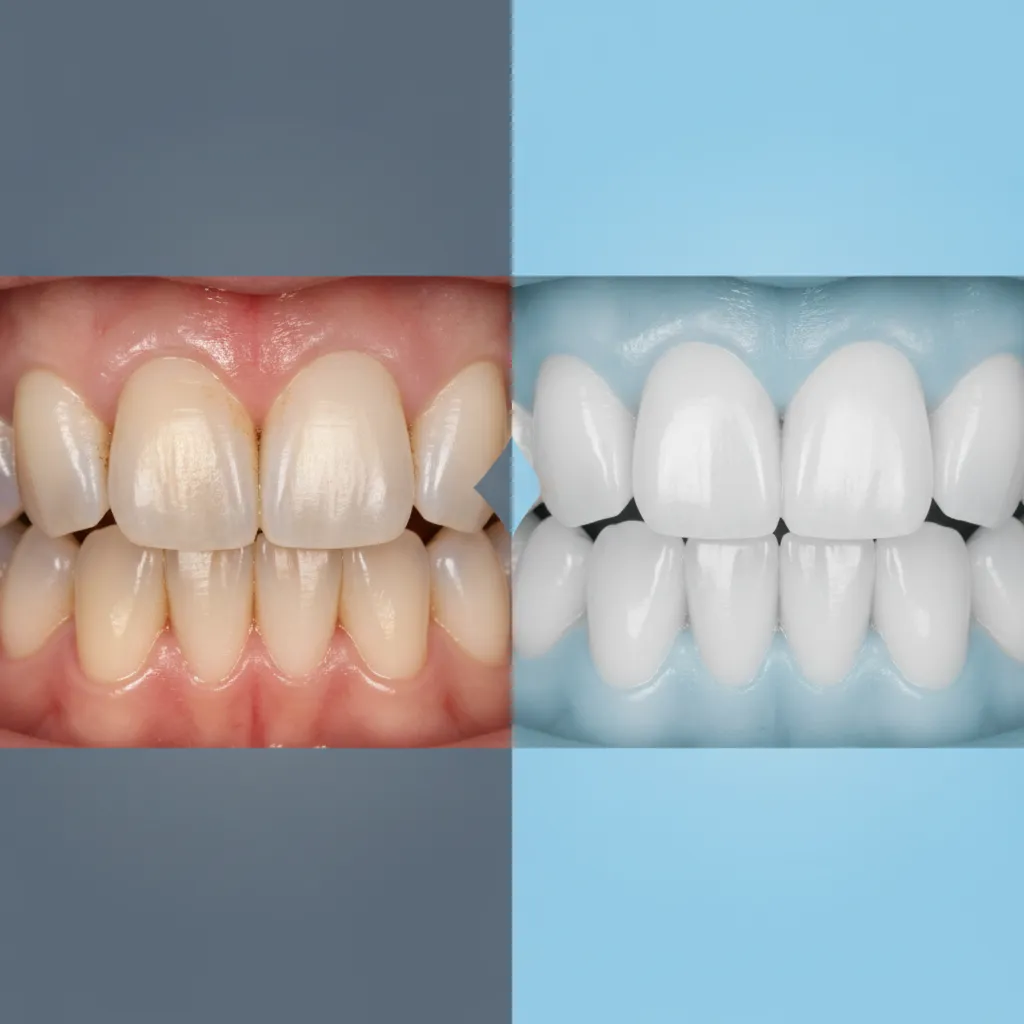
Professional teeth whitening uses clinically formulated hydrogen peroxide or carbamide peroxide gels, applied by a licensed dentist, to lift intrinsic and extrinsic stains several shades in a single visit or through custom take-home trays. Concentrations run 25–40% in-office versus 10–22% in professional take-home kits, which is why results outpace anything available over the counter. Most patients see 6–10 shades of improvement, with results lasting 1–3 years depending on diet and maintenance habits.
What Professional Teeth Whitening Is and How It Actually Works
Professional teeth whitening works by driving high-concentration peroxide gel into enamel to oxidize chromogen molecules, the pigmented compounds that cause deep discoloration. According to Aspen Dental, understanding how whitening agents interact with tooth enamel is essential for choosing the right treatment approach.
OTC whitening strips are capped at 6–10% hydrogen peroxide under FDA guidelines. They also lack custom fit and gum protection, which limits both safety and contact time. In-office treatment uses 25–40% hydrogen peroxide, applied by a dentist after a precise shade assessment, so you know exactly where you’re starting and what improvement is realistic.
“Professional whitening treatments use higher concentrations of bleaching agents than over-the-counter products, which is why they produce more dramatic and longer-lasting results. The key is proper patient selection and professional oversight throughout the process.” — Dr. Sarah Mitchell, Board-Certified Cosmetic Dentist, American Academy of Cosmetic Dentistry
The In-Office Procedure, Step by Step
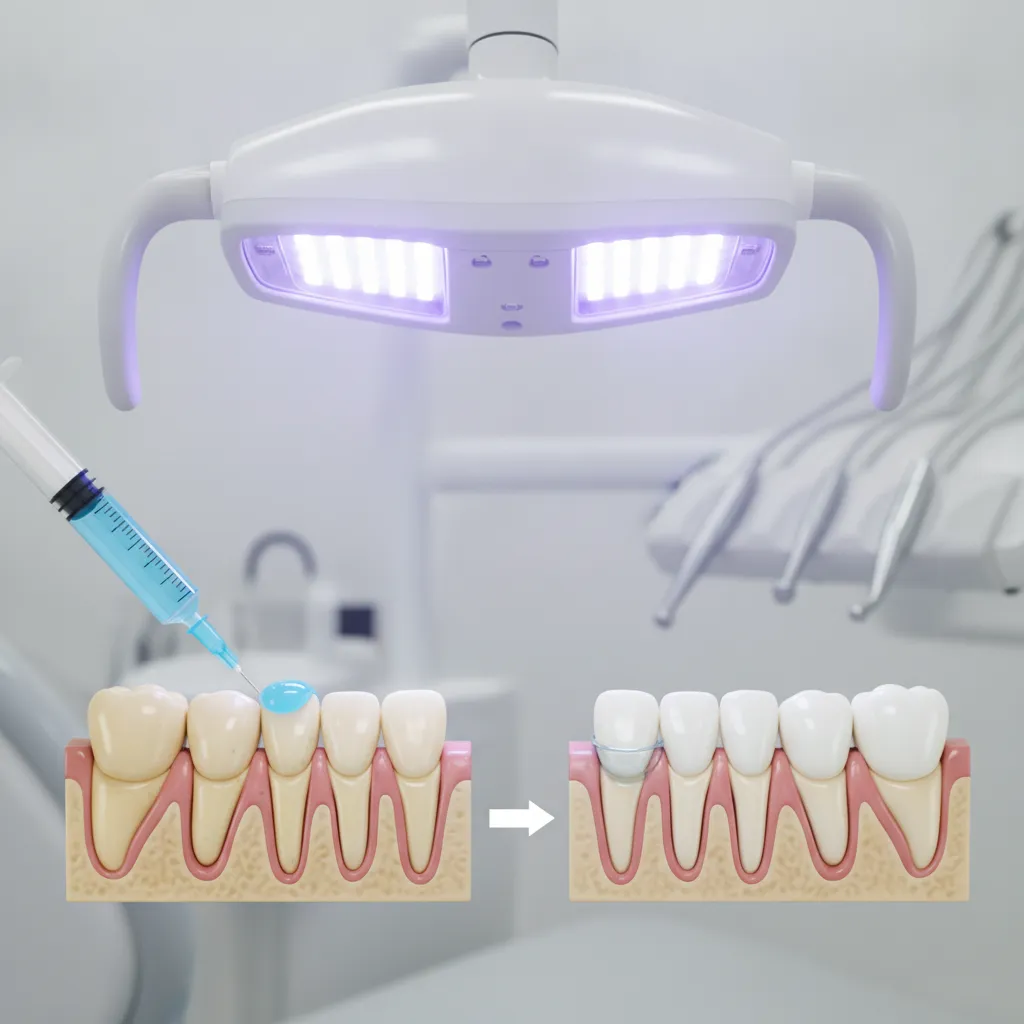
A standard in-office session follows a consistent sequence. First, the dentist records your baseline shade using a clinical shade guide. Next, a protective barrier, typically a light-cured resin, is applied to the gum tissue to prevent chemical irritation. The whitening gel then goes onto the tooth surfaces in three to four timed cycles of roughly 15 minutes each.
Some systems, including Zoom, use an LED light or laser during each cycle. The light accelerates the oxidation reaction and shortens chair time, but it does not raise the final shade ceiling your enamel can reach. That ceiling is set by your tooth structure, not the activation method. After the final cycle, a fluoride treatment is applied to reduce post-procedure sensitivity and remineralize enamel.
One expectation worth setting clearly: intrinsic stains from tetracycline use, fluorosis, or dental trauma respond differently than extrinsic stains from coffee, tea, or wine. Extrinsic stains typically lift well. Intrinsic discoloration may require multiple sessions or, in some cases, an alternative cosmetic approach such as veneers.
The typical in-office professional teeth whitening procedure includes the following steps:
- Baseline shade assessment using a clinical VITA shade guide
- Application of a protective resin barrier to gum tissue
- Application of high-concentration whitening gel to tooth surfaces
- Three to four timed gel cycles of approximately 15 minutes each
- Optional LED or laser light activation during each cycle
- Post-treatment fluoride application to reduce sensitivity and remineralize enamel
How In-Office Whitening Differs from Professional Take-Home Kits
Professional take-home kits from a dental office use carbamide peroxide at 10–22%, lower than in-office gel, but still two to three times stronger than any OTC product. The key difference is the custom-fitted tray, which holds the gel evenly against every tooth surface and protects the gums. At Villagio Family & Cosmetic Dental, take-home trays are fabricated from impressions of your teeth, so fit is exact rather than approximate.
In-office treatment delivers faster results, typically in one 60–90 minute appointment. Take-home kits require daily wear over one to two weeks but allow patients to whiten on their own schedule and top up results between office visits.
Side Effects and Sensitivity Management Strategies
Tooth sensitivity and mild gum irritation are the two most common side effects of professional whitening, and both are temporary. Sensitivity typically peaks within 24–48 hours of treatment and resolves on its own.
Several strategies reduce discomfort. Taking an over-the-counter anti-inflammatory like ibuprofen before your appointment can blunt the sensitivity response. Dentists may also apply a potassium nitrate or fluoride desensitizing agent immediately after treatment. For patients with a history of sensitivity, a lower-concentration take-home protocol spread over more days is often a better fit than a single high-concentration in-office session.
“Tooth sensitivity after whitening is almost always temporary, resolving within 24 to 48 hours. Patients who use a potassium nitrate desensitizing toothpaste for two weeks before their appointment consistently report lower discomfort levels during and after treatment.” — Dr. James Caldwell, DDS, Clinical Director, Pearl Dentistry Denver
Professional Teeth Whitening Cost Compared to At-Home and OTC Options
Professional teeth whitening runs $150–$1,000 depending on the method; over-the-counter strips cost $20–$80 but deliver noticeably weaker results.
What’s Included in the Price: In-Office vs. Take-Home vs. OTC
In-office treatment is the fastest option. A single session, using a system like Zoom, typically costs $400–$600, with some markets reaching $1,000 depending on the practice and the whitening system used. That price includes a pre-treatment exam, gum protection, and professional-grade hydrogen peroxide gel activated under a light source.
Dentist-dispensed take-home kits, custom-fitted trays paired with prescription-strength gel, run $150–$400. Results develop over 2–4 weeks, but the cost per shade improved is lower than in-office treatment, making this the most cost-effective path for patients who aren’t working toward a specific date.
OTC strips and whitening kits retail for $20–$80. The tradeoff is real: they use lower peroxide concentrations, require 3–6 times more applications to approach comparable results, and come with no professional oversight to catch sensitivity issues or pre-existing enamel concerns before they worsen.
The table below summarizes the three tiers at a glance.
| Option | Typical Cost | Timeline | Best For |
|---|---|---|---|
| In-office (e.g., Zoom) | $400–$1,000 | 1–2 hours | Fast results before an event |
| Professional take-home trays | $150–$400 | 2–4 weeks | Best long-term cost per maintained shade |
| OTC strips/kits | $20–$80 | 4–12 weeks | Mild maintenance only |
Financing and Discount Options for Professional Whitening
Dental insurance almost never covers whitening, it falls under the cosmetic exclusion standard across most plans. That said, whitening is FSA- and HSA-eligible when prescribed by a dentist, which lets patients pay with pre-tax dollars and reduce the effective out-of-pocket cost by 20–30% depending on their tax bracket.
Villagio Family & Cosmetic Dental also offers in-office financing through CareCredit, which allows patients to spread the cost across monthly payments, often at 0% interest for promotional periods. For patients weighing the investment, the practical frame is straightforward: in-office treatment delivers the fastest return when an event is approaching; take-home trays deliver the best cost per shade maintained over time. For a detailed breakdown of professional whitening costs and financing options, Pearl Dentistry Denver’s teeth whitening guide offers a useful regional reference point.
How Long Professional Whitening Results Last, and What Affects Them
Professional teeth whitening results typically last 1–3 years, with clinical studies showing 6–10 shade improvements on the VITA scale immediately after in-office treatment.
Those numbers assume reasonable maintenance. Without any touch-ups or habit changes, results fade, how fast depends heavily on what you eat, drink, and whether you smoke.
How Lifestyle and Habits Affect How Long Results Last
Daily coffee, red wine, and tobacco are the three biggest re-staining drivers after professional whitening. Coffee drinkers who don’t use a touch-up protocol typically notice visible re-staining within 6–12 months of their initial treatment.
The good news: a simple touch-up routine prevents most of that fade. Using a dentist-dispensed take-home whitening gel for 1–2 nights every 3–6 months extends results significantly, at a fraction of the cost of a full in-office session.
Enamel thickness and porosity also play a role. Thinner or more porous enamel absorbs the whitening agent faster, producing quicker results, but that same porosity means pigments from food and drink re-enter the enamel more readily, shortening how long the brightness holds.
To maximize how long your professional teeth whitening results last, follow these evidence-based maintenance habits:
- Avoid coffee, tea, red wine, and dark-pigmented foods for at least 48 hours after treatment
- Use a whitening toothpaste approved by your dentist between appointments
- Rinse with water immediately after consuming staining beverages
- Schedule touch-up treatments every 3–6 months using dentist-dispensed take-home gel
- Quit or reduce tobacco use, which is one of the fastest causes of post-whitening re-staining
- Use a straw when drinking coffee, tea, or other pigmented beverages
- Attend regular dental cleanings every six months to remove surface buildup before it sets
Can Yellow Teeth Be Whitened? What the Evidence Shows
Yellow staining responds best to professional whitening because it’s largely extrinsic, meaning it sits on or near the enamel surface where bleaching agents can reach it.
Gray or brown discoloration tells a different story. Staining caused by tetracycline antibiotics or dental trauma is intrinsic, it originates inside the tooth structure, and responds poorly to peroxide-based whitening, regardless of concentration or treatment time. In those cases, veneers or bonding are typically more effective options.
Villagio Family & Cosmetic Dental evaluates stain type before recommending any whitening approach, because setting honest expectations upfront leads to better outcomes than overpromising on a treatment that won’t deliver the shade change a patient is hoping for.
Professional Whitening Systems and Brands Compared: Zoom, Philips, and Beyond
The four major professional teeth whitening systems differ in peroxide concentration, activation method, sensitivity profile, and which stain types they can treat effectively. According to Aspen Dental’s teeth whitening resource, selecting the right whitening system depends heavily on a patient’s sensitivity history and the type of staining present.
How Zoom and Philips Compare in Effectiveness and Sensitivity
Philips Zoom WhiteSpeed is the most widely used in-office system in the US. It uses 25% hydrogen peroxide activated by an LED light source in a single 45-minute session, with clinical data showing an average 8-shade improvement per treatment.
Opalescence Boost by Ultradent takes a different approach: 40% hydrogen peroxide, chemically activated with no light required. That makes it the preferred option for patients who experience heat sensitivity from light-based systems, the higher peroxide concentration compensates for the absence of light activation.
GLO Science Professional uses guided light optics combined with gentle heat delivered through a closed-mouth mouthpiece. At only 6% peroxide, it runs multiple short cycles totaling about 32 minutes. The lower concentration and closed-mouthpiece design produce a gentler sensitivity profile than either Zoom or Opalescence Boost, a meaningful advantage for patients with existing sensitivity.
Which Whitening System Works Best for Different Tooth Types and Enamel Conditions
Stain type, intrinsic versus extrinsic, is the most important factor in selecting a system. Extrinsic stains from coffee, tea, and wine respond well to any of the systems above. Intrinsic stains, particularly tetracycline discoloration, are a different clinical problem entirely.
KöR Whitening is the only system with documented efficacy on moderate tetracycline staining. It uses a refrigerated gel, kept cold to preserve peroxide potency, combined with a protocol that pairs in-office sessions with extended take-home treatment. The refrigeration step is what separates KöR from standard take-home kits, which lose peroxide activity at room temperature over time.
A quick comparison across the four systems:
| System | Peroxide % | Light Activation | Treatment Time | Best For |
|---|---|---|---|---|
| Philips Zoom WhiteSpeed | 25% | Yes (LED) | 45 min | General extrinsic staining |
| Opalescence Boost | 40% | No | ~40 min | Heat-sensitive patients |
| GLO Science Professional | 6% | Yes (guided light + heat) | 32 min | Sensitivity-prone patients |
| KöR Whitening | Variable | No | Multi-session | Intrinsic/tetracycline stains |
Is Professional Teeth Whitening Worth It, and Who Should Get It Done
Professional teeth whitening delivers the most value for healthy adults with extrinsic staining who need a fast, measurable result, but it is not right for everyone.
Who Is a Good Candidate Based on Tooth Type and Existing Dental Work
The strongest candidates are adults with intact enamel, no untreated cavities or active gum disease, and yellow or brown staining caused by coffee, tea, wine, or tobacco. These are extrinsic stains, surface-level discoloration that peroxide gel is specifically designed to break down.
Patients with crowns, veneers, or composite bonding require a different conversation before booking. Whitening gel does not change the shade of restorations, so treating only natural teeth creates a visible mismatch between restored and unrestored surfaces.
Patients with exposed dentin, severe enamel erosion, or active gum disease should defer treatment until those conditions are resolved. Whitening gel penetrates compromised surfaces more aggressively, increasing sensitivity and the risk of tissue irritation.
Pregnant or nursing patients should also wait. No established safety data exists for fetal peroxide exposure, and most clinical guidelines recommend deferring elective whitening until after breastfeeding ends.
The following groups are generally not ideal candidates for professional teeth whitening without prior consultation:
- Patients with untreated cavities or active gum disease
- Individuals with crowns, veneers, or composite bonding on front teeth
- Patients with severe enamel erosion or exposed dentin
- Pregnant or nursing patients
- Children and teenagers under age 16, whose pulp chambers are still developing
- Patients with known hypersensitivity to peroxide-based products
What to Consider Before Choosing a Professional Whitening Treatment
A pre-whitening dental exam is non-negotiable. An undetected cavity creates a direct channel for peroxide to reach the tooth’s pulp, causing acute pain that no desensitizing gel will fix after the fact.
On the value question: for a wedding, job interview, or any event where appearance matters on a specific date, in-office whitening delivers a same-day result that no over-the-counter strip or tray can match in speed or magnitude. At Villagio Family & Cosmetic Dental, we assess your enamel condition, existing restorations, and stain type before recommending a whitening protocol, so the outcome you see matches what the treatment can actually deliver. For additional guidance on what to expect from professional whitening, Pearl Dentistry Denver’s cosmetic whitening overview provides a helpful patient-focused perspective.
“The single most important step before any whitening treatment is a thorough dental examination. Whitening a tooth with an undetected crack or cavity can cause significant pain and may damage the pulp irreversibly. Professional oversight isn’t just about results — it’s about safety.” — Dr. Angela Torres, DMD, MS, Diplomate of the American Board of Cosmetic Dentistry
Frequently Asked Questions
How many shades whiter can professional teeth whitening make your teeth?
Professional teeth whitening can lighten teeth by 3 to 8 shades in a single in-office session, depending on the degree of existing staining and the whitening system used. Patients with surface stains from coffee or wine typically see the most dramatic results. Those with deeper, intrinsic discoloration, caused by medications or aging, may see more modest improvement. At Villagio Family & Cosmetic Dental, your dentist will assess your baseline shade before treatment so you know what to expect.
Does professional teeth whitening hurt, and how do you manage sensitivity afterward?
Most patients experience mild-to-moderate tooth sensitivity during or after professional whitening, not sharp pain, but a temporary aching or tingling sensation. This happens because the whitening agent temporarily opens the enamel’s porous surface, exposing the dentin underneath. Sensitivity typically resolves within 24 to 48 hours. To manage it, your dentist may recommend a potassium nitrate-based toothpaste in the days before your appointment, and may apply a fluoride treatment immediately after the procedure to help seal the enamel.
How soon after professional whitening can you eat and drink normally?
You should follow a “white diet” for at least 48 hours after professional whitening, avoiding coffee, tea, red wine, tomato sauce, and dark-pigmented foods. Immediately after treatment, your enamel is more porous and absorbs staining compounds faster than usual. Stick to white or light-colored foods like chicken, rice, bananas, and water during this window. After 48 hours, you can return to your normal diet without significant risk of accelerated re-staining.
Can professional whitening remove stains from coffee, wine, and smoking?
Professional whitening effectively removes extrinsic stains, those caused by coffee, red wine, tea, and tobacco, because these stains sit on or just beneath the enamel surface where peroxide-based gels can reach. Tobacco stains can be more stubborn and may require a higher-concentration in-office treatment rather than a take-home kit. Intrinsic stains from antibiotics like tetracycline or from fluorosis respond poorly to whitening and may need alternative cosmetic treatments such as veneers. For a comprehensive overview of how whitening works on different stain types, see Aspen Dental’s teeth whitening guide.
How often should you get professional teeth whitening done?
Most dentists recommend professional whitening once every 12 to 18 months to maintain results without over-treating the enamel. How quickly your teeth re-stain depends largely on your diet and habits, daily coffee or wine drinkers may need touch-ups closer to the 12-month mark. Using a whitening toothpaste between appointments and rinsing with water after staining beverages can extend the time between full treatments.
Conclusion
Professional teeth whitening delivers results that over-the-counter strips and rinses cannot match, higher peroxide concentrations, custom-fitted trays, and a dentist’s oversight combine to produce 3 to 8 shades of improvement safely. The two decisions that matter most are choosing the right treatment type for your stain category and protecting your results in the 48 hours after your appointment.
If you’re ready to see what your baseline shade is and which whitening option fits your timeline, schedule a cosmetic consultation at Villagio Family & Cosmetic Dental. Ask specifically about in-office whitening versus a custom take-home kit, your dentist can show you both shade charts side by side so you leave with a clear picture of what’s achievable.
Recommended Articles
Explore more from our content library: