Proudly Serving Katy, Richmond & Fulshear Cinco Ranch
(281) 395-2100
|
(281) 394-4001

A root canal procedure removes infected or damaged pulp from inside a tooth, cleans the canals, and seals them to eliminate pain and save the tooth. Most patients need one when decay, a crack, or trauma reaches the nerve. Despite its reputation, the procedure itself is no more painful than getting a filling, modern anesthesia handles that. Success rates exceed 95% when performed correctly, and a treated tooth can last a lifetime with a crown and routine care.
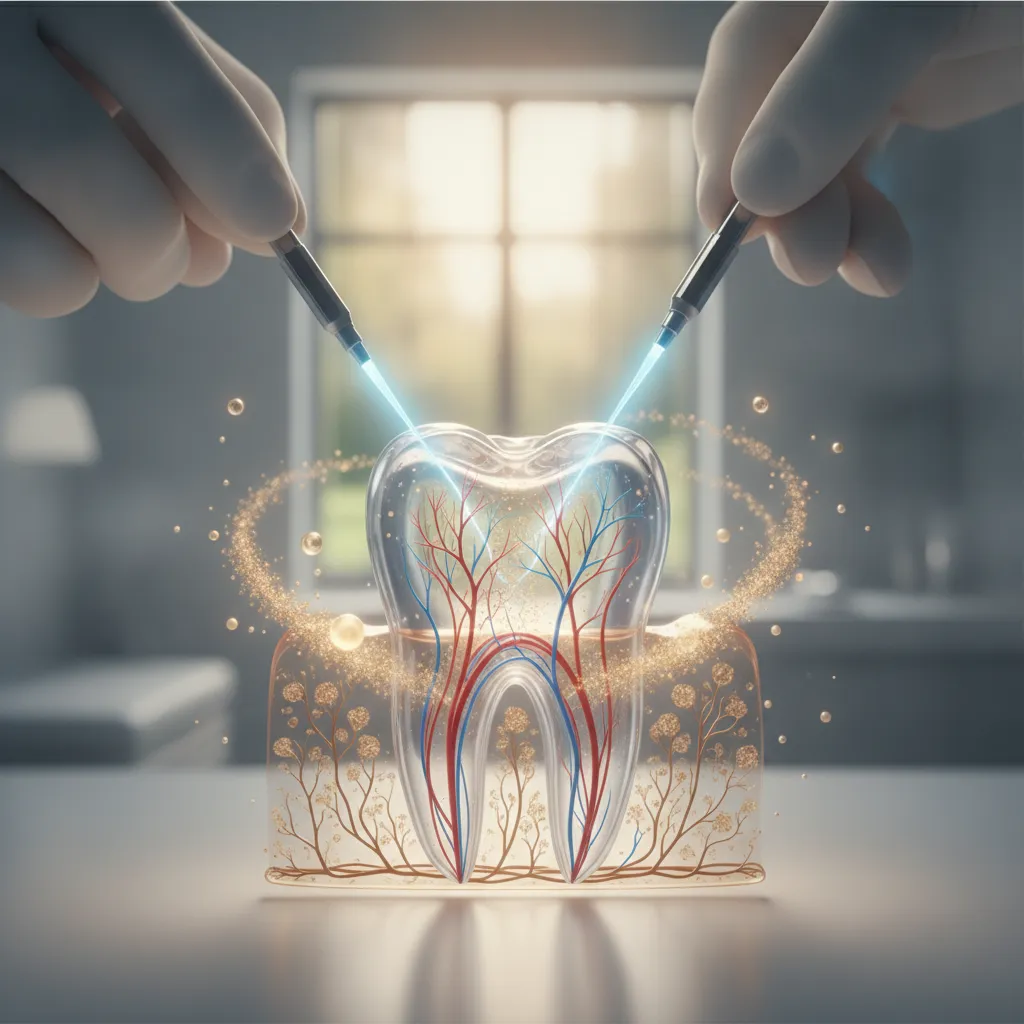
What Is a Root Canal Procedure and Why Do You Need One?
A root canal procedure treats infection or damage inside the tooth’s pulp, the soft core containing nerves, blood vessels, and connective tissue.
The pulp sits in a chamber beneath the hard enamel and dentin layers. When bacteria breach those outer layers through deep decay, a crack, or a traumatic injury, the pulp becomes inflamed and infected. Antibiotics can temporarily reduce symptoms, but they cannot clear an infection trapped inside a sealed tooth structure, only physical removal of the infected tissue resolves it permanently.
“Root canal treatment is one of the most effective ways to relieve the severe pain caused by an infected or inflamed pulp while preserving the natural tooth structure.” — American Association of Endodontists, Professional Guidance on Endodontic Treatment
Why Dentists Recommend a Root Canal Over Other Treatments
Dentists prescribe a root canal procedure in four primary situations: deep decay that has reached the pulp chamber, a cracked or fractured tooth that exposes the inner tissue, repeated dental work on the same tooth that progressively irritates the pulp, and traumatic injury that damages the nerve even without visible external breakage.
The alternative, extraction, creates a different set of problems. Removing a natural tooth triggers bone resorption at the extraction site, allows adjacent teeth to shift toward the gap, and typically leads to an implant or bridge costing $3,000–$5,000 or more. A root canal preserves the original tooth root, which keeps the jawbone stimulated and the bite stable.
Left untreated, a pulp infection does not stay contained. The bacteria can spread to the jaw, neck, or, in severe cases, the brain, making the procedure medically necessary rather than optional. According to the Cleveland Clinic’s overview of root canal procedure and recovery, prompt treatment is essential to prevent the spread of infection to surrounding tissues.
Long-Term Success Rates and When Root Canals Fail
Endodontic outcome studies place root canal success rates above 95% at 8–10 years post-treatment [1], and teeth that receive a properly fitted crown afterward can last a lifetime with routine care.
Failure is uncommon but does occur. The most frequent causes are an undetected additional canal left untreated, a delayed or poorly fitted crown that allows recontamination, or a vertical root fracture that develops after treatment. In those cases, a retreatment procedure or, as a last resort, extraction is considered, but first-time root canals performed by an experienced provider, like the team at Villagio Family & Cosmetic Dental, carry a strong track record of long-term success.
How Painful Is a Root Canal During the Procedure?
A root canal procedure is not painful, local anesthesia numbs the area completely, and most patients report feeling pressure rather than pain.
The fear surrounding root canals is largely outdated. Modern anesthesia, typically lidocaine, blocks sensation so effectively that the procedure itself is comparable to getting a routine filling. Clinical surveys consistently show that patients rate the pain of an untreated tooth infection far higher than the root canal treatment that resolves it.
One real challenge: infected tissue can resist standard numbing. When that happens, an endodontist may use supplemental techniques, an intraligamentary injection (delivered directly into the ligament around the tooth) or a targeted nerve block, to achieve full anesthesia before proceeding.
“Most patients are surprised by how comfortable the root canal procedure actually is. The anxiety beforehand is almost always worse than the treatment itself.” — Dr. Kenneth Hargreaves, Professor and Chair of Endodontics, University of Texas Health Science Center
Pain Management Options During and After a Root Canal
During the procedure, local anesthesia handles pain control entirely. Afterward, mild to moderate soreness is normal for 2–3 days [1] as the surrounding tissue recovers. Over-the-counter ibuprofen or acetaminophen manages this effectively for most patients. Prescription pain medication is rarely necessary.
At Villagio Family & Cosmetic Dental, the team reviews each patient’s comfort level before starting and adjusts anesthesia as needed, supplemental techniques are available and used without hesitation when standard numbing falls short.
When to Seek Emergency Care for Post-Procedure Complications
Normal soreness fades steadily after day one. Contact your dentist immediately if you notice any of these warning signs:
- Swelling that spreads toward your neck or eye
- Fever above 101°F
- Visible pus at the treatment site
- Pain that intensifies after day 3 instead of improving
These symptoms can indicate a spreading infection that requires prompt treatment, not a wait-and-see approach.
What Happens During a Root Canal Procedure Step by Step
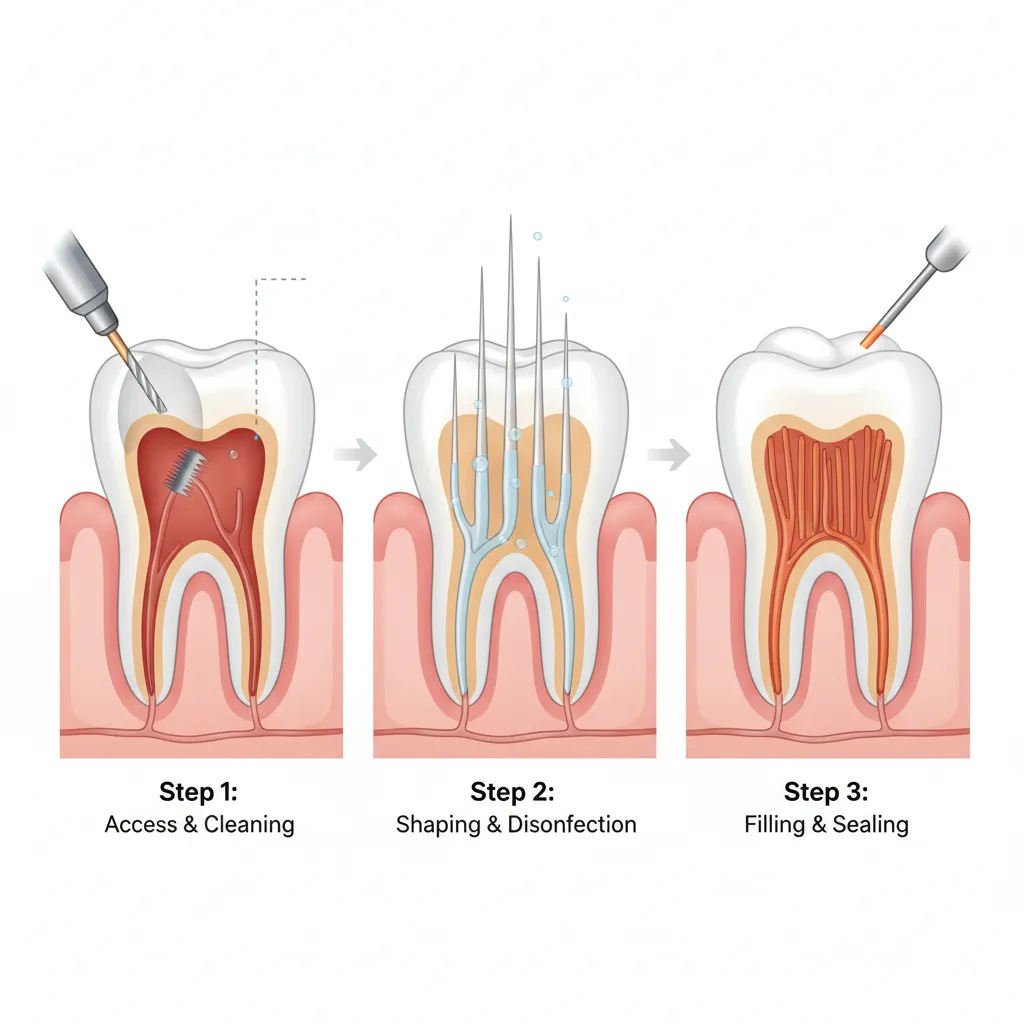
A root canal procedure follows five clinical steps: X-ray, anesthesia, pulp removal, canal filling, and crown placement, typically completed in 60–90 minutes.
The 5 Core Steps
- X-ray and diagnosis. Your dentist takes a periapical X-ray to map the root shape and confirm infection depth. This image guides every decision that follows.
- Local anesthesia and dental dam placement. A local anesthetic numbs the tooth and surrounding tissue. A small rubber sheet called a dental dam isolates the tooth, keeping it dry and free of saliva during treatment [1].
- Access opening and pulp removal. The dentist drills a small opening through the crown to reach the pulp chamber, then removes the infected or inflamed pulp tissue with fine hand files.
- Canal shaping, irrigation, and filling. Each canal is shaped with progressively larger files, then flushed with an antimicrobial solution, typically sodium hypochlorite, to clear debris and bacteria. The canals are then filled with gutta-percha, a rubber-like material, and sealed with adhesive cement [1].
- Crown placement. A temporary or permanent crown restores the tooth’s structure and protects the treated root. Without a crown, the tooth is vulnerable to fracture.
Single-rooted teeth, front teeth and premolars, are usually finished in one 60–90 minute appointment [1]. Molars have two to four canals and may require a second visit to complete shaping and filling.
Should You See an Endodontist or a General Dentist?
General dentists handle the majority of straightforward root canal cases without a referral. Endodontists are specialists who complete 2–3 additional years of post-dental-school training focused exclusively on the inner tooth [1]. They take on complex anatomy, curved canals, calcified roots, and cases where a previous root canal failed. At Villagio Family & Cosmetic Dental, the clinical team evaluates each case and refers to an endodontist when the anatomy or infection complexity warrants it, so you get the right level of care from the start.
How Much Does a Root Canal Cost and What Does Insurance Cover?
Costs vary by tooth type. A front tooth typically runs $700–$1,500; a molar ranges from $1,000–$2,000, before adding the crown, which adds another $1,000–$1,800. Dental insurance generally covers 50–80% of the procedure cost, subject to your plan’s annual maximum.
Uninsured patients have several practical options. Dental savings plans reduce fees at participating offices. In-house financing through CareCredit or Sunbit lets patients split the balance into monthly payments, often at 0% interest for promotional periods.
Root Canal vs. Tooth Extraction: Which Is the Better Choice?
A root canal procedure saves your natural tooth and costs less over 10 years than extraction followed by an implant replacement.
The upfront numbers favor extraction: a simple pull runs $150–$350, while surgical extraction costs $300–$800. But that’s only part of the picture. If you don’t replace the missing tooth, bone resorption begins at the extraction site within 6–12 months, gradually shifting adjacent teeth and altering your facial structure. Replacing the tooth with a dental implant adds $3,000–$5,000 to the bill, making root canal treatment plus a crown the more cost-effective path for most patients over a 10-year horizon.
The Cleveland Clinic recommends saving the natural tooth whenever clinically feasible, and the evidence supports that position: nothing functions as well as your original tooth.
“Preserving the natural tooth through endodontic treatment is almost always preferable to extraction. A natural tooth provides stability, function, and bone support that no artificial replacement can fully replicate.” — American Dental Association, Statement on Tooth Preservation and Endodontic Care
That said, extraction is genuinely the right call in specific situations, severely fractured roots that extend below the bone line, advanced periodontal disease that has destroyed the supporting bone, or a tooth with no restorable crown structure left to work with.
Alternative Treatment Options to a Root Canal
Three other clinical options exist, though each applies only in narrow circumstances.
- Pulp capping: A viable option only when pulp exposure is minimal and recent, typically from a small cavity or a minor chip. The dentist places a protective material directly over the exposed pulp to encourage healing without full removal.
- Apicoectomy: A surgical procedure that removes the tip of the tooth’s root and seals it from the bottom up. Used when root canal retreatment isn’t possible due to calcified canals or a persistent infection near the root tip.
- Intentional replantation: A rare, last-resort technique where the tooth is extracted, treated outside the mouth, and immediately reimplanted. Reserved for cases where neither a standard root canal nor an apicoectomy can reach the problem.
At Villagio Family & Cosmetic Dental, the clinical team evaluates each case individually, reviewing X-rays, bone levels, and crown restorability, before recommending extraction or any of these alternatives over a root canal.
What to Do and Avoid After a Root Canal
Recovery after a root canal procedure is straightforward when you follow a short list of concrete steps in the first 24–48 hours and beyond.
First 24 Hours
Avoid chewing on the treated side entirely. Skip hard, crunchy, or chewy foods, and do not use a straw, suction can disturb the temporary filling. Take ibuprofen 400–600mg every 6–8 hours proactively; waiting until pain spikes makes it harder to control.
Oral Hygiene
Brush and floss normally, do not skip the treated tooth. The temporary filling needs to stay clean to prevent bacteria from re-entering the canal before your permanent crown is placed. Skipping hygiene around the site creates exactly the conditions the procedure was designed to eliminate.
Crown Timeline
A temporary filling is not a long-term fix. Delaying the permanent crown beyond 4–6 weeks significantly increases the risk of reinfection and treatment failure. Schedule your crown appointment before you leave the office, not as a follow-up call you intend to make later. For a comprehensive overview of what to expect during healing, the Cleveland Clinic’s root canal recovery guide provides detailed post-procedure instructions.
Return immediately if swelling spreads to your jaw or neck, the temporary filling falls out, or your bite still feels significantly off after day 2.
Common Complications After a Root Canal and How They Are Treated
Most complications are manageable when caught early. Three are worth knowing by name:
- Flare-up pain: An acute inflammatory response after treatment, managed with a short course of antibiotics combined with anti-inflammatory medication.
- Instrument separation: A small file tip can occasionally break inside the canal. Depending on its location, treatment requires endodontic retreatment or a minor surgical procedure called an apicoectomy.
- Missed canals: The most common cause of root canal failure [1]. An untreated canal harbors bacteria that eventually cause reinfection, addressed through retreatment by an endodontist.
At Villagio Family & Cosmetic Dental, post-treatment follow-up is built into every root canal appointment, so you leave with a crown date confirmed and a clear plan if anything changes.
Frequently Asked Questions
How many appointments does a root canal take?
Most root canals require one to two appointments, each lasting 60 to 90 minutes [1]. A straightforward single-canal tooth, such as a front incisor, can often be completed in one visit. Molars with multiple canals, or teeth with severe infection, typically need a second appointment to place the permanent filling or crown after the canals have been cleaned and sealed.
Can a root canal fail, and what happens if it does?
Yes, root canals can fail, most often because a canal was missed, the seal broke down over time, or a new cavity allowed bacteria back in [1]. When failure occurs, a dentist may recommend retreatment, where the tooth is reopened, cleaned again, and resealed. In cases where retreatment isn’t viable, an apicoectomy (surgical removal of the root tip) or tooth extraction becomes the next option.
Is it safe to eat before a root canal appointment?
Eating a normal meal before your appointment is fine and often recommended, since local anesthesia will numb your mouth for several hours afterward [1]. Avoid alcohol on the day of treatment. Once the procedure is done, wait until the numbness wears off completely before eating to prevent accidentally biting your cheek or tongue.
How long does it take to fully recover from a root canal?
Most patients feel back to normal within a few days, though mild soreness can last up to one week [1]. The tooth itself heals over several weeks as surrounding tissue settles. A permanent crown, placed at a follow-up visit, protects the tooth long-term and marks the practical end of the recovery process. Avoid hard or crunchy foods until the crown is in place.
Are there any long-term restrictions after a root canal procedure?
Once a permanent crown is placed, most patients face no long-term dietary or activity restrictions. The restored tooth functions like a natural tooth for chewing, speaking, and biting. However, maintaining excellent oral hygiene, including twice-daily brushing, daily flossing, and regular dental checkups, is essential to prevent new decay from compromising the treated tooth and surrounding structures over time.
Conclusion
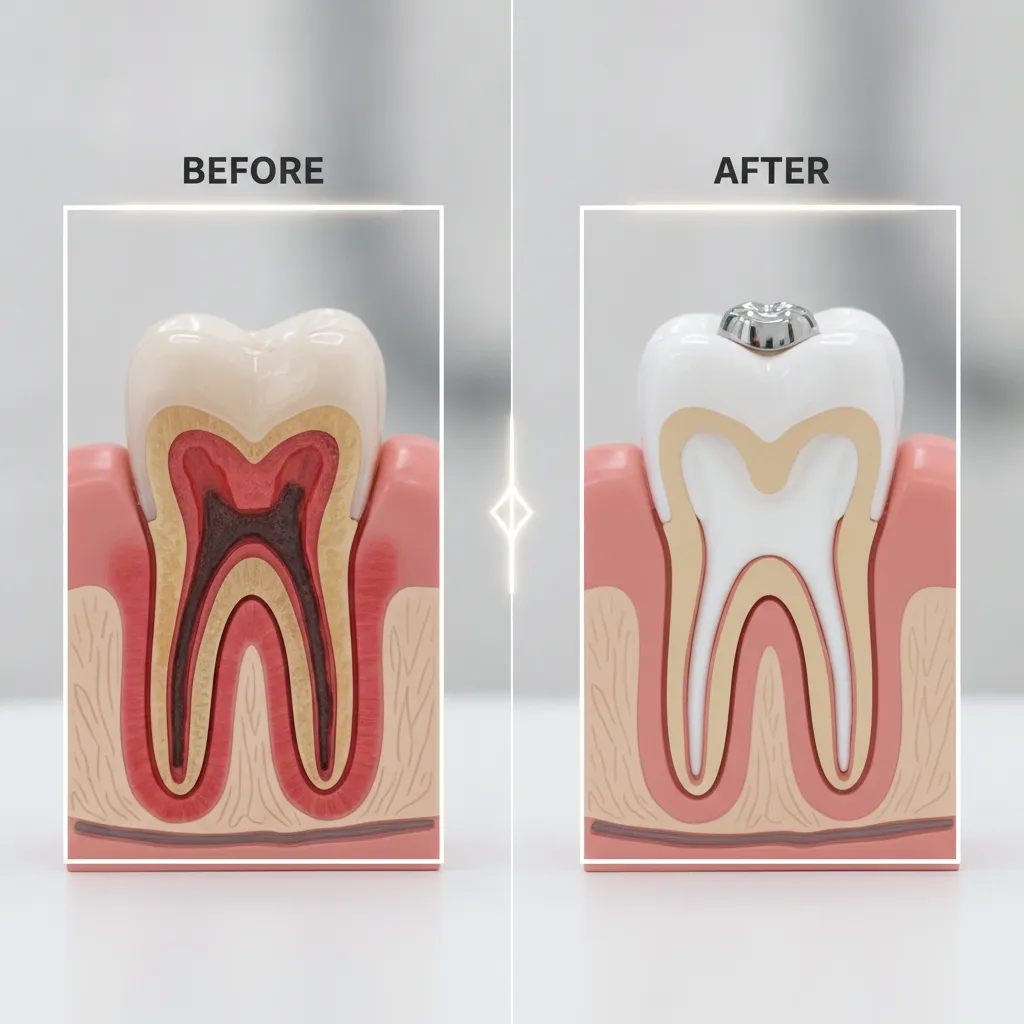
A root canal procedure removes infected pulp, seals the tooth, and, when followed by a permanent crown, gives that tooth a realistic lifespan of decades. Three things matter most after reading this: recognize the warning signs early (persistent pain, swelling, or a gum abscess), don’t delay treatment once your dentist identifies pulp infection, and plan for the crown placement that completes the restoration.
If you’re experiencing tooth pain or sensitivity in the Katy, Fulshear, Richmond, or Cinco Ranch area, schedule a diagnostic exam at Villagio Family & Cosmetic Dental. Ask specifically about a pulp vitality test, it’s the clearest first step toward knowing whether a root canal is necessary.
Sources & References
Recommended Articles
Explore more from our content library: