Proudly Serving Katy, Richmond & Fulshear Cinco Ranch
(281) 395-2100
|
(281) 394-4001

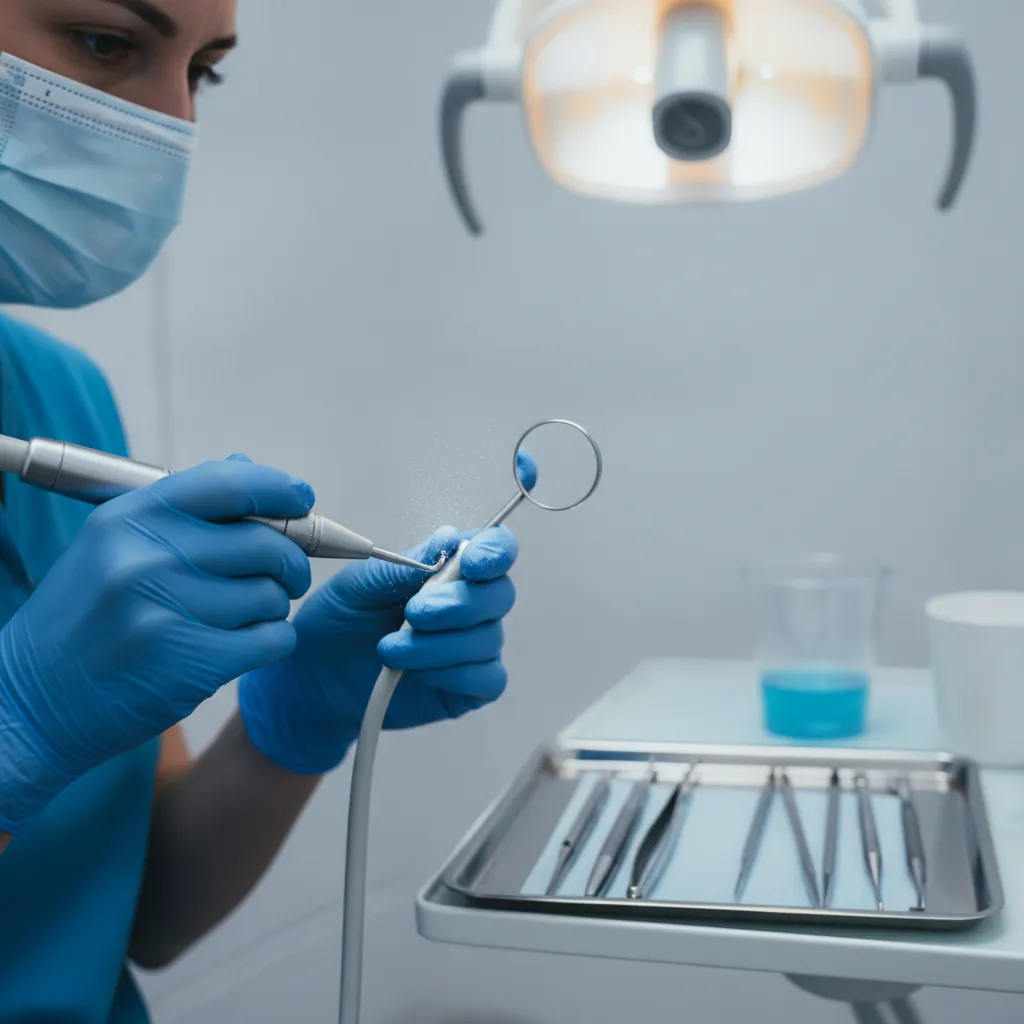
Professional teeth cleaning is a preventive dental procedure performed by a licensed hygienist or dentist to remove plaque, tartar, and surface stains that regular brushing and flossing cannot eliminate. Most adults need it every six months, though patients with gum disease, diabetes, or a smoking history often require visits every three to four months. A standard cleaning takes 45–60 minutes and typically costs $75–$200 without insurance, most plans cover it at 100% as a preventive benefit.
What Professional Teeth Cleaning Is and How It Works
A dental prophylaxis, the clinical term for this procedure, uses specialized instruments to remove calcified deposits that no toothbrush can reach. This is particularly relevant for professional teeth cleaning.
At home, brushing and flossing remove soft plaque before it hardens. Once plaque mineralizes into tartar (also called calculus), only a dental hygienist’s ultrasonic scaler or hand instruments can break it apart safely. That distinction is the core reason twice-yearly appointments matter even for patients with excellent home care habits. According to the American Dental Association, tartar can begin forming on teeth within 24 to 72 hours of plaque accumulation, making consistent professional removal essential.
“Regular dental cleanings are one of the most effective tools we have for preventing gum disease and tooth loss. Patients who skip routine visits often face far more complex and expensive treatment down the road.” — Dr. Maria Lopez, Board-Certified Periodontist, American Academy of Periodontology
What Are the Steps Involved in a Professional Dental Cleaning?
A routine adult cleaning follows six steps in sequence and runs 45–60 minutes from start to finish [1].
- Oral exam. The hygienist uses a small mirror to inspect teeth and gums for signs of gingivitis, decay, or other concerns before any instruments touch your teeth [1]. Digital X-rays are often taken at this visit, typically once a year, to catch decay or bone changes not visible to the naked eye [3].
- Plaque and tartar removal. An ultrasonic scaler loosens larger deposits with vibration and water; hand scalers clear remaining tartar along the gum line and between teeth. The scraping sound is normal [1].
- Polishing. A rotating rubber cup applies a gritty prophy paste to buff away surface stains and smooth enamel [1].
- Expert flossing. The hygienist flosses between every contact point, reaching areas most patients miss at home [1].
- Rinse. A water rinse or antibacterial mouth rinse clears debris from the cleaning [1].
- Fluoride treatment. A fluoride gel or varnish is applied to strengthen enamel and reduce cavity risk, the final step before you leave the chair [1].
Is It Better to Have Teeth Cleaned by a Dentist or Hygienist?
Registered dental hygienists perform most prophylaxis appointments; the dentist typically conducts a separate exam after the cleaning is complete [2].
At Villagio Family & Cosmetic Dental, that workflow means your hygienist handles the full cleaning while the dentist reviews findings, addresses any concerns, and handles more complex scaling cases that go beyond routine prophylaxis. Neither role is optional, both work together at the same visit.
How Much a Dental Cleaning Costs, With and Without Insurance
A routine dental cleaning costs $75–$200 out-of-pocket in the U.S.; a deep cleaning runs $150–$350 per quadrant, or $600–$1,400 for a full mouth. When considering professional teeth cleaning, this point stands out.
The price gap between a routine prophylaxis and a deep cleaning (scaling and root planing) reflects the clinical difference: a routine cleaning removes surface plaque and tartar, while scaling and root planing cleans below the gum line to treat active gum disease. Skipping routine visits is often what drives patients into the more expensive procedure.
Does Dental Insurance Cover Professional Teeth Cleaning?
Most PPO dental plans classify routine cleanings as Class I preventive services and cover them at 100%, typically two visits per calendar year with no deductible required. That means the majority of insured patients pay $0 for their biannual cleaning as long as they stay in-network.
HMO plans also cover cleanings, often at no copay, but require you to use in-network providers. Before scheduling, confirm your plan’s frequency limitations, some plans restrict coverage to one cleaning every six months on a rolling basis, not two per calendar year, which can create a coverage gap if you book early.
What Payment Options Are Available for Professional Cleanings?
Uninsured patients have several practical paths to reduce costs. In-office dental savings plans, such as those through Careington or DentalPlans.com, typically reduce cleaning costs by 20–50%. Dental school clinics charge $25–$75 for a supervised prophylaxis performed by a student under licensed faculty oversight.
FSA and HSA funds are also eligible for dental cleanings, letting you cover any out-of-pocket balance with pre-tax dollars. At Villagio Family & Cosmetic Dental, the team can walk you through in-office savings plan options and help you apply your FSA or HSA balance before your appointment. For those exploring professional teeth cleaning, this matters.
How Often You Should Schedule a Cleaning, by Patient Type
Most healthy adults need a dental cleaning every six months, but smokers, diabetics, and gum disease patients require visits every three to four months.
The American Dental Association sets the six-month interval as the standard for adults with no active gum disease and a low cavity risk. Children follow the same schedule, the American Academy of Pediatric Dentistry recommends starting dental visits around age one or when the first tooth erupts, with cleanings every six months from that point forward. According to the Centers for Disease Control and Prevention, nearly half of adults over 30 show signs of gum disease, making consistent preventive visits even more critical.
“The evidence is clear: patients who receive regular preventive dental care have significantly lower rates of tooth loss, gum disease progression, and systemic complications linked to oral bacteria.” — Dr. James Hargreaves, Clinical Professor of Periodontology, University of Michigan School of Dentistry
How Often Should Smokers and People with Gum Disease Get Professional Cleanings?
Smokers need cleanings every three to four months. Tobacco accelerates tartar buildup while suppressing the immune response that would otherwise signal early gum disease, meaning damage progresses further before it becomes noticeable. For more information, see Sbiancamento Denti Professionale Guida Completa.
Patients managing Type 2 diabetes should schedule cleanings every three months. Periodontal disease and blood sugar control are bidirectionally linked: untreated gum inflammation makes glucose harder to regulate, and some studies show that more frequent cleanings measurably improve HbA1c levels.
Patients with active periodontal disease follow a protocol called periodontal maintenance, ADA procedure code D4910, at three- to four-month intervals. This is a distinct clinical procedure from routine prophylaxis, and insurers bill it differently. Villagio Family & Cosmetic Dental provides this level of care for patients in Katy, Fulshear, Richmond, and Cinco Ranch who need more than a standard twice-yearly visit. This directly impacts professional teeth cleaning outcomes.
Routine Cleaning vs. Deep Cleaning: What the Difference Actually Means
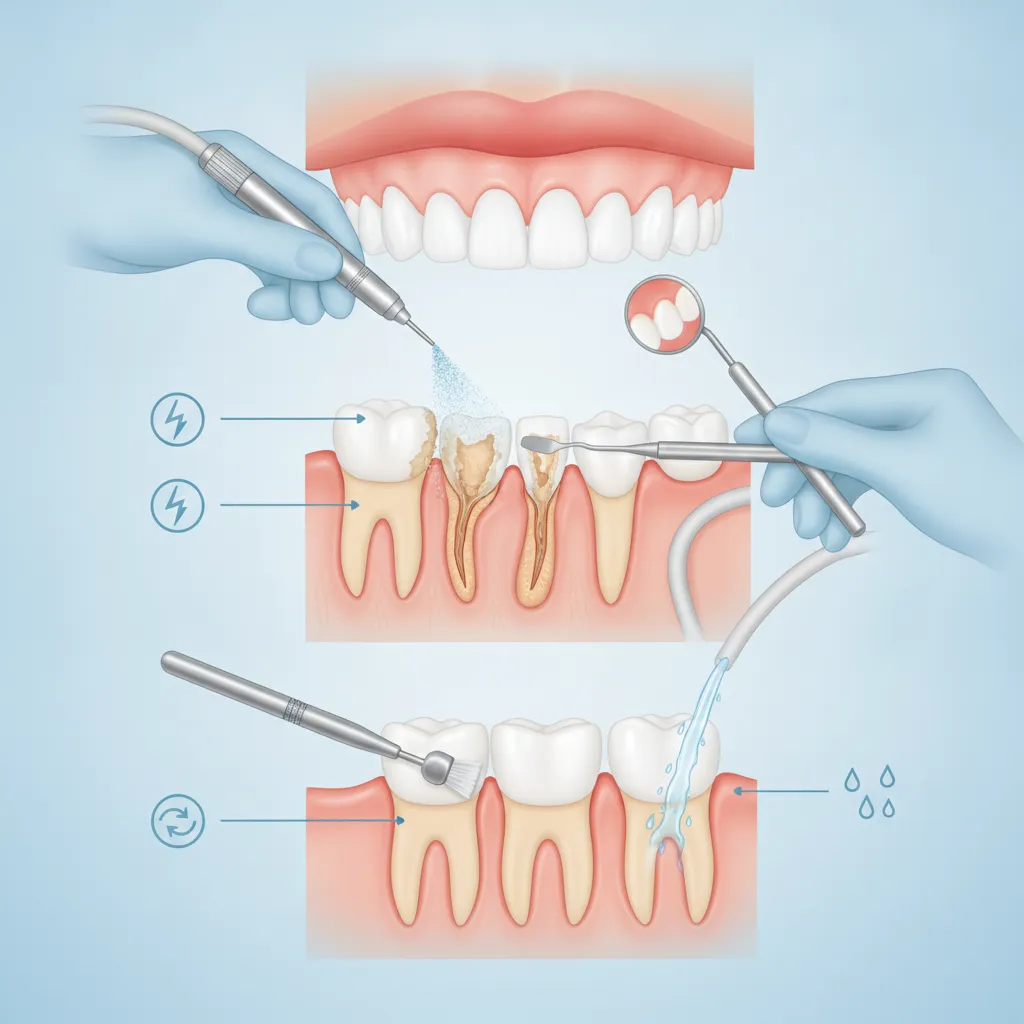
Routine prophylaxis and scaling and root planing (SRP) are two distinct procedures, one maintains healthy gums, the other treats active periodontal disease.
A standard adult prophylaxis, billed under code D1110 for adults or D1120 for children, removes plaque and tartar at and just below the gumline, typically within 1–3 mm of sulcular depth. SRP goes significantly further, reaching 4–6 mm or deeper to remove tartar from root surfaces. That distinction matters clinically: SRP is a periodontal treatment, not a more thorough version of a routine cleaning. The American Academy of Periodontology outlines clear clinical thresholds that distinguish when each procedure is appropriate.
When Is Scaling and Root Planing Recommended Instead of Routine Cleaning?
The decision comes down to two findings during your exam: pocket depths of 4 mm or greater measured with a periodontal probe, combined with bone loss visible on X-rays. When both indicators are present, prophylaxis cannot adequately address the infection, and SRP becomes the appropriate course of treatment.
SRP is typically split across two appointments, treating two quadrants per visit under local anesthetic [3]. Patients should expect 24–48 hours of gum soreness and sensitivity to cold following each session, this is a normal healing response, not a complication.
Insurance coverage differs significantly between the two procedures. Prophylaxis falls under D1110 or D1120; SRP is billed as D4341 (four or more teeth per quadrant) or D4342 (one to three teeth), categories most insurers cover at a lower percentage than preventive care. This is particularly relevant for professional teeth cleaning.
After completing SRP, patients do not return to standard six-month recall appointments. Instead, they transition to periodontal maintenance visits (D4910) every three to four months, which are designed to monitor and preserve the results of treatment long-term.
What to Do After Your Cleaning to Make It Last
The 24 hours after a dental cleaning set the tone for how long the results hold, follow a specific protocol to protect the work done.
What Post-Cleaning Care Instructions Should Patients Follow?
If your hygienist applied a fluoride treatment, wait at least 30 minutes before eating or drinking anything. That window lets the fluoride absorb fully into the enamel without being washed away.
For the next 24 hours, skip staining foods and beverages, coffee, red wine, and tomato sauce are the main offenders. Your enamel is more porous immediately after scaling, which makes it easier for pigments to bind to the surface.
Some sensitivity in the first 24–48 hours is normal, particularly after scaling and root planing. Switch to a toothpaste containing potassium nitrate, such as Sensodyne, and avoid very hot or very cold foods until the sensitivity settles. If discomfort persists beyond 48 hours, contact your dentist. When considering professional teeth cleaning, this point stands out.
Before you leave the office, book your next appointment. Patients who pre-schedule are significantly more likely to maintain their cleaning interval than those who plan to call later, the friction of making that call is enough for many people to delay by months.
What At-Home Tools and Products Extend Time Between Professional Cleanings?
The right tools make a measurable difference. An electric toothbrush with an oscillating-rotating head, the Oral-B Pro series is a widely recommended example, removes 21% more plaque than a manual brush, according to a 2019 Cochrane review.
Patients with bridges, implants, or wider interdental gaps benefit from two additional tools. A water flosser clears debris around hardware that string floss misses. Interdental brushes outperform string floss where gum recession has created larger spaces, ask your hygienist to size you correctly at your next visit, since using the wrong diameter reduces effectiveness.
Use a fluoride mouthwash at a separate time from brushing, not immediately after. Brushing already deposits fluoride on the enamel; rinsing right away dilutes it. A separate rinse, midday or before bed, adds a second fluoride exposure without canceling the first. Maintaining these habits between visits helps ensure that each appointment starts with less buildup, which can shorten chair time and reduce any discomfort during scaling.
Frequently Asked Questions
Is professional teeth cleaning painful?
Most dental cleanings are painless, though patients with sensitive gums or significant tartar buildup may feel mild pressure or brief discomfort during scaling [1]. A dental hygienist uses a scaler to remove hardened deposits around the gum line, the scraping sensation is normal and typically not painful [1]. If you experience sensitivity, let your hygienist know so they can adjust their technique or recommend a desensitizing option before your next visit. For those exploring professional teeth cleaning, this matters.
Can professional teeth cleaning whiten teeth?
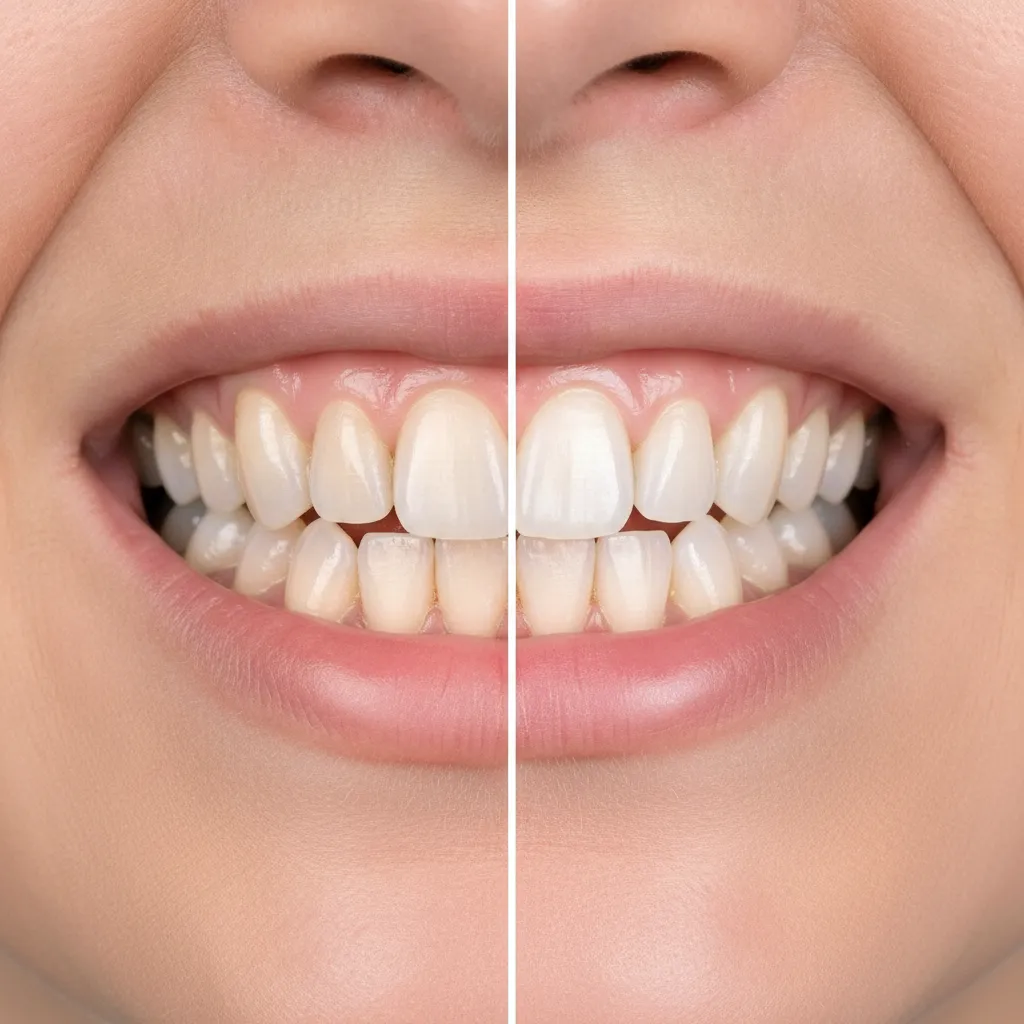
A dental cleaning removes surface stains caused by coffee, tea, and tobacco, which can make teeth appear noticeably brighter, but it is not a whitening treatment [3]. The polishing step buffs away extrinsic discoloration, not the deeper pigmentation that bleaching agents address. If you want a whiter shade beyond what cleaning achieves, ask your dentist about a separate cosmetic whitening procedure.
Is it worth getting teeth professionally cleaned if you brush twice a day?
Yes, brushing and flossing cannot remove tartar (calcified plaque) once it hardens on the tooth surface, and only a dental hygienist’s scaler can safely clear it [2]. Even diligent home care leaves hard-to-reach areas vulnerable to buildup. The American Dental Association recommends a professional cleaning every six months [2] because consistent home care and professional removal work together, neither replaces the other.
How long does a professional teeth cleaning take?
A standard dental cleaning typically takes 30 to 60 minutes when combined with a routine exam [1]. The exact time depends on the amount of tartar present, whether X-rays are taken, and whether any additional steps, such as a fluoride treatment, are included. Patients who maintain regular six-month appointments generally have shorter appointments because less buildup accumulates between visits.
What is the difference between a routine cleaning and a deep cleaning?
A routine prophylaxis cleans at and just below the gumline, typically within 1–3 mm of sulcular depth, and is appropriate for patients with healthy gums. A deep cleaning, or scaling and root planing, reaches 4–6 mm or deeper to remove tartar from root surfaces and treat active gum disease. Your dentist determines which procedure is needed based on pocket depth measurements and X-ray findings during your exam.
Conclusion
A professional dental cleaning does two things home care cannot: it removes hardened tartar that brushing leaves behind, and it gives a trained clinician the chance to catch early signs of decay or gum disease before they become costly problems. Scheduling every six months is the single highest-return habit in preventive dental care.
Three specific steps to act on: confirm your last cleaning was within the past six months, ask your hygienist at your next visit whether your gum pockets show any early inflammation, and discuss fluoride treatment if you have a history of cavities.
Ready to schedule? Villagio Family & Cosmetic Dental serves patients in Katy, Fulshear, Richmond, and Cinco Ranch, TX, call the office directly to book your next cleaning appointment.
Sources & References
- What Happens During Your Professional Dental Cleaning
- Dental Cleaning | Colorado Family Dentistry | Lakewood, CO
- Dental Cleaning Parker, CO | Stonegate Dental Care | Teeth Cleaning, Deep Cleaning
Recommended Articles
Explore more from our content library: