Proudly Serving Katy, Richmond & Fulshear Cinco Ranch
(281) 395-2100
|
(281) 394-4001

Understanding dental implants explained is essential. Dental implants are titanium posts surgically placed into the jawbone to replace missing tooth roots, topped with a crown that looks and functions like a natural tooth. They are the only tooth replacement option that preserves jawbone density over time. With a success rate above 95% at 10 years, implants outperform bridges and dentures on longevity, but they require adequate bone volume, healthy gums, and a multi-month healing process before the final restoration is placed.
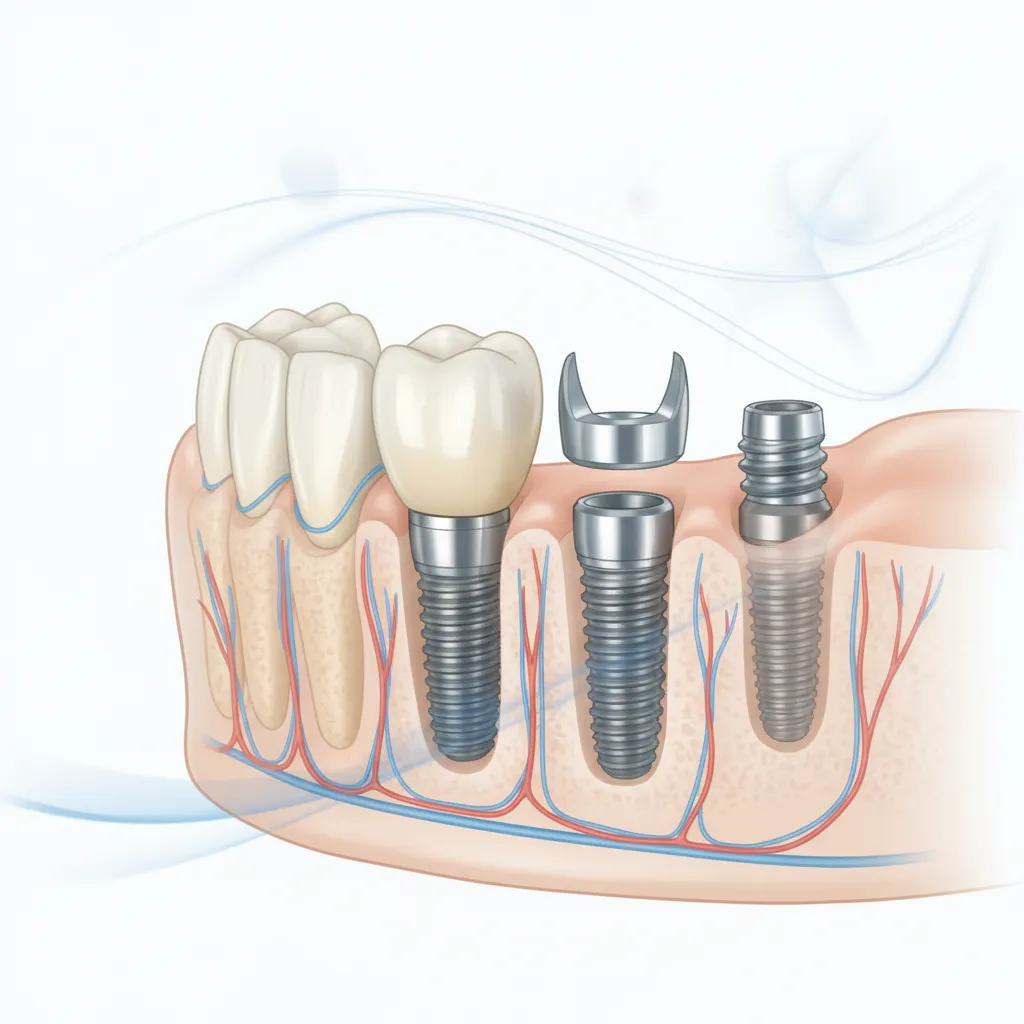
Dental Implants Explained: What They Are and How They Work
A dental implant is a three-part system, titanium post, abutment, and crown, that replicates the full structure of a natural tooth from root to tip. This is particularly relevant for dental implants explained.
Each component has a distinct mechanical role. The titanium post is surgically inserted into the jawbone, where it functions as an artificial tooth root. The abutment is a small connector piece that attaches to the top of the post and protrudes just above the gum line. The prosthetic crown, custom-fabricated to match surrounding teeth in shape and color, clips or cements onto the abutment, completing the visible tooth.
Osseointegration: The Biological Process That Makes It Work
What separates implants from every other tooth replacement is osseointegration, the process by which living bone cells grow directly onto the titanium surface and fuse with it over 3 to 6 months. The result is a load-bearing anchor that functions like a natural root, not a prosthetic resting on top of tissue.
Titanium is the material of choice because it is biocompatible: the immune system does not recognize it as foreign, so the body does not reject it [2]. For patients with metal sensitivity, zirconia, a white ceramic with equivalent bone-bonding properties, is a clinically validated alternative [1].
Peer-reviewed implant literature consistently reports success rates above 95% at 10 years, giving patients a concrete benchmark when weighing the investment against shorter-lived options. According to the European Federation of Periodontology, dental implants are considered the gold standard for replacing missing teeth due to their ability to integrate with living bone tissue.
“Dental implants are the closest thing we have to replacing a natural tooth — not just in appearance, but in function and in how they interact with the surrounding bone.” — Dr. Søren Jepsen, Professor of Periodontology, University of Bonn, and past President of the European Federation of Periodontology
How Dental Implants Compare to Bridges, Dentures, and Other Tooth Replacement Options
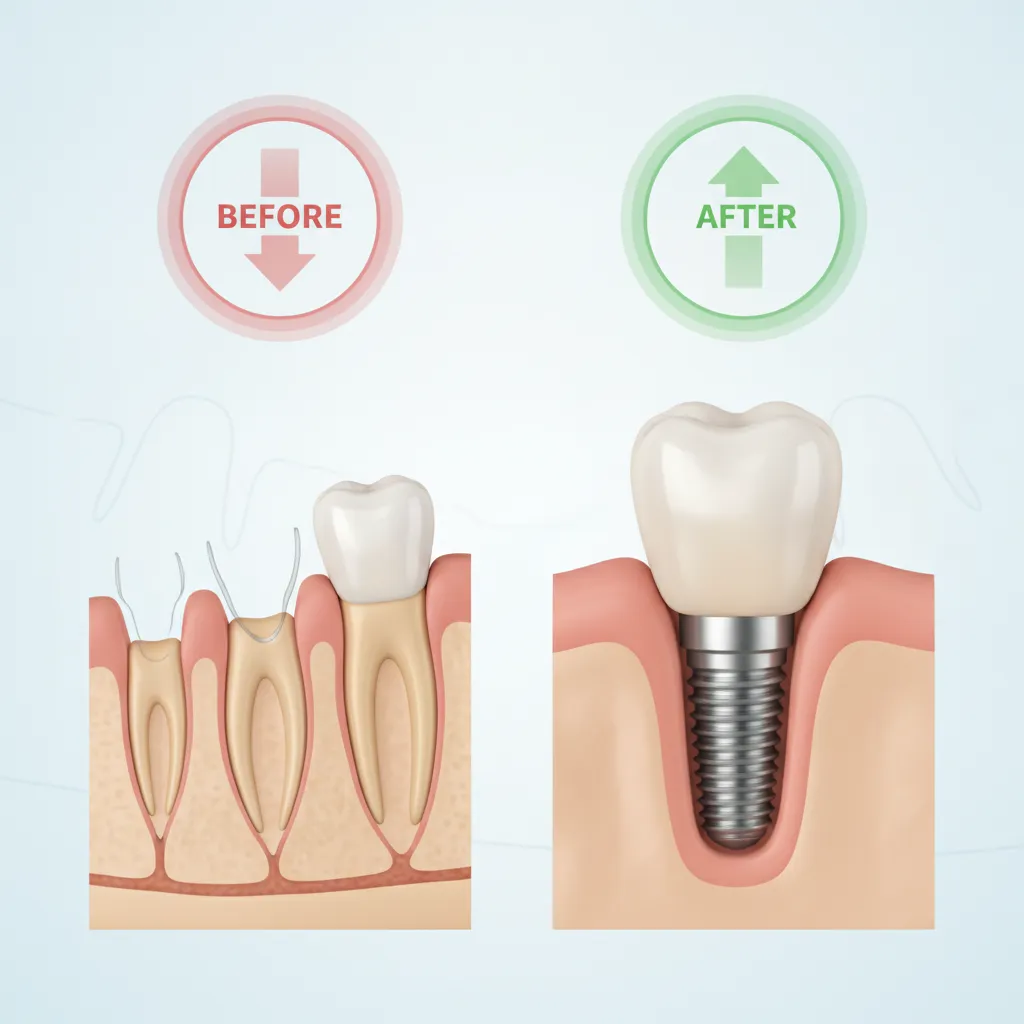
The structural difference between implants and other restorations has real clinical consequences. Implants stimulate the jawbone through normal chewing forces, preventing the bone loss that begins within months of tooth loss [2]. Bridges restore the visible tooth but require grinding down the two healthy teeth on either side to anchor the appliance, permanently altering otherwise intact enamel. Dentures rest on gum tissue rather than bone, which means they provide no stimulation to the jaw and actively accelerate bone resorption over time.
For families in Katy, TX considering their options, Villagio Family & Cosmetic Dental walks through this comparison at the consultation stage, because the right choice depends on bone volume, adjacent tooth health, and long-term goals, not a single factor alone. Getting dental implants explained clearly before committing to any path is the starting point for a decision that lasts decades.
Types of Dental Implants and Which Situation Each Fits
The four main implant types, endosteal, subperiosteal, All-on-4, and mini, each serve a distinct clinical situation based on bone volume, tooth count, and budget. When considering dental implants explained, this point stands out.
Endosteal Implants: The Standard Option
Endosteal implants are placed directly into the jawbone and represent the default choice for most patients replacing one or several teeth [2]. They require sufficient bone height and width to anchor securely. If you have healthy bone and are missing one to several teeth, this is almost certainly the type your dentist will recommend first.
Subperiosteal Implants: When Bone Volume Is Too Low
Subperiosteal implants sit on top of the jawbone, beneath the gum tissue, rather than inside it [2]. Dentists use this approach when a patient lacks the bone depth needed for endosteal placement and declines bone grafting. This option is less common today but remains a viable path for specific cases.
All-on-4: Full-Arch Replacement in a Single Procedure
All-on-4 uses four implants to support a complete arch of teeth. The typical cost runs $20,000–$30,000 per arch, and most patients leave with provisional teeth the same day, a meaningful advantage over traditional multi-stage protocols.
Mini Implants: Denture Stabilization on a Smaller Scale
Mini implants have a smaller diameter and lower cost than standard implants. They work well for stabilizing lower dentures but are not a full substitute for endosteal implants in most replacement scenarios.
What Actually Determines Your Implant Type
Getting dental implants explained properly means understanding that type selection is a clinical decision, driven by bone density measured on a CBCT scan, the number of missing teeth, and your budget, not personal preference alone. Villagio Family & Cosmetic Dental evaluates all three factors before recommending any implant path.
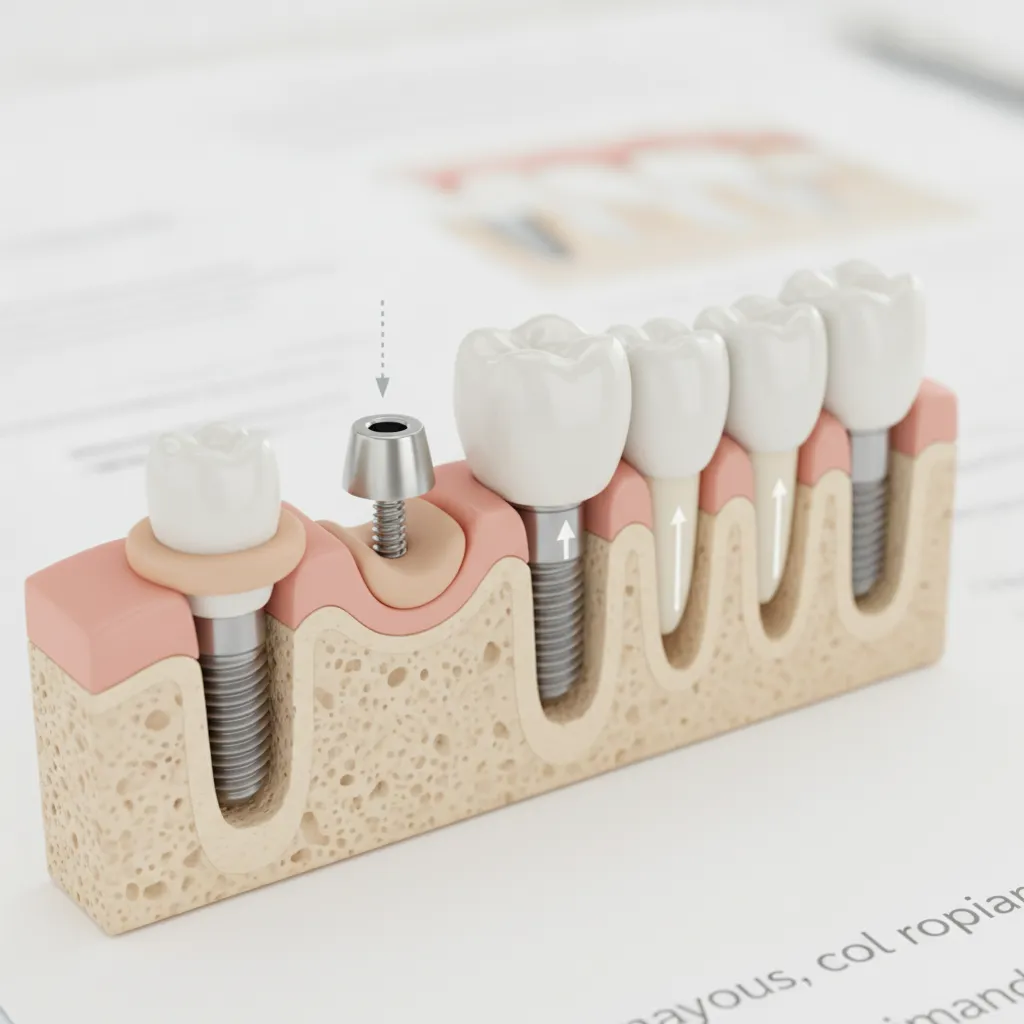
How Much Do Dental Implants Cost and What Drives the Price
A single dental implant in the U.S. costs between $3,000 and $6,000 total as of 2024–2025, with full-arch restorations reaching $60,000 for both jaws. For more information, see Gelato Vs Ice Cream Key Differences Explained.
What Is Included in the Total Cost of a Dental Implant Procedure
Most patients are quoted a single number, but that figure covers three distinct components, each billed separately at many practices: For those exploring dental implants explained, this matters.
- Implant post (titanium screw): $1,500–$2,500. This is the fixture surgically placed into the jawbone.
- Abutment: $300–$500. The connector piece that links the post to the visible crown.
- Crown: $1,000–$2,000. The tooth-shaped cap cemented or screwed onto the abutment.
Two costs that frequently surprise patients are bone grafting and sinus lifts. If you’ve experienced bone loss at the implant site, common after a tooth has been missing for a year or more, bone grafting adds $500–$3,000 per site. A sinus lift, required when the upper jaw lacks sufficient bone depth, adds another $1,500–$5,000.
For patients missing all teeth on one arch, All-on-4 implant restorations run $20,000–$30,000 per arch, or $40,000–$60,000 for both. That figure looks steep until you compare it against conventional dentures, which cost $1,500–$3,000 and typically need replacement every 5–7 years. Over 20 years, dentures can match or exceed the implant cost, without the stability or bone-preservation benefits that make dental implants explained so thoroughly in clinical literature [1].
“When patients understand the long-term cost comparison between implants and repeated denture replacements, the value proposition of implants becomes much clearer. The upfront investment often pays for itself within 15 to 20 years.” — Dr. Carl Misch, Founder, Misch International Implant Institute and pioneer of modern implant dentistry protocols
Does Dental Insurance Cover Dental Implants
Most dental insurance plans classify implants as cosmetic and exclude them entirely. According to the FDA’s guidance on dental implants, patients should carefully review device labeling and insurance terms before proceeding with treatment [2]. Some plans cover the crown portion at roughly 50%, subject to an annual maximum, often $1,000–$2,000, which rarely offsets the full procedure cost. Medicare does not cover dental implants [2].
Financing options close much of that gap. CareCredit offers promotional periods with deferred interest, and many practices, including Villagio Family & Cosmetic Dental, offer in-house payment plans that spread costs across months without requiring third-party approval. Dental school clinics are another route: supervised student clinicians perform implant procedures at 50–70% below private-practice rates, though treatment timelines are longer.
Who Is a Good Candidate for Dental Implants and What Are the Risks
Most healthy adults with adequate jawbone volume qualify for dental implants, but several medical conditions and lifestyle factors can disqualify or delay treatment.
Before any treatment planning begins, your dentist will order a cone beam CT (CBCT) scan to measure your bone density and volume in three dimensions. Implants require at least 1mm of bone surrounding the post on all sides, less than that, and the implant has no structural foundation to integrate with. If your scan shows insufficient bone, a bone graft procedure can rebuild volume before implant placement, though it adds 3–6 months to the overall timeline.
What Disqualifies Someone from Getting Dental Implants
Three conditions are absolute contraindications, meaning implant placement should not proceed until they are resolved or cleared by a physician. This directly impacts dental implants explained outcomes.
- Active bisphosphonate therapy (used to treat osteoporosis or bone cancers) raises the risk of osteonecrosis, a condition where jawbone tissue dies after surgical trauma [2].
- Uncontrolled diabetes impairs the body’s ability to heal after surgery, which directly prevents osseointegration [2].
- Active radiation therapy to the jaw compromises blood supply to the bone, making successful integration unlikely.
Relative contraindications don’t automatically disqualify you, but they require active management first. Heavy smoking roughly doubles the implant failure rate compared to non-smokers. Uncontrolled periodontal disease must be treated before placement, placing an implant into an infected mouth introduces bacteria directly to the surgical site. Bruxism (chronic teeth grinding) creates mechanical overload on the implant crown; a night guard plan must be in place before proceeding.
What Are the Downsides and Complications of Dental Implants
Any complete dental implants explained discussion includes failure rates, and they are real. Across all patients, implants carry a 5–10% lifetime failure rate. Early failure, defined as loss within the first year, most often results from infection at the surgical site or failed osseointegration where the bone simply doesn’t bond to the titanium post [2].
Late failure is driven primarily by peri-implantitis, a bacterial gum infection that forms around the implant post and destroys supporting bone. An estimated 22% of implants show signs of peri-implantitis at five or more years. Mechanical overload from unmanaged grinding is the second leading cause of late failure. At Villagio Family & Cosmetic Dental, pre-treatment screening and post-placement monitoring are built into the implant process specifically to catch these risk factors before they become failures.
“Peri-implantitis is the most significant threat to long-term implant survival. Patients who maintain rigorous oral hygiene and attend regular professional maintenance appointments dramatically reduce their risk of implant loss.” — Dr. Lisa Heitz-Mayfield, Professor and implant research specialist, University of Western Australia
Recovery Timeline and Long-Term Maintenance After Dental Implant Surgery
Most patients complete the full dental implant process in 3–9 months, longer if bone grafting is required before the implant can be placed.
Patients routinely underestimate this timeline, expecting a procedure closer to a crown or filling. Setting accurate expectations from the start prevents frustration and improves compliance with each recovery phase.
Week-by-Week Recovery: What to Expect
Days 1–3: Swelling peaks around 48 hours post-surgery. Stick to soft foods, apply ice in 20-minute intervals, and avoid smoking entirely, nicotine restricts blood flow to healing tissue and significantly raises failure risk.
Weeks 1–2: Sutures are typically removed at the one-week mark. Most patients return to a normal diet by day 10–14, provided there are no complications. This is particularly relevant for dental implants explained.
Months 1–3: Osseointegration, the process by which the titanium post fuses with surrounding jawbone [2], is underway. A temporary crown protects the site while the implant anchors itself. Avoid hard or crunchy foods during this window.
Months 3–6: Once bone fusion is confirmed through X-ray, the final crown is placed. If bone grafting was performed beforehand, this phase may extend closer to the 9-month mark.
How Do You Care for Dental Implants Long-Term
Understanding dental implants explained fully means recognizing that placement is only half the commitment, daily maintenance determines how long the implant lasts.
- Brush twice daily with a soft-bristle brush to avoid abrading the crown or irritating gum tissue around the implant collar.
- Floss or use a water flosser daily to clear bacteria from below the gumline where peri-implantitis begins.
- Schedule professional cleanings every 6 months, and tell your hygienist you have implants. Metal scalers scratch implant surfaces and accelerate bacterial buildup; implant-safe plastic or resin instruments should be used instead.
Peri-implantitis, bacterial infection of the tissue and bone surrounding an implant, is the single most important long-term risk variable. Caught early at a routine checkup, it can be treated and the implant saved. Left untreated, it causes progressive bone loss and eventual implant failure.
With consistent care, implants can last 20–25 years or more. The porcelain crown attached to the implant typically needs replacement every 10–15 years due to normal wear, a separate cost patients should plan for. At Villagio Family & Cosmetic Dental, our hygiene team uses implant-specific protocols at every cleaning appointment to protect that long-term investment.
Frequently Asked Questions
How painful is dental implant surgery and what should I expect during recovery?
Most patients report less discomfort than they anticipated, local anesthesia controls pain during the procedure itself, and over-the-counter pain relievers typically manage soreness in the days after. Swelling and mild tenderness peak around 48–72 hours post-surgery, then steadily improve. The osseointegration phase, where the implant fuses with the jawbone, takes 3–6 months but causes no active pain. Patients can usually return to desk work within one to two days.
What does no one tell you about dental implants before getting them?
The timeline surprises most patients, the full process, from implant placement to final crown, routinely takes 6–12 months, not a few weeks. Bone grafting, if needed, adds additional healing time before placement can even begin. Patients also underestimate the dietary restrictions during osseointegration: soft foods only for several weeks. And while implants themselves cannot decay, the surrounding gum tissue can still develop peri-implantitis, an infection that is a leading cause of late implant failure if oral hygiene slips. When considering dental implants explained, this point stands out.
How common is dental implant failure and can a failed implant be replaced?
Dental implant failure occurs in roughly 5–10% of cases, with early failures (within the first few months) more common than late failures [2]. Smoking, uncontrolled diabetes, and poor bone density are the primary risk factors. A failed implant can usually be removed, the site allowed to heal, and a new implant placed, often with a bone graft to rebuild lost volume before the second attempt.
At what age can someone get dental implants?
Dental implants are generally appropriate for adults whose jawbone has finished growing, typically around age 18 for women and slightly later for men. There is no upper age limit, healthy bone density and good systemic health matter far more than age. Adolescents missing teeth are usually fitted with temporary solutions until jaw development is complete.
Are dental implants safe, and are they regulated by any health authority?
Yes, dental implants are considered safe when placed by a qualified dental professional in appropriate candidates. In the United States, dental implants are regulated as medical devices by the U.S. Food and Drug Administration (FDA), which reviews implant components for safety and effectiveness before they can be marketed. Patients should ask their provider about the specific implant system being used and confirm it has received regulatory clearance.
Conclusion
Dental implants are the only tooth-replacement option that preserves jawbone, and their 95%+ long-term success rate reflects decades of clinical evidence, but that success depends on patient selection, bone quality, and consistent aftercare. Two things matter most before you commit: confirm you have adequate bone volume (or a clear grafting plan), and choose a provider experienced in the full implant workflow, not just crown placement.
If you’re weighing implants against a bridge or denture and aren’t sure which fits your situation, schedule a consultation at Villagio Family & Cosmetic Dental and ask specifically for a bone density assessment alongside your implant evaluation, that single step will give you a clear, honest picture of your candidacy and timeline.
Sources & References
- Dental implants explained – European Federation of Periodontology
- Dental Implants: What You Should Know | FDA
Recommended Articles
Explore more from our content library:
- Professional Teeth Cleaning: Why You Need It Twice a Year
- <a href="https://villagiofamilydental.com/blog/2026/07/26/understanding-root-canal-treatment-what-to-expect-during-the/" title="Understanding the Root Canal Procedure: What to Expect”>Understanding the Root Canal Procedure: What to Expect
- What Are Dental Veneers and Can They Transform Your Smile
- Professional Teeth Whitening: Which Method Works Best
- <a href="https://villagiofamilydental.com/blog/2026/07/22/what-does-a-cosmetic-dentist-do-services-explained/" title="What Does a Cosmetic Dentist Do? Services Explained”>What Does a Cosmetic Dentist Do? Services Explained