Proudly Serving Katy, Richmond & Fulshear Cinco Ranch
(281) 395-2100
|
(281) 394-4001

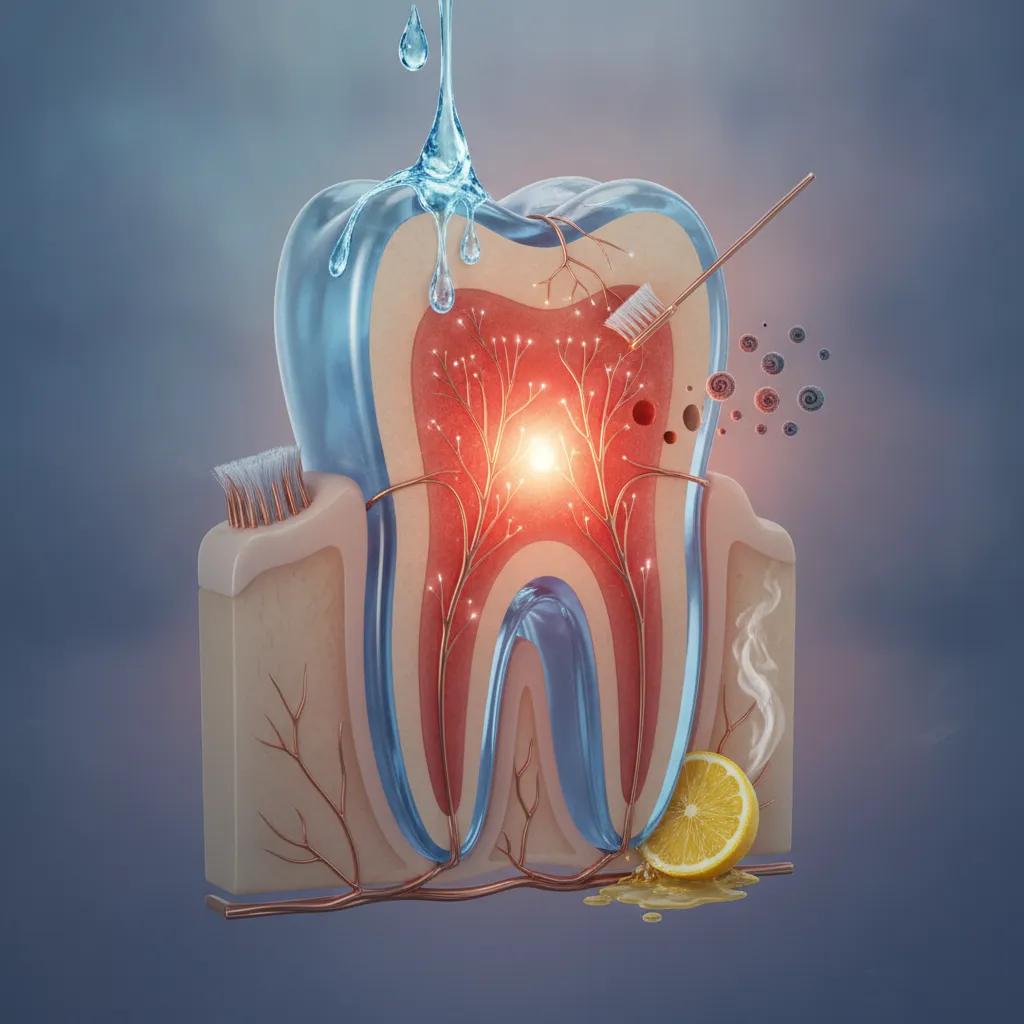
Understanding sensitive teeth causes is essential. Sensitive teeth are most often caused by exposed dentin, the porous layer beneath tooth enamel, which allows temperature, pressure, and acidic foods to trigger nerve signals. The most common culprits are enamel erosion from acidic foods or aggressive brushing, gum recession, teeth grinding (bruxism), cracked teeth, and recent dental procedures. Certain medications, whitening products, and orthodontic treatment can also trigger or worsen sensitivity.
Sensitive Teeth Causes: Why Your Teeth Hurt
Tooth sensitivity occurs when dentin, the porous layer beneath enamel, becomes exposed and allows external stimuli to reach the pulp nerve. According to Cleveland Clinic’s overview of sensitive teeth causes, dentin hypersensitivity is one of the most frequently reported dental complaints among adults worldwide.
What Is Dentin Hypersensitivity and How Does It Work?
The accepted explanation for why exposed dentin causes pain is the hydrodynamic theory. When a trigger, hot coffee, cold air, a sweet dessert, contacts exposed dentin, fluid inside microscopic channels called dentinal tubules shifts rapidly. That movement stimulates A-delta nerve fibers in the pulp, producing the sharp, brief pain that defines sensitivity.
The scale of exposure matters. Dentin contains roughly 15,000–30,000 tubules per mm² [1], so even a small patch of exposed dentin creates a significant number of open nerve pathways. That is why minor enamel loss can produce disproportionately intense discomfort.
“Dentin hypersensitivity is characterized by short, sharp pain arising from exposed dentin in response to stimuli — typically thermal, evaporative, tactile, osmotic, or chemical — that cannot be ascribed to any other dental defect or pathology.” — Dr. David Bartlett, Professor of Prosthodontics, King’s College London Dental Institute
One distinction worth making: sensitivity produces brief, stimulus-triggered pain that stops when the trigger is removed. A toothache produces persistent, spontaneous pain that lingers without any obvious trigger. If your pain does not resolve within a few seconds of removing the stimulus, a cavity, abscess, or cracked tooth, rather than simple dentin hypersensitivity, may be the cause.
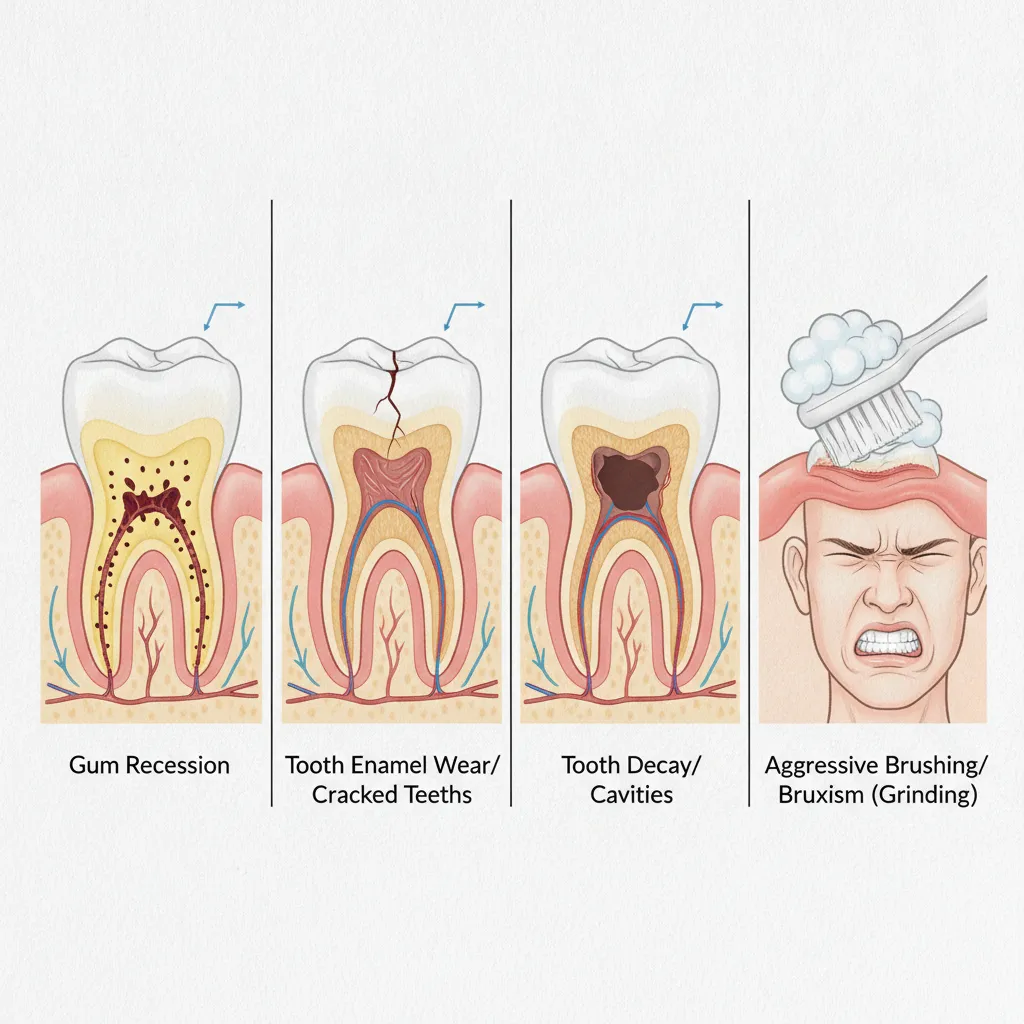
The most common sensitive teeth causes share one mechanism: they expose dentin or cementum that enamel or gum tissue normally protects. Structurally, those causes include:
- Enamel erosion, acidic foods and beverages (citrus, soda, vinegar-based dressings) and acid reflux (GERD) dissolve enamel from the outside in [1]
- Gum recession, when gum tissue pulls back, it exposes the root’s cementum layer, which is thinner and more porous than enamel [1]
- Cracked or chipped teeth, fractures create a direct pathway for stimuli to reach the pulp
- Worn fillings or crowns, aged restorations lose their seal, leaving dentin at the margins unprotected
What Illnesses Can Cause Sensitive Teeth?
Bruxism, chronic teeth grinding, is a mechanical cause that strips enamel gradually rather than through chemical erosion. An estimated 8–31% of adults grind their teeth [1], often during sleep, making it easy to overlook until sensitivity or jaw pain appears. Patients at Villagio Family & Cosmetic Dental in Katy, TX frequently report that their sensitivity worsened before they realized grinding was the source.
GERD is the systemic condition most directly linked to enamel loss, because stomach acid repeatedly contacts tooth surfaces [1]. Eating disorders that involve purging carry the same risk. Sjögren’s syndrome reduces saliva production, and since saliva neutralizes acid and remineralizes enamel, its absence accelerates erosion. Gum disease (periodontitis) drives recession at a structural level, exposing root surfaces across multiple teeth simultaneously. These systemic sensitive teeth causes are often overlooked because patients and providers focus on local dental factors rather than whole-body contributors.
Why Are My Teeth Suddenly Sensitive?
Sudden tooth sensitivity usually traces back to a recent product, procedure, or medication, not a structural problem that developed overnight.
Whitening treatments are one of the most common acute sensitive teeth causes. Professional in-office whitening uses 25–40% hydrogen peroxide, which temporarily dehydrates dentinal tubules and triggers sharp, short-lived sensitivity. Over-the-counter strips use a much lower concentration, typically 6–10%, so the sensitivity is milder but can last longer because patients use them repeatedly over days or weeks.
Certain medications also reduce saliva flow without patients realizing it. Antihistamines, calcium channel blockers, and diuretics all suppress salivary output. Saliva is the mouth’s natural acid buffer, less of it means enamel erodes faster, which exposes the dentin layer underneath and creates sensitivity that feels like it appeared from nowhere.
Recent dental work is another trigger worth knowing. Cleanings, fillings, and crown placements all cause some degree of pulpal irritation. That post-appointment sensitivity is normal and typically resolves within a few days to a few weeks.
“Many patients are surprised to learn that their toothbrush technique is one of the leading sensitive teeth causes we see in the clinic. Brushing too hard with a medium or hard-bristle brush can remove gum tissue and enamel faster than most people realize.” — Dr. Maria Lopez Howell, Spokesperson, American Dental Association
How Does Age Affect Tooth Sensitivity?
Gum recession accelerates with age, and the numbers are stark: studies show 88% of adults over 65 have at least one tooth with measurable recession. Receded gums expose the root surface, which has no enamel, only cementum, a softer tissue that wears away quickly and leaves nerve endings close to the surface. Older adults are disproportionately affected by sensitivity for exactly this reason.
Can Orthodontic Treatment or Braces Cause Sensitivity?
Braces and clear aligners both create transient pulpal inflammation, the pressure from bracket bonding, wire adjustments, or aligner changes temporarily stresses the tooth’s internal nerve. This sensitivity is normal and typically resolves within 3–5 days after each adjustment cycle. If it persists beyond that window, a dentist should evaluate whether something else is contributing.
How to Stop Tooth Sensitivity
Tooth sensitivity responds well to treatment once you match the remedy to the underlying cause, most people see meaningful relief within 2–4 weeks. For more information, see Refus De Pret Immobilier Causes Et Solutions En 2026.
Start With the Right Daily Habits
Desensitizing toothpastes containing 5% potassium nitrate or stannous fluoride are the standard first step. Potassium nitrate calms nerve transmission; stannous fluoride physically blocks the open dentinal tubules that allow temperature and pressure signals to reach the nerve. Neither works overnight, plan for consistent twice-daily use over 2–4 weeks before you notice a difference.
Brush with a soft-bristle toothbrush and a low-abrasion paste. Research links brushing force above 150 grams to measurable gum recession, which exposes root surfaces and worsens sensitivity over time. A gentle circular motion beats aggressive back-and-forth scrubbing.
Diet matters too. Foods and drinks with a pH below 5.5, citrus juice, soda, wine, vinegar-based dressings, dissolve enamel on contact. Wait at least 30 minutes after eating or drinking anything acidic before brushing, so you’re not scrubbing softened enamel. For a comprehensive breakdown of how diet and lifestyle intersect with sensitive teeth causes, Penn Dental Medicine’s guide to sensitive teeth causes and cures offers practical, evidence-based recommendations.
What Professional Treatments Can Do That OTC Products Cannot
When over-the-counter options aren’t enough, a dentist has several stronger tools. Fluoride varnishes and dentin bonding agents seal tubules more completely than toothpaste can. Nd:YAG laser therapy goes further, it closes tubules at a structural level and typically delivers longer-lasting relief than any topical product.
At Villagio Family & Cosmetic Dental, the treatment approach starts by identifying the specific sensitive teeth causes driving your discomfort, then matching the right professional intervention to that cause, rather than applying a one-size-fits-all fix.
What Is the Difference Between Professional and OTC Whitening for Sensitive Teeth?
Professional whitening uses higher-concentration peroxide gels (often 25–40%) applied under controlled conditions, which can temporarily increase sensitivity. Over-the-counter strips typically use 6–10% hydrogen peroxide. If you already have sensitivity, tell your dentist before any whitening treatment, they can apply a desensitizing agent beforehand and select a protocol that minimizes irritation.
Can You Fix Sensitive Gums?
Gum-related sensitivity often improves when you treat the root cause directly. A night guard corrects the enamel and gum wear caused by bruxism. Managing GERD, through diet, medication, or both, stops acid from bathing teeth during sleep. If a prescription medication is contributing to dry mouth or gum changes, a physician may be able to adjust the dosage or substitute an alternative. Treating only the symptom while the underlying cause continues is what keeps sensitivity from resolving permanently.
Can Sensitive Teeth Go Away on Their Own?
Some sensitivity resolves without treatment, but structural causes never reverse on their own, and delaying care makes them worse.
The distinction depends entirely on what triggered the sensitivity in the first place. Post-procedure sensitivity, after a professional cleaning, teeth whitening, or a new filling, typically clears up within 2–4 weeks as the dental pulp calms down and inflammation subsides [2]. No intervention is needed beyond avoiding extreme temperatures during that window.
Sensitivity from orthodontic adjustments follows a similar pattern. The periodontal ligament, the tissue anchoring each tooth to its socket, becomes briefly inflamed after each wire tightening or aligner change. That discomfort resolves within a few days as the ligament adapts, and it requires no treatment.
“Understanding the specific sensitive teeth causes in each patient is the cornerstone of effective treatment. Without identifying whether the source is erosion, recession, bruxism, or a systemic condition, any remedy is essentially guesswork.” — Dr. Edwina Kidd, Emeritus Professor of Cariology, King’s College London
Should I Be Worried If My Teeth Are Sensitive?
Worry is warranted when the underlying sensitive teeth cause is structural. Gum recession, enamel erosion, and cracked teeth do not heal without clinical intervention, they progress. Exposed dentin and cementum are softer and more acid-susceptible than enamel, so untreated dentin exposure raises cavity risk on the newly unprotected surfaces [1].
Three specific patterns signal a problem that won’t self-resolve: sensitivity that is getting worse over time, spreading across multiple teeth at once, or accompanied by swelling or spontaneous pain that arrives without any hot, cold, or sweet trigger. Any of those patterns warrants a prompt evaluation at Villagio Family & Cosmetic Dental, waiting typically means more extensive treatment later.
When to See a Dentist About Tooth Sensitivity
See a dentist if sensitivity persists beyond 4 weeks, affects multiple teeth at once, or strikes without any hot, cold, or sweet trigger.
Pain That Lingers After the Stimulus Is Gone
A sharp reaction to cold that fades within a few seconds is typical of enamel-level sensitivity. Pain that continues for more than 30 seconds after a cold stimulus points to pulpitis, inflammation inside the tooth’s pulp, which may require root canal therapy rather than a desensitizing toothpaste [1].
Structural Problems No OTC Product Can Fix
Visible gum recession, a cracked tooth, or a lost filling are physical findings that need in-office repair. Understanding sensitive teeth causes matters here: no over-the-counter gel or toothpaste addresses exposed root surfaces caused by recession or seals a fractured cusp [2].
Symptoms That Signal a Dental Emergency
Sensitivity paired with facial swelling, fever, or a visible abscess is a dental emergency. Oral infections can spread to adjacent structures, including the jaw and airway, within hours, so same-day care is necessary, not optional.
Medications That Quietly Worsen Sensitivity
Patients taking long-term antihistamines or antihypertensives should tell their dentist about any dry mouth symptoms at every visit. Reduced saliva flow is a modifiable risk factor that routine exams often miss, and addressing it early can prevent enamel erosion before it starts.
At Villagio Family & Cosmetic Dental, our team checks for all of these thresholds during a standard exam, so a brief conversation about what you’re feeling can prevent a much larger problem later.
Frequently Asked Questions
Can medications cause tooth sensitivity?
Yes, certain medications can cause or worsen tooth sensitivity as a side effect. Antihistamines, antidepressants, and some blood pressure medications reduce saliva flow, which normally protects enamel from acid erosion. Less saliva means more acid exposure, which wears enamel down over time and exposes the dentin underneath. If you started a new medication and noticed increased sensitivity shortly after, mention it to both your prescribing physician and your dentist at Villagio Family & Cosmetic Dental.
Is tooth sensitivity a sign of a cavity?
Tooth sensitivity can be a sign of a cavity, but it is not the only cause [1]. A cavity creates a direct pathway to the nerve-rich dentin, triggering sharp pain with sweet, hot, or cold foods. Sensitivity that lingers after the stimulus is removed, rather than fading within a few seconds, is a stronger indicator that decay or nerve involvement may be present and warrants a dental exam.
Does teeth grinding cause sensitivity?
Yes, grinding (bruxism) wears down enamel directly, exposing the dentin layer and causing sensitivity [1]. Nighttime grinding is especially damaging because it can continue for hours without your awareness. A custom night guard from your dentist can stop further enamel loss and reduce sensitivity over time.
Why are my teeth sensitive after whitening?
Whitening products temporarily increase sensitivity because the bleaching agents, typically hydrogen peroxide or carbamide peroxide, penetrate enamel and mildly irritate the dentin [2]. This effect usually resolves within 24 to 72 hours after treatment. Using a toothpaste formulated for sensitivity before and after whitening can reduce discomfort. If sensitivity persists beyond three days, a dentist should check whether pre-existing enamel erosion or gum recession is amplifying the reaction.
How do I know which sensitive teeth cause applies to me?
Identifying your specific sensitive teeth cause starts with noting the pattern of your discomfort. Sensitivity triggered by cold and sweet foods often points to enamel erosion or early decay. Pain from brushing or flossing near the gumline suggests recession. Widespread sensitivity across multiple teeth that worsens in the morning is a classic sign of nighttime bruxism. Tracking when, where, and how your sensitivity occurs gives your dentist the clearest picture for an accurate diagnosis and targeted treatment plan.
Conclusion
Sensitive teeth rarely have a single cause. Enamel erosion, gum recession, bruxism, and even your whitening routine can each expose dentin and trigger pain, and in many cases, more than one factor is at work simultaneously.
Three things worth acting on now: switch to a soft-bristled toothbrush if you haven’t already, check whether any current medications list dry mouth as a side effect, and note exactly when sensitivity strikes, hot, cold, sweet, or pressure, before your next appointment. That pattern tells your dentist more than a general complaint of “my teeth hurt.”
If sensitivity has lasted more than a week or is getting worse, schedule an exam at Villagio Family & Cosmetic Dental in Katy, TX, bring your symptom notes and let the team identify the specific cause before it becomes a larger problem.
Sources & References
- Sensitive Teeth: Causes, Treatment & Prevention
- Common Sensitive Teeth Causes and Cures | PDM at PHMC on Cedar
Recommended Articles
Explore more from our content library: