Proudly Serving Katy, Richmond & Fulshear Cinco Ranch
(281) 395-2100
|
(281) 394-4001

A complete oral hygiene routine includes brushing twice daily for two minutes, flossing once daily, rinsing with fluoride mouthwash, and scraping your tongue, in that order. Skipping any step leaves bacteria and plaque that brushing alone cannot reach. Done consistently, this routine prevents cavities, gum disease, and bad breath, and reduces your risk of systemic conditions linked to poor oral health, including heart disease and diabetes.
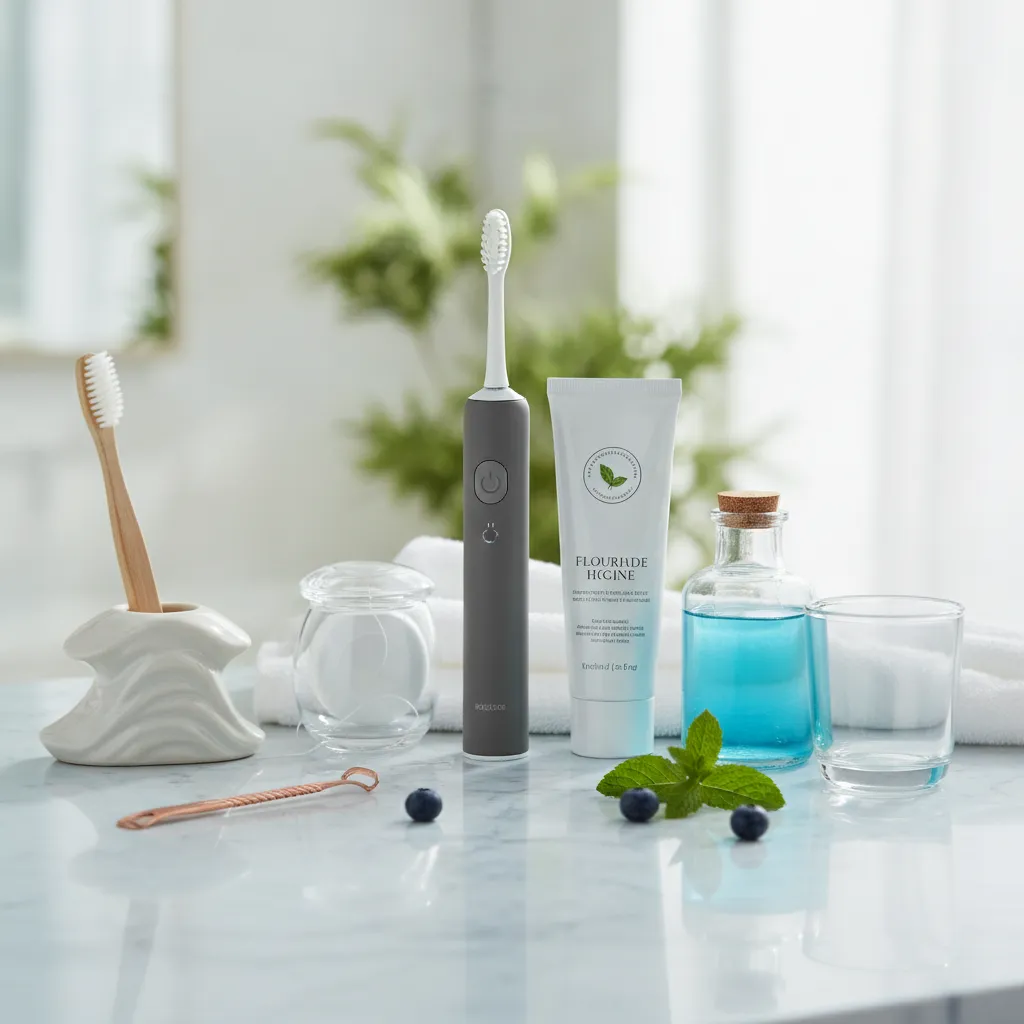
Build Your Daily Oral Hygiene Routine: The 5 Essential Steps
Follow these five steps in sequence every morning and night to remove plaque, control bacteria, and protect your teeth and gums.
Order matters because each step prepares your mouth for the next. Rinsing first loosens food debris and softens plaque, so your toothbrush works against less resistance. Flossing after brushing clears the particles your brush dislodged from between teeth. Tongue scraping and mouthwash finish the job by targeting bacteria your brush and floss never touch.
“A consistent oral hygiene routine is the single most important thing a patient can do between dental visits. The order of steps matters just as much as performing them at all.” — Dr. Sally Cram, Periodontist and Consumer Advisor, American Dental Association
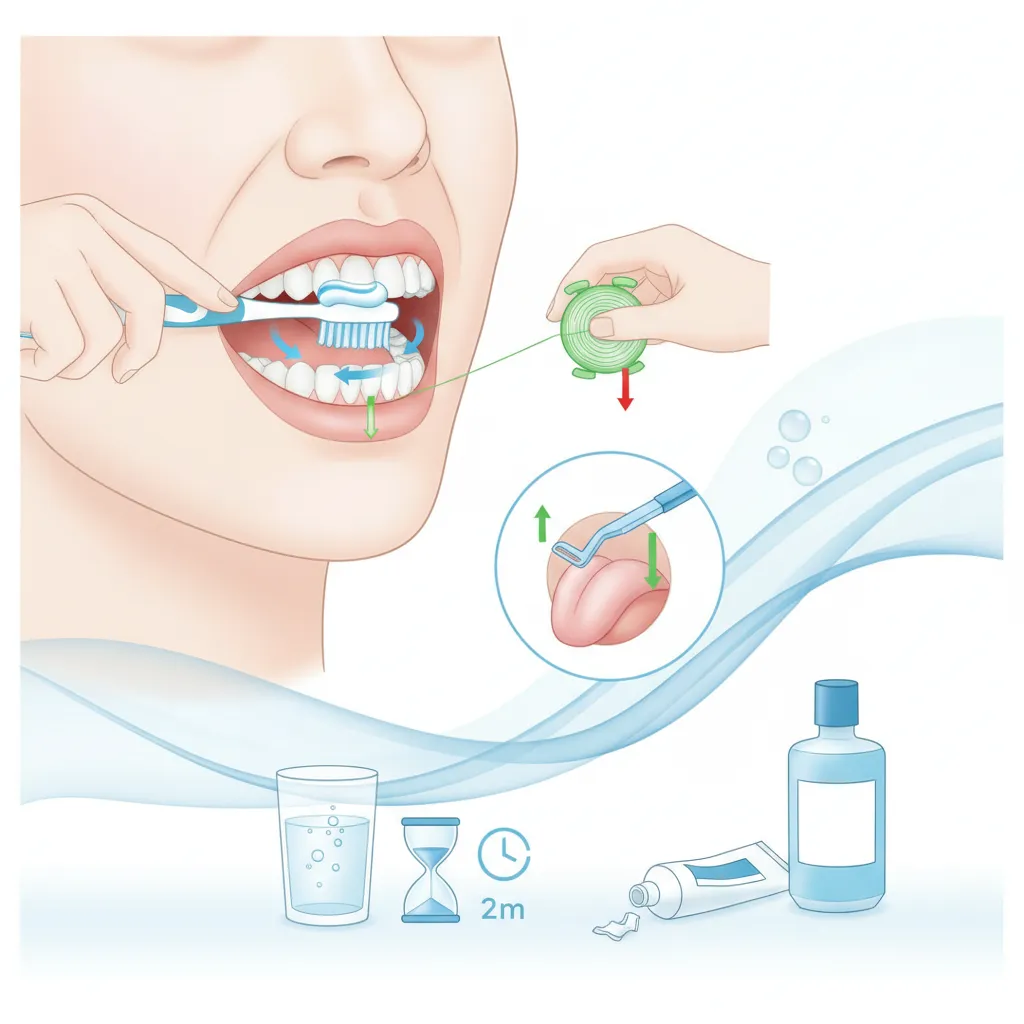
- Rinse with water or an antibacterial mouthwash for 20–30 seconds before you pick up your toothbrush. This pre-rinse dislodges loose food particles and hydrates the soft tissue, so your brush makes direct contact with plaque rather than debris.
- Brush for exactly two minutes, dividing your mouth into four quadrants, upper right, upper left, lower right, lower left, and spending 30 seconds on each. Hold the brush at a 45-degree angle to the gumline so the bristles reach just beneath it, where plaque accumulates and gingivitis begins [2].
- Floss once daily using the C-shape technique: curve the floss around each tooth and slide it gently under the gumline rather than snapping it straight down. Snapping cuts gum tissue and misses the bacterial film that causes decay between teeth [3].
- Scrape your tongue from back to front using 3–5 firm strokes. The tongue harbors volatile sulfur compounds, the primary cause of bad breath, that brushing alone does not remove [2].
- Rinse with an ADA-accepted fluoride mouthwash for 30 seconds, then avoid eating or drinking for 30 minutes. This gives the fluoride time to bond with enamel and strengthen it against acid attack.
The single highest-impact habit in this oral hygiene routine is brushing before bed. Saliva production drops significantly during sleep [1], removing the mouth’s natural defense against acid and bacteria, which means any plaque left on your teeth at night works uninterrupted for six to eight hours.
According to the Cleveland Clinic, establishing a structured oral hygiene routine and sticking to it daily is the most reliable way to prevent the majority of common dental problems, including cavities, gingivitis, and chronic bad breath.
How to Use a Tongue Scraper Correctly
Place the scraper at the back of your tongue, as far back as is comfortable, and draw it forward with light, even pressure. Rinse the scraper under running water between each stroke. Three to five passes cover the full surface; more than that risks irritating the tissue. A dedicated tongue scraper removes more volatile sulfur compounds than a toothbrush bristle can, because its flat edge makes full contact with the tongue’s surface rather than just the raised papillae.
Electric vs. Manual Toothbrush: Which Belongs in Your Routine
An electric toothbrush removes more plaque than a manual brush when used correctly, a 2019 Cochrane review found electric brushes reduced gingivitis by 11% more than manual brushes over three months. That said, a manual brush used at the correct 45-degree angle for the full two minutes produces clinically acceptable results. The right choice is the one you will use consistently, twice a day, every day. At Villagio Family & Cosmetic Dental, our team can assess your technique at your next cleaning and recommend whether an upgrade makes sense for your specific gum and enamel condition.
Follow the 3-3-3 Rule for Oral Hygiene
The 3-3-3 rule means brushing 3 times per day, for 3 minutes each session, within 3 minutes of finishing a meal.
The American Dental Association’s official recommendation is twice daily [1], so the 3-3-3 rule is a stricter protocol, typically advised for patients with active decay, braces, or high-sugar diets where plaque accumulates faster than average. If none of those conditions apply to you, twice daily remains the standard.
One critical exception: if you’ve just eaten citrus fruit, soda, or anything acidic, do not brush immediately. Acid temporarily softens enamel, and brushing within that window can wear it away. Wait at least 30 minutes before brushing after acidic foods or drinks.
A practical daily schedule for the 3-3-3 rule looks like this:
- Morning, brush within 3 minutes of finishing breakfast
- Midday, brush within 3 minutes of finishing lunch
- Evening, brush before bed, after your last meal or snack
Building this into your oral hygiene routine is straightforward once you keep a toothbrush accessible at work or school for the midday session.
“Most people brush for only 45 seconds on average — less than half the recommended two minutes. Setting a timer or using an electric brush with a built-in timer is one of the simplest ways to close that gap.” — Dr. Rosamund Harrison, Clinical Director, Harvard School of Dental Medicine
Choosing the Right Toothbrush Bristle Type for Your Needs
Use a soft-bristle toothbrush for every session, medium and hard bristles cause gum recession over time, regardless of how gently you think you’re brushing [2]. Pair it with a fluoride toothpaste containing at least 1,000 ppm fluoride; most adult formulas sold in the US meet that threshold, but check the label if you’re using a “natural” or whitening product, as some fall below it. For more information, see Enso.
At Villagio Family & Cosmetic Dental, we recommend patients confirm their toothpaste’s fluoride concentration at their next cleaning, a 30-second label check that makes a measurable difference in cavity prevention.
Adjust Your Oral Hygiene Routine for Your Age and Condition
A single oral hygiene routine does not fit everyone, age, hardware, and health conditions each require specific adjustments to protect your teeth effectively.
Children, Teens, and Seniors
Children under 3 need only a rice-grain-sized smear of fluoride toothpaste [3]. From ages 3 to 6, increase that to a pea-sized amount. Parents should brush for their children until age 7 or 8, when fine motor skills become reliable enough for consistent technique [3].
Teens with braces face plaque buildup under wires that standard floss cannot reach. Adding an interdental brush or floss threader addresses that gap directly. Water flossers reduce plaque around brackets by up to 3x compared to string floss alone in orthodontic patients, a meaningful difference over a 2–3 year treatment course.
Seniors often take medications that cause dry mouth (xerostomia), which strips away saliva’s natural cavity protection [2]. Alcohol-free mouthwash, xylitol gum, and more frequent fluoride application, such as a prescription fluoride toothpaste used nightly, help compensate for reduced saliva flow. According to the National Institute of Dental and Craniofacial Research, older adults are at significantly higher risk for root decay and gum disease, making routine adjustments especially important as patients age.
Oral Care with Braces, Implants, or Dentures
Implants and dentures demand non-abrasive toothpaste and specific tools: implant-safe floss, a dedicated denture brush, and overnight soaking solutions. Standard toothpaste contains abrasives that scratch acrylic surfaces over time, creating microscopic grooves where bacteria accumulate.
Managing Oral Hygiene with Gum Disease, Dry Mouth, or Diabetes
Diabetics face a higher risk of periodontitis and slower tissue healing, which makes the standard twice-yearly cleaning schedule insufficient. Professional cleanings every 3 to 4 months are the appropriate interval. If your gums bleed consistently for more than two weeks, contact Villagio Family & Cosmetic Dental promptly, in diabetic patients, that symptom warrants immediate evaluation rather than a wait-and-see approach.
Avoid These Common Oral Hygiene Mistakes
Five specific errors undermine even a consistent oral hygiene routine, and each one has a straightforward fix you can apply today.
- Brushing too hard. More than 150 grams of pressure, roughly the weight of an orange resting on your gum line, causes gum recession and enamel wear over time. Electric toothbrushes with built-in pressure sensors stop you before damage occurs, removing the guesswork entirely.
- Keeping your toothbrush too long. Frayed bristles lose up to 30% of their cleaning efficacy [2]. Replace your brush every three months, and immediately after any illness, bacteria linger on bristles longer than most people realize.
- Substituting mouthwash for floss. Mouthwash freshens breath but does not remove the bacterial biofilm packed between teeth [3]. That biofilm is the direct cause of interproximal cavities, the kind that form between teeth, not on chewing surfaces. Floss is irreplaceable here.
- Rinsing with water right after brushing. Doing so washes away the fluoride film that keeps protecting enamel for 30 or more minutes post-brush. Spit, but don’t rinse.
- Skipping or delaying professional cleanings. Plaque hardens into tartar (calculus) within 24–72 hours [1], and no amount of brushing removes it once it sets. Only a hygienist’s scaler can. At Villagio Family & Cosmetic Dental, we recommend cleanings every six months, waiting longer lets tartar accumulate in areas your brush will never reach.
“Flossing is not optional — it reaches the 40% of tooth surfaces that a toothbrush simply cannot access. Patients who skip it are leaving nearly half their mouth uncleaned every single day.” — Dr. Edmond Hewlett, Professor of Restorative Dentistry, UCLA School of Dentistry
According to Harvard Health, combining rinsing, brushing, flossing, and tongue scraping in a structured sequence produces meaningfully better outcomes than performing those steps in a random order or skipping any of them entirely.
Schedule Professional Cleanings to Complete Your Routine
Professional cleanings complete your oral hygiene routine by removing what daily brushing and flossing physically cannot reach or dissolve.
For low-risk adults, the American Dental Association recommends a professional cleaning and exam every six months [1]. Patients with active gum disease, diabetes, or a history of frequent cavities should schedule visits every three to four months, the shorter interval keeps bacterial load from rebuilding between appointments.
A prophylaxis cleaning removes subgingival tartar, surface staining, and early calculus deposits sitting in pockets deeper than 3mm [2]. No toothbrush or floss thread reaches those depths. Think of each cleaning as an audit: it tells you whether your home routine is working, and it catches the places where it isn’t.
Don’t wait for your next scheduled visit if you notice any of these signs:
- Bleeding gums that persist for more than two weeks
- Tooth sensitivity that appeared suddenly, without an obvious cause
- Visible white spots on enamel, an early marker of decay [3]
- Persistent bad breath despite a consistent daily routine
A general dentist handles most preventive and restorative care. A periodontist becomes the appropriate specialist when probing reveals pocket depths of 4mm or greater, when X-rays show bone loss, or when gum recession has exposed root surfaces. At Villagio Family & Cosmetic Dental, our team identifies those thresholds at every exam and refers patients to a periodontist when clinical findings call for it, so you get the right level of care at the right time.
Frequently Asked Questions
How often should you see a dentist if you have a good oral hygiene routine at home?
Even with a strong daily routine, most adults should visit a dentist every six months for a professional cleaning and exam [1]. Home brushing and flossing remove surface plaque, but only a dental hygienist can clear hardened tartar buildup that accumulates below the gumline. Patients with a history of gum disease, dry mouth, or frequent cavities may need appointments every three to four months, your dentist at Villagio Family & Cosmetic Dental can recommend the right schedule based on your specific risk profile.
What is the correct order to brush, floss, and use mouthwash?
Floss first, then brush, then rinse with mouthwash [2]. Flossing before brushing loosens food and plaque between teeth so your toothbrush and toothpaste can clear the debris more effectively. Rinsing last lets the mouthwash reach a cleaner surface and leaves fluoride or antibacterial agents in contact with your enamel longer. Harvard Health notes that a pre-brush rinse can also help loosen debris before you start [2].
Does oral hygiene affect overall health beyond the mouth?
Yes, poor oral hygiene is linked to systemic conditions including heart disease, diabetes complications, and respiratory infections [1]. Bacteria from untreated gum disease can enter the bloodstream and contribute to inflammation elsewhere in the body. The National Institute of Dental and Craniofacial Research notes that protecting oral health with consistent brushing and flossing reduces the risk of these broader health consequences [3]. Treating gum disease has also been shown to improve blood sugar control in people with Type 2 diabetes.
How do children’s oral hygiene routines differ from adults’?
Children need adult supervision for brushing until around age 7–8, when they develop the motor skills to clean all tooth surfaces reliably [3]. Kids should use a pea-sized amount of fluoride toothpaste starting at age 3, and flossing should begin as soon as two teeth touch. The NIDCR also recommends that children see a dentist within six months of their first tooth erupting [3]. At Villagio Family & Cosmetic Dental, our team works with parents in Katy, Fulshear, and Cinco Ranch to build age-appropriate routines from the first visit.
Is mouthwash a necessary part of an oral hygiene routine?
Mouthwash is a beneficial addition to your oral hygiene routine, but it is not a substitute for brushing or flossing. An ADA-accepted fluoride mouthwash helps strengthen enamel, reduce bacteria, and freshen breath, particularly when used as the final step after brushing. Antibacterial formulas containing chlorhexidine may be recommended short-term for patients with active gum disease. However, alcohol-based rinses can worsen dry mouth in some patients, so ask your dentist which formula is appropriate for your specific needs before making it a daily habit.
Conclusion
A consistent oral hygiene routine, floss before you brush, use a fluoride toothpaste for two full minutes, and rinse last, removes the plaque that causes both cavities and gum disease [1][2]. The habits you build at home directly affect your systemic health, not just your smile. Children benefit most when parents model and supervise these steps early, before decay has a chance to start [3].
The single most actionable next step: schedule a cleaning at Villagio Family & Cosmetic Dental and ask your hygienist to flag any gaps in your current routine. A 45-minute appointment can catch what daily brushing misses.
Sources & References
- Oral Hygiene: Best Practices & Instructions for Good Routine
- Rinse, brush, floss, scrape, and repeat – Harvard Health
- Oral Hygiene | National Institute of Dental and Craniofacial Research
Recommended Articles
Explore more from our content library:
- Why Do Teeth Become Sensitive and How to Find Relief
- Dental Implants Explained: Modern Tooth Replacement Guide
- Professional Teeth Cleaning: Why You Need It Twice a Year
- <a href="https://villagiofamilydental.com/blog/2026/07/26/understanding-root-canal-treatment-what-to-expect-during-the/" title="Understanding the Root Canal Procedure: What to Expect”>Understanding the Root Canal Procedure: What to Expect
- <a href="https://villagiofamilydental.com/blog/2026/07/25/what-are-dental-veneers-and-can-they-transform-your-smile/" title="What Are Dental Veneers and Can They Transform Your Smile”>What Are Dental Veneers and Can They Transform Your Smile