Proudly Serving Katy, Richmond & Fulshear Cinco Ranch
(281) 395-2100
|
(281) 394-4001

Root canal symptoms include persistent tooth pain, prolonged sensitivity to heat or cold, darkening of the tooth, swollen or tender gums, and a persistent pimple-like bump on the gum. These signs indicate the pulp inside the tooth is infected or dying. Left untreated, the infection can spread to surrounding bone and tissue. If you notice one or more of these symptoms lasting more than a few days, see a dentist promptly, early treatment preserves the tooth and prevents more serious complications.
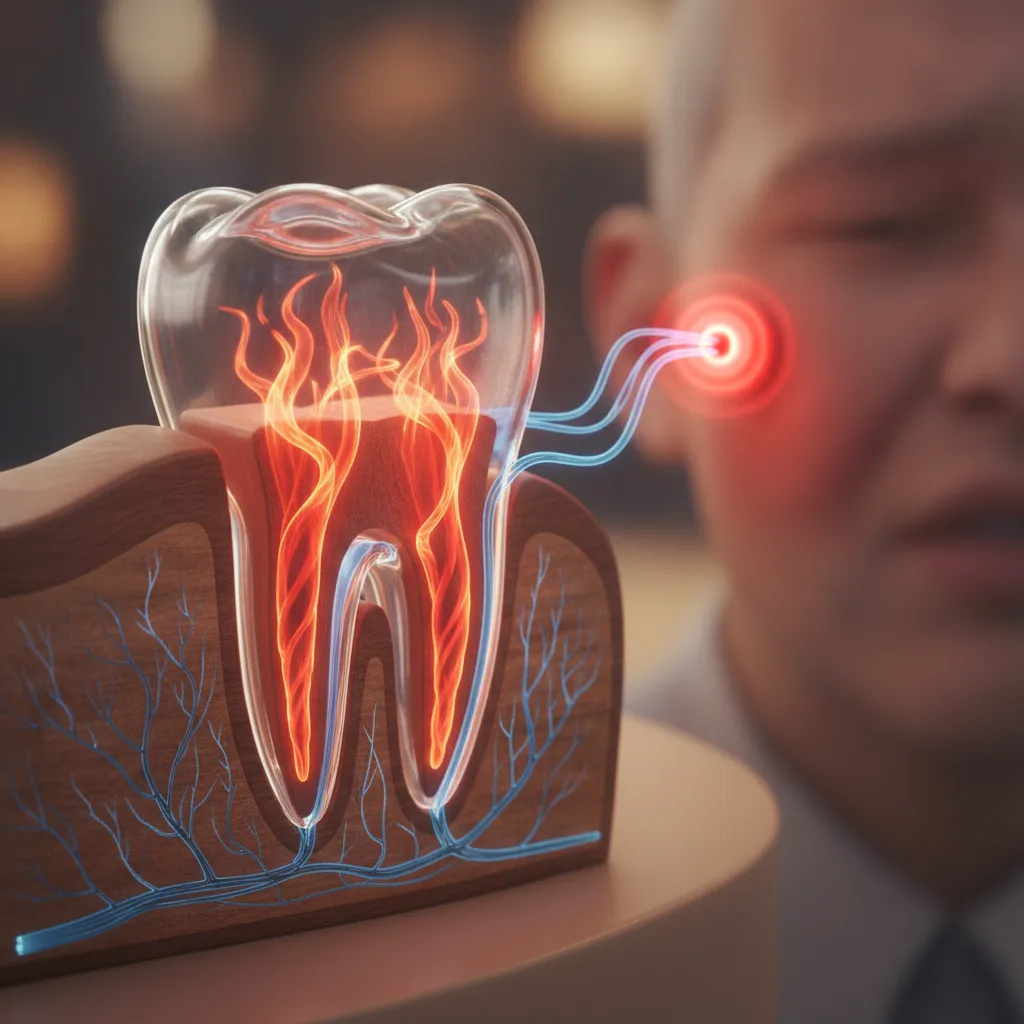
1. Root Canal Symptoms: The 9 Warning Signs You Should Not Ignore
Nine root canal symptoms signal pulp damage, and catching even one of them early can mean the difference between a straightforward procedure and a tooth extraction.
Roughly 15 million root canals are performed in the U.S. each year, making this one of the most common dental interventions. Symptoms can appear alone or in combination, when several show up together, pulp involvement is far more likely.
“When patients come in with lingering sensitivity to heat or cold that lasts more than 30 seconds, that’s a strong clinical indicator of irreversible pulpitis. Early diagnosis at this stage gives us the best chance of saving the tooth with a straightforward root canal.” — American Association of Endodontists, Clinical Guidelines on Pulpal Diagnosis
- Persistent or severe tooth pain, deep, throbbing, or pressure-like discomfort that doesn’t resolve
- Prolonged heat or cold sensitivity, pain lasting 30+ seconds after the stimulus is removed
- Tooth discoloration, a single tooth turning gray, brown, or dark yellow
- Swollen or tender gums, localized swelling near one tooth, sometimes warm to the touch
- Pain when biting or chewing, pressure on the tooth triggers sharp or aching discomfort
- A pimple or abscess on the gums, a raised bump that may drain fluid
- Cracked or chipped tooth, structural damage that exposes the pulp to bacteria
- Loose tooth, infection-related bone loss can cause unexpected mobility
- Facial or jaw swelling, infection spreading beyond the tooth root
Call the same day: facial swelling, a draining abscess, or severe pain that prevents normal function. Schedule promptly (within days): discoloration, lingering sensitivity, or mild gum tenderness.
2. Persistent or Severe Tooth Pain
Deep, constant tooth pain, especially when it throbs or radiates, is the most common sign that the pulp inside a tooth is infected or inflamed [3].
Root canal pain differs from a standard cavity ache in character and duration. Cavity pain is typically sharp and brief, triggered by a specific stimulus like sugar or cold. Root canal pain is pressure-like or throbbing, often radiating to the jaw, ear, or neighboring teeth, and it doesn’t resolve between triggers [3].
Pain persisting more than a few days, without a clear cause like a recent bite injury or visible fracture, is a red flag that the pulp may be involved. Don’t wait for it to worsen before calling a dentist.
One critical detail many patients miss: the pain may temporarily disappear if the nerve dies. The infection has not resolved, it has simply progressed to a stage where the nerve can no longer send signals. Swelling and bone damage continue even when the tooth feels numb [1].
According to Cleveland Clinic’s overview of root canal procedure and recovery, severe tooth pain that does not respond to over-the-counter pain relievers is one of the clearest indicators that professional endodontic evaluation is needed without delay.
“Tooth pain that radiates to the jaw or ear and doesn’t subside between episodes is rarely a minor issue. In most cases, it reflects pulp involvement that will not resolve without endodontic treatment.” — Cleveland Clinic, Department of Dentistry
3. Prolonged Sensitivity to Heat or Cold
Thermal sensitivity that lingers for 30 seconds or more after contact with hot or cold food or drink points to nerve involvement, not ordinary tooth sensitivity [3].
Normal dentinal hypersensitivity, the kind addressed by desensitizing toothpaste, resolves within a few seconds once the stimulus is removed. When pain persists well past 30 seconds, it suggests pulpitis: inflammation inside the pulp that a sensitivity toothpaste cannot reach or resolve.
Heat sensitivity is a stronger predictor of irreversible pulpitis than cold sensitivity. If a sip of hot coffee triggers pain that lingers for a minute or more, that pattern warrants a prompt dental evaluation, not a wait-and-see approach.
One detail the top-ranking results on this topic omit: sensitivity to sweet foods can accompany thermal sensitivity as a root canal symptom. Sugar draws fluid through exposed dentinal tubules, and when pulp inflammation is present, that response is amplified and prolonged. If sweets are triggering the same lingering ache as hot or cold, mention it specifically when you call Villagio Family & Cosmetic Dental to describe your symptoms.
4. Tooth Discoloration or Darkening
A single tooth turning gray, brown, or dark yellow often signals internal pulp breakdown, and it can appear even when the tooth causes no pain at all. For more information, see Guide To It Services In Cape Town 2025.
When pulp tissue dies, byproducts from the breakdown process leach into the surrounding dentin, producing a gray or brownish tint that originates from inside the tooth [1]. This discoloration develops slowly, sometimes over weeks or months, making it easy to attribute to aging or diet and dismiss without a second thought.
Surface staining from coffee, tea, or tobacco affects multiple teeth in a similar pattern. A single tooth darkening on its own, particularly after a past injury or untreated cavity, follows a different pattern entirely and warrants evaluation.
Discoloration alone, with no accompanying pain, can still indicate that the pulp has died and infection is present. The top-3 results currently ranking for this topic treat discoloration as a secondary sign; clinically, it is sufficient on its own to justify a root canal evaluation.
5. Swollen, Tender, or Bleeding Gums Near the Tooth
Localized gum swelling adjacent to a single tooth, especially when tender to the touch, indicates that infection has moved beyond the pulp into surrounding tissue [1].
Gum disease causes generalized inflammation across multiple sites in the mouth. Pulp infection behaves differently: swelling is concentrated directly beside or above one specific tooth, often warm to the touch, and may form a raised, fluid-filled area called a dental abscess or parulis, sometimes described as a “pimple on the gum” [1].
Pressing gently on the gum tissue directly above the tooth root and feeling tenderness or pressure is a specific clinical indicator that infection has reached the periapical tissue surrounding the root tip. This is distinct from the diffuse tenderness of inflamed gums caused by plaque buildup.
In advanced cases, swelling can extend beyond the gum line to the face, jaw, or neck. Facial or neck swelling alongside a painful tooth requires same-day care, this level of spread can compromise the airway and becomes a medical emergency if left untreated [1].
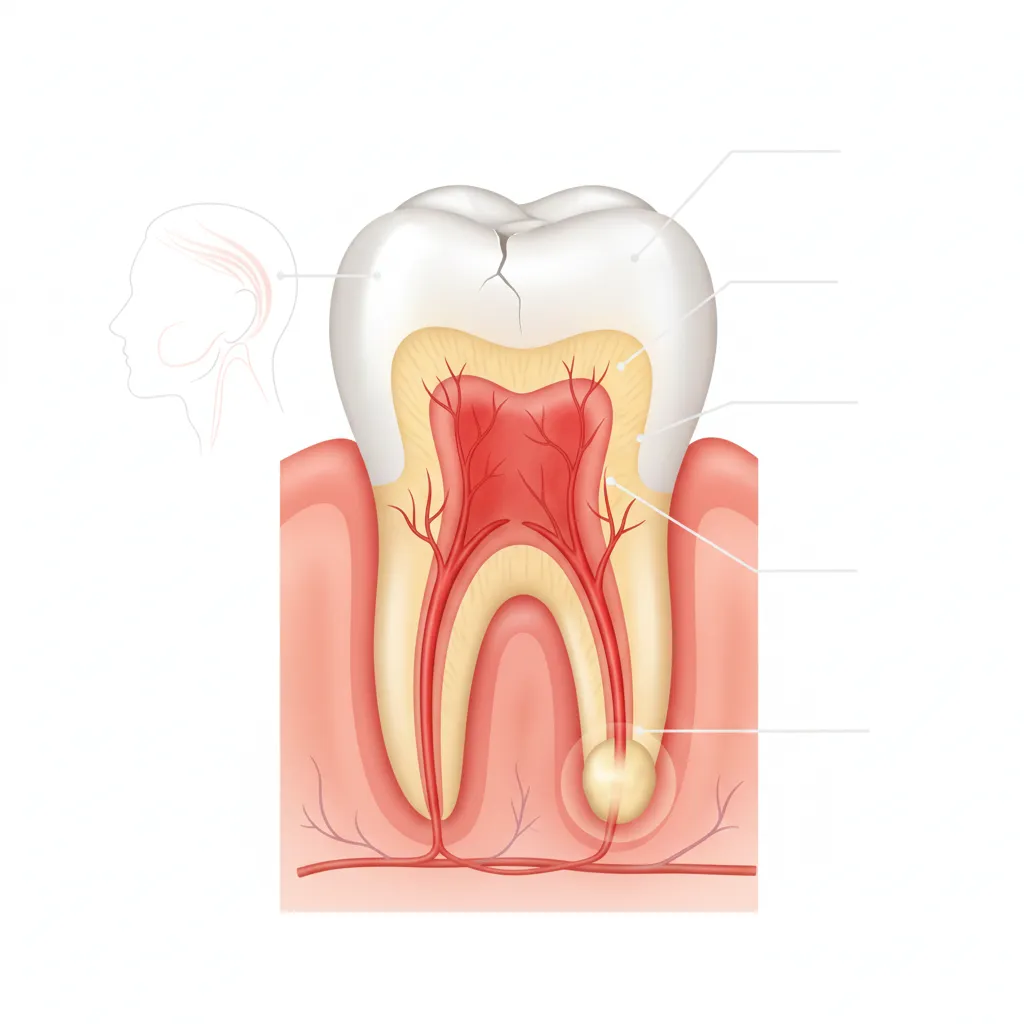
6. A Pimple or Abscess on the Gum
A small, recurring bump on the gum, often called a parulis, signals an active infection draining from inside the tooth root.
The bump looks like a pimple and may ooze pus or leave a salty taste in your mouth. It appears on the gum tissue near the tip of an infected root, and it tends to come and go, which many patients read as the problem clearing up on its own. It isn’t.
That bump is a fistula: a drainage tract the body creates to release pressure from a periapical abscess. Its presence means infection has already reached the bone surrounding the root tip. The fistula is the body venting pressure, not healing the source. When it disappears temporarily, the abscess has simply stopped draining, the infection remains, and the bone loss continues.
A recurring gum pimple is one of the clearest signs that root canal treatment is overdue, not optional. According to PH Dental’s guide on root canal warning signs, a draining fistula is among the most definitive indicators that endodontic treatment cannot be safely delayed.
7. Pain When Biting, Chewing, or Touching the Tooth
Pain on biting or touching a tooth means inflammation has extended beyond the pulp into the periodontal ligament surrounding the root.
The periodontal ligament contains pressure-sensitive nerve fibers. When periapical inflammation reaches it, even light contact, eating, closing your mouth, or a dentist tapping the tooth with a metal instrument, reproduces sharp pain. That tapping test, called percussion testing, is a standard diagnostic step dentists use to confirm periapical involvement.
What’s the difference between root canal pain and the pain from a cracked tooth?
The timing of pain distinguishes the two. Root canal-related bite pain tends to occur on contact with the tooth. Cracked tooth syndrome produces a sharp, directional pain on the release of biting pressure, the moment you lift off the tooth, because the crack flexes and then snaps back.
One additional detail: a tooth with periapical swelling can feel slightly raised in the bite, as though it sits higher than the surrounding teeth. Patients often describe this as the tooth feeling “different.” That sensation reflects fluid pressure building at the root tip, and it warrants a dental exam, not an adjustment period.
8. Asymptomatic Root Canal: When You Need Treatment Without Obvious Symptoms
A tooth can require a root canal with no pain at all, because a dead pulp has no living nerve fibers left to send a distress signal.
Can you need a root canal without experiencing any symptoms?
Yes, and this is one of the most clinically significant root canal symptoms gaps. When pulp tissue dies (necrosis), the nerve dies with it. Pain stops. Patients often assume the problem resolved. It hasn’t, bacteria continue to colonize the empty pulp chamber and spread toward the bone.
Periapical lesions, areas of bone loss around the root tip, develop silently and are frequently discovered only during routine dental X-rays [1]. Studies estimate that 10–20% of teeth requiring root canal treatment present with no symptoms at the time of diagnosis. The tooth looks normal, feels normal, and causes no discomfort. Research published in endodontic literature further indicates that approximately 25% of root canal treatments are performed on teeth with necrotic pulps that had become entirely asymptomatic prior to diagnosis, underscoring how frequently patients delay care because they no longer feel pain.
Asymptomatic does not mean untreatable or low-priority. Active infection is still present, and without treatment it will cause progressive bone loss or spread to adjacent structures. A routine dental exam, including X-rays, remains the only reliable way to catch these cases before they escalate.
9. How Root Canal Symptoms Progress Over Time, and What Happens If You Wait
Can root canal symptoms come and go, or do they get progressively worse?
Root canal symptoms follow a predictable biological sequence, but pain can temporarily disappear mid-progression, which creates a dangerous false sense of resolution.
The typical path runs: reversible pulpitis (brief sensitivity that clears when the stimulus is removed) → irreversible pulpitis (persistent, spontaneous pain that does not resolve) → pulp necrosis (nerve death, pain often subsides here, misleading patients) → periapical abscess (swelling, pressure, and systemic risk). The transition from reversible to irreversible pulpitis can occur within days to weeks, depending on the cause, a deep crack moves faster than slow-progressing decay, and on the patient’s overall health [1].
The pain lull after nerve death is the stage where delayed treatment causes the most damage. Bone loss is accelerating while the patient feels fine.
What serious complications can develop if you delay or avoid getting a root canal?
Untreated periapical infection does not stay contained. It can spread into surrounding soft tissue as cellulitis, a diffuse, rapidly advancing infection. In severe cases, it progresses to Ludwig’s angina, a life-threatening infection of the floor of the mouth that can obstruct the airway, or to osteomyelitis, a deep bone infection requiring hospitalization and IV antibiotics. These are not rare edge cases; they represent the documented endpoint of ignored dental infections [3]. Facial swelling that spreads toward the neck or eye is a medical emergency, not a dental inconvenience.
“Delaying treatment for an infected tooth is never a neutral choice. Every week without intervention allows bacterial spread to advance further into the surrounding bone and soft tissue, turning a routine endodontic case into a potential systemic emergency.” — Essentials Dental, Clinical Team
For additional context on how quickly untreated root canal symptoms can escalate, see Essentials Dental’s overview of root canal warning signs and next steps.
How to Decide When Root Canal Symptoms Require Immediate Care
Not every dental symptom is an emergency, but some require same-day attention, and waiting for a routine cleaning appointment can make a manageable problem dangerous.
Use this tiered guide to match your symptoms to the right level of urgency:
- Same-day emergency care: Facial swelling spreading toward the jaw, neck, or eye; fever above 101°F; inability to open your mouth fully; an abscess with spreading redness or warmth. These signs indicate infection is moving beyond the tooth.
- Within 48 hours: Persistent, unprovoked tooth pain lasting more than a day; sharp pain on biting or touching the tooth; a gum pimple that keeps returning.
- Scheduled consultation: Tooth discoloration with no pain; mild sensitivity that lingers a few seconds after hot or cold; a single episode of sensitivity that resolved.
While you wait for your appointment: take OTC ibuprofen (follow label dosing) to reduce inflammation, avoid chewing on the affected side, and call Villagio Family & Cosmetic Dental directly, do not wait for a scheduled cleaning to mention the symptom.
When should post-treatment pain concern you enough to call your dentist?
Mild soreness for 2–5 days after a root canal is normal as the surrounding tissue settles [1]. Call your dentist if pain worsens after day 3 rather than improving, or if you develop new swelling or a fever, these signal a complication such as a missed canal or reinfection, not routine recovery.
Are root canal symptoms different in baby teeth versus permanent teeth?
Children’s primary teeth have thinner dentin walls than permanent teeth, so infection moves from the pulp to the surrounding bone faster [2]. A child showing swelling, a gum bump, or spontaneous tooth pain warrants a same-day call, parents should act a full urgency tier sooner than an adult with the same symptom severity. Untreated abscess in a baby tooth can damage the developing permanent tooth directly beneath it.
Frequently Asked Questions
How long do root canal symptoms typically last before they get worse?
Untreated root canal symptoms rarely stay stable, most worsen within days to weeks without dental intervention. A deep cavity or cracked tooth allows bacteria to reach the pulp, and once infection sets in, it spreads. Swelling, intensifying pain, and abscess formation can develop quickly. Some patients report manageable discomfort for weeks before a sudden escalation; others see rapid deterioration within days. Don’t wait for the pain to become unbearable before calling your dentist [1].
What visible signs in your mouth might suggest you need a root canal?
A pimple-like boil on your gums, tooth discoloration, or visible swelling near a tooth are common visible indicators [1] [3]. A darkened tooth, often gray or brown, signals that the pulp inside may be dying. A gum boil, sometimes called a dental fistula, means infection has built up enough pressure to create a drainage point. These signs are often painless at first, which makes them easy to overlook.
How long does it take to fully recover from a root canal?
Most patients recover from a root canal within a few days, though full healing of surrounding tissue can take one to two weeks [1]. Mild soreness and sensitivity after the procedure are normal and typically managed with over-the-counter pain relievers. A follow-up crown placement, usually scheduled within a few weeks, completes the restoration and protects the treated tooth long-term.
What should you do immediately if you think you have root canal symptoms?
Call your dentist as soon as possible, don’t wait to see if the pain resolves on its own [2] [3]. While waiting for your appointment, avoid chewing on the affected side and take an over-the-counter pain reliever like ibuprofen to manage discomfort. If you’re in the Katy, TX area, Villagio Family & Cosmetic Dental offers same-day evaluations for patients experiencing acute tooth pain or swelling.
Is a root canal more painful than a tooth extraction?
Most patients report that a root canal is no more painful than having a cavity filled, thanks to modern local anesthesia. According to the Cleveland Clinic’s root canal procedure and recovery guide, the procedure itself is typically well-tolerated, and the discomfort associated with root canal symptoms before treatment is usually far greater than anything experienced during the procedure. Choosing a root canal over extraction also preserves your natural tooth, which supports long-term jaw health and bite alignment.
Conclusion
Persistent tooth pain, sensitivity that lingers after hot or cold exposure, gum swelling, and visible discoloration are your mouth’s clearest signals that the pulp inside a tooth is in trouble. Waiting on these symptoms doesn’t make them go away, it gives the infection more time to spread and turns a straightforward procedure into a more complex one.
Three things worth acting on now: note when your pain started and what triggers it, check your gums for any boil-like swelling, and schedule a dental exam before symptoms escalate. If you’re near Katy, TX, contact Villagio Family & Cosmetic Dental directly and describe your symptoms, specific details help the team prioritize your appointment accurately.
Sources & References
- Root Canal: Procedure & Recovery — Cleveland Clinic
- 5 Signs You Might Need a Root Canal (And What to Do Next) — Essentials Dental
- Signs You Might Need a Root Canal: Don’t Ignore These Symptoms — PH Dental
Recommended Articles
Explore more from our content library:
- <a href="https://villagiofamilydental.com/blog/2026/08/10/how-to-understand-your-dental-insurance-coverage-and-maximiz/" title="Understanding Your Dental Insurance Coverage Benefits“>Understanding Your Dental Insurance Coverage Benefits
- <a href="https://villagiofamilydental.com/blog/2026/08/09/how-to-address-common-smile-concerns-without-major-procedure/" title="A Complete Guide to Cosmetic Smile Improvements“>A Complete Guide to Cosmetic Smile Improvements
- How to Find a Family Dentist You Can Trust in Your Area
- <a href="https://villagiofamilydental.com/blog/2026/08/06/how-to-floss-properly-and-make-it-a-daily-habit/" title="A Complete Guide to Proper Flossing Technique“>A Complete Guide to Proper Flossing Technique
- A Complete Guide to Home Teeth Whitening Safely