Proudly Serving Katy, Richmond & Fulshear Cinco Ranch
(281) 395-2100
|
(281) 394-4001

The most common children dental problems are tooth decay, cavities, gum disease, tooth sensitivity, orthodontic issues, and dental emergencies from injury. Left untreated, these conditions affect more than just teeth — they can disrupt speech development, concentration, and school attendance. Most children dental problems are preventable with consistent brushing, fluoride exposure, a low-sugar diet, and dental visits starting at age one.

1. Tooth Decay and Cavities, The Most Widespread Children Dental Problems
Tooth decay is the most common chronic childhood disease in the U.S., affecting roughly 20% of children aged 5–11, according to the CDC’s oral health data on dental caries. Understanding children dental problems like tooth decay starts with recognizing how quickly enamel can break down in young mouths.
What Are Tooth Decay, Cavities, and Tooth Sensitivity in Children?
Cavities form when Streptococcus mutans bacteria convert dietary sugar into acid. That acid erodes tooth enamel over time, creating holes that deepen if left untreated. Baby teeth are not immune — their enamel is thinner than permanent teeth, making decay progress faster.
Some parents assume baby tooth cavities can wait. They can’t. Untreated decay spreads, can reach the permanent tooth bud beneath the gum, and causes premature tooth loss that disrupts spacing for adult teeth [2].
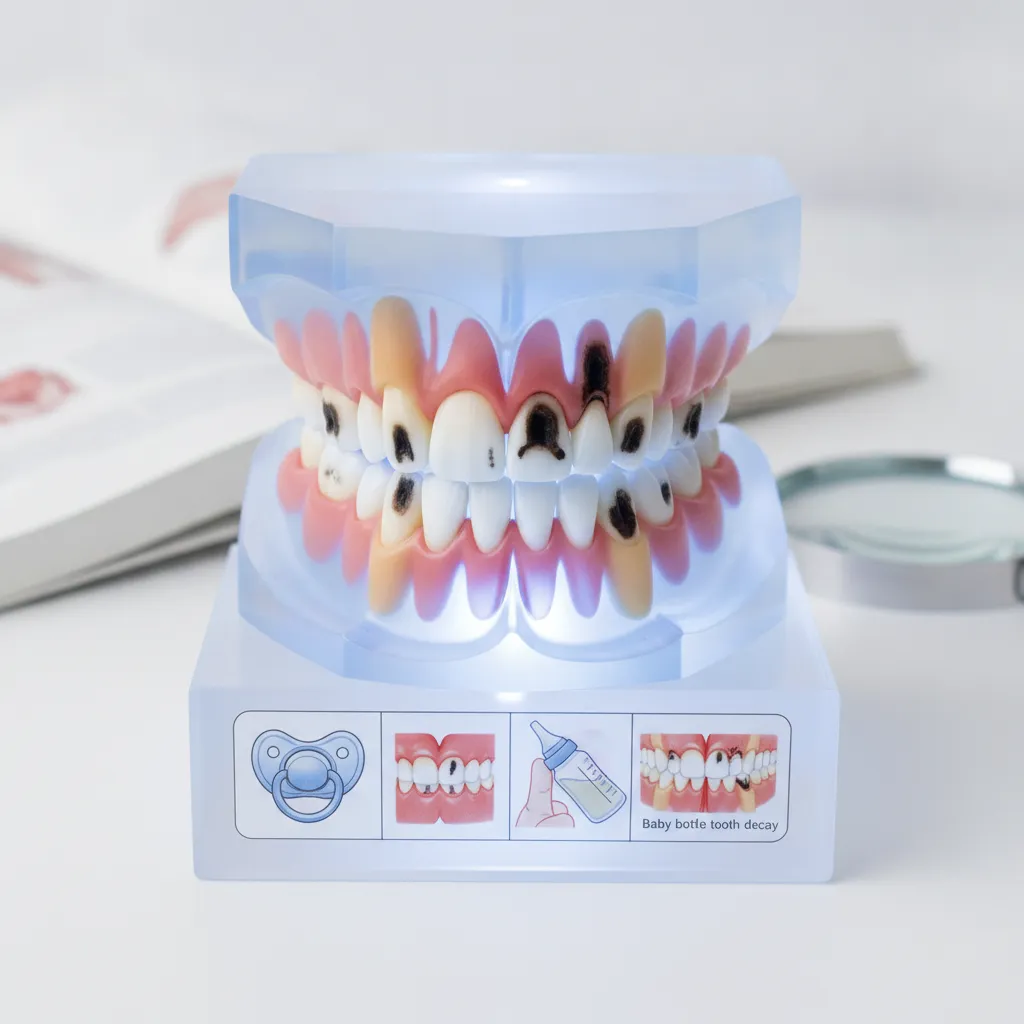
Early childhood caries (ECC) can appear as early as 12 months, a detail most pediatric dental articles overlook. The two highest-risk behaviors for toddlers are frequent snacking on sugary foods and bottle feeding at night, both of which keep acid in prolonged contact with enamel.
At Villagio Family & Cosmetic Dental, we screen for ECC at early visits and coach parents on feeding routines that cut cavity risk before the first signs of decay appear.
2. Tooth Sensitivity in Children
Tooth sensitivity in children usually signals enamel erosion, newly erupted teeth, or an untreated cavity, and each cause needs a different response. This is one of the children dental problems that parents most often overlook because kids struggle to describe the discomfort accurately.
The three most common drivers are: acid erosion from frequent consumption of acidic drinks, newly erupted permanent teeth whose enamel is still maturing and temporarily thinner, and untreated cavities that expose the dentin layer beneath the enamel [2]. Daily acidic sports drinks, not just soda, are a leading cause of enamel erosion in school-age children, a risk many parents underestimate.
Children rarely describe sensitivity in clinical terms. Watch for flinching at cold drinks, reluctance to eat ice cream, or sudden refusal of foods they previously enjoyed. Those behavioral cues are often the first signal a parent will notice.
Sensitivity during tooth eruption is normal and typically resolves on its own. Sensitivity that persists beyond two weeks warrants a dental evaluation. One specific treatment competitors rarely mention: fluoride varnish applied during a routine dental visit can measurably reduce sensitivity by reinforcing enamel and blocking exposed dentin tubules.
3. Pediatric Gum Disease and Gingivitis
Gum disease in children is more common than most parents expect, and bleeding gums during brushing are the clearest early warning sign to watch for at home. Like many children dental problems, early-stage gum disease is reversible when caught promptly.
When Should I Schedule a Routine Dental Visit Versus Seeking Emergency Care?
Gingivitis affects a significant share of school-age children [2]. Four signs parents can spot without a dental visit:
- Gums that bleed during brushing
- Persistent bad breath that doesn’t clear with brushing
- Red or swollen gum tissue
- Gum margins that appear to be pulling away from the teeth
Most cases are gingivitis, reversible with improved brushing and a professional cleaning. A rarer but serious condition, localized aggressive periodontitis, can appear in adolescents and progresses faster than adult periodontitis, causing bone loss around specific teeth. It requires prompt diagnosis and a different treatment approach.
Hormonal changes during puberty increase gum inflammation risk even when oral hygiene is adequate, making ages 11–14 a second high-risk window beyond the toddler years.
Use this decision rule: bleeding that stops after brushing means schedule a routine visit within a few weeks. Spontaneous bleeding, pain without brushing, or visible swelling means seek care within 24–48 hours — those signs can indicate an infection that won’t resolve on its own.
“Gum disease in children is often silent in its early stages. Parents who wait for pain before seeking care are frequently surprised to learn how advanced the condition has become.” — American Academy of Pediatric Dentistry, Clinical Affairs Committee on Periodontal Diseases
4. Dental Emergencies in Children
A knocked-out permanent tooth can often be saved, but only if a parent knows the correct steps and acts within 30 minutes of the injury.
What Are the Warning Signs That Require Immediate Dental Attention?
For a knocked-out permanent tooth, store it in milk or saline, not water, and get to a dentist immediately. Re-implantation within 30 minutes gives the tooth the best survival odds. Do not scrub the root [1].
The rules are different for baby teeth. Do not attempt to re-implant an avulsed baby tooth — doing so risks damaging the permanent tooth bud developing beneath it. Call your dentist for guidance and monitor for infection.
For a chipped tooth with no pain: cover any sharp edge with dental wax and schedule an appointment within 24 hours. If the chip exposes a pink or red center, the nerve, treat it as a same-day emergency. Nerve exposure causes rapid pain escalation and infection risk.
Severe toothache combined with facial swelling should be treated as a dental abscess until a clinician rules it out. Abscess infections can spread to the jaw, neck, and airway — same-day care or an emergency room visit is appropriate [2].
Keep a simple home dental emergency kit: dental wax, saline solution, and your pediatric dentist’s after-hours contact number. Villagio Family & Cosmetic Dental provides after-hours guidance so families in Katy, Fulshear, and Cinco Ranch aren’t left searching for answers at the worst moment. For more information, see 2nd Infantry Division Trailer Hitch Cover Official Licensed Indianhead.
5. Orthodontic Problems in Children
The American Association of Orthodontists recommends a first orthodontic screening by age 7, well before most parents think to schedule one.
What Are Orthodontic Problems and Excessive Thumb Sucking in Children?
Waiting until all permanent teeth erupt, typically ages 12–13, is too late for some corrections. An evaluation at age 7 allows a dentist to identify developing issues while the jaw is still growing and more responsive to intervention.
The four most common bite and alignment issues each have a different optimal treatment window. Overcrowding often benefits from early space management. Overbite and underbite respond well to jaw-guidance appliances during growth. Crossbite, if caught early, can be corrected with a palatal expander before the mid-palatal suture fuses, a window that closes in the early teens.
Phase 1, or interceptive, orthodontics at ages 7–10 addresses structural problems while the jaw is still developing. It frequently reduces the scope, and cost, of Phase 2 braces or aligner treatment later. That cost-saving outcome is one most competitor articles don’t discuss.
Two habit-driven causes of open bite and tooth protrusion: thumb sucking past age 4 and pacifier use past age 3. Both apply sustained pressure that changes developing bone. Early loss of baby teeth from untreated decay compounds the problem — neighboring teeth drift into the gap, creating crowding that later requires orthodontic correction [2].
6. Age-Specific Dental Problems From Infancy Through Adolescence
Children’s dental risks shift at every developmental stage — what threatens a toddler’s teeth differs entirely from what threatens a teenager’s. Recognizing children dental problems by age group helps parents take the right preventive steps at the right time.
Most dental resources treat children as a single group. They’re not. The problems a 2-year-old faces, a 10-year-old faces, and a 16-year-old faces are clinically distinct, and so are the warning signs parents should watch for.
What Dental Problems Are Unique to Infants and Toddlers?
Infants and toddlers (ages 0–3) are most at risk for baby bottle tooth decay, teething discomfort, and tongue-tie — a structural issue that can affect both latch and early speech development. According to the American Academy of Pediatric Dentistry’s periodicity guidelines, the first dental visit should occur by age 1 or within six months of the first tooth erupting, whichever comes first.
Preschoolers (ages 3–5) face early childhood caries, thumb-sucking habits that begin to affect jaw alignment, and the first signs of spacing problems as the jaw grows faster than the teeth.
What Dental Problems Are Common in School-Age Children?
School-age children (ages 6–12) enter the mixed dentition phase, when baby and permanent teeth coexist and temporary crowding is normal. The critical mistake parents make: assuming the first permanent molars are still baby teeth. They’re not, and because they’re unrecognized as permanent, they often go unprotected and become the most cavity-prone teeth in the mouth.
Adolescents (ages 13–18) face a different set of risks: wisdom tooth eruption, increased gum disease risk driven by hormonal changes during puberty, and enamel erosion accelerated by daily sports drinks and energy drinks. No top-ranking competitor article on children dental problems breaks down risks by age this specifically — this phase-by-phase view is the gap this section fills.
7. How Diet and Nutrition Drive Children’s Dental Health
What your child eats matters less than how often they eat it — frequent sugar exposure causes more enamel damage than a single high-sugar meal. Diet-related children dental problems are among the most preventable when parents understand how acid exposure works.
A child who sips apple juice over two hours generates continuous acid exposure on tooth enamel. The same juice consumed in five minutes gives saliva time to neutralize the acid between meals. Frequency, not total quantity, is the primary driver of decay risk.
Which Foods and Drinks Should I Avoid to Protect My Child’s Teeth?
Four drinks carry the highest risk for children’s teeth:
- Flavored milk — contains added sugar that feeds decay-causing bacteria
- Sports drinks — combine sugar with acid for a double attack on enamel
- Fruit juice — natural sugars with prolonged exposure create sustained acid contact
- Carbonated water with citric acid flavoring — many parents assume it is safe because it contains no sugar, but the acid alone erodes enamel
Nutritional deficiencies also shape dental outcomes before teeth even erupt. Low calcium and vitamin D during tooth development causes hypomineralized enamel, a condition called molar-incisor hypomineralization (MIH), making affected teeth more cavity-prone from the moment they break through the gumline.
Protective foods work through specific mechanisms: cheese raises oral pH and stimulates saliva production; crunchy vegetables mechanically remove plaque from tooth surfaces; fluoridated water remains the single most cost-effective dietary intervention for reducing childhood decay rates.
One hidden risk most parents miss: gummy vitamins. They contain sugar and adhere directly to enamel, the same mechanism as gummy candy. Liquid vitamins or chewable tablet formulations are safer alternatives for children’s teeth.
8. How Untreated Dental Problems Affect a Child’s Development and School Performance
Untreated dental disease doesn’t stay in the mouth — it disrupts sleep, speech, nutrition, self-esteem, and classroom performance in measurable ways. Children dental problems that go unaddressed can have consequences that extend far beyond the dental chair.
Children with untreated tooth pain miss an estimated 51 million school hours per year in the United States, according to the U.S. Surgeon General’s report on oral health, published by the National Institute of Dental and Craniofacial Research. That figure reframes pediatric dental care as an academic issue, not just a health one.
What Long-Term Impacts Do Untreated Dental Problems Have on Children?
Early tooth loss from decay disrupts tongue placement during speech development. Children who lose front teeth prematurely often develop difficulty producing ‘s,’ ‘z,’ and ‘th’ sounds, a pattern that can persist into school age without speech therapy intervention.
Dental pain also changes how children eat. Kids in pain avoid hard or crunchy foods, the same foods most likely to be nutritious, creating a pathway to nutritional deficiency that compounds developmental risk over time.
Sleep disruption is another underrecognized consequence. Chronic dental pain interrupts sleep architecture, and the resulting attention and behavioral problems are sometimes misattributed to ADHD or learning disorders before the dental source is identified.
Visible decay or missing teeth carry social costs as well. Peer-reviewed studies link visible dental disease in school-age children to social withdrawal and reduced classroom participation — outcomes that affect academic trajectory well beyond the dental chair. At Villagio Family & Cosmetic Dental, early intervention appointments are structured specifically to catch these problems before they reach this stage.
9. Costs and Insurance Coverage for Pediatric Dental Treatment
Pediatric dental costs range from zero to several thousand dollars depending on treatment, insurance status, and whether you know which programs your child qualifies for. Understanding the financial side of children dental problems helps families seek care earlier rather than delaying until conditions worsen.
Under the Affordable Care Act, pediatric dental care is an essential health benefit for children under 19, but how much a plan actually covers varies significantly by state and plan design. “Essential benefit” does not mean full coverage.
How Much Do Common Pediatric Dental Treatments Cost and What Does Insurance Cover?
Typical out-of-pocket cost ranges without insurance: routine cleaning and exam runs $50–$150; a composite (tooth-colored) filling costs $90–$250 per tooth; a stainless steel crown runs $300–$500; and orthodontic Phase 1 treatment ranges from $1,500 to $3,500 depending on complexity.
CHIP, the Children’s Health Insurance Program, covers dental care for eligible children at low or no cost. In most states, families qualify at income levels up to 200% of the federal poverty level. Many eligible families don’t apply because they assume they won’t qualify.
Dental savings plans (distinct from insurance) offer 10–60% discounts at participating providers and require no deductible or annual maximum. For families without employer dental coverage, these plans are a practical cost-reduction tool worth comparing before a first appointment.
For early cavities in baby teeth, ask about silver diamine fluoride (SDF) before scheduling a filling. SDF arrests decay without drilling and costs roughly $75–$150 per application, compared to $90–$250 for a conventional composite filling. Villagio Family & Cosmetic Dental can walk families through which treatment approach fits their child’s specific cavity stage and their coverage situation.
How to Choose the Right Pediatric Dentist for Your Child
The right pediatric dentist holds specialty credentials, creates a child-friendly environment, and presents treatment options — not just a single plan on the first visit. Choosing the right provider is especially important when managing ongoing children dental problems that require consistent monitoring.
Start with credentials. Board-certified pediatric dentists, ABPD diplomates, complete two to three additional years of specialty training beyond dental school. Verify certification directly at abpd.org rather than relying on the practice website alone.
Office environment shapes whether an anxious child will cooperate with treatment or shut down. Look for practices with child-specific waiting areas, staff trained in the tell-show-do technique, and nitrous oxide availability for patients who need it. These aren’t amenities — they’re clinical tools that determine treatment outcomes for anxious children.
Ask one diagnostic question during the first visit: “What is your protocol for a child with early-stage decay in a baby molar?” A quality practice presents at least two treatment options — monitoring, SDF, or a filling — and explains the tradeoffs. A practice that defaults immediately to extraction without alternatives is telling you something about how it operates.
One documented red flag: a dentist who recommends full-mouth treatment under general anesthesia on a first visit without offering a second-opinion referral. Overtreatment under general anesthesia in pediatric dentistry is a pattern identified in investigative reporting and professional oversight cases — it warrants a second opinion before any parent agrees.
For families in Katy, Fulshear, Richmond, and Cinco Ranch, TX, Villagio Family & Cosmetic Dental serves both children and adults under one roof. Confirm in-network status before your first visit, since out-of-network pediatric specialists routinely cost two to three times more for identical procedures. For additional context on the most frequently seen children dental problems in clinical practice, Absolute Dental’s overview of the 7 most common dental problems in children offers a useful reference, and Honeybee PDC’s guide to top dental issues in children covers additional practical guidance for parents.
Frequently Asked Questions
How often should my child see a dentist?
Children should visit a dentist every six months for a checkup and cleaning. The American Academy of Pediatric Dentistry recommends the first visit by age one or within six months of the first tooth appearing. Twice-yearly appointments let the dentist catch cavities, gum changes, and bite issues early, before they require more involved treatment. Children with a history of frequent cavities or orthodontic concerns may need visits every three to four months instead.
What happens during a pediatric dental checkup and cleaning?
A pediatric checkup includes a visual exam, X-rays (based on age and risk), professional cleaning, and a fluoride treatment or dental sealant application if indicated. The dentist checks for tooth decay, gum inflammation, bite alignment, and signs of oral habits like thumb sucking. At Villagio Family & Cosmetic Dental, the team also reviews brushing technique with the child and answers parent questions about diet, fluoride use, and developmental milestones, so each visit doubles as a practical education session.
What are the best practices for brushing and flossing for children?
Use a soft-bristled toothbrush and a fluoride toothpaste twice daily — a rice-grain amount for children under three, a pea-sized amount from ages three to six. Parents should brush alongside children and supervise technique until around age eight, when hand coordination is reliable enough for independent brushing. Flossing should start as soon as two teeth touch, typically around age two to three. Replace toothbrushes every three months or after any illness.
Can dental anxiety in children be treated, and how?
Yes, dental anxiety in children responds well to a combination of behavioral techniques and, when needed, sedation options. Practices that use tell-show-do communication (explaining each step before performing it), child-friendly language, and a calm environment reduce fear significantly for most kids [2]. For children with severe anxiety or special needs, nitrous oxide or oral sedation provides a safe, controlled option. Choosing a dental team experienced with pediatric patients makes a measurable difference in how quickly a child builds comfort with dental visits.
Are children dental problems different from adult dental problems?
Yes, children dental problems differ from adult dental issues in important ways. Baby teeth have thinner enamel, making decay progress faster. Children also face unique risks like early childhood caries, teething complications, and habit-driven bite changes from thumb sucking or pacifier use. Additionally, the mixed dentition phase — when baby and permanent teeth coexist — creates crowding and eruption challenges that adults never experience. Early intervention during childhood often prevents more serious and costly problems in adulthood.
Conclusion
Most children dental problems — cavities, gum inflammation, bite issues, dental anxiety — are preventable or manageable when caught early. Three actions make the biggest difference: schedule the first dental visit by age one, supervise brushing until around age eight, and don’t skip the six-month checkup even when baby teeth look fine. Baby teeth hold space for permanent ones, and untreated decay in them causes real harm.
If your child hasn’t had a dental exam in the past six months, or if you’ve noticed tooth sensitivity, bleeding gums, or a chipped tooth, book a pediatric appointment at Villagio Family & Cosmetic Dental in Katy, TX, and bring a list of any specific concerns so the team can address them during the visit.
Sources & References
- Top Dental Issues in Children and How to Address Them
- 7 Most Common Dental Problems in Children | Absolute Dental
- CDC Oral Health Data: Dental Caries in Children
- U.S. Surgeon General’s Report on Oral Health — NIDCR
- American Academy of Pediatric Dentistry: Periodicity Guidelines
Recommended Articles
Explore more from our content library: