Proudly Serving Katy, Richmond & Fulshear Cinco Ranch
(281) 395-2100
|
(281) 394-4001

Understanding invisalign vs traditional braces is essential. Invisalign uses a series of removable clear aligners to gradually shift teeth, while traditional braces use fixed metal brackets and wires bonded to the teeth. Invisalign offers greater discretion and lifestyle flexibility, but braces typically handle more complex orthodontic cases with greater precision. The right choice depends on your specific bite issues, compliance habits, and treatment goals, a qualified provider can assess which method will deliver the best outcome for your situation.
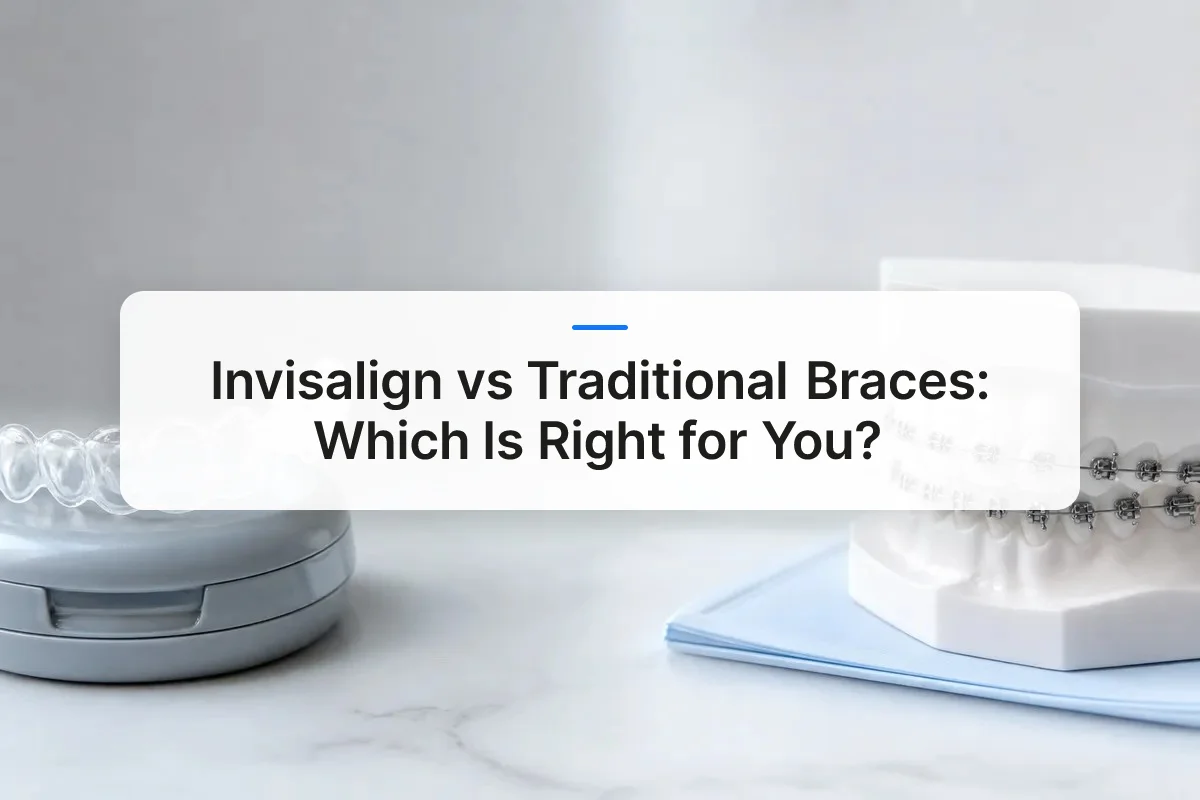
Invisalign vs Traditional Braces: How Each Method Actually Works
Both systems move teeth through sustained pressure, but the mechanics, materials, and patient responsibilities differ significantly from day one.
What the Treatment Process Looks Like for Each Option
Invisalign uses a series of custom-molded thermoplastic aligners, each worn for one to two weeks before swapping to the next tray in the sequence. Every aligner applies incremental pressure to specific teeth, shifting them gradually without any brackets or wires. A full series can range from as few as 10 trays to well over 30, depending on the complexity of the case. According to The Orthodontists, Invisalign now accounts for a growing share of orthodontic starts globally, with millions of patients treated since the system launched in the late 1990s.
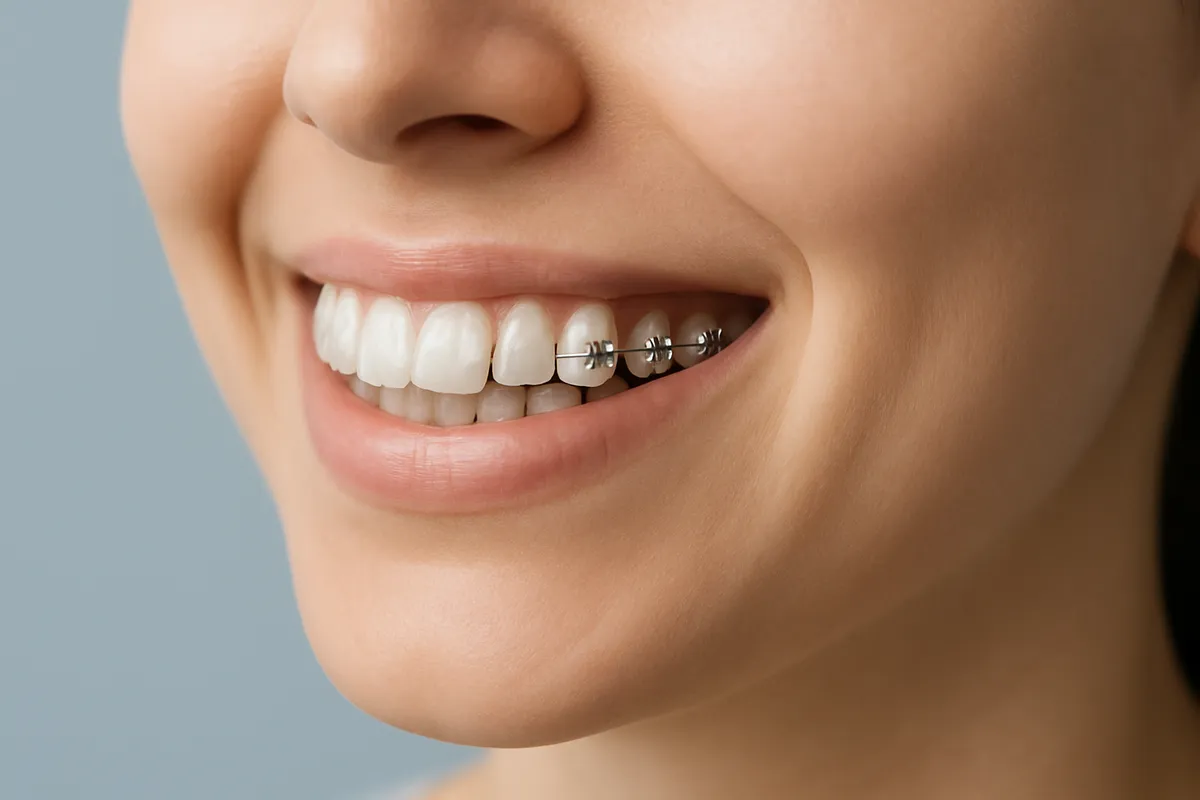
Traditional braces work differently at a structural level. Metal or ceramic brackets bond directly to each tooth, connected by an archwire that your orthodontist tightens at regular appointments, typically every four to eight weeks. Each adjustment increases the tension in the wire, which transfers force through the brackets to guide tooth movement. The hardware stays fixed in place throughout treatment; you have no role in managing it between visits.
One critical variable separates the two approaches in practice: compliance. Invisalign aligners must stay in for 20 to 22 hours per day to deliver the intended results. Patients who remove them for meals, social situations, or discomfort and don’t hit that daily threshold routinely see extended treatment timelines or incomplete corrections. Braces eliminate that variable entirely, they work continuously because they can’t be removed.
Both methods may incorporate additional hardware mid-treatment. Invisalign often uses small tooth-colored attachments, composite bumps bonded to specific teeth, to help aligners grip the tooth surface and apply directional force that a smooth tray alone cannot generate. Traditional braces may add rubber bands or auxiliary springs for similar reasons.
“Clear aligner therapy has advanced dramatically, but patient compliance remains the single most important predictor of a successful outcome. An aligner that isn’t being worn simply isn’t working.” — Dr. Laurance Jerrold, Dean, College of Dental Medicine, Jacksonville University
Orthodontic Cases Where One Method Won’t Work
When comparing invisalign vs traditional braces for complex cases, fixed appliances hold a clear mechanical advantage. Severe crowding, large overbites, underbites, crossbites, and the rotation of round teeth, such as canines, typically require the precise, continuous control that bonded brackets provide. Aligners apply pressure across a broader contact surface, which limits the directional specificity a provider can achieve with certain tooth movements.
Invisalign performs well for mild to moderate spacing issues, minor bite discrepancies, and cases where the primary concern is aesthetic alignment. Patients who are strong candidates tend to have fully erupted permanent teeth, predictable compliance habits, and orthodontic needs that fall within the range the aligner sequence can address. A clinical exam and digital imaging, the starting point at a practice like Villagio Family & Cosmetic Dental, are the only reliable way to determine which system fits your specific anatomy.
Appearance, Discretion, and Daily Life: What Changes With Each Option
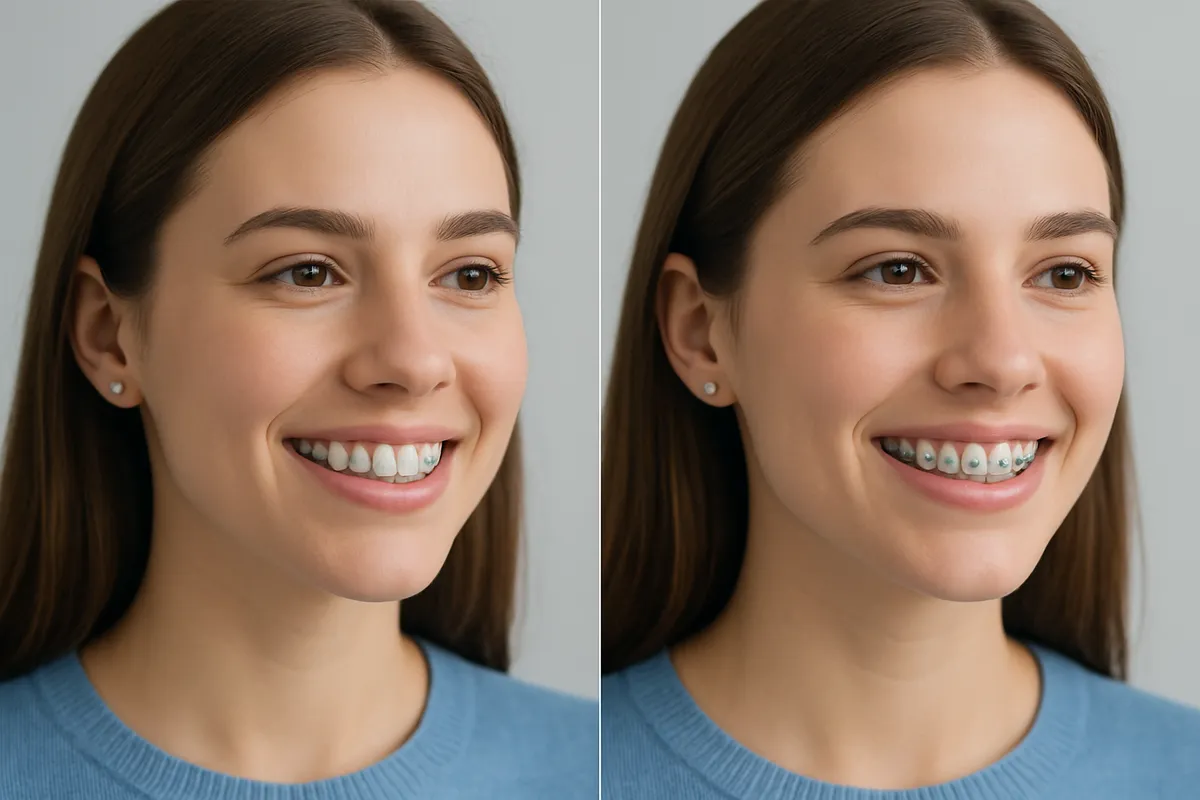
Invisalign aligners are nearly invisible when worn; traditional metal braces are immediately noticeable and affect eating, hygiene, and daily routines in ways aligners do not.
This is often the deciding factor for adults and teens who weigh invisalign vs traditional braces. Clear aligners sit flush against the teeth and are difficult to spot across a room. Metal braces, with their brackets and wires, are visible at close range. Ceramic braces reduce that contrast by matching tooth color, but the hardware is still present and can stain over time. Research published through the American Association of Orthodontists consistently shows that aesthetic concerns are among the top reasons adult patients choose clear aligner therapy over conventional braces.
How Each Option Affects Eating Habits and Social Comfort
Braces come with a firm list of foods to avoid. Hard items, sticky foods, and chewy foods can all cause problems during treatment. Specifically, patients with traditional braces should steer clear of:
- Hard foods such as raw carrots, apples, and ice, which can bend wires or dislodge brackets
- Sticky foods such as caramel, taffy, and chewing gum, which cling to brackets and are difficult to clean
- Chewy foods such as bagels and hard rolls, which place excessive stress on the archwire
- Crunchy snacks like popcorn and hard pretzels, which can break brackets on contact
Breaking those rules means an unplanned orthodontic visit.
Invisalign wearers remove their aligners before eating, which means no food restrictions at all. The trade-off is behavioral, aligners must come out before every meal or snack, and before drinking anything other than water. In a business lunch or social setting, that routine can feel conspicuous, and the aligners need to be stored safely while eating.
Both options cause some discomfort. Braces typically produce soreness for a few days after each tightening appointment. Switching to a new Invisalign tray creates pressure for the first day or two, though many patients describe it as milder than post-tightening soreness from braces [2]. For more information, see Safeteam.
“In my clinical experience, adult patients consistently report that the ability to remove aligners for meals and social events significantly reduces treatment-related anxiety and improves overall satisfaction with the orthodontic process.” — Dr. Greg Huang, Chair of Orthodontics, University of Washington School of Dentistry
Maintenance and Care Routines Compared
Oral hygiene with braces demands more effort. Food collects around brackets and under wires, requiring interdental brushes, floss threaders, or a water flosser to clean properly. Skipping that step raises the risk of white-spot lesions, permanent enamel marks that appear when braces come off. According to the American Dental Association, patients with fixed orthodontic appliances are at significantly elevated risk for demineralization if they do not maintain a rigorous daily hygiene routine throughout treatment.
Invisalign patients brush and floss normally, then rinse or brush the aligners separately before reinserting them. The aligners themselves can discolor if soaked in colored beverages or left uncleaned, so a consistent rinse routine matters. Overall, most patients find aligner hygiene less demanding than navigating brackets and wires.
Treatment Timelines and Effectiveness: Which Option Works Faster?
Invisalign often finishes faster for mild-to-moderate cases, but traditional braces typically deliver more predictable results when the correction is complex.
Traditional braces run 18 months to 3 years depending on case complexity. Invisalign for straightforward alignment issues can complete in as little as 6–12 months, while moderate cases average 12–18 months. The gap narrows, and sometimes reverses, once a case moves into more demanding territory. Studies cited by the National Institutes of Health indicate that approximately 26% of Invisalign patients require refinement trays to achieve their final planned tooth position, underscoring the importance of compliance and realistic expectations from the outset.
The biggest variable in any Invisalign timeline is the patient. Aligners must be worn 20–22 hours per day to stay on schedule. Skipping wear time or losing a tray doesn’t just cause inconvenience, it adds weeks or months to the overall treatment. Braces don’t carry that risk because they’re bonded to the teeth and working continuously, regardless of patient behavior.
Which Option Delivers Better Results for Complex Cases
When comparing invisalign vs traditional braces for complex corrections, fixed appliances hold a clear advantage. Skeletal discrepancies, significant tooth rotations, and cases requiring extractions consistently produce more predictable outcomes with braces. Aligner mechanics have physical limits that brackets and wires don’t, particularly when applying torque to individual teeth or coordinating multiple movements simultaneously.
At Villagio Family & Cosmetic Dental, the treatment recommendation always starts with a clinical assessment of case complexity, not a preference for one system over the other.
One point applies equally to both methods: active treatment is only half the process. Every patient needs a retainer phase after alignment is complete. Skipping retention, with either system, leads to relapse, often within months of finishing treatment.
Understanding the Cost Difference Between Invisalign and Braces
Traditional metal braces are the most budget-friendly option; Invisalign sits at the premium tier, though case complexity shifts costs for both.
When comparing Invisalign vs traditional braces on price, the general hierarchy holds across most dental practices: metal braces are the most affordable, ceramic braces land in the mid-range, and Invisalign typically carries a premium price tag. That said, these tiers are not fixed. A straightforward spacing correction with Invisalign may cost less than a complex bite reconstruction requiring metal braces with additional appliances.
Case complexity is the single biggest cost driver for either system. The number of teeth being moved, the severity of the bite issue, and the estimated treatment length all affect the final fee, sometimes dramatically.
Hidden Costs and Long-Term Maintenance Expenses
Invisalign carries costs that patients often don’t anticipate at the start of treatment. Lost or damaged aligners require replacement trays, which typically come at an additional charge. Refinement trays, used to fine-tune tooth position near the end of treatment, are included in some providers’ original fees and billed separately by others. Ask your provider explicitly before signing any treatment agreement.
Both options carry long-term maintenance costs that extend beyond active treatment. Retainers wear out and need periodic replacement; fixed retainers bonded behind the teeth require professional checks and can break without warning.
Dental insurance coverage also varies. Many plans apply a lifetime orthodontic maximum regardless of whether you choose Invisalign or metal braces, but some plans distinguish between the two methods. Verify your specific plan details before committing to either treatment, coverage assumptions are one of the most common sources of unexpected out-of-pocket expense. For a detailed breakdown of how each system compares on value, Vantage Point Dental’s adult comparison guide offers a useful reference point.
Which Option Is Right for Your Orthodontic Needs?
The right choice between Invisalign and traditional braces depends on your case complexity, age, daily habits, and how consistently you’ll follow through with treatment.
Key Factors to Weigh Before Choosing a Treatment
Case type and complexity. Invisalign is a strong fit for adults and older teens managing mild-to-moderate crowding, spacing, or minor bite issues, provided they will wear aligners 20–22 hours daily without exception. Traditional braces are the more reliable option for younger patients (whose compliance is less predictable), significant crowding, or complex bite corrections where the provider needs full mechanical control over tooth movement.
Schedule and accessibility. When comparing Invisalign vs traditional braces on a practical level, visit frequency matters. Braces require regular tightening appointments; Invisalign check-ins are less frequent. For patients with demanding schedules or limited local provider options, that difference is real.
Provider experience. Ask any prospective provider how many cases at your complexity level they have completed with each system, and request before-and-after examples. A qualified orthodontist should answer that question directly and without hesitation.
No shortcut replaces a clinical exam. An in-person consultation, including X-rays and a full bite assessment, is the only reliable way to determine which method can achieve your specific goals. At Villagio Family & Cosmetic Dental, that evaluation covers both systems so you leave with a clear, evidence-based recommendation rather than a guess.
“The best orthodontic treatment is the one that is clinically appropriate for the patient’s specific malocclusion — not the one that is most heavily marketed. Providers should let the diagnosis drive the recommendation.” — Dr. Katherine Vig, Professor Emerita of Orthodontics, The Ohio State University College of Dentistry
Frequently Asked Questions
Can Invisalign fix an overbite or underbite as effectively as braces?
Invisalign treats mild to moderate overbites and underbites effectively, but severe skeletal bite problems typically require traditional braces or surgical intervention. Aligner technology has improved significantly, Invisalign’s SmartForce attachments and precision bite ramps now handle many cases that once demanded metal brackets. A dentist or orthodontist will assess your bite severity and jaw alignment before recommending which system can realistically correct your specific issue. For complex cases, braces remain the more predictable choice.
What happens if I lose or break an Invisalign aligner?
Contact your dental provider immediately, most offices advise wearing your previous aligner until a replacement arrives to prevent teeth from shifting back. Replacement aligners carry an additional cost, and turnaround time from Invisalign’s lab typically runs one to two weeks. Keeping your previous tray as a backup is a practical habit worth building from day one of treatment.
Is Invisalign painful compared to traditional braces?
Both options cause discomfort, but the type differs, Invisalign produces pressure and soreness when you switch to a new tray, while braces cause soreness after tightening appointments and occasional irritation from brackets and wires. Most patients describe Invisalign discomfort as milder and shorter-lived, typically fading within 24 to 48 hours after each new aligner. Neither option is pain-free throughout treatment.
Do I need a retainer after finishing Invisalign or braces?
Yes, retainer wear is non-negotiable after both treatments. Teeth naturally shift once active correction ends, and skipping retention is the most common reason patients lose their results. Most providers prescribe full-time retainer wear for the first few months, followed by nightly wear indefinitely. Invisalign’s Vivera retainers and standard wire retainers both work well when worn consistently.
Is Invisalign a good option for teenagers, or is it mainly for adults?
Invisalign offers a Teen version specifically designed for younger patients, including features like compliance indicators and extra replacement aligners for lost trays. However, success with teen patients depends heavily on discipline and parental involvement. Orthodontists often recommend traditional braces for teenagers whose compliance habits are unpredictable, since braces work continuously without relying on the patient to wear them correctly. A clinical evaluation will help determine which system is the better fit for a teen’s specific case and maturity level.
Conclusion
The right choice between Invisalign and traditional braces comes down to three factors: the complexity of your case, how consistently you can commit to wearing aligners, and what your daily life demands from your smile. Braces win on predictability for complex corrections; Invisalign wins on discretion and comfort for mild to moderate cases.
Before you decide, get a full clinical assessment, not just a consultation based on preference. At Villagio Family & Cosmetic Dental, we evaluate bite, spacing, and alignment together to recommend the option that fits your teeth and your life. Schedule an Invisalign consultation with our Katy, TX team and leave with a clear treatment plan, not just a brochure.
Sources & References
- Invisalign vs. Braces for Adults: Which Is Better?
- Invisalign vs Braces: Which is Better? | Expert Comparison
- American Association of Orthodontists
- American Dental Association
- National Institutes of Health: Clear Aligner Therapy Outcomes
Recommended Articles
Explore more from our content library: