Proudly Serving Katy, Richmond & Fulshear Cinco Ranch
(281) 395-2100
|
(281) 394-4001

Understanding the dental bonding procedure explained in full is essential for anyone considering this treatment. Dental bonding is a cosmetic procedure where a tooth-colored composite resin is applied directly to a tooth’s surface, shaped, hardened with a curing light, and polished, all in a single visit. Dentists use it to repair chips, close gaps, cover discoloration, and change teeth without removing significant tooth structure. Most appointments take 30 to 60 minutes per tooth, require no anesthesia for purely cosmetic cases, and deliver immediate visible results.
Dental Bonding Procedure Explained: What It Is and Why Dentists Recommend It
Dental bonding uses composite resin, a tooth-colored plastic material, bonded directly to natural enamel, requiring no lab fabrication and no waiting period.
Unlike porcelain veneers or crowns, which are manufactured off-site and cemented over prepared teeth, bonding material is applied chairside in a single appointment. That distinction matters clinically: crown preparation removes 60–75% of healthy tooth structure, while bonding typically removes little to none [2].
Dentists reach for bonding in six specific situations: chipped or cracked teeth, gaps between teeth (diastema), discoloration that whitening cannot correct, minor misalignment, exposed root surfaces caused by gum recession, and teeth that are too short and need lengthening [1]. Each of these cases shares a common thread, the underlying tooth is structurally sound but cosmetically compromised.
Because the procedure preserves enamel and delivers immediate results, it suits patients who want a visible improvement without committing to an irreversible treatment. For anyone exploring the dental bonding procedure explained in full, that reversibility is often the deciding factor.
“Dental bonding is one of the most conservative cosmetic treatments available. When the underlying tooth structure is sound, it allows us to make meaningful aesthetic improvements without permanently altering the tooth.” — Dr. Kimberly Harms, Consumer Advisor, American Dental Association
What Are the Main Advantages of Choosing Dental Bonding Over Other Treatments?
The three advantages that consistently drive dentists to recommend bonding first are speed, conservation, and flexibility. Most cases finish in one visit, no temporaries, no lab coordination, no second appointment [2].
- Minimal enamel removal: The tooth surface is lightly etched for adhesion, not changed the way crown preparation requires.
- Single-visit completion: Composite resin is applied, sculpted, cured with a blue light, and polished in one chairside session [1].
- Reversibility: Because so little natural structure is altered, patients can transition to veneers or other treatments later without having foreclosed their options.
According to the Cleveland Clinic, dental bonding is among the easiest and least expensive cosmetic dental procedures available, making it an accessible first step for patients seeking smile improvements. At Villagio Family & Cosmetic Dental, bonding is one of the most requested same-day cosmetic services, precisely because it delivers a meaningful aesthetic result without the commitment or recovery time that more invasive procedures require.
How the Dental Bonding Procedure Works Step by Step
The dental bonding procedure typically takes 30–60 minutes per tooth and follows six distinct clinical steps from shade selection to final polish. For a visual overview of what to expect in the chair, this step-by-step dental bonding video walkthrough illustrates the process clearly.
What Are the Specific Steps Involved in Etching, Priming, and Applying Composite Resin?
Understanding the dental bonding procedure explained in sequence helps patients know exactly what happens in the chair, and why each step matters for a durable result.
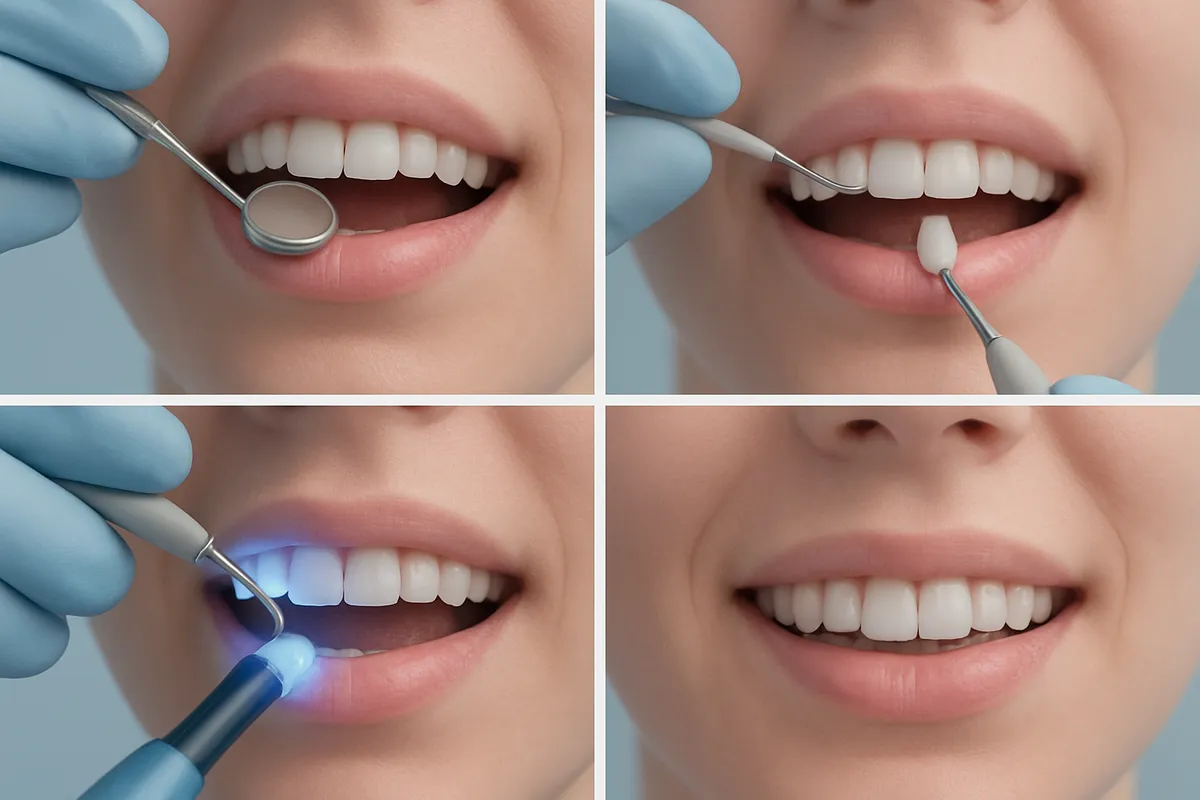
Step 1, Shade matching. Your dentist holds a shade guide next to your tooth and selects a composite resin color that closely matches your surrounding natural enamel. This happens before any moisture or light alters the tooth’s appearance.
Step 2, Surface preparation and etching. The tooth surface is lightly roughened, then a phosphoric acid etching gel is applied for 15–30 seconds [2]. The acid creates microscopic pores in the enamel, giving the resin a textured surface to grip.
Step 3, Primer and bonding agent. A liquid bonding agent is brushed onto the etched surface and cured briefly with a curing light. This layer acts as a chemical bridge between your enamel and the composite resin applied next.
Step 4, Resin application and sculpting. Your dentist applies a putty-like composite resin in incremental layers, hand-sculpting each one to rebuild the tooth’s shape. Building up the material gradually produces a more precise and natural-looking result.
Step 5, Curing. A high-intensity blue LED curing light hardens each resin layer in 20–40 seconds [2]. Your dentist cures each layer before adding the next.
Step 6, Finishing and polishing. Once the final layer is cured, the hardened resin is trimmed, contoured, and polished until its sheen matches the surrounding natural enamel.
How Painful Is the Dental Bonding Procedure and What Should I Expect During Treatment?
Dental bonding is generally painless, most patients require no anesthesia unless the procedure is addressing decay or a chip near a nerve [1].
The etching gel produces a mild tingling sensation for a few seconds, and the curing light generates no heat that patients typically notice. Patients at Villagio Family & Cosmetic Dental consistently report the experience as straightforward, comparable to a routine cleaning in terms of discomfort. The main sensation most people describe is simply keeping their mouth open for the sculpting phase.
“Most patients are genuinely surprised by how comfortable the bonding procedure is. The absence of drilling and anesthesia in purely cosmetic cases makes it one of the most patient-friendly treatments we offer.” — Dr. Mark Wolff, Dean, University of Pennsylvania School of Dental Medicine
How Long Dental Bonding Lasts and What the Recovery Timeline Looks Like
Dental bonding typically lasts 3 to 10 years, and most patients resume normal activity the same day with no formal recovery period [2].
How Many Years Does Tooth Bonding Typically Last Before Needing Replacement?
Durability depends on three factors: where the bonded tooth sits in the mouth, the bite forces it absorbs, and the patient’s daily habits. Front teeth with minimal bite contact, the most common candidates in a dental bonding procedure explained step by step, trend toward the 7-to-10-year end of that range [2].
Teeth that bear heavy chewing load, or patients who grind at night, tend to see wear closer to the 3-to-5-year mark. A nightguard can extend the life of bonding significantly for grinders. According to WebMD’s overview of dental bonding, how well a patient cares for bonded teeth is one of the single strongest predictors of longevity — patients who avoid staining foods in the first 48 hours and attend regular cleanings consistently achieve results at the higher end of the lifespan range.
Watch for these signs that a repair is due:
- Visible chipping along the bonded edge
- Rough texture when you run your tongue across the surface
- Color mismatch between the resin and the surrounding tooth
- New sensitivity to hot, cold, or pressure
In many cases, a dentist can repair just the affected area, replacing the full restoration is not always necessary [2].
What Is the Exact Recovery Time After Dental Bonding and Are There Activity Restrictions?
There is no recovery period. Patients can eat, drink, and go back to their normal routine immediately after the appointment [2].
The one exception covers the first 24 to 48 hours. Freshly polished composite resin is slightly more porous before its surface fully hardens, so staining agents, coffee, red wine, berries, and tomato sauce, can discolor the resin during that window. Avoiding them briefly protects the color match your dentist worked to achieve.
Bonding also skips the multi-appointment process that crowns and veneers require. There is no temporary restoration to manage and no separate placement visit, the tooth is finished and functional before you leave the chair [2].
How Dental Bonding Compares to Veneers, Crowns, and Other Cosmetic Options
Dental bonding sits at the budget-friendly end of cosmetic dentistry, less invasive than veneers or crowns, but with shorter longevity and more stain susceptibility.
Understanding these trade-offs is the most practical part of any dental bonding procedure explained to a new patient. Each option solves a different problem, and choosing the wrong one costs more time and money in the long run.
Bonding vs. Porcelain Veneers
Porcelain veneers last 10–20 years and resist staining better than composite resin [2]. The catch: placing veneers requires the dentist to permanently remove a thin layer of enamel, making the procedure irreversible. Bonding leaves enamel intact and costs considerably less, but the resin surface picks up stains from coffee, tea, and wine more readily over time.
Bonding vs. Dental Crowns
Crowns encase the entire tooth and are designed for structural damage, teeth that have fractured significantly or undergone a root canal [2]. They sit at the premium end of the cost range and require removing more tooth structure than either bonding or veneers. Bonding is appropriate only when the underlying tooth is largely intact and the repair is primarily cosmetic or minor.
Bonding vs. Teeth Whitening
Whitening treats discoloration only, it cannot repair a chip or change tooth shape. Bonding handles both cosmetic and minor structural concerns in a single appointment, making it the more flexible option for patients dealing with multiple issues at once.
Bonding vs. Invisalign and Orthodontics
Bonding can close small gaps or create the visual impression of straighter teeth quickly. It does not move teeth, though. Patients with significant misalignment need orthodontic treatment, bonding used in place of it produces results that look unnatural and wear unevenly.
What Is the Cost Difference Between Dental Bonding, Veneers, Crowns, and Teeth Whitening?
Bonding is the most budget-friendly cosmetic option. Veneers fall in the mid-to-premium range, and crowns are a premium investment, both vary by case complexity and the dental market in your area. At Villagio Family & Cosmetic Dental, the team reviews each patient’s specific situation before recommending any option, so cost and clinical need are weighed together rather than in isolation.
Risks, Downsides, and Maintenance Requirements for Bonded Teeth
Dental bonding is durable and cost-effective, but it stains more easily than porcelain, chips under heavy bite forces, and requires consistent upkeep to reach its full lifespan.
Any honest dental bonding procedure explained to a patient should cover these limitations before treatment begins. Composite resin is more porous than porcelain, which means it absorbs pigment from coffee, tea, red wine, and tobacco over time [2]. Professional polishing at your regular cleanings slows the process, but some color shift is expected, it is not a defect, it is a material property.
Bonding also lacks the hardness of natural enamel or porcelain. Nail-biting, chewing ice, and biting hard objects can chip the resin [2]. Patients with bruxism, nighttime teeth grinding, carry a higher risk of fracture and should discuss a custom nightguard with their dentist before committing to bonding on high-stress teeth.
“Composite resin has improved dramatically over the past two decades, but patient selection and maintenance habits remain the most important variables in long-term bonding success. The material can only perform as well as the environment it’s placed in.” — Dr. Richard Simonsen, Editor Emeritus, Journal of Esthetic and Restorative Dentistry
Do Teeth Rot or Decay Under Composite Bonding and What Special Care Is Needed?
Yes, the tooth underneath bonding can still develop cavities, particularly at the margin where resin meets enamel. Composite does not seal the tooth against bacteria; poor oral hygiene allows decay to develop at the bond line without any visible warning on the surface.
To protect bonded teeth, use a non-abrasive toothpaste, avoid biting fingernails or hard foods directly with the bonded area, and schedule professional cleanings every six months so your dentist can polish the resin and inspect the margins for early decay or separation.
What Are the Potential Complications and Failure Rates of Dental Bonding?
Studies suggest composite restorations carry an annual failure rate of roughly 1–3%, meaning a restoration placed today has a meaningful chance of needing repair or replacement within a decade. Chipping, staining, and margin breakdown are the most common failure modes, not sudden, dramatic fracture. Research published in dental literature also indicates that approximately 50% of composite resin restorations require some form of repair or replacement within 10 years, underscoring the importance of routine monitoring at professional checkups.
Patients who grind their teeth, consume heavily pigmented foods regularly, or skip routine cleanings sit at the higher end of that failure range. Wearing a nightguard if grinding is present and committing to six-month checkups at Villagio Family & Cosmetic Dental gives bonded teeth the best realistic chance of lasting eight to ten years before any significant touch-up is needed.
Frequently Asked Questions
Is dental bonding covered by dental insurance?
Insurance coverage depends on the reason for the procedure. When bonding repairs a chipped tooth, treats decay, or protects an exposed root, many dental plans classify it as restorative and cover a portion of the cost [2]. When the purpose is purely cosmetic, closing a gap or changing tooth color, most insurers treat it as elective and offer no coverage. Always confirm with your provider before scheduling.
Can dental bonding fix a gap between front teeth?
Yes, dental bonding is one of the most straightforward ways to close a small gap between front teeth [2]. Your dentist applies composite resin to the sides of the adjacent teeth, sculpts the material to reduce the space, and hardens it with a curing light. The result is immediate, and no lab work or waiting period is required.
How do I know if I am a good candidate for dental bonding?
You are likely a good candidate if your teeth are structurally sound and you want to correct minor cosmetic issues, chips, discoloration, small gaps, or slight shape irregularities [1]. Bonding works best on teeth with sufficient enamel for the resin to adhere to. Patients with significant decay, gum disease, or heavy bite pressure on the target tooth may need a different treatment first. A dentist at Villagio Family & Cosmetic Dental can assess your specific situation during a consultation.
Can bonded teeth be whitened if they discolor over time?
Composite resin does not respond to whitening treatments the way natural enamel does [1]. If your bonded tooth discolors, your dentist can polish the resin to remove surface stains, or replace the bonding material with a shade that matches freshly whitened surrounding teeth. For this reason, many dentists recommend completing any whitening treatment before placing new bonding.
How should I care for my teeth immediately after a dental bonding procedure?
In the first 24 to 48 hours after bonding, avoid strongly pigmented foods and beverages such as coffee, red wine, and berries, as the resin surface is slightly more porous during this period and more susceptible to staining. Beyond that initial window, maintain good oral hygiene with a soft-bristled toothbrush and non-abrasive toothpaste, avoid biting hard objects with the bonded tooth, and attend professional cleanings every six months so your dentist can polish the resin and check the margins.
Conclusion
Dental bonding is one of the few cosmetic procedures that delivers visible results in a single appointment, without removing healthy tooth structure. Three things are worth remembering: the surface preparation and shade selection your dentist performs before applying resin determine how natural the result looks; daily habits, coffee, tea, and tobacco, directly affect how long the bonding stays stain-free; and composite resin cannot be whitened after placement, so plan any whitening first.
If you are weighing bonding against veneers or simply want to know whether your specific chip or gap qualifies, schedule a cosmetic consultation at Villagio Family & Cosmetic Dental in Katy, TX, and ask your dentist to show you a shade guide so you leave knowing exactly what color your bonded tooth will be.
Sources & References
- What is Dental Bonding & What To Expect — Cleveland Clinic
- Dental Bonding: Teeth Bonding Procedure, Lifespan, and Cost — WebMD
- Dental Bonding Procedure Video Walkthrough — YouTube
Recommended Articles
Explore more from our content library: