Proudly Serving Katy, Richmond & Fulshear Cinco Ranch
(281) 395-2100
|
(281) 394-4001

Scaling and root planing treatment is a non-surgical deep cleaning procedure used to treat periodontal (gum) disease by removing plaque, tartar, and bacterial toxins from below the gumline and smoothing the tooth root surfaces so gums can reattach. It is typically recommended when gum pockets measure 4mm or deeper, a sign that standard cleaning can no longer reach the infection. Without treatment, periodontal disease progresses to bone loss and, eventually, tooth loss.

What Is Scaling and Root Planing Treatment, and Why Do You Need It?
Scaling and root planing treatment is the clinical standard for gum disease that has progressed past what a routine cleaning can address. A standard prophylaxis, the cleaning you get at a twice-yearly checkup, removes plaque and tartar from the tooth surface above the gumline. Scaling and root planing goes further, clearing bacterial deposits from below the gumline and smoothing the root surfaces where bacteria anchor themselves.
What Is Periodontal Disease and How Does It Develop?
Periodontal disease begins when plaque, a sticky bacterial film, is not fully removed from teeth and hardens into tartar [2]. The bacteria irritate gum tissue, triggering inflammation. At this earliest stage, called gingivitis, the damage is still reversible with professional cleaning and good home care.
Left untreated, gingivitis advances to early periodontitis. The gums pull away from the teeth, forming pockets where bacteria accumulate out of reach of a toothbrush or standard cleaning instruments [2]. Once pocket depths reach 4mm or greater, the infection has moved below the gumline, the clinical threshold at which scaling and root planing becomes necessary rather than optional [1]. Without intervention, the disease progresses to advanced periodontitis, destroying the bone and connective tissue that hold teeth in place.
The consequences extend beyond the mouth. Untreated periodontal disease is associated with increased risk of cardiovascular disease and complications in patients managing diabetes, systemic effects that make gum disease a whole-body concern, not just a dental one. According to the American Dental Association’s MouthHealthy resource, research continues to strengthen the link between periodontal health and overall systemic health, underscoring why early intervention matters.
“Periodontal disease is not just a mouth problem — it is a systemic condition with implications for cardiovascular health, diabetes management, and even pregnancy outcomes. Treating it early with procedures like scaling and root planing is one of the most impactful things a patient can do for their overall health.” — Dr. Wayne Aldredge, Past President, American Academy of Periodontology
Is Scaling and Root Planing Worth It?
A July 2015 study in the Journal of the American Dental Association found that scaling and root planing is beneficial for patients with chronic periodontitis [2]. The procedure halts disease progression and can reverse early-stage periodontitis by allowing inflamed gum tissue to heal and reattach to clean root surfaces. That outcome, stopping an active infection and preserving natural teeth, makes it one of the most cost-effective interventions in dentistry. Treating gum disease at this stage is significantly less involved than managing bone loss or tooth replacement later.
Research published in the Journal of Clinical Periodontology found that patients who completed scaling and root planing and adhered to a 3–4 month maintenance schedule reduced their risk of disease recurrence by more than 50% compared to those who returned to annual cleanings only. This statistic reinforces why the post-treatment maintenance schedule is considered a non-negotiable part of the overall therapy, not an optional add-on.
What Happens During a Scaling and Root Planing Procedure?
A scaling and root planing treatment involves two distinct cleaning phases, local anesthesia, and typically spans multiple appointments of 45–90 minutes each.
How Long Does a Scaling and Root Planing Procedure Typically Take?
Most dental offices divide treatment into quadrant or half-mouth sessions rather than completing the entire mouth in one visit [2]. Each appointment runs 45–90 minutes depending on how much tartar has accumulated and how deep the gum pockets have become [3].
A follow-up periodontal evaluation is scheduled 4–6 weeks after the final session. At that appointment, your dentist measures pocket depths again to confirm improvement and decides whether any additional intervention, such as referral to a periodontist, is warranted.
What Should I Expect During Each Stage of the Treatment?
Before any instruments touch your teeth, your dentist applies local anesthesia to the area being treated. You may feel pressure and vibration throughout the procedure, but you should not feel pain [1].
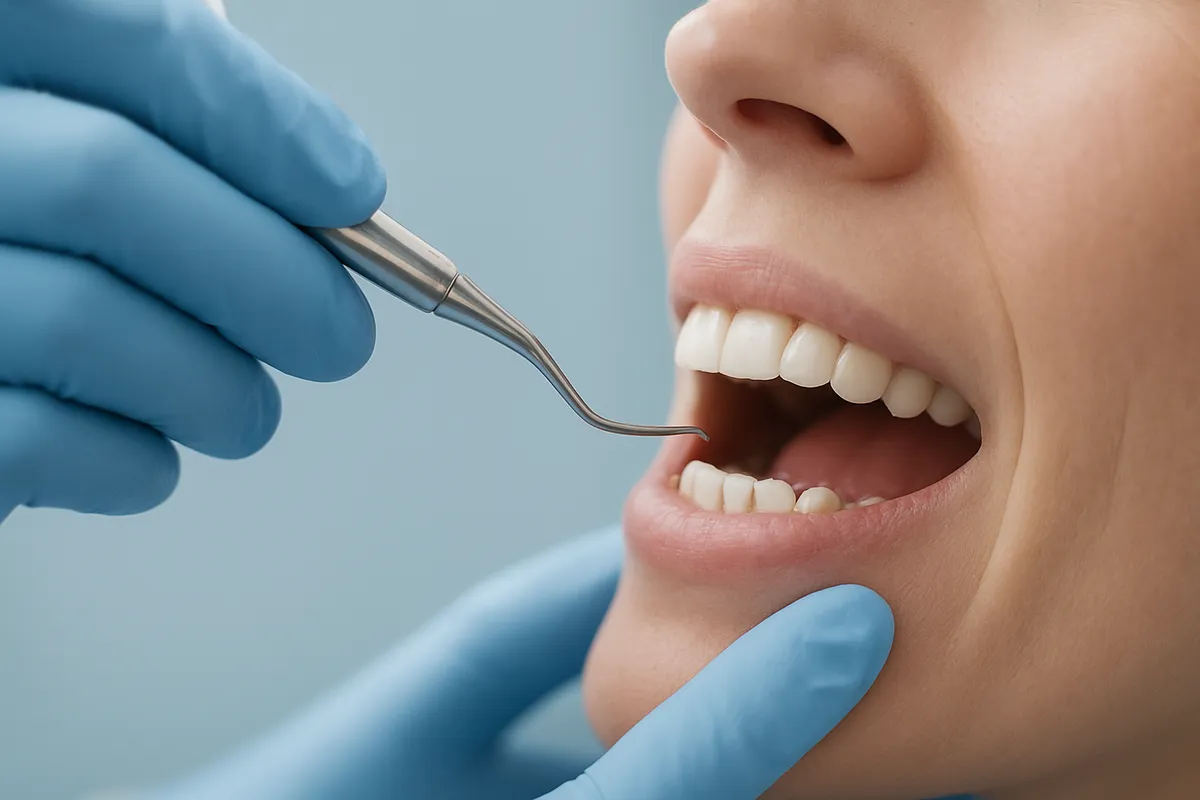
The first phase is scaling: your dentist or hygienist removes calculus (hardened tartar) and plaque from tooth surfaces both above and below the gumline [2]. Both ultrasonic scalers, which use high-frequency vibration and a water spray, and traditional hand instruments are used to clear deposits from the pockets [3].
The second phase is root planing. Your clinician smooths the root surfaces of each tooth, which eliminates the rough areas where bacteria anchor themselves and encourages the gum tissue to reattach to the root [1]. Some practices also place an antimicrobial agent directly into the cleaned pockets at this stage to reduce residual bacterial load.
The two-phase approach works together as a system: scaling removes the existing bacterial deposits, while root planing creates a clean, smooth surface that is far more resistant to future bacterial colonization. Skipping or rushing either phase reduces the overall effectiveness of the treatment.
“Scaling removes the deposits, but root planing is what gives the gum tissue a fighting chance to reattach. Both steps are essential — one without the other leaves the job half done.” — Dr. Maria Emanuel Ryan, Professor of Oral Biology and Pathology, Stony Brook University School of Dental Medicine
Is Scaling and Root Planing Painful, and What Does Recovery Look Like?
Most patients feel pressure, not pain, during the procedure, and mild soreness typically resolves within 3 to 7 days. For more information, see grateful hearts growing families what it means to be named the best pediatrics practice of 2025.
Local anesthesia is applied before scaling and root planing treatment begins, which means the dominant sensation during the appointment is pressure from the instruments working below the gumline [2]. Discomfort during the procedure itself is minimal for the vast majority of patients.
Post-procedure soreness is a different matter. Expect gum tenderness, sensitivity to hot and cold foods, minor bleeding, and the appearance of slight gum recession as swelling subsides, all of these are normal and expected [1]. The gum recession you notice in the first few days is usually swelling resolving, not actual tissue loss.
Over-the-counter pain relievers such as ibuprofen manage post-treatment soreness well for most people. A soft-food diet for the first 48 hours, think yogurt, mashed potatoes, and scrambled eggs, reduces irritation while the tissue heals [3]. According to the Cleveland Clinic’s guide to dental deep cleaning, patients should also avoid very hot or very cold beverages for the first 24–48 hours to minimize sensitivity during the initial healing window.
How Long Is the Recovery Period After Scaling and Root Planing?
Most patients return to normal eating and oral hygiene within 3 to 7 days [1]. Sensitivity to temperature can linger for up to 2 weeks, which is still within the expected range.
What Are the Potential Risks of This Procedure?
Serious complications are uncommon, but certain symptoms require a call to the dental office. Contact your dentist if you experience severe or worsening pain beyond 72 hours, signs of infection such as pus or fever, or bleeding that won’t slow down [1]. These fall outside the normal recovery pattern and need prompt evaluation.
How Does Scaling and Root Planing Compare to Other Gum Disease Treatments?
Scaling and root planing treatment sits in the middle of the gum disease care spectrum, more intensive than a routine cleaning, but less invasive than surgery.
The treatment ladder works in three clear steps. A standard prophylaxis cleaning handles healthy gums with no pocket involvement. Scaling and root planing addresses moderate periodontitis, typically when pocket depths measure 4–6mm [2]. When pockets reach 7mm or deeper, or when significant bone defects are present, osseous surgery or flap surgery becomes the appropriate path.
One thing scaling and root planing cannot do: reverse bone loss that has already occurred. It stops further destruction by removing the bacterial deposits driving the infection, but bone that is gone requires surgical intervention, such as bone grafting, to address.
To summarize how the treatment options compare at each stage of gum disease:
- Gingivitis (no pocketing): Standard prophylaxis cleaning and improved home care are sufficient to reverse the condition.
- Early to moderate periodontitis (4–6mm pockets): Scaling and root planing is the first-line, non-surgical treatment of choice.
- Advanced periodontitis (7mm+ pockets or bone defects): Surgical intervention such as osseous surgery, flap surgery, or bone grafting is typically required.
- Post-treatment maintenance (all stages): Periodontal maintenance every 3–4 months is essential to prevent recurrence regardless of which treatment was performed.
When Is Laser Therapy or Surgical Intervention Recommended Instead?
Laser-assisted periodontal therapy is sometimes used alongside or instead of conventional instruments. It can reduce bacterial load and encourage tissue regeneration, but it is not consistently superior to traditional scaling and root planing for all pocket depths, and many insurance plans do not cover it.
Surgical intervention becomes the recommendation when scaling and root planing has not resolved persistent deep pockets at the follow-up evaluation, when furcation involvement is detected, meaning disease has reached the point where roots divide, or when bone defects require direct access to repair.
What Is the Typical Timeline for Seeing Results?
Your dentist will measure pocket depths at a follow-up appointment 4–6 weeks after the procedure to assess how well your gum tissue has responded. Full tissue stabilization, meaning gum reattachment and inflammation resolution, generally takes 3–6 months [1].
If pockets remain deep after that window, a referral to a periodontist for surgical evaluation is the standard next step.
What to Do After Scaling and Root Planing to Keep Gum Disease from Returning
Long-term success after scaling and root planing treatment depends on combining professional maintenance visits every 3–4 months with consistent daily oral hygiene at home.
At-Home Maintenance Products and Techniques That Help
Brush twice daily with a soft-bristled or electric toothbrush, electric models remove plaque more reliably along the gumline for most patients. Clean between teeth once daily using floss or interdental brushes, which reach the pockets that a toothbrush cannot access.
If your dentist prescribes a chlorhexidine rinse, use it as directed during the healing period. It reduces the bacterial load in treated pockets and supports tissue recovery. Water flossers are a useful addition for patients with dexterity limitations or dental implants, but they do not replace traditional interdental cleaning, they work best as a supplement, not a substitute.
“Consistent home care after scaling and root planing is not optional — it is the difference between a successful outcome and a relapse. Patients who brush, floss, and keep their maintenance appointments give their gums the best possible chance of staying healthy long-term.” — Dr. Joan Otomo-Corgel, Past President, American Academy of Periodontology
How to Prevent Periodontal Disease from Returning
After scaling and root planing, the clinical standard is a periodontal maintenance appointment every 3–4 months, not the routine 6-month recall [2]. Bacteria repopulate treated pockets within weeks, so this shortened interval is non-negotiable for preventing recurrence. Skipping or delaying these visits is the most common reason gum disease returns.
Three controllable risk factors accelerate recurrence more than any others: smoking, uncontrolled diabetes, and chronic stress. Smoking is the single largest modifiable risk, it restricts blood flow to gum tissue and slows healing measurably. Managing blood sugar and stress levels gives treated tissue the best environment to stay healthy. For additional guidance on long-term gum disease prevention, Colgate’s overview of scaling and root planing expectations and prevention offers practical tips patients can apply at home.
Neither professional care nor home care alone is enough. The patients who maintain their results long-term are the ones who show up for every maintenance visit and follow through daily at home.
Frequently Asked Questions
How many sessions does scaling and root planing typically require?
Most patients complete scaling and root planing in two to four appointments, with the mouth divided into quadrants treated one or two at a time [1]. Each quadrant session typically runs 45 to 60 minutes. Dentists schedule appointments this way to keep each visit manageable and to allow local anesthetic to work effectively on a focused area. Patients with more advanced gum disease or deeper pockets may need additional visits before the gums stabilize.
Can scaling and root planing fully cure gum disease?
Scaling and root planing can reverse early-stage gum disease and significantly reduce the progression of more advanced periodontitis, but it is not a permanent cure on its own [2]. A July 2015 study in the Journal of the American Dental Association found the treatment beneficial for patients with chronic periodontitis [2]. Long-term success depends on consistent home care and regular professional maintenance cleanings, typically every three to four months after the initial treatment.
Does dental insurance usually cover scaling and root planing?
Most dental insurance plans classify scaling and root planing as a covered periodontal procedure, though coverage levels and annual maximums vary by plan. Many plans cover 50% to 80% of the cost after the deductible is met. At Villagio Family & Cosmetic Dental, the team can review your specific benefits before treatment so you know exactly what to expect, no surprises at checkout.
How do I know if I need scaling and root planing or just a regular cleaning?
The key indicator is pocket depth, if the space between your gums and teeth measures 4 mm or deeper, scaling and root planing is likely needed rather than a standard cleaning [2]. Your dentist measures these pockets during a periodontal exam using a small probe. Signs like bleeding gums, persistent bad breath, or gum recession are also red flags. A routine exam at Villagio Family & Cosmetic Dental will determine exactly which treatment applies to your situation.
Can I eat normally after scaling and root planing?
For the first 48 hours after treatment, a soft-food diet is strongly recommended to minimize irritation to treated gum tissue. Foods like yogurt, mashed potatoes, soup, and scrambled eggs are ideal during this window. Avoid hard, crunchy, or very hot and cold foods until sensitivity subsides. Most patients return to their normal diet within 3 to 7 days, though individual healing times vary depending on the extent of treatment and overall health.
Conclusion
Scaling and root planing treatment is the most effective non-surgical option for stopping gum disease before it destroys the bone and tissue that hold your teeth in place [2]. Three things matter most after reading this: catch gum disease early by keeping your regular exams, follow through with the full treatment if your dentist recommends it, and commit to maintenance cleanings every three to four months once treatment is complete.
If you live in Katy, Fulshear, Richmond, or Cinco Ranch and your gums bleed when you brush or floss, schedule a periodontal exam at Villagio Family & Cosmetic Dental, ask specifically for a pocket-depth measurement so you leave with a clear answer, not just a general checkup.
Sources & References
- Dental Deep Cleaning: What It Is & What To Expect — Cleveland Clinic
- Scaling and Root Planing for Gum Disease | MouthHealthy – Oral Health Information from the ADA — American Dental Association
- Teeth Scaling And Root Planing: Expectations And Prevention | Colgate
Recommended Articles
Explore more from our content library:
- A Complete Guide to the Dental Bonding Procedure Explained
- A Complete Guide to Invisalign vs Traditional Braces and
- <a href="https://villagiofamilydental.com/blog/2026/08/18/what-is-gum-disease-and-how-does-it-affect-your-overall-heal/" title="Understanding Gum Disease Causes and Effects“>Understanding Gum Disease Causes and Effects
- 7 Proven Keys to Maintain a Bright Smile Every Day
- 5 Key Reasons to Choose Professional vs Home Whitening