Proudly Serving Katy, Richmond & Fulshear Cinco Ranch
(281) 395-2100
|
(281) 394-4001

Smile design dentistry is a comprehensive cosmetic dental approach that combines multiple treatments, such as veneers, whitening, bonding, and orthodontics, to change, recolor, and rebalance a patient’s smile according to their facial features and personal goals. Unlike a single-procedure fix, it begins with a detailed analysis of tooth proportion, gum line, lip framing, and facial symmetry before any treatment starts. The result is a coordinated plan where every element works together rather than in isolation.
What Is Smile Design Dentistry and How Does It Work?
Smile design dentistry coordinates multiple dental procedures around a single aesthetic blueprint, rather than treating each concern as a separate problem.
That blueprint is what separates a designed smile from a collection of individual procedures. A dentist performing standalone whitening or a single veneer is solving one problem. A smile design practice starts by mapping the entire mouth, and the face around it, before recommending any treatment at all. Practices such as Smile Design of Georgia, serving Duluth, Suwanee, and Norcross, and Smile Design of Atlanta, serving Atlanta and Alpharetta, exemplify this full-mouth planning approach.
The Analysis That Comes Before Any Treatment
Before a treatment plan takes shape, a dentist evaluates several measurable relationships. According to the American Dental Association, a thorough pre-treatment evaluation is essential to predictable cosmetic outcomes. Key reference points include:
- The ratio of tooth length to lip height when smiling
- The alignment of the dental midline with the center of the face
- The symmetry of the gum line across both sides
- How tooth color reads against the patient’s skin tone
These aren’t aesthetic preferences — they’re structural reference points that determine which procedures will produce a balanced result. Skipping this analysis is where single-procedure approaches often fall short. A patient who whitens teeth that are already slightly misaligned ends up with brighter teeth that still look off-center.
What Makes a Good Smile Design Versus a Poor One?
A well-executed smile design produces results that look proportional and natural: teeth with slight translucency at the edges, a gum line that follows an even arc, and overall dimensions that suit the patient’s face width and lip shape. Poorly executed designs often share one flaw — they ignore facial framing. Teeth that are too long, too uniformly opaque, or too wide for the patient’s face tend to look artificial precisely because they were planned in isolation from the surrounding features.
How Does Smile Design Differ Across Dental Philosophies?
Two dentists may recommend different paths for the same smile, and both can be correct. Minimally invasive approaches prioritize preserving natural tooth structure, using options like composite bonding or thin porcelain veneers that require little to no enamel removal. More transformative approaches may involve reshaping teeth more aggressively to achieve a specific result, which can be appropriate when structural correction is needed alongside aesthetics.
Neither philosophy is universally superior. The right choice depends on how much natural tooth structure is healthy, how significant the changes need to be, and what the patient is willing to commit to long-term. At Villagio Family & Cosmetic Dental, the treatment planning process addresses these trade-offs directly before any work begins.
The Key Principles and Steps Involved in Creating a Smile Design
Smile design dentistry follows a structured sequence: diagnostic records first, digital planning second, and treatment execution only after both dentist and patient approve the proposed outcome.
The process begins with a thorough consultation. Your dentist captures facial photographs from multiple angles, takes digital scans or physical impressions of your teeth, and records specific measurements, including tooth-to-lip ratios and how much of your upper teeth show when your lips are at rest. These measurements anchor every design decision that follows.
What Specific Design Decisions Go Into a Personalized Smile Plan?
Tooth shape is one of the first choices. Square teeth read as bold and structured; rounded teeth look softer and more youthful. Neither is objectively better — the right choice depends on your facial geometry, age, and personal preference.
Shade selection follows a similar logic. A shade that looks natural against fair skin can appear stark against a deeper complexion. Dentists also factor in eye color and the existing color of adjacent teeth to find a tone that integrates rather than stands out. Incisal edge position — how low the upper front teeth sit relative to your lower lip at rest — determines how much tooth shows when you speak, which affects both aesthetics and the appearance of age.
Treatment sequencing matters just as much as these aesthetic choices. The American Academy of Cosmetic Dentistry emphasizes that orthodontic alignment or gum contouring must happen before veneers or bonding are placed. Placing veneers on teeth that will later shift, or on gum lines that will later be changed, wastes the restoration and can require costly rework.
How Do Dentists Use Digital Tools and Technology in Smile Design?
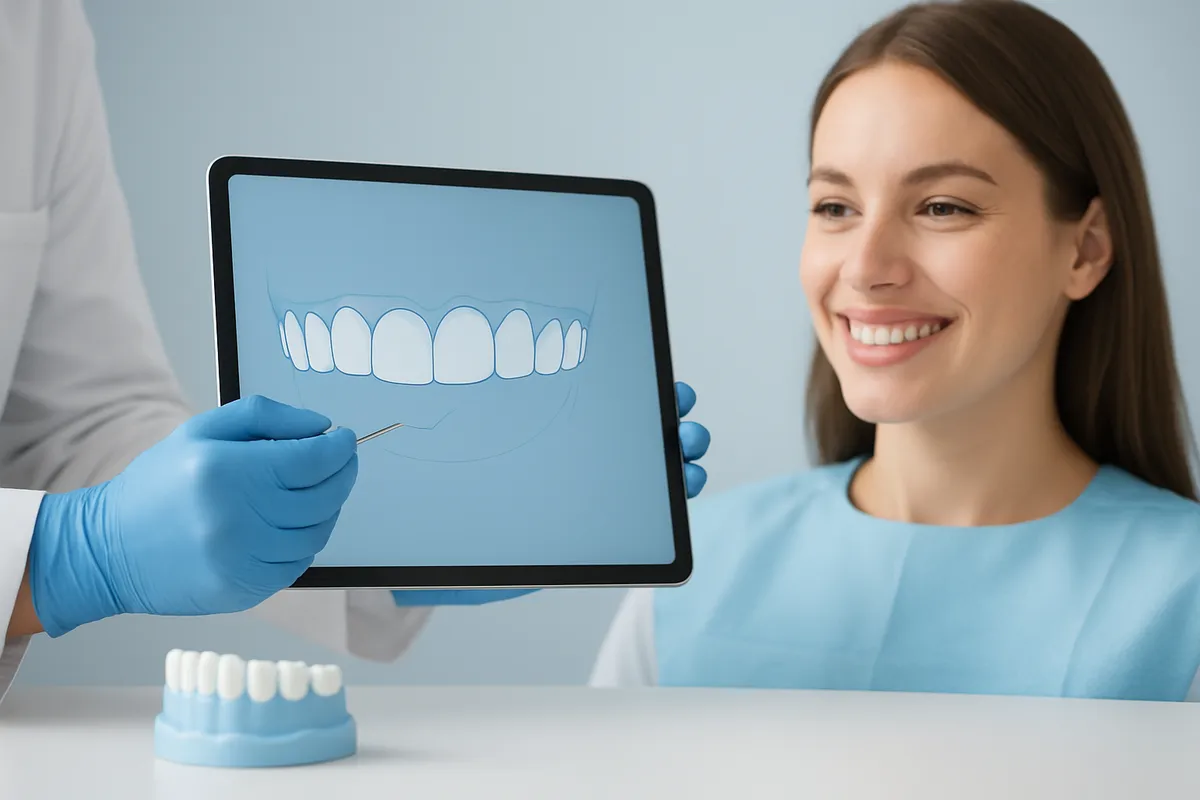
Digital smile design software overlays proposed changes — tooth shape, length, shade — directly onto a photograph of your actual face. You see the projected result before any preparation work begins, which means no irreversible enamel reduction happens until both you and your dentist are confident in the plan. At Villagio Family & Cosmetic Dental, this preview step is a standard part of the planning process, giving patients in Katy and the surrounding communities a clear picture of their expected outcome before committing to treatment.
What Smile Design Options Are Available and How Do They Compare?
Smile design dentistry draws on five core treatment categories — veneers, bonding, whitening, orthodontics, and gum contouring — each targeting a different set of concerns. For more information, see Smiley Face Emoji Trailer Hitch Cover Spread Good Vibes Everywhere You Go.
Veneers, Bonding, and Whitening: Choosing the Right Restoration
Understanding the differences between the primary restoration types helps patients make informed decisions. Here is how the most common options compare:
- Porcelain veneers: Thin ceramic shells bonded to the front of each tooth. They mask deep discoloration, correct irregular shapes, and close minor gaps with results that typically last 10–15 years. The trade-off is irreversibility — a small amount of enamel is removed to seat them.
- Composite bonding: Tooth-colored resin applied directly to the tooth surface. It handles minor chips, slight spacing, and surface stains with no enamel removal, making it fully reversible. Bonding is less durable than porcelain and may need replacement within 5–7 years, but it requires a single appointment.
- Professional whitening: Addresses discoloration only — it does nothing for shape or alignment. It works best as a starting point that sets the shade target before any restorations are matched to it.
How Do Braces, Clear Aligners, and Other Treatments Fit Into Smile Design?
Alignment must be resolved before cosmetic restorations are placed. Veneers bonded to teeth that will later shift waste both time and money. Traditional braces and clear aligners both correct positioning — the choice depends on severity and patient preference, but either way, orthodontic treatment comes first in the sequencing plan.
For minor positional issues, a skilled dentist can sometimes compensate with careful veneer shaping rather than full orthodontic treatment. That call depends on how much the tooth deviates and the overall bite relationship.
Gum contouring and crown lengthening are often overlooked foundational steps. An uneven gum line makes symmetrical veneers look asymmetrical — the gum tissue frames each restoration, so correcting its contour before placing any restorations is critical to the final result. The American Academy of Periodontology provides detailed guidance on gum tissue health as a foundation for cosmetic dental work.
What Before-and-After Results Can You Realistically Expect?
Some concerns respond predictably to treatment. Discoloration, minor chips, and slight spacing are among the most straightforward to address, and results are consistent across patients when the underlying teeth are healthy.
Severe crowding, significant bite misalignment, or bone loss require multi-phase planning — often involving orthodontics, restorative work, and possibly periodontal treatment before any cosmetic step begins. Expecting veneer-level simplicity for these cases leads to disappointment. A thorough clinical assessment at the start sets accurate expectations and prevents mid-treatment surprises.
How Much Does Smile Design Dentistry Cost and What Affects the Investment?
Smile design dentistry costs vary widely based on the number of teeth treated, materials chosen, and whether preparatory work is needed first.
The clearest cost driver is scope. Treating two front teeth costs far less than a full-arch reconstruction. Material choice also shifts the investment significantly — composite resin bonding sits at the budget-friendly end, porcelain veneers occupy the mid-range, and full-coverage zirconia restorations represent the premium tier. Preparatory treatments like orthodontic alignment or gum contouring add both time and cost before cosmetic work even begins. Geographic market plays a role too — practices in higher cost-of-living areas typically reflect that in their fees.
Entry-level options such as single-tooth bonding or professional whitening give patients a meaningful result without a large commitment. Partial veneer sets or clear aligner therapy sit in the mid-range. Full-arch smile reconstructions — combining veneers, crowns, and gum work across all visible teeth — represent the most significant investment.
Are Smile Design Treatments Covered by Dental Insurance?
Most smile design procedures are classified as elective cosmetic care, which places them outside standard dental insurance coverage. Insurers generally do not reimburse veneers, bonding for aesthetic purposes, or whitening.
Preparatory treatments are a different matter. If orthodontic work or gum therapy is deemed medically necessary to correct a functional issue, partial insurance coverage may apply — worth confirming directly with your provider before treatment begins.
Financing plans and phased treatment schedules are the practical answer for most patients. Sequencing work over 12 to 24 months allows you to prioritize the highest-impact procedures first and spread the investment without delaying care indefinitely.
Who Is a Good Candidate for Smile Design and What Should You Expect?
Most adults with stable oral health qualify for smile design dentistry, but active decay, gum disease, or bite problems must be treated first.
Skipping that foundational step is the most common reason cosmetic restorations fail ahead of schedule. A veneer bonded over a tooth with untreated decay, or a crown placed on a patient with unmanaged gum disease, sits on an unstable base. The cosmetic work fails, and the patient pays twice. At Villagio Family & Cosmetic Dental, every smile design consultation begins with a full clinical assessment to confirm the mouth is ready before any aesthetic planning starts.
Are There Age-Specific Considerations for Smile Design?
Younger patients whose dentition is still developing are generally not candidates for permanent cosmetic restorations like veneers — placing them before the jaw and teeth have fully matured risks misalignment as growth continues. Orthodontic treatment or conservative bonding is typically the better starting point for patients in their mid-to-late teens.
Older adults face a different set of variables. Bone density loss and gum recession change the visible tooth structure and affect how restorations are shaped and supported. A plan built for a 55-year-old patient accounts for those tissue changes in ways a template designed for a 30-year-old simply would not.
How Does Smile Design Address Individual Aesthetic Goals Across Demographics?
Tooth shape preferences, shade selection relative to skin tone, and the proportions that read as natural differ meaningfully across individuals — and a skilled dentist treats those differences as clinical inputs, not afterthoughts. A shade that looks bright and natural against one skin tone can appear stark against another. Tooth shape preferences also vary: some patients prefer rounder, softer edges while others favor a more defined, angular profile. These goals belong in the consultation conversation from the first appointment.
Timeline expectations matter too. A straightforward case — whitening plus two veneers — may conclude in two to three appointments over four to six weeks. A full-mouth redesign involving crowns, gum contouring, and orthodontic preparation can span six to eighteen months. During longer treatment arcs, patients typically wear temporary restorations or a wax mock-up so they can preview the planned result and request adjustments before anything is made permanent.
For patients in the greater Atlanta area, Smile Design of Atlanta offers comprehensive consultations that walk through each of these demographic and aesthetic considerations in detail. Similarly, Smile Design of Georgia provides personalized planning for patients across the Duluth, Suwanee, and Norcross communities.

Frequently Asked Questions
How long does a smile design treatment take from start to finish?
Treatment length depends on which procedures are included — a single-visit veneer case may take two to three appointments over four to six weeks, while a plan combining orthodontics, gum contouring, and restorations can run six to eighteen months. Your dentist will map out a realistic timeline during the smile design consultation, after digital imaging and bite analysis are complete.
Can smile design fix a gummy smile?
Yes, gum contouring (also called crown lengthening) is a standard component of smile design dentistry that reduces excess gum tissue and exposes more of the tooth surface. The procedure is typically completed in one visit using a soft-tissue laser. Results are permanent once healing is complete, usually within two to four weeks.
Is smile design dentistry painful?
Most smile design procedures are performed under local anesthesia, so discomfort during treatment is minimal. Mild soreness after gum contouring or tooth preparation for veneers is common and usually resolves within a few days. Patients with dental anxiety can discuss sedation options, including nitrous oxide, with their dentist before treatment begins.
How long do smile design results last?
Results vary by procedure: porcelain veneers typically last ten to fifteen years with proper care, while composite bonding may need refreshing every five to seven years. Teeth whitening requires periodic touch-ups, often once or twice a year. Consistent oral hygiene, routine checkups, and avoiding habits like nail-biting or chewing ice extend the lifespan of every component in the plan.
Do I need to see a specialist for smile design, or can my general dentist handle it?
Many general dentists with advanced cosmetic training are fully qualified to plan and execute smile design treatments. However, complex cases involving significant orthodontic correction, periodontal therapy, or implant placement may benefit from a coordinated team that includes specialists. The most important factor is that your provider has specific experience in comprehensive smile planning — ask to see before-and-after cases similar to your own concerns before committing to a treatment plan.
Conclusion
Smile design dentistry works because it treats your smile as a system, not a collection of isolated problems. The most durable outcomes come from a sequenced treatment plan that addresses bite function first, then aesthetics, and from choosing materials matched to your specific tooth structure and lifestyle.
Three things to act on: request a consultation that includes digital smile previewing so you can approve the outcome before any preparation begins; ask your dentist to explain the maintenance schedule for each procedure in your plan; and confirm that your provider handles gum contouring in-house, since outsourcing that step often adds weeks to your timeline.
At Villagio Family & Cosmetic Dental, the next step is straightforward — book a smile design consultation and bring photos of smiles you admire. That single reference point cuts planning time significantly and helps your dentist build a result you’ll actually recognize as yours.
Recommended Articles
Explore more from our content library: