Proudly Serving Katy, Richmond & Fulshear Cinco Ranch
(281) 395-2100
|
(281) 394-4001

Dental implant cost varies based on several factors: the number of implants, the materials used, any preparatory procedures required, and your geographic location. Understanding what drives the dental implant cost helps you plan realistically and avoid surprises. Implants are generally a premium tooth replacement option, but their durability and function often make them the most cost-effective choice over a decade or more.
What Affects Dental Implant Cost? A Clear Breakdown
Three core components — the titanium post, the abutment, and the crown — each carry their own fee, and together they determine your dental implant cost.
What Is Included in the Dental Implant Fee?
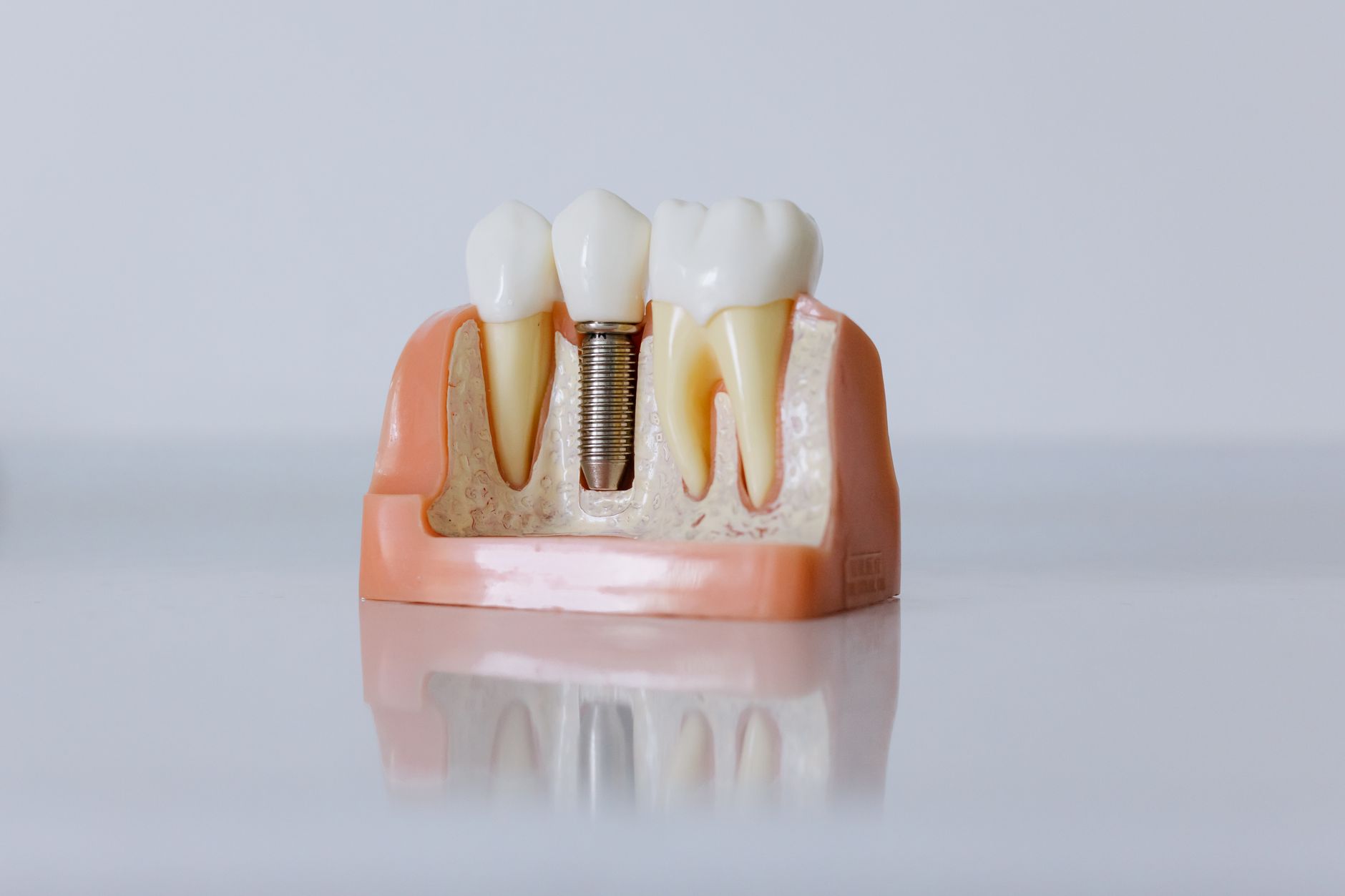
Most quotes patients receive bundle all three components into a single number, which can make it difficult to understand where the money actually goes. The titanium post is the implant itself, a screw surgically placed into the jawbone that acts as an artificial root. The abutment is the connector piece that links the post to the visible tooth. The crown is the custom-made cap that sits on top and replicates the look of a natural tooth [2]. Each of these components contributes meaningfully to the overall dental implant cost.
Each component is priced separately at the manufacturing and placement level. When a quote looks unusually low, it often means one or more components — most frequently the crown — are not included in the advertised figure.
The provider’s credentials also factor in. A general dentist who places implants typically charges less than an oral surgeon or periodontist. Specialists carry higher overhead and additional training costs, which their fees reflect, though specialist placement is sometimes clinically necessary depending on bone density and case complexity.
How Crown Material Affects the Total Cost
Crown material is one of the clearest price variables in any implant treatment plan [2]. Zirconia and all-ceramic crowns sit at the premium tier — they offer the closest match to natural tooth appearance and are highly durable. Porcelain-fused-to-metal crowns fall in the mid-range. Metal-based crowns are the most budget-friendly option, though they are less common in visible areas of the mouth.
The lab that fabricates the crown also influences the final figure. Domestic dental laboratories typically charge more than overseas labs, and the turnaround time and quality control standards differ accordingly. Practices that use in-house milling technology (CAD/CAM systems) can sometimes reduce crown costs and shorten the overall treatment timeline.
Hidden Costs: Bone Grafting, Extractions, and Sinus Lifts
Preparatory procedures are the most frequently overlooked part of the total fee. If a tooth still needs to be removed before implant placement, the extraction adds a separate charge. Patients who have experienced bone loss — common after a tooth has been missing for a year or more — often require bone grafting to build up enough jaw structure to support the post [1]. A sinus lift may be necessary when placing implants in the upper jaw if the sinus cavity sits too close to the implant site.
CT imaging, used to map bone depth and nerve position before surgery, is another line item that does not always appear in an initial estimate. Geographic location adds a further layer: dental practices in urban markets like Houston carry higher overhead than those in smaller surrounding communities, and that difference typically shows up in the fee schedule.
How the Number of Implants Changes the Overall Price
A single-tooth replacement involves one post, one abutment, and one crown. Replacing multiple teeth raises the dental implant cost proportionally, though full-arch solutions like All-on-4 can reduce the per-tooth cost by supporting an entire arch on fewer posts. Patients replacing several teeth should ask for a comprehensive treatment plan that itemizes each phase, since the cumulative cost of multiple single implants can differ significantly from a full-arch approach.
Does Dental Insurance Cover Dental Implants?
Most traditional dental insurance plans either exclude implants entirely or cover only a small portion of the total dental implant cost through strict annual maximums.
The core reason is classification. Insurers typically label the implant post — the titanium fixture surgically placed into the jawbone — as a cosmetic or elective procedure [1]. That designation puts it outside the scope of standard restorative benefits, even though implants function identically to natural teeth.
How Much Will Insurance Typically Pay for Dental Implants?
Insurance is more likely to contribute toward adjacent procedures than toward the implant itself. Tooth extractions, bone grafting, and the final crown are the components most plans will at least partially cover [2]. The implant post remains the most commonly excluded line item.
Annual benefit maximums compound the problem. Many plans cap yearly payouts at a level that covers only a fraction of what a single implant placement costs, meaning even a plan that technically includes implant benefits may leave you responsible for the majority of the fee [3].
Is Dental Insurance Worth It for Implant Coverage?
Evaluating a supplemental or implant-specific dental plan comes down to a straightforward break-even question: will the benefits you receive over the plan’s waiting period exceed the premiums you pay to get there? Most implant-specific plans carry waiting periods of 12 to 24 months before major benefits activate, so the math rarely favors purchasing coverage after you already need the procedure.
One avenue worth checking is your medical insurance. If tooth loss resulted from an accident, trauma, or a documented medical condition, your medical plan may cover a portion of implant treatment [1]. Contact your medical insurer directly and ask whether implant placement qualifies under accident or reconstructive benefits — the eligibility criteria vary significantly by plan. Villagio Family & Cosmetic Dental can help you identify which portions of your treatment to submit to which insurer before your procedure begins.

Dental Implants vs. Bridges and Dentures: Long-Term Value Compared
Dental implants typically cost more upfront than bridges or dentures, but their per-decade value often exceeds both alternatives when replacement cycles and bone health are factored in.
What Is the Long-Term Cost Comparison Between Implants, Dentures, and Bridges?
Dentures and bridges are not permanent solutions. Dentures typically require relining or full replacement every five to ten years as the jawbone changes shape, and bridges have a similar replacement window [2]. Each replacement cycle adds cost, meaning a patient who chooses dentures at 45 may pay for the same solution three or four times before retirement.
A single-tooth bridge also carries a hidden cost that rarely appears in the initial quote: the two healthy teeth on either side must be ground down to anchor the bridge. Damaging structurally sound teeth creates long-term risk — those teeth may eventually need crowns, root canals, or their own implants. When you frame dental implant cost as a value-per-decade question rather than a sticker-price comparison, the calculus shifts.
Bone loss is the other variable most patients don’t anticipate. When a tooth root is absent, the jawbone beneath it resorbs — a process that can destabilize neighboring teeth and visibly alter facial structure over time. Implants are the only replacement option that stimulates the jawbone the way a natural root does, halting that resorption [1].
How Long Do Dental Implants Last Compared to Alternatives?
An implant that integrates successfully can last a lifetime with routine maintenance. Bridges and dentures cannot make that claim [2].
Functional outcomes also differ. Implants restore chewing efficiency and speech clarity close to natural-tooth levels. Removable dentures can shift during eating or speaking, and a poorly fitting bridge can create bite problems — both of which carry downstream health and quality-of-life costs that don’t show up in any fee estimate.
Implants are not the right fit for every patient. Insufficient bone density, certain systemic health conditions, and genuine budget constraints are all legitimate factors. At Villagio Family & Cosmetic Dental, the conversation always starts with your specific clinical picture, not a one-size recommendation, so the treatment plan reflects what will serve you best over the long term.
Financing and Affordability Options for Dental Implants
Several proven pathways exist to make dental implant cost manageable, from tax-advantaged savings accounts to in-office installment plans.
How to Find Affordable Dental Implants Without Sacrificing Quality
Third-party financing programs — such as those offering deferred-interest or low-interest installment plans — work by extending a credit line specifically for medical or dental expenses. The patient applies, receives an approved credit limit, and repays the balance over a fixed term, often 12 to 60 months. The critical detail: deferred-interest offers charge no interest only if the full balance is paid before the promotional period ends. Miss that deadline by even a day, and retroactive interest — calculated from the original purchase date — gets added to the balance. Read the agreement carefully before signing.
In-house payment plans offered directly by dental practices vary widely. Before committing, ask the office three specific questions: what down payment is required, whether the plan carries interest, and what happens if a payment is missed. Some practices charge no interest; others apply fees that compound quickly.
Health Savings Accounts (HSAs) and Flexible Spending Accounts (FSAs) reduce your effective out-of-pocket cost because contributions go in pre-tax. FSAs carry a lower annual limit and a “use-it-or-lose-it” rule, so timing matters — patients planning implant treatment should fund these accounts in the calendar year the procedure is scheduled.
At Villagio Family & Cosmetic Dental, the team walks patients through all available financing structures before any treatment begins, so there are no surprises in the total fee.
What Are the Risks of Dental Tourism for Implants?
Dental tourism reduces upfront dental implant cost through lower labor and facility overhead in certain international markets, but the trade-offs are real. Follow-up care — which implants require across a multi-month healing period — becomes difficult or impossible to access once a patient returns home. Material standards and implant brand quality vary by country and by clinic. If a complication arises domestically, a local dentist treating someone else’s implant work often charges a premium, and that cost can erase the original savings. Weigh the full financial picture, not just the quoted procedure fee abroad.
What Are Dental Implants and How Do They Work?
A dental implant is a three-part tooth replacement — a titanium post, an abutment connector, and a crown — surgically anchored into the jawbone for permanent stability.
The titanium post is placed directly into the jaw, where it undergoes osseointegration, a biological process in which bone tissue grows around and bonds to the metal. This fusion is what gives implants their stability and makes them function like a natural tooth root. Without it, the restoration has no secure foundation.
Treatment spans several months, not a single visit. After the initial consultation and imaging, the surgeon places the post and the patient enters a healing period — typically three to six months — while osseointegration occurs. Only once the post is fully integrated does the dentist attach the abutment and fit the final crown. Skipping or rushing this timeline compromises the implant’s long-term success.
What Are the Different Types of Dental Implants Available?
Endosteal implants, placed directly into the jawbone, are the most common type [1]. Subperiosteal implants sit on top of the bone rather than inside it, used when a patient lacks sufficient bone volume for standard placement. All-on-4 (or full-arch) implants support an entire arch of teeth on just four strategically positioned posts, reducing the need for bone grafting in many cases.
Candidacy depends on adequate bone density, healthy gum tissue, and no uncontrolled systemic conditions — unmanaged diabetes, for example, can impair healing and osseointegration. A thorough clinical evaluation, including X-rays or a CT scan, must happen before any dental implant cost estimate is meaningful.
The multi-stage surgical process, the precision the procedure demands, and the quality of materials involved — particularly medical-grade titanium and ceramic crowns — place implants at the premium end of tooth replacement options. That complexity is reflected directly in the price.
Frequently Asked Questions
Is a single tooth implant worth the investment?
For most patients, yes — a single implant preserves jawbone, prevents neighboring teeth from shifting, and functions like a natural tooth for decades. Bridges, by contrast, require grinding down healthy adjacent teeth and typically need replacement every 10–15 years [2]. Over a lifetime, the implant often costs less in total dental work. Patients who maintain good oral hygiene and have adequate bone density tend to see the strongest long-term results.
How can I find affordable dental implants in my area?
Start by requesting itemized treatment estimates from at least two or three local dental practices, including Villagio Family & Cosmetic Dental if you’re in the Katy, TX area. Ask specifically whether the quoted fee includes the post, abutment, and crown, or just the surgical placement [2]. Also ask about in-house financing, dental savings plans, and whether the practice accepts your insurance. Comparing complete dental implant costs — not just the headline figure — gives you an accurate picture.
What factors drive implant costs up or down by geographic region?
Overhead costs — office rent, staff wages, and local lab fees — vary significantly by market, and practices pass those differences on to patients [3]. Urban and coastal markets generally carry higher fees than suburban or rural areas. Dental school clinics in any region typically offer reduced rates because supervised students perform the procedures, though treatment timelines are longer.
Can I use my HSA or FSA to pay for dental implants?
Yes, dental implants qualify as an eligible medical expense under both Health Savings Accounts (HSAs) and Flexible Spending Accounts (FSAs). Using pre-tax dollars effectively reduces your out-of-pocket cost by your marginal tax rate. FSA funds typically expire at year-end, so timing your implant procedure before the deadline matters. Confirm eligibility with your plan administrator before scheduling, as individual plan rules can vary.
What happens if a dental implant fails, and does that cost extra?
Implant failure — where the post does not fuse properly with the jawbone — does occur in a small percentage of cases, and retreatment typically carries additional cost [2]. Some practices offer a warranty or reduced-fee retreatment policy, so ask about this before signing a treatment agreement. Smoking, uncontrolled diabetes, and insufficient bone density are the most common risk factors. Addressing those conditions before placement significantly improves the odds of a successful outcome.
Conclusion
Dental implant cost is never a single number — it reflects the number of implants placed, the materials selected, any preparatory procedures like bone grafting, and the overhead structure of the practice you choose. Three takeaways matter most: get a fully itemized estimate that includes the post, abutment, and crown before comparing quotes; ask every practice about financing and HSA/FSA eligibility; and weigh long-term value — not just upfront cost — against alternatives like bridges or dentures.
If you’re in the Katy, Fulshear, Richmond, or Cinco Ranch area, schedule a consultation at Villagio Family & Cosmetic Dental and ask specifically for a line-item implant treatment plan, so you know exactly what you’re paying for before any work begins.
Sources & References
- Dental Implants Cost and Procedure Guide
- Dental Implants Fees Explained: Full Cost Breakdown (2026) – Dental Express
- Dental Implants Cost & Pricing Guide | Aspen Dental
Recommended Articles
Explore more from our content library: