Proudly Serving Katy, Richmond & Fulshear Cinco Ranch
(281) 395-2100
|
(281) 394-4001

Cosmetic dentistry services are elective dental treatments designed to improve the appearance of your teeth, gums, and smile, covering everything from professional whitening and veneers to dental bonding, implants, and Invisalign. Unlike restorative dentistry, which repairs function, cosmetic procedures prioritize aesthetics, though many deliver functional benefits too. The right service depends on your specific concern, budget tier, and how long you want results to last.
1. What Cosmetic Dentistry Services Actually Cover
Cosmetic dentistry services address how your teeth look, color, shape, size, and alignment, while restorative dentistry addresses how they function.
That distinction matters when choosing a treatment path, but it is not always a clean line. Crowns and implants, for example, repair structural damage and improve appearance at the same time. The deciding factor is usually whether the tooth’s structural integrity is compromised: if it is, the treatment is restorative first, cosmetic second. This is particularly relevant for cosmetic dentistry services.
What Dental Problems Can Cosmetic Procedures Address?
Cosmetic procedures cover a specific set of aesthetic concerns: discoloration and staining, chips and cracks, gaps between teeth, mild to moderate misalignment, missing teeth, and irregular gum lines. Most patients present with more than one of these at the same time, which is why treatment planning often combines multiple procedures.
When Is Cosmetic Dentistry Appropriate Versus Restorative Dentistry?
A dentist recommends a cosmetic approach when the tooth’s underlying structure is sound and the concern is purely visual. When enamel is cracked through, decay is present, or a tooth cannot bear normal bite pressure, restorative treatment takes priority, even if the result also improves appearance.
One credential detail most practices don’t surface: the American Dental Association does not recognize cosmetic dentistry as a formal specialty [1]. Any licensed dentist can offer these services, so experience, training, and before-and-after case volume are the metrics that actually differentiate providers.
2. Teeth Whitening
Professional teeth whitening is the fastest entry point into cosmetic dental treatment, most in-office sessions deliver visible results in under two hours.
The mechanism is chemical: peroxide-based agents break apart chromogenic compounds, the pigmented molecules, embedded in enamel and dentin. In-office treatments use higher peroxide concentrations, often paired with light or heat activation to accelerate the reaction. Take-home trays use lower concentrations applied over days or weeks. Over-the-counter strips sit at the lowest concentration tier and contact less tooth surface, which limits how deep the whitening effect reaches.
The best candidates are patients with extrinsic staining from coffee, tea, red wine, or tobacco. Intrinsic staining, caused by tetracycline use during tooth development or fluorosis, originates inside the tooth structure and responds poorly to peroxide-based whitening alone [1]. Those cases typically require veneers or bonding to mask the discoloration effectively. When considering cosmetic dentistry services, this point stands out.
One detail that catches patients off guard: whitening agents do not change the color of existing crowns, veneers, or composite bonding. Patients with mixed restorations need to decide on a target shade before whitening, not after, so any existing work can be replaced or matched accordingly.
3. Dental Veneers
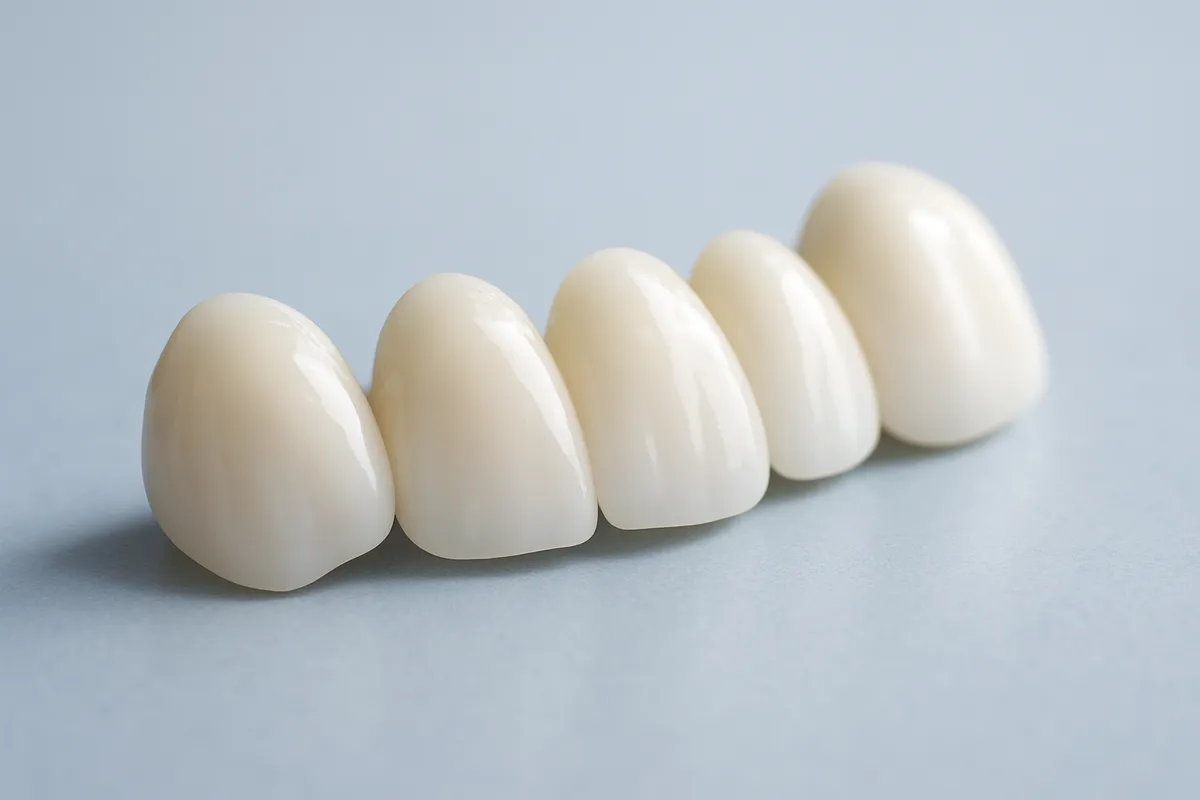
Dental veneers are thin shells bonded to the front surface of teeth, they correct chips, cracks, discoloration, minor gaps, and uneven shape in a single treatment course.
Two material options exist, each with real trade-offs. Porcelain veneers are fabricated in a dental lab, last 10–15 years on average, and replicate the light-translucency of natural enamel. Composite resin veneers are sculpted chairside in one visit, cost less, and can sometimes be removed or adjusted, but they stain more readily and typically need replacement sooner.
The prep process for porcelain veneers requires removing a thin layer of enamel, usually 0.3–0.5 mm, so the shell sits flush with surrounding teeth. That reduction is permanent. Patients need to understand this is a lifelong commitment to having veneers on those teeth before treatment begins.
Ideal candidates include patients with chips, cracks, severe discoloration that whitening cannot correct, minor misalignment, or teeth that are proportionally small or irregularly shaped.
The differentiator most cosmetic-focused content skips: no-prep or minimal-prep veneers are a legitimate option for select cases, specifically patients whose teeth are already slightly smaller than ideal or set back enough that adding thickness doesn’t require removing existing enamel. Villagio Family & Cosmetic Dental evaluates each patient’s tooth anatomy before recommending prep type, because preserving natural tooth structure is always the preferable starting point when the clinical situation allows it. For those exploring cosmetic dentistry services, this matters.
4. Dental Bonding
Dental bonding repairs minor chips, gaps, and discoloration in a single appointment, no lab fabrication, no temporary restorations, no second visit.
The process is direct: a tooth-colored composite resin is applied to the prepared tooth surface, sculpted to the correct shape, then hardened with a UV curing light. The entire procedure typically takes 30–60 minutes per tooth. Because no lab is involved, it is also the most budget-friendly cosmetic option available.
Bonding works best on small chips, narrow gaps between front teeth, minor discoloration on isolated teeth, and teeth that are slightly short or misshapen. It is not the right call for large surface areas, teeth that absorb heavy bite pressure (such as molars), or patients who grind, the resin is more prone to fracture under sustained force than porcelain.
Longevity is the honest trade-off: composite resin typically lasts 5–7 years before needing touch-up or replacement, and it picks up staining from coffee and tea faster than porcelain does. Patients who commit to bonding should plan for periodic polishing and eventual re-treatment. For more information, see Microservices Bancaires Guide Complet 2026.
The use case most competitors don’t mention: bonding can lengthen teeth that appear short relative to the gum line, creating the visual effect of a better gum-to-tooth ratio, without any surgical gum reshaping. For patients who feel their smile looks “gummy” but whose gum tissue is actually proportional, this is a fast, reversible first step worth discussing.
5. Porcelain Crowns
Porcelain crowns cap the entire visible portion of a tooth, making them the right choice when a tooth is both structurally damaged and aesthetically problematic, not for cosmetic concerns alone. This directly impacts cosmetic dentistry services outcomes.
That dual role is the defining characteristic. A veneer covers only the front surface; a crown encases the tooth on all sides. When a tooth has significant decay, a large existing filling, or has been weakened by a crack, a crown restores load-bearing capacity while also correcting color, shape, and size.
Material quality has changed significantly. Modern all-ceramic options, zirconia and lithium disilicate (e.max), match natural tooth translucency closely and eliminate the dark gray line at the gum margin that older porcelain-fused-to-metal crowns produced as gums receded over time. For front teeth especially, this is a meaningful clinical and aesthetic difference.
The standard process runs two visits: the tooth is prepared and reduced, a temporary crown is placed, the permanent crown is fabricated in a lab, and it is cemented at the follow-up appointment. Some practices offer same-day CEREC milling, which compresses this into a single visit for patients who qualify.
The clinical nuance most cosmetic content ignores: a crown is the correct choice after root canal treatment or when so little natural tooth structure remains that a veneer has nothing adequate to bond to. Attempting a veneer in those situations risks failure, the crown is not a more aggressive option, it is simply the appropriate one given what the tooth can structurally support.
6. Dental Implants
Dental implants are the only tooth-replacement option that replicates the full structure of a natural tooth, root, connector, and visible crown, in a single permanent solution.
Each implant has three components: a titanium post surgically placed into the jawbone, an abutment that connects the post to the surface, and a custom-shaded porcelain crown. The post fuses with the bone through a process called osseointegration, where living bone tissue bonds directly to the titanium, which is why implants are the only replacement option that actively preserves jawbone density after tooth loss. This is particularly relevant for cosmetic dentistry services.
The crown is color-matched and shaped to mirror the surrounding teeth. A well-placed implant is clinically indistinguishable from a natural tooth in both appearance and function.
Compared to bridges or partial dentures, implants require no alteration of adjacent teeth, no adhesives, and no removal for cleaning. Longevity is measured in decades with proper care, not years.
Differentiator most listicles miss: When a tooth root is absent, the jawbone beneath it gradually resorbs, shrinking in volume and density over time. This causes the characteristic sunken, aged appearance around the missing tooth site. Implants are the only cosmetic dentistry service that prevents this facial collapse entirely, making them a long-term cosmetic investment, not just a functional one.
7. Invisalign and Clear Aligners
Clear aligners correct mild to moderate crowding, spacing, and bite issues using a series of custom-fabricated trays that shift teeth incrementally without metal brackets or wires.
Treatment begins with a digital scan or physical impression of your teeth. That data generates a series of trays, each worn for roughly one to two weeks, that apply controlled, graduated pressure to move teeth toward the planned final position. The digital scan also lets you preview the projected outcome before treatment starts.
Ideal candidates have mild to moderate alignment concerns. Severe skeletal discrepancies, significant bite misalignment, or complex rotations typically require traditional braces or surgical intervention, clear aligners have clinical limits that a qualified provider should explain upfront. When considering cosmetic dentistry services, this point stands out.
Compliance is non-negotiable. Aligners must be worn approximately 20 to 22 hours per day. Falling short of that consistently causes teeth to drift off the planned tracking schedule, extending treatment or requiring refinement trays.
Differentiator: General cosmetic dentists and orthodontists both offer Invisalign, but case complexity matters when choosing a provider. For mild spacing or minor crowding, an experienced cosmetic dentist is often appropriate. For moderate bite correction or cases involving multiple tooth movements simultaneously, ask specifically about the provider’s Invisalign case volume and whether they refer complex cases out, that answer tells you more than any credential on the wall.
8. Gum Contouring
Gum contouring changes an uneven or excessive gum line to improve smile symmetry, one of the most effective cosmetic dentistry services most patients don’t know exists until a dentist points it out.
A gummy smile has two distinct causes: excess gum tissue covering more of the tooth crown than normal, or teeth that are naturally shorter in clinical length. The diagnosis matters because contouring alone corrects the first cause, but if the teeth themselves are short, additional treatment may be needed alongside it.
Most practices now perform the procedure using soft-tissue lasers rather than scalpels. The laser removes and sculpts gum tissue with minimal bleeding, reduces the risk of infection, and eliminates the need for sutures in most cases. Healing is noticeably faster than with older surgical techniques.
Recovery involves mild sensitivity and swelling for several days. Full tissue healing typically takes two to three weeks. During that window, soft foods are recommended and abrasive toothbrushing around the treated area should be avoided.
Differentiator: When a patient has both excess gum tissue and short clinical crowns, contouring alone won’t produce the intended result. In those cases, crown lengthening, a procedure that removes both gum tissue and a small amount of supporting bone to expose more of the tooth structure, is performed alongside contouring. This combined approach is rarely explained in cosmetic dentistry listicles, but it’s the reason some patients see dramatically better results than others from what appears to be the same procedure. For those exploring cosmetic dentistry services, this matters.
9. Smile Makeovers: Combining Multiple Cosmetic Dentistry Services
A smile makeover is a coordinated treatment plan, not a single procedure, that sequences whitening, veneers, bonding, contouring, and orthodontics to achieve results no single service can deliver alone.
Sequencing is where most patients and some providers go wrong. Orthodontic work must come before veneers, shifting teeth after veneers are placed can crack or dislodge them. Whitening must precede any shade-matching for restorations, because porcelain and composite cannot be bleached after placement. Getting the order wrong doesn’t just delay results; it wastes the investment in earlier procedures.
Modern practices use digital smile design software to map out the planned outcome before any irreversible treatment begins. Patients see a projected image of their result, adjusted for tooth shape, proportion, and gum line, and can give input before a single tooth is prepared. At Villagio Family & Cosmetic Dental, this planning step is built into the consultation process so patients understand exactly what to expect at each stage.
Differentiator: A smile makeover consultation should open with a functional assessment, bite alignment, TMJ health, and gum condition, before any cosmetic planning begins. Cosmetic work placed over an unstable bite or active gum disease fails faster and costs more to correct. A practice that skips the functional baseline and moves straight to procedure recommendations is prioritizing the sale over the outcome.
How to Choose the Right Cosmetic Dentistry Service for Your Smile
The right cosmetic dentistry service depends on four factors: your primary concern, how permanent a solution you want, your recovery tolerance, and your budget tier.
Start with those four filtering questions. Is the concern color, shape, alignment, or a missing tooth? Do you want a reversible option like bonding or a permanent one like implants or veneers? Can you take time off for recovery, or do you need a same-visit solution? Are you working within a budget-friendly range, mid-range, or premium investment? Answering these narrows a list of ten services down to two or three realistic candidates before you sit in a dental chair. This directly impacts cosmetic dentistry services outcomes.
What Credentials Should a Cosmetic Dentist Have?
A general dentist license permits cosmetic procedures, but it doesn’t guarantee cosmetic-specific training. Look for documented continuing education in procedures like veneers, implant restoration, or laser gum treatment, not just a general dentistry degree. Ask whether the practice invests in digital imaging, laser equipment, and smile design software. Technology investment signals that the provider performs these procedures regularly enough to justify the cost.
At Villagio Family & Cosmetic Dental, serving patients in Katy, Fulshear, Richmond, and Cinco Ranch, TX, the consultation includes an oral health baseline, bite analysis, and gum condition review before any cosmetic recommendation is made, the functional assessment that should precede every treatment plan.
How Can I Review Before-and-After Results?
Ask to see case portfolios specific to the procedure you’re considering, not a generic gallery. Before-and-after images from the provider’s own patients, showing cases similar in complexity to yours, give you the most accurate picture of what to expect.
Differentiator: Ask whether the practice will build you a phased treatment plan, one that starts with the highest-impact, lowest-risk procedure first and stages additional work over time. A provider who leads with a phased approach is planning around your goals. A provider who opens with a full-mouth reconstruction quote on the first visit is worth a second opinion.
Frequently Asked Questions
Does dental insurance cover cosmetic dentistry services?
Most dental insurance plans do not cover purely cosmetic procedures because insurers classify them as elective rather than medically necessary. Teeth whitening, veneers, and cosmetic bonding are typically excluded. That said, some treatments serve both cosmetic and restorative purposes, a crown that repairs a cracked tooth, for example, may receive partial coverage. Villagio Family & Cosmetic Dental recommends confirming your specific plan benefits before scheduling, since coverage rules vary significantly by insurer and policy tier.
How long do cosmetic dentistry results last?
Results vary by procedure: professional whitening typically lasts one to three years with maintenance, while porcelain veneers can last 10 to 20 years with proper care [1]. Dental bonding falls in the middle, averaging five to ten years before touch-ups are needed. Daily habits, grinding, staining foods, and oral hygiene, are the biggest factors in how long any cosmetic result holds. Your dentist can give you a realistic timeline based on your specific treatment plan. This is particularly relevant for cosmetic dentistry services.
What financing options are available for cosmetic dental work?
Many dental practices offer third-party financing plans that spread treatment costs into monthly payments, making elective procedures more accessible. Common options include patient financing programs such as CareCredit or Lending Club, in-office payment plans, and health savings accounts (HSAs) or flexible spending accounts (FSAs) for qualifying procedures. Ask Villagio Family & Cosmetic Dental about current financing arrangements before your consultation, available options can change, and some carry interest-free promotional periods worth timing your treatment around.
What are the risks of cosmetic dental treatments?
Cosmetic dental treatments carry low but real risks, including temporary tooth sensitivity, gum irritation, and uneven color matching [1]. More involved procedures, such as veneers or implants, require enamel removal or surgery, which are irreversible steps that require careful planning. Choosing a qualified, experienced cosmetic dentist significantly reduces these risks. A thorough pre-treatment consultation, including X-rays and a full oral health assessment, helps identify any underlying issues that could affect your outcome before work begins.
Conclusion
Cosmetic dentistry services range from single-visit whitening to multi-step smile makeovers, and the right starting point depends on what you want to fix, how long you want results to last, and what your oral health currently supports. Three things worth acting on: get a full oral health assessment before committing to any elective procedure, ask specifically about combination treatments that may qualify for partial insurance coverage, and request before-and-after examples from your dentist’s own patient cases, not stock photos.
If you’re in the Katy, Fulshear, Richmond, or Cinco Ranch area, schedule a cosmetic consultation at Villagio Family & Cosmetic Dental and bring a list of the specific concerns you want addressed, that single step moves you from browsing to a concrete treatment plan.
Sources & References
Recommended Articles
Explore more from our content library: