Proudly Serving Katy, Richmond & Fulshear Cinco Ranch
(281) 395-2100
|
(281) 394-4001

Understanding teeth cleaning procedure is essential. A professional teeth cleaning follows a set sequence: a hygienist examines your mouth, removes plaque and tartar with hand tools and an ultrasonic scaler, polishes your teeth with a gritty paste, flosses thoroughly, and finishes with a fluoride treatment. The whole visit typically takes under an hour and removes buildup that brushing and flossing at home can’t reach, especially along the gumline and between teeth. Most people feel mild pressure but little to no pain, and teeth often feel noticeably smoother afterward. For a closer look at what happens at each stage, the Cleveland Clinic’s overview of dental cleanings walks through the same core steps in more clinical detail.
What Happens During the Teeth Cleaning Procedure, Step by Step
Every teeth cleaning procedure moves through five stages in the same order: exam, scaling, polishing, flossing, and fluoride, each building on the last.
- Exam: The hygienist checks your gums and tooth surfaces for inflammation, pockets, or trouble spots.
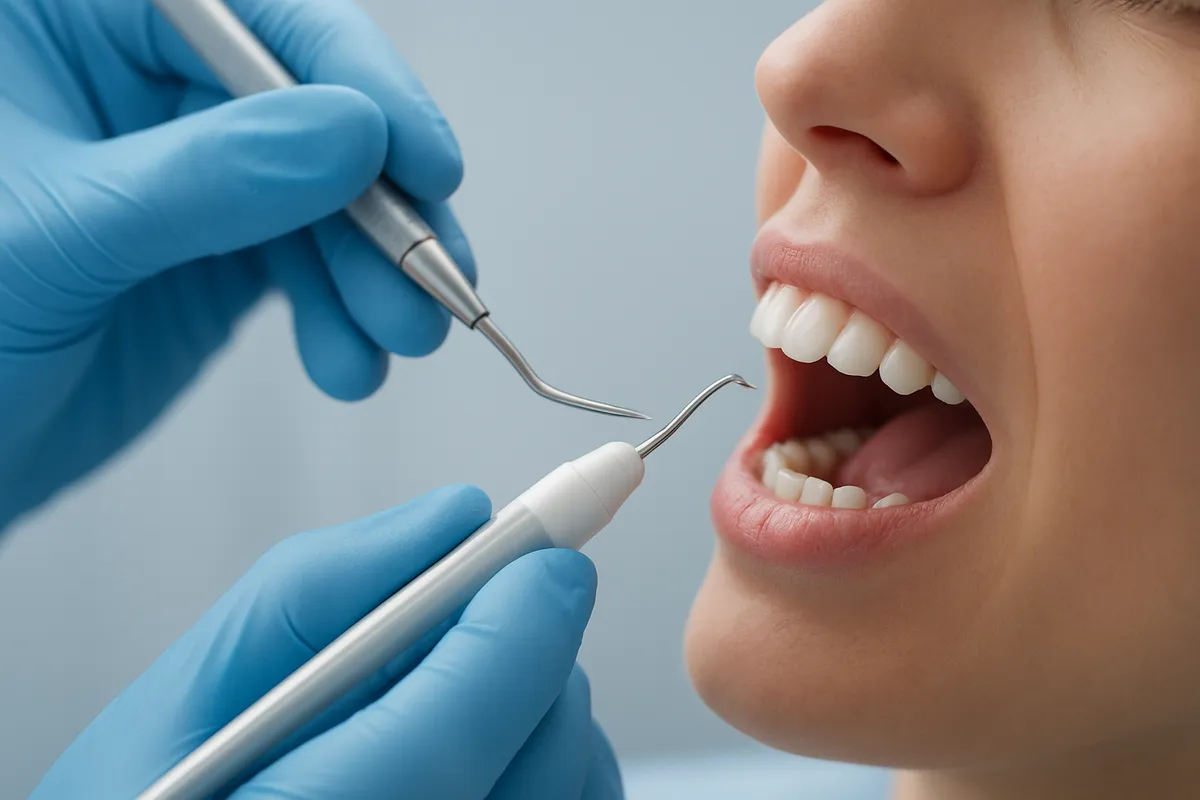
- Scaling: Hand tools and an ultrasonic scaler remove plaque and tartar above and just below the gumline.
- Polishing: A gritty paste on a rotating rubber tip buffs away surface stains and smooths enamel.
- Flossing: The hygienist flosses thoroughly between every tooth to clear anything the polish missed.
- Fluoride treatment: A quick application strengthens enamel and helps guard against future decay.
Your hygienist starts with a visual exam and a gum check, using a small mirror and probe to look for inflammation, pockets around the gumline, or areas that need extra attention. This tells them where plaque and tartar have accumulated and whether any spots need closer work before the cleaning proper begins. The Cigna Healthcare overview of the teeth cleaning process also breaks down these stages and the benefits of staying on a regular schedule.
Hand Tools vs. Ultrasonic Scalers: Why Hygienists Use Both
Hygienists typically use a hand scaler for detail work and an ultrasonic scaler for the bulk of tartar removal, switching between them depending on how stubborn the buildup is. The ultrasonic tool vibrates at a high frequency to break tartar loose with a fine water spray, which works faster on heavier deposits. Hand instruments then refine the edges, especially near the gumline and in tight spaces between teeth where the ultrasonic tip can’t get precise contact. After scaling, the hygienist polishes with a gritty paste on a rotating rubber tip, which buffs away surface stains and leaves teeth smooth. A thorough manual flossing follows, reaching between every tooth to clear anything the polish missed. The visit closes with a fluoride treatment, a quick application that strengthens enamel against future decay. If you’d rather watch the process than read about it, this short video walkthrough of a teeth cleaning appointment shows the scaling and polishing steps in action.
Is Teeth Cleaning Painful, and How Can You Stay Comfortable?
Most patients feel pressure and vibration rather than actual pain, though sensitive teeth or inflamed gums can make certain spots feel tender. If you know you’re sensitive, tell your hygienist before starting, numbing gel is a common option, and many offices can adjust technique or pacing for anxious or sensitive patients. Villagio Family & Cosmetic Dental builds this kind of check-in into every cleaning appointment, since comfort affects whether patients keep up with regular visits at all.
How Does Professional Cleaning Compare to Brushing and Flossing at Home?
Daily brushing and flossing can’t remove tartar once plaque has hardened, and they rarely reach subgingival buildup below the gumline. Only hand and ultrasonic scalers can break that hardened layer loose. That’s why the appointment itself stays short and routine, usually well under an hour for a standard cleaning, but still accomplishes something a toothbrush physically cannot.
How Often Should You Get Your Teeth Cleaned?
Twice a year is the standard starting point for most patients, but your dentist may adjust that number up based on specific risk factors [1].
The twice-yearly recommendation exists because plaque hardens into tartar within days, and tartar can’t be removed by brushing alone [1]. For patients with healthy gums, low plaque buildup, and no history of cavities, a six-month interval between cleanings is often enough to stay ahead of buildup. But that number was never meant to apply uniformly, it’s a baseline, not a ceiling.
Do Smokers or People With a History of Gum Disease Need More Frequent Cleanings?
Yes, smokers and patients with a history of gum disease typically need cleanings every three to four months instead of six. A few groups tend to fall into this higher-frequency category:
- Smokers, since restricted blood flow slows healing and masks early bleeding.
- Patients with a prior history of periodontitis, whose deepened gum pockets trap bacteria a standard cleaning can’t fully reach.
- Patients with diabetes, since impaired blood sugar control can slow healing and raise the risk of gum disease.
- Patients with a heavy tartar buildup history, who tend to redevelop deposits faster between visits.
Smoking restricts blood flow to gum tissue, which slows healing and masks early bleeding that would normally signal inflammation. That combination lets bacteria do more damage before it’s caught. Patients with a prior history of gum disease (periodontitis) face a similar problem: pockets that have already deepened around the tooth root trap bacteria that a standard cleaning can’t fully reach, so dentists monitor those areas more closely. Diabetes adds another layer, impaired blood sugar control affects the body’s ability to fight infection and repair tissue, which is why diabetic patients often see higher rates of gum disease and slower recovery after any teeth cleaning procedure.
At Villagio Family & Cosmetic Dental, we set cleaning intervals based on plaque accumulation rate, gum pocket measurements, and what past treatments show about your healing pattern, not a fixed calendar. That same individualized approach is why routine checkups matter beyond the cleaning itself, catching shifts in risk before they become bigger problems.
What’s the Difference Between a Regular Cleaning and a Deep Cleaning?
A regular cleaning maintains healthy gums above the gumline, while a deep cleaning treats gum disease that has already spread below it.
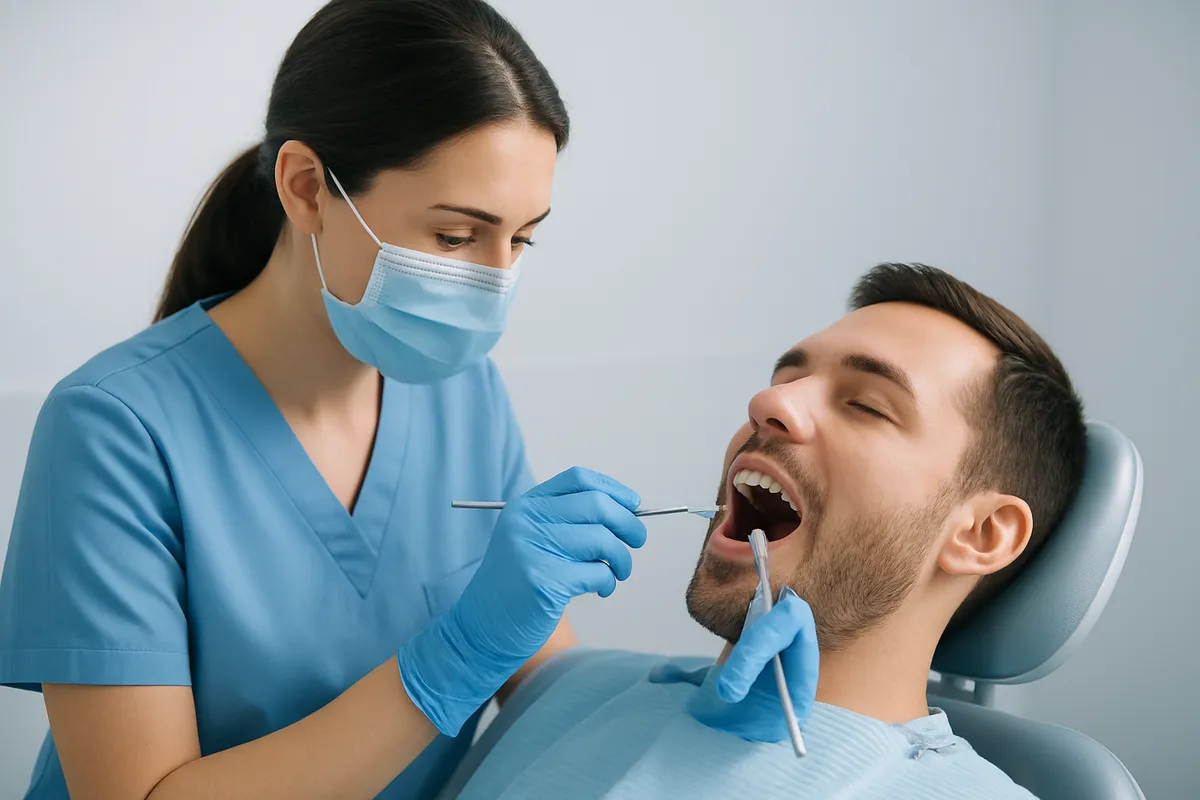
Dentists call the standard version prophylaxis, the routine teeth cleaning procedure most patients get twice a year. It removes plaque and tartar from the visible tooth surface and just under the gum edge. A deep cleaning, known clinically as scaling and root planing, goes further. It’s a treatment for periodontal disease, not a maintenance visit, and it targets tartar and bacterial buildup hiding in pockets that have formed between the tooth root and the gum.
The mechanism explains why a standard cleaning can’t do both jobs. Once gum disease creates space between the tooth and gum tissue, bacteria colonize that pocket and a toothbrush, or a hygienist’s routine scaler, physically cannot reach it. Scaling and root planing clears tartar off the root surface itself and smooths the root so gum tissue can reattach.
When Would a Dentist Recommend Scaling and Root Planing Instead of a Standard Cleaning?
The decision comes down to a measurement, not a guess. During your exam, the hygienist or dentist uses a small probe to measure the depth of the pocket around each tooth in millimeters. Pockets in the healthy range get a standard cleaning. Deeper pockets, along with signs of bone loss on X-rays or bleeding that doesn’t resolve with routine care, point toward scaling and root planing.
Because deep cleaning treats infected tissue below the gumline, it often requires local numbing and gets split across two or more visits, treating one side of the mouth at a time. A standard cleaning needs neither. If you want the full breakdown of what a deep cleaning appointment involves, we cover it in a dedicated guide on scaling and root planing.
How Much Does Professional Teeth Cleaning Cost, and What Does Insurance Cover?
A routine cleaning usually falls in a budget-friendly to mid-range price tier, while a deep cleaning costs more because it treats a diagnosed problem, not just maintenance.
Cost for a teeth cleaning procedure isn’t one number industry-wide. It shifts based on what your mouth actually needs, where you live, and how a given practice is set up to deliver care.
Are There Cost Variations Based on Cleaning Type or Location?
Yes, cleaning type is the biggest cost driver. A routine preventive cleaning for a patient with healthy gums sits at the lower end of the spectrum, since it’s a shorter appointment with no anesthesia or multiple visits involved. A deep cleaning (scaling and root planing) for someone with gum disease costs more, because it’s billed as a therapeutic treatment, often split across quadrants of the mouth over two or more visits.
Geography and office overhead matter too. Practices in higher cost-of-living areas around Houston, or offices with newer equipment and specialized hygiene staff, tend to price toward the premium end. A smaller practice in Katy, Fulshear, Richmond, or Cinco Ranch with lower overhead may land closer to mid-range for the same service. None of this means cheaper is worse or pricier is better, it reflects local market conditions more than quality of care.
What Does Dental Insurance Typically Cover?
Most dental insurance plans classify routine preventive cleanings as a fully or largely covered benefit, often with little to no out-of-pocket cost, because insurers price these visits as a strategy to reduce more expensive claims down the road. Deep cleanings usually shift into a different coverage tier, basic or major services, which can mean coinsurance, a deductible, or a waiting period applies.
Your actual out-of-pocket cost depends on your specific plan design: whether you’ve met your deductible, how many cleanings your insurer covers per year, and any frequency limits between visits. Two patients with the same cleaning can owe very different amounts based on these plan details alone.
For a full breakdown of coverage categories, waiting periods, and what to ask your insurer before you book, see our dental insurance coverage guide rather than treating this section as the complete picture.
What Should You Expect After a Teeth Cleaning, and How Do You Care for Your Teeth Afterward?
Most people leave a teeth cleaning procedure with smoother-feeling teeth, slightly tender gums, and mild sensitivity to hot or cold that fades within a day or two.
What Side Effects or Sensitivity Might You Experience, and How Long Do They Last?
The smooth feeling comes from removed plaque and tartar, your tongue notices the difference immediately. Gum tenderness and temporary sensitivity are also common, especially after a deeper cleaning like scaling and root planing, where the hygienist works below the gumline.
Sensitivity happens for a straightforward reason: tartar buildup, even though it’s harmful long-term, sometimes insulates areas of the tooth or root where gums have receded slightly. Once that buildup is scraped away, those exposed areas react to temperature for a short stretch, typically a few days, occasionally up to a week after a deep cleaning. If sharp sensitivity lasts longer than a week or worsens, that’s worth a call to your dentist rather than something to wait out.
How Do You Care for Your Teeth in the Days After Cleaning?
If your hygienist applied a fluoride treatment or polish, follow their guidance on waiting before eating or drinking, usually 30 minutes, so the treatment can absorb properly. Brush gently with a soft-bristled brush for the next few days, and switch to a sensitivity toothpaste if hot or cold drinks bother you. Avoid scrubbing hard at the gumline while it’s still slightly tender.
The cleaning resets your mouth, but daily brushing and flossing are what keep it that way. Consistent home care between visits is what actually extends the results of a professional cleaning, skipping flossing for a few months lets plaque rebuild in the same spots the hygienist just cleared.
Frequently Asked Questions
Can I eat right after a teeth cleaning?
Yes, you can eat right after a routine cleaning, though your teeth may feel more sensitive for a few hours. If you had fluoride varnish applied, wait about 30 minutes so it can absorb properly. Stick to softer foods and lukewarm drinks if your gums feel tender.
Will my teeth cleaning show if I have cavities or other problems?
A cleaning alone won’t diagnose cavities, that’s the job of the exam and X-rays that typically happen alongside it. Your hygienist will flag rough or discolored spots for the dentist to check, but the actual diagnosis comes from a visual exam, a probe check, and imaging when needed.
Why do my gums bleed a little during or after a cleaning?
Bleeding usually means your gums are inflamed from plaque and tartar buildup, not that the hygienist did something wrong. Removing hardened tartar below the gumline can irritate tissue that’s already sensitive from gingivitis. Bleeding that persists after a few days of good brushing and flossing is worth mentioning at your next visit.
Can children get the same teeth cleaning procedure as adults?
Children get a similar process, scaled down and often shorter, with the same basic steps of plaque removal, polishing, and a fluoride treatment. Pediatric hygienists use smaller instruments and gentler pressure, and many offices build in extra time to help kids feel comfortable before their next visit.
What happens if you skip professional cleanings for a long time?
Skipping cleanings lets plaque harden into tartar that brushing can’t remove, which raises your risk of gum disease and cavities over time. Regular cleanings twice a year help prevent this buildup [1]. Going years without one often means a longer, more involved appointment once you do return, sometimes across multiple visits.
Conclusion
A professional cleaning follows a predictable sequence, exam, scaling, polishing, flossing, and often fluoride, and knowing each step ahead of time makes the appointment far less intimidating, especially for kids. The real takeaway: cleanings twice a year catch problems before they become fillings or root canals, and consistency matters more than any single visit. If it’s been over a year since your last cleaning, that gap is the first thing to close. Call your local dental office in Katy, Fulshear, Richmond, or Cinco Ranch this week and get back on a six-month schedule before small issues turn into bigger ones.
Sources & References
Recommended Articles
Explore more from our content library: