Proudly Serving Katy, Richmond & Fulshear Cinco Ranch
(281) 395-2100
|
(281) 394-4001

The most affordable teeth whitening options that actually work combine in-office treatments a dental practice offers at a lower-cost tier (like take-home trays with professional-grade gel) with well-chosen over-the-counter products used correctly. Cost and quality don’t move in lockstep, a dentist-dispensed take-home kit often costs less than repeated in-office visits while outperforming drugstore strips, because the gel concentration and custom tray fit are closer to professional standards. The right choice depends on your starting tooth shade, sensitivity, and whether you have existing dental work.
Below is a breakdown of the main affordable teeth whitening routes patients typically consider, along with the tradeoffs that usually get left out of drugstore marketing and generic dental blog posts. Reading through all seven before you buy anything will save you from paying twice, once for a product that doesn’t fit your teeth, and again for the treatment that actually does.
1. Dentist-Dispensed Take-Home Whitening Trays
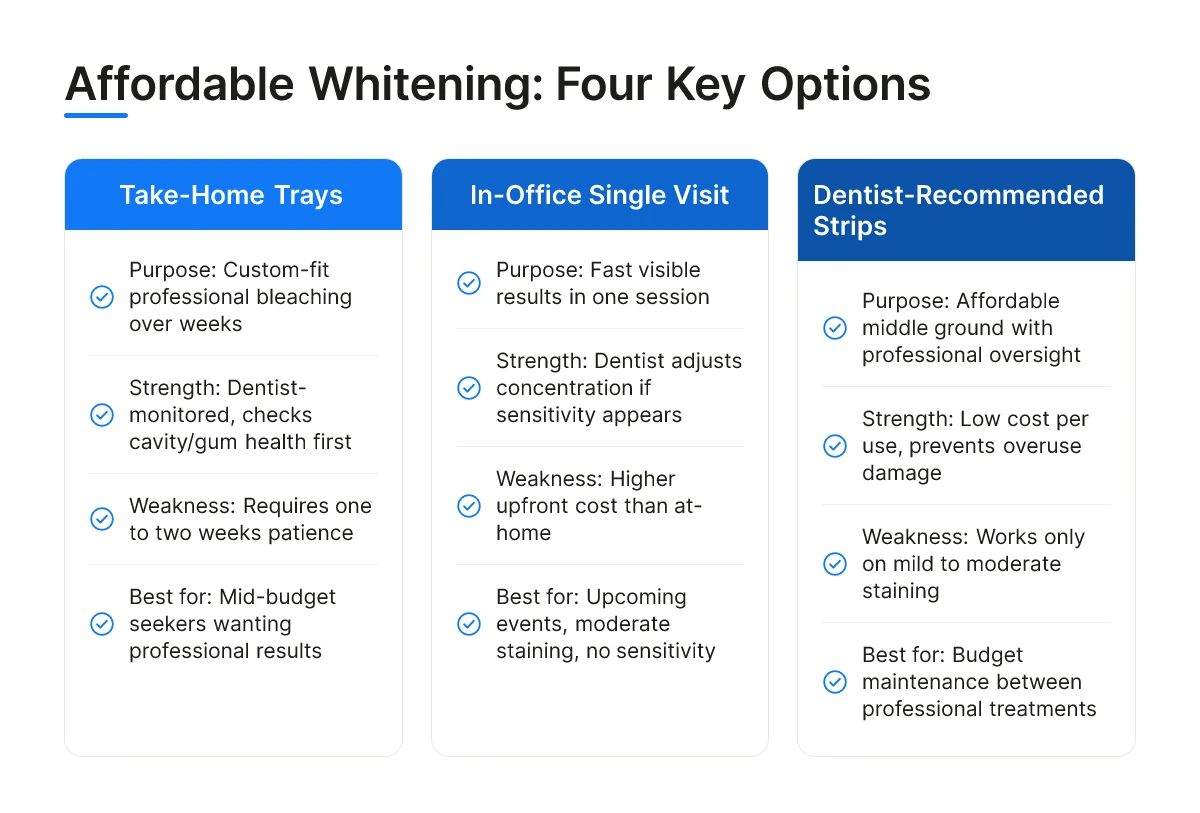
Custom take-home trays are the anchor of affordable teeth whitening because they combine a professional-grade fit with a price point below full in-office treatment.
A tray molded to your teeth holds whitening gel against the enamel evenly, unlike boil-and-bite kits or strips that gap around crowded teeth or gum lines. That tighter contact is the main reason results look more uniform than store-bought alternatives. Because your dentist dispenses the gel and checks in during the process, you get professional guidance without booking repeated chair-time appointments.
This option suits patients who want professional-grade whitening on a mid-range budget and don’t mind spreading treatment over one to two weeks rather than getting it done in an hour.
The step most drugstore routes and even some competing dental sites skip: before dispensing anything, the dentist checks for cavities and gum disease first. Whitening gel on a tooth with untreated decay can cause pain and won’t hold color evenly, so that exam protects the money you’re about to spend.
2. In-Office Whitening with a Budget-Friendly Package
A budget-friendly in-office package delivers same-day whitening by scaling back session length and light cycles, not by cutting safety corners.
Practices structure this tier with fewer light-activation rounds or a shorter total chair time compared to premium full-treatment packages, which lowers the cost while still using the same professional-grade gel. The main advantage is speed: results are visible immediately, which matters for patients with a wedding, interview, or photo shoot days away rather than weeks.
This route fits patients with moderate staining and no history of significant tooth sensitivity.
The differentiator over any at-home product: if sensitivity shows up mid-session, the dentist can adjust gel concentration or pause light cycles in real time. A tube of whitening gel from a drugstore shelf can’t respond to your mouth the way a chairside adjustment can.
3. Professional-Grade Whitening Strips Recommended by Your Dentist
Dentist-recommended whitening strips cost little per use while adding a layer of oversight that generic drugstore strips never include.
The mechanism is the same peroxide-based process as any strip, but a dentist first confirms your enamel and gums are healthy enough to handle it, then sets a frequency that avoids overuse. That oversight is what separates this from grabbing a box off a shelf: low cost per use, plus someone watching for sensitivity or gum irritation before it becomes a problem.
This fits patients with mild to moderate staining looking for a budget-friendly maintenance step between bigger treatments.
The differentiator: a dentist-approved schedule prevents the most common self-inflicted mistake with strips, overuse that thins enamel and increases sensitivity over time. For a closer look at how practices structure these lower-cost tiers without sacrificing results, this breakdown of budget-friendly whitening options covers similar ground from a different practice’s perspective.
4. Whitening Toothpaste and Rinses as a Maintenance Layer
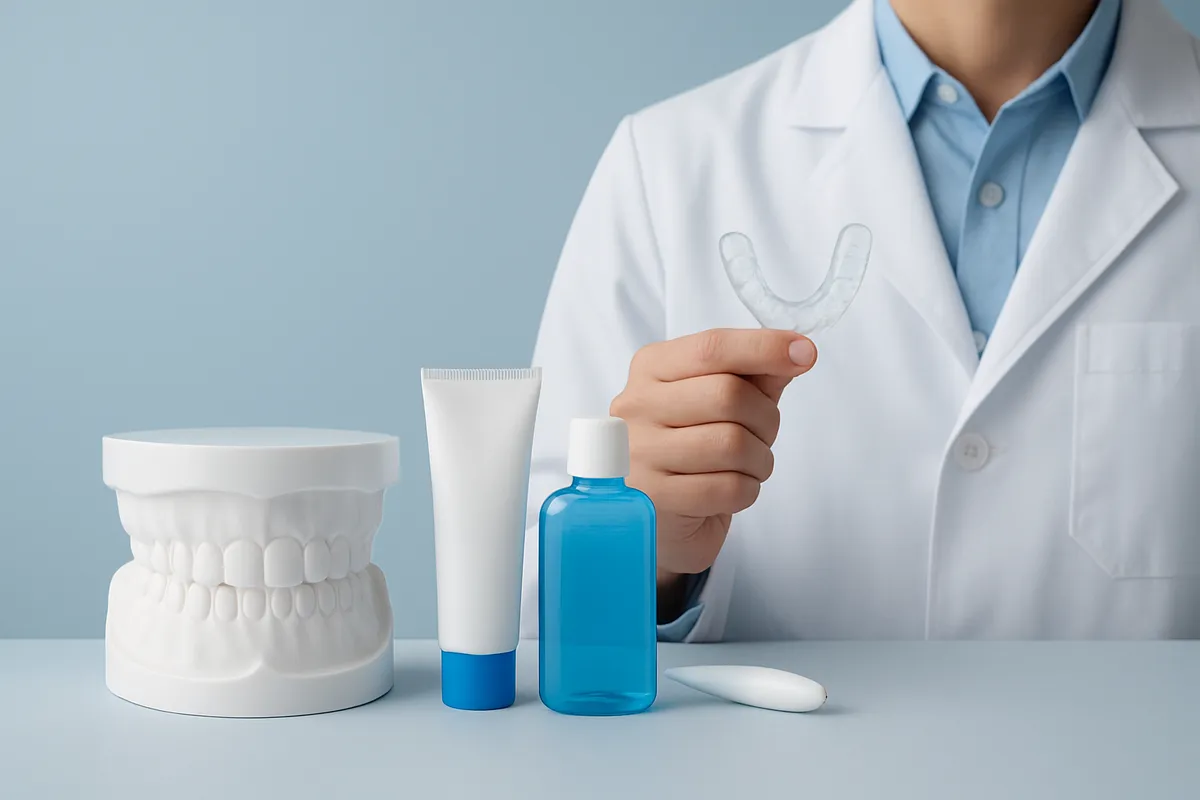
Whitening toothpaste and rinses work as an affordable maintenance layer, not a standalone fix, because they only lift surface stains.
Mild abrasives and low-concentration agents in these products remove stains sitting on the enamel surface from coffee, tea, or wine. They don’t bleach beneath the surface the way professional gel does, so expecting dramatic change from toothpaste alone sets up disappointment. Their real value is cost: this is the lowest ongoing expense in any whitening routine, and it’s effective at extending results after a professional treatment.
Best for patients who’ve already whitened and want to protect that investment rather than lift new staining.
Where several competing pages fall short is framing: toothpaste and rinses are maintenance, not a replacement for professional whitening. Treating them as interchangeable is a common misconception worth correcting before patients waste money expecting salon-level results from a low-cost tube of toothpaste.
5. Combination Plans: In-Office Boost Plus At-Home Follow-Up
Pairing one in-office session with take-home trays gives the most cost-effective path to whitening that actually lasts.
The mechanism works in two stages: the in-office visit lifts deeper, more stubborn stains fast, and take-home trays then maintain and extend that result over the following weeks. This spreads cost over time instead of requiring another full-price in-office visit every time color starts to fade. For patients researching affordable teeth whitening options that hold up past the first month, this sequencing is usually the better value than either method alone.
This plan suits patients with significant staining from coffee, tea, or tobacco who want both a fast initial result and staying power.
The differentiator: a dentist can sequence the two treatments, timing the in-office boost and the at-home follow-up, to reduce the total number of sessions needed, which cuts long-term cost more than defaulting to one method by itself.
6. Whitening Safety and Suitability for Different Patients
Not every patient is a good candidate for the same whitening approach, and a quick screening step protects both your results and your enamel. Sensitivity, existing dental work, pregnancy, and cavities all change what affordable teeth whitening should look like for a given patient.
Is Teeth Whitening Safe During Pregnancy or for Children?
Most dentists recommend postponing elective whitening during pregnancy and for children under 16, not because peroxide is proven harmful in these groups, but because the research is limited and caution costs nothing. A blanket yes-or-no answer isn’t useful here, the right move is a conversation with a dentist who can weigh personal health history against the timing of the request.
What Are Your Options If You Have Veneers or Crowns?
Veneers, crowns, and bonded fillings don’t contain the porous enamel structure that peroxide reacts with, so no whitening product, professional or over-the-counter, will lighten those surfaces. Patients in this position often need a color-matching plan, such as whitening natural teeth first and then evaluating whether restorations need replacing to match.
Sensitivity is the other common concern, but it rarely means whitening is off the table entirely. A dentist can lower the peroxide concentration, shorten wear time, or add a desensitizing step so patients with sensitive teeth still get results without discomfort. A short dental exam before starting also catches cavities or gum recession that would otherwise turn a whitening session into a painful one, or waste money on a treatment that won’t take evenly.
A few other factors worth flagging before you assume any option is off-limits:
- Deep intrinsic stains from certain medications (like tetracycline) respond more slowly to standard whitening and may need a longer treatment plan.
- Thin or worn enamel can make even a mild affordable teeth whitening product feel uncomfortable, so a dentist may recommend a desensitizing toothpaste first.
- Recent dental work, like a new filling or crown, is usually a reason to wait a few weeks before whitening so the shade match stays accurate.
- Gum recession exposes root surfaces that whiten unevenly compared to enamel, which a dentist can address with a targeted application technique.
7. What Results to Expect and How to Maintain Them
Results depend more on your starting tooth shade and daily habits than on which product you buy, and maintenance costs nothing beyond a few behavior changes.
Teeth with heavier yellowing or deep intrinsic stains take longer to lighten and often plateau at a noticeably brighter, not stark-white, shade, regardless of the method used. Patients starting from a lighter baseline tend to see faster, more dramatic-looking change simply because there’s less staining to lift.
Whitening isn’t permanent because the mechanism of relapse is behavioral: coffee, tea, red wine, and tobacco redeposit surface stains onto enamel pores that were just cleared. That’s why maintenance is about habits, not repeat purchases of stronger products. Rinsing with water after staining foods or drinks, using a straw for dark beverages, and reserving whitening toothpaste for periodic touch-ups rather than daily use all help results last longer.
How Often Do You Need Touch-Ups to Maintain Results?
Touch-up frequency tracks diet and habits far more closely than it tracks which whitening product a patient chooses. Someone who drinks coffee daily and skips rinsing will need touch-ups sooner than someone with the same treatment who adjusts those habits, spending more on a stronger kit won’t substitute for that behavior change.
How to Choose the Right Affordable Teeth Whitening Option
Match the option to your timeline, budget, and starting condition rather than picking the most-advertised product, a five-minute filter narrows it down fast.
If you need results before an event in the next week or two, in-office treatment is the only option built for that speed. If you’re optimizing cost-per-use over months, trays or strips give the most control for the spend. If you’ve already whitened and just want to hold the shade, toothpaste is the lower-cost maintenance layer, not a starting point.
A quick way to sort through the options above is to match your situation to one of these starting points:
- Tight timeline, moderate staining: a budget-friendly in-office package.
- No urgent deadline, want the best value over time: dentist-dispensed take-home trays.
- Already whitened, want to hold the result: whitening toothpaste or rinse as maintenance.
- Heavy staining from coffee, tea, or tobacco: a combination plan pairing in-office and take-home treatment.
- Unsure about sensitivity or existing dental work: start with a consultation before buying anything.
Before committing to any option, ask a dentist four things: the current health of your teeth and gums, the shade change you can realistically expect given your staining, whether any existing crowns or veneers will match the new shade, and how often you’ll need touch-ups based on your habits. These questions matter more than the price tag on the box, because a treatment mismatched to your starting condition wastes money whether it’s a budget-friendly option or a premium one.
A short consultation prevents that waste. At Villagio Family & Cosmetic Dental, we assess starting shade, sensitivity, and existing dental work before recommending a path, so patients in Katy, Fulshear, Richmond, and Cinco Ranch spend on the affordable teeth whitening option suited to their teeth rather than guessing from a drugstore shelf.
Frequently Asked Questions
How much should teeth whitening actually cost at a dental practice?
Professional whitening costs vary by method, but a legitimate practice prices it well below cosmetic procedures like veneers, not as a luxury add-on. In-office sessions typically run higher than take-home tray kits, while take-home trays cost more upfront than drugstore strips but last for repeat use over months. Ask your dentist for a written quote that separates the exam, trays, and gel refills, and don’t be afraid to ask which tier counts as their affordable teeth whitening option versus their premium package.
What’s included in professional whitening pricing versus drugstore options?
Professional pricing covers a dental exam, custom-fitted trays or in-office application, and stronger peroxide concentrations applied under supervision. Drugstore kits skip the exam and use lower-strength gels in generic trays or strips [1]. The dental visit also catches issues, cavities, gum recession, existing restorations, that affect whether whitening will work evenly or cause sensitivity. This is also detailed in this guide to budget-friendly whitening options that deliver real results.
Do natural or non-peroxide whitening options actually work?
Most natural remedies produce little to no real whitening effect and can wear down enamel with repeated use. Reputable results come from hydrogen peroxide or carbamide peroxide at FDA-recognized concentrations [1], which actually break down stain molecules. Baking soda or charcoal pastes mostly just polish surface stains temporarily rather than lightening the tooth itself.
Why don’t veneers and crowns whiten like natural teeth?
Porcelain and composite materials don’t respond to peroxide gel the way natural enamel does, so whitening treatments have no effect on them. This creates a mismatch if you whiten your natural teeth after getting veneers or crowns placed. A dentist should plan the shade and timing of any restoration around your whitening goals before the work is done.
How long does it take to see whitening results, and does cost affect the timeline?
In-office treatments show visible results in a single visit, while take-home trays typically take one to two weeks of nightly use. Lower-cost drugstore strips can take several weeks of consistent use for a similar level of change. Faster results generally cost more upfront, but take-home options often deliver comparable outcomes if you’re patient and consistent, which is why many patients treat trays as the more affordable teeth whitening path over time.
Conclusion
Affordable whitening comes down to matching the method to your teeth, timeline, and budget, not just picking the cheapest box on the shelf. A dental exam first prevents wasted money on a kit that won’t work on your existing restorations or sensitivity issues. Take-home trays from your dentist often give you the best long-term value, since one set lasts for repeat touch-ups. Before buying anything at the drugstore, schedule a whitening consultation with Villagio Family & Cosmetic Dental to get a shade assessment and a treatment plan built around what your teeth actually need.
Sources & References
Recommended Articles
Explore more from our content library: