Proudly Serving Katy, Richmond & Fulshear Cinco Ranch
(281) 395-2100
|
(281) 394-4001

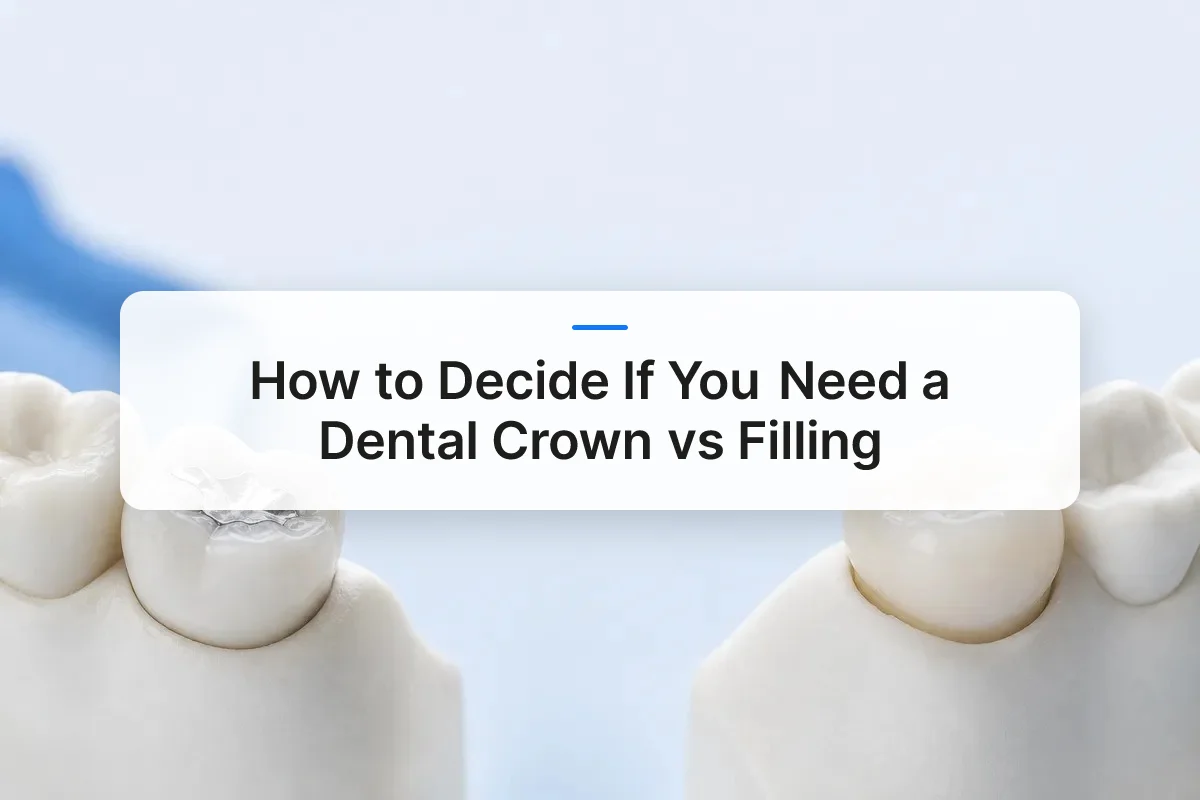
Understanding crown vs filling is essential. A filling is usually enough when tooth decay or damage is limited and enough healthy structure remains to support it; a crown becomes necessary when the tooth has lost so much structure, through a large cavity, cracks, or a root canal, that it needs full coverage to stay strong. Your dentist decides based on how much of the tooth remains, where the damage sits, and whether the tooth faces heavy biting force. Fillings are quicker and less invasive; crowns cost more but protect a weakened tooth from fracturing.
Prerequisites: What to Know Before Comparing Crown vs Filling
Before you can weigh crown vs filling for your own tooth, you need to know what each restoration actually does and what information your dentist will ask for at the appointment. For a side-by-side breakdown of the two procedures, this comparison of dental crowns and fillings is a useful starting point before your visit.
A filling repairs a cavity or a small area of lost tooth structure. The dentist removes the decayed material, then packs composite resin or another filling material directly into the space, where it bonds to the remaining healthy tooth. It works because most of the natural tooth is still intact and can support the repair. This is particularly relevant for crown vs filling.
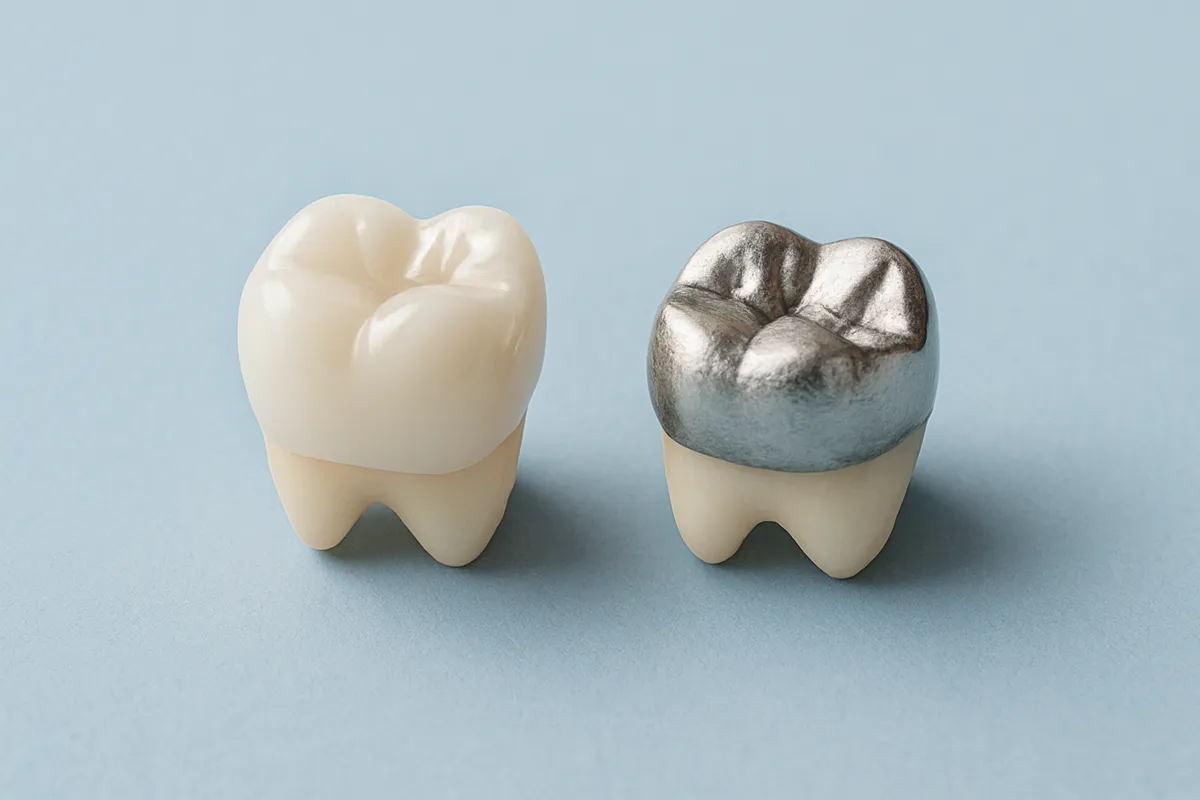
A crown takes a different approach. Instead of filling a gap, it caps the entire visible portion of the tooth above the gumline, replacing the outer surface with a custom-made shell of porcelain, ceramic, or metal. Crowns come into play when too much of the original tooth is gone or compromised to rely on a bonded filling alone, the crown becomes the new outer wall.
Gather this before your appointment
A few pieces of information will speed up the exam and help your dentist explain the reasoning behind the recommendation:
- Recent x-rays, if you have them from a prior visit or another office, these show how deep the decay or fracture runs beneath the surface.
- A clear description of your symptoms: sharp pain when biting down, lingering sensitivity to hot or cold, or a dull ache that comes and goes.
- Whether the tooth in question has had a root canal. Root-canal-treated teeth lose blood supply and become more brittle, which often tips the decision toward a crown.
- Any history of cracking, chipping, or a large existing filling in that same tooth.
None of this replaces an actual exam. Only a clinical exam and x-ray can tell your dentist exactly how much healthy structure remains and whether the crack or decay reaches the nerve. Practices like Villagio Family & Cosmetic Dental in Katy use that exam to map out the treatment plan, this guide is meant to help you understand the reasoning behind that call, not substitute for it.
Step 1: Compare What Crown vs Filling Actually Involves
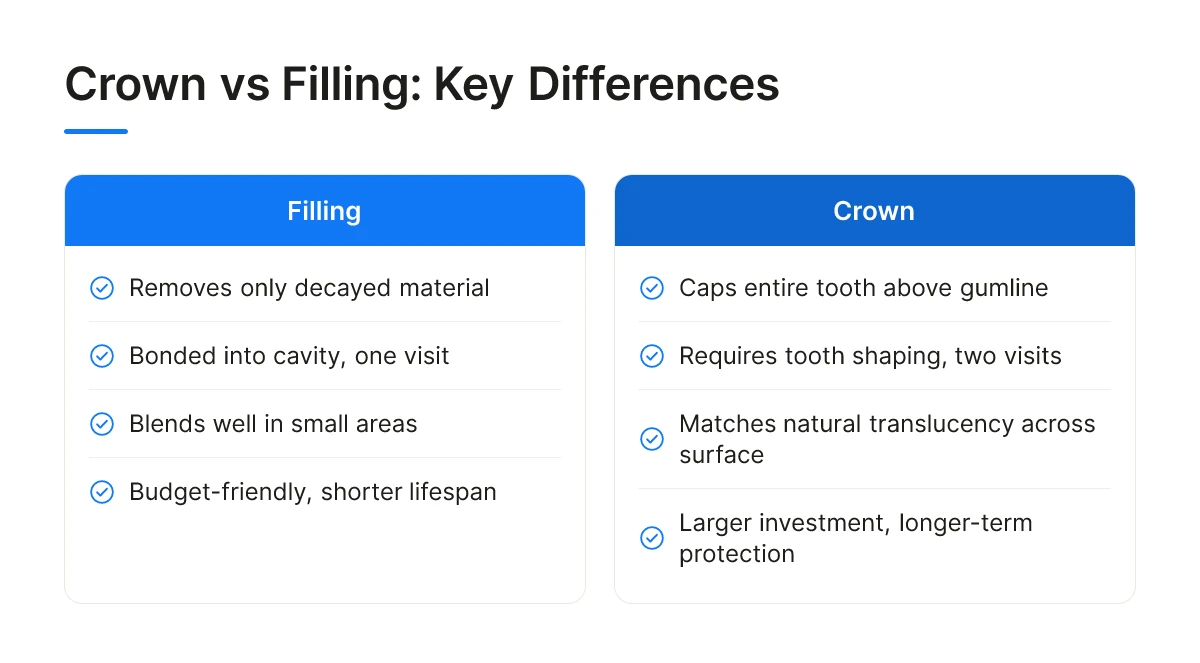
A filling replaces only the decayed part of a tooth in one visit, while a crown changes and caps the entire tooth, usually over two appointments.
The crown vs filling decision comes down to how much of your natural tooth is still healthy enough to keep. Once you understand what each procedure physically does to the tooth, the differences in cost, appearance, and how long the repair lasts start to make sense. This overview of when each treatment applies covers the same distinction from a different practice’s perspective, which can help confirm what you hear in the chair.
How Much of the Tooth Does Each Procedure Remove?
A filling is conservative by design. Your dentist removes only the decayed or damaged material, cleans the cavity, and bonds a tooth-colored composite directly into that space. Healthy tooth structure around the cavity stays untouched.
A crown asks for more. To make room for a cap that will cover the entire visible tooth, your dentist shaves down the outer surface on all sides, sometimes 1 to 2 millimeters of enamel, depending on the crown material. That reduction is necessary so the finished crown fits over the tooth without feeling bulky or affecting your bite. It’s also why crowns are reserved for teeth with more extensive damage, large old fillings that have failed, or teeth that have had root canal treatment and need reinforcement to avoid cracking. When considering crown vs filling, this point stands out.
Which Option Looks More Natural?
For small to moderate cavities, a composite filling blends in well because your dentist can shade-match the material to the surrounding tooth in one sitting. Most patients at our Katy office can’t spot their own fillings in a smile photo.
Crowns face a tougher aesthetic test because they need to replicate the way an entire tooth reflects light, not just a small patch of it. Porcelain crowns handle this well; modern ceramic materials mimic the translucency of natural enamel across the full tooth surface, which matters most on front teeth where color and shine are visible when you talk or smile.
Procedure timing differs too. A filling is typically finished in a single visit lasting less than an hour. A crown usually takes two visits: the first for reshaping the tooth and fitting a temporary crown, the second, often two to three weeks later, for cementing the permanent one. Practices with same-day milling technology can sometimes compress this into one appointment, though not every dental office offers it. This short video walkthrough shows what each procedure looks like in practice, which can help set expectations before your appointment.
Step 2: Verify Which Treatment Your Tooth Actually Needs
Dentists decide crown vs filling by weighing four factors: how much healthy tooth structure remains, where the damage sits, whether the cusps are compromised, and root canal history.
None of these factors work in isolation. A dentist at Villagio Family & Cosmetic Dental looks at the whole picture on the X-ray and in the mouth before recommending anything, because the same size cavity can call for different treatments depending on where it sits and what’s happened to the tooth before.
- Percentage of tooth structure remaining. If more than half the tooth is intact, a filling usually holds. Once decay or a crack eats into 50% or more of the tooth, the remaining walls often aren’t thick enough to support a filling under normal biting force.
- Location and size of the cavity or crack. Small, single-surface cavities on a flat area of the tooth are straightforward filling territory. Large cavities that wrap around multiple surfaces, or cracks that run toward the root, change the calculation.
- Whether cusps are involved. Cusps are the pointed, raised parts of the chewing surface. When a cusp is cracked or has to be removed to clear out decay, a filling has nothing solid to anchor to, and a crown becomes the more predictable option.
- Prior root canal treatment. A tooth that’s had a root canal loses its internal blood supply and becomes more brittle over time. Most of these teeth need a crown regardless of how much visible structure remains, simply to prevent the tooth from splitting under normal chewing pressure.
Why Might a Dentist Recommend a Crown When a Filling Might Work?
Some dentists recommend a crown even on a tooth that could technically hold a filling, because a weakened tooth that fractures later usually costs more to fix than the crown would have upfront. A large filling in a tooth with thin remaining walls acts like a wedge, it can split the tooth down the middle when the patient bites into something hard. Once that happens, the tooth often isn’t salvageable with another filling and may need a crown anyway, or in worse cases, extraction.
This is judgment, not a rigid rule, which is why it’s worth asking your dentist to walk through their reasoning rather than accepting “you need a crown” as the final word. For those exploring crown vs filling, this matters.
It’s also worth understanding what a crown does and doesn’t protect. A crown covers and reinforces the outer structure of the tooth, but the natural tooth underneath is still alive and still vulnerable. Decay can develop at the margin where the crown meets the gumline if brushing and flossing lapse, which means a crown reduces fracture risk but doesn’t eliminate the need for normal hygiene.
When Is a Filling Not Enough?
A filling stops being a reasonable option in three common situations: when a cusp has fractured off, when decay spans three or more surfaces of the tooth, and when the tooth has already had a root canal and become brittle. In each case, the remaining structure is too compromised to hold a filling material under normal chewing force without a high risk of cracking further.
Ask your dentist these questions to understand a specific recommendation: What percentage of the tooth is affected? Is a cusp involved? Would a filling likely need to be redone within a few years? Has this tooth had root canal treatment? The answers should make the crown vs filling decision concrete rather than a judgment call you have to take on faith.
Step 3: Weigh Cost, Durability, and Recovery Before Deciding
Fillings sit at the more budget-friendly end because they use chairside material placed in one visit; crowns fall into a higher investment tier because they require lab fabrication, a custom fit, and often two appointments. That single difference, chairside material versus a lab-made restoration, drives most of the cost gap in the crown vs filling decision.
Think of it as scope of work, not just materials. A filling patches a small area of decay directly in the chair. A crown requires shaping the entire tooth, taking impressions or digital scans, sending specs to a dental lab, and cementing a custom-fabricated cap once it returns. That lab step, plus the porcelain or zirconia material itself, is why crowns sit in a higher investment tier than fillings, even though neither procedure is exotic by modern dental standards.
Durability follows a similar logic. Fillings, especially on molars that absorb heavy chewing force, tend to wear down or chip sooner and often need replacement or repair after years of use. Crowns are built specifically for structural protection, they encase the whole tooth, which is why dentists reach for a crown when a tooth has lost enough structure that a filling would fracture under normal biting pressure. A properly prepared tooth with a well-fitted crown is designed to hold up over the long term, which is part of why the upfront cost difference exists in the first place.
How Does Insurance Typically Cover Fillings vs Crowns?
Most dental plans classify fillings as basic care and crowns as major care, which usually means a smaller out-of-pocket share for fillings and more cost-sharing for crowns. Basic care categories typically carry lower coinsurance, while major care often comes with waiting periods, annual maximums that get eaten up faster, or a lower reimbursement percentage.
This isn’t universal. Some plans fold crowns into a mid-tier category, and annual maximums vary widely by employer and carrier. Before committing to either option, call your insurance provider and ask directly how they classify the specific procedure your dentist recommends, the plan document language rarely matches how claims are actually processed. This directly impacts crown vs filling outcomes.
What’s the Recovery Time and Discomfort Level for Each?
A filling usually means mild numbness from local anesthetic and a same-day return to normal eating once the numbness wears off. Most patients are back to coffee and lunch within a couple of hours, avoiding only the very hot or very cold on the treated side until sensation fully returns.
A crown involves more steps and more sensitivity along the way. Between the temporary crown and the permanent one, the tooth can feel more reactive to temperature, and some patients notice mild soreness at the gumline where the tooth was changed. After the final crown is cemented, there’s often a short adjustment period as the bite settles, a day or two of feeling that “high spot” before it feels natural. Neither timeline is long, but the crown path asks for a bit more patience.
At Villagio Family & Cosmetic Dental, we walk patients through both the cost tier and the recovery expectations before any drill touches the tooth, so there are no surprises on the insurance statement or in the chair.
Common Mistakes to Avoid When Choosing Between a Crown and a Filling
Most crown vs filling regrets trace back to four decisions: picking the cheaper option on a bad tooth, trusting a recommendation without seeing the evidence, ignoring a grinding habit, and skipping a second opinion.
The costliest mistake we see at our Katy office is choosing a filling for a tooth that’s already lost significant structure, purely to avoid the higher upfront cost of a crown. A filling needs enough healthy tooth around it to hold the material in place. When decay or an old filling has eaten away too much of the tooth, packing in a new filling anyway just sets up a fracture down the road, and a cracked tooth often means an emergency visit, a crown placed under worse conditions, or in the worst case, an extraction and implant. What looked like savings turns into the most expensive path available.
The reverse mistake also costs patients money: accepting a crown recommendation without asking basic questions. Before agreeing to a crown, ask what percentage of natural tooth structure remains and ask to see the x-ray yourself. A tooth with 60% of its structure intact and a small cavity rarely needs a crown, a well-placed filling can handle it. If a dentist can’t or won’t explain the reasoning with the image in front of you, that’s worth pausing on.
Grinding and clenching wreck restorations regardless of which one you choose. A patient who grinds at night can crack a filling or chip a crown within a couple of years, while the same restoration might last over a decade in someone without that habit. If nobody’s asked about jaw tension, morning headaches, or worn enamel, the material discussion is happening before the real problem gets addressed. This is particularly relevant for crown vs filling.
Finally, trust your gut if the treatment feels disproportionate to the symptoms. A crown recommendation for a tooth that only aches occasionally, or a filling for a tooth that’s clearly cracked to the gumline, both deserve a second look. Routine six-month checkups catch most decay while it’s still small enough that a filling is the only treatment ever needed, which is the simplest and least invasive outcome in this entire comparison.
Frequently Asked Questions
Can a large filling fall out and need to become a crown later?
Yes, a large filling can fail over time and often needs to be replaced with a crown. Once a filling covers more than a third of the biting surface, the remaining tooth structure weakens with every chew, and cracks or a lost filling frequently push patients from a filling repair to a crown.
Does a crown hurt more than a filling to get placed?
No, crown placement isn’t more painful than a filling once the area is numbed. Both procedures use local anesthetic, so patients feel pressure rather than pain. Mild sensitivity after a crown appointment tends to last a day or two longer than after a simple filling.
How do I know if my tooth pain means I need a crown instead of a filling?
Sharp pain when biting down, lingering sensitivity to hot or cold, or a visible crack usually signals damage beyond what a filling can fix. Dull, brief sensitivity from a small cavity often still qualifies for a filling. An exam and X-ray at Villagio Family & Cosmetic Dental confirm how much healthy structure remains before recommending either option.
Is a same-day crown as durable as a traditional lab-made crown?
Same-day milled crowns made from solid ceramic block material hold up comparably well for most back and front teeth. Traditional lab-made crowns still offer more layering options for color-matching front teeth. For everyday chewing strength, the difference between the two is minor for most patients.
Can a tooth need a crown and a filling at the same time?
Yes, a tooth can sometimes need a filling built up first before a crown is placed over it. If enough natural structure remains but not enough to hold a crown securely on its own, the dentist adds a core buildup, essentially a supportive filling, before shaping the tooth for the crown. This is common on molars with root canals. When considering crown vs filling, this point stands out.

Conclusion
The crown-vs-filling decision comes down to how much healthy tooth structure remains, not personal preference. A filling works when decay is contained; a crown becomes necessary once a cavity, crack, or old filling has compromised the tooth’s ability to withstand normal biting force. Waiting rarely shrinks the problem, small fillings that fail often turn into crown cases, and cracked teeth left untreated can progress to root canals or extraction.
If you’re noticing sensitivity, a visible crack, or an aging filling, schedule an exam and X-ray at Villagio Family & Cosmetic Dental in Katy so we can measure the remaining tooth structure and recommend the least invasive option that will actually last.
Recommended Articles
Explore more from our content library: