Proudly Serving Katy, Richmond & Fulshear Cinco Ranch
(281) 395-2100
|
(281) 394-4001

Understanding broken tooth repair is essential. If you’ve broken a tooth, rinse your mouth with warm water, save any broken pieces, and apply a cold compress to reduce swelling. Cover any sharp edges with dental wax or sugar-free gum to protect your tongue and cheek, take an over-the-counter pain reliever if needed, and call your dentist promptly, same-day if there’s pain, bleeding, or a visible nerve. Your dentist will then determine whether bonding, a crown, or another repair option best restores the tooth based on how much structure is damaged.
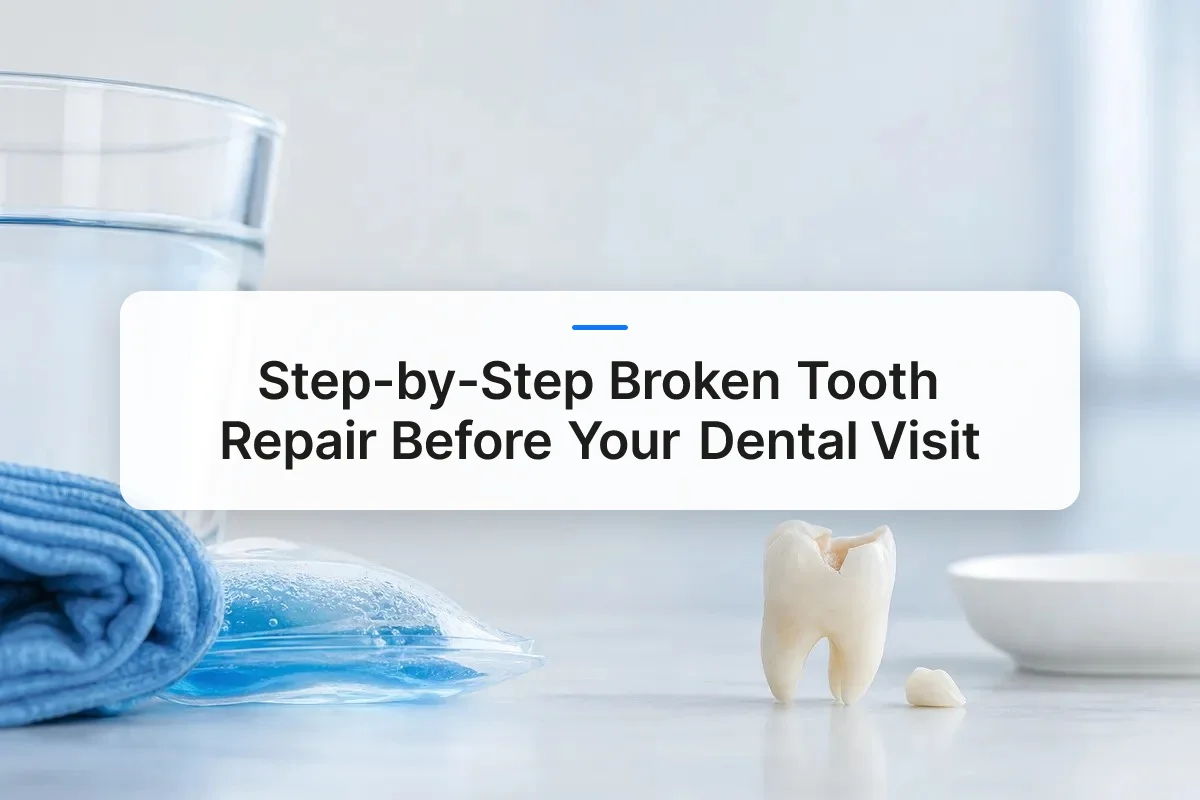
Take These First Steps Immediately After Breaking a Tooth
The first ten minutes after a tooth breaks decide how much damage you prevent and how much broken tooth repair your dentist can offer later. Move calmly through a few basic steps rather than reaching for the nearest sharp object or panicking about what you see in the mirror.
Start by rinsing your mouth gently with warm water. This clears blood, food debris, and small tooth fragments from the area without the sting that cold water or mouthwash can cause on exposed dentin or nerve tissue. Skip vigorous swishing, a light rinse is enough to see the damage clearly.
Next, look for the broken piece. If you find it, drop it in a small container of milk or, if milk isn’t available, your own saliva. Both keep the fragment’s cells hydrated, which matters if your dentist determines the piece is usable during repair. Avoid handling it more than necessary and never let it dry out on a napkin or countertop.
Apply a cold compress to the outside of your cheek near the injured tooth in cycles of about 15–20 minutes on, then off. This limits swelling and takes the edge off throbbing pain while you arrange an appointment.
What Materials and Methods Are Safe for a Temporary Fix at Home
Dental wax or a small piece of sugar-free gum pressed gently over a jagged edge is the safest home fix, it shields your tongue and cheek from cuts without adding pressure to the tooth. Over-the-counter pain relievers such as ibuprofen or acetaminophen, taken as directed on the label, help manage discomfort in the meantime. Skip household adhesives, super glue, or dental cement bought online, none of these are formulated for use inside the mouth and they can trap bacteria against the fracture. This emergency guide to temporary fixes for a broken tooth covers similar first-response steps worth reviewing before your appointment.
When Does This Need Urgent Dental Care Versus a Regular Appointment
Call your dentist the same day if you notice sharp or worsening pain, visible bleeding, a pink or reddish tint at the center of the tooth suggesting nerve exposure, or a fragment large enough to expose raw tissue. Smaller chips with no pain and no sensitivity can typically wait for the next available regular appointment, but they still need evaluation before the edge worsens.
While you wait, avoid chewing on the injured side, skip very hot or cold foods and drinks that trigger sensitivity, and resist the urge to probe the area with your finger or tongue, that habit alone can chip away more of the remaining structure.
Protect the Tooth Until Your Broken Tooth Repair Appointment
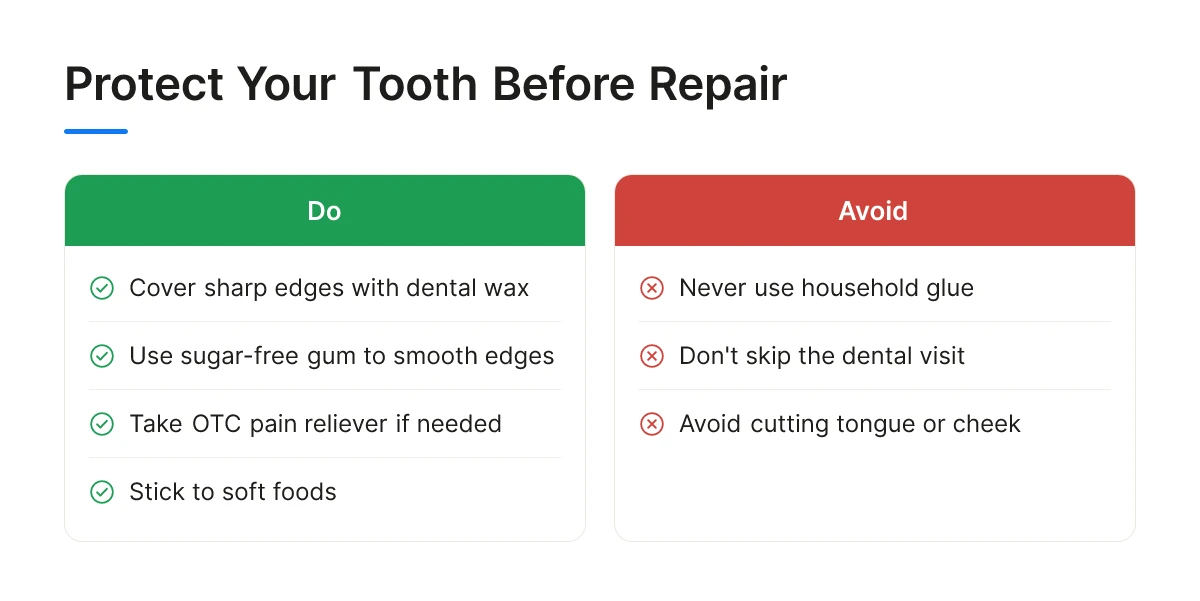
Cover sharp edges with dental wax or sugar-free gum, take an OTC pain reliever if needed, stick to soft foods, and never use household glue or skip the dental visit.
The hours between a chipped or cracked tooth and your appointment matter. What you do, and don’t do, during that window can determine whether your dentist performs a simple repair or has to manage a more complicated infection.
Shield the Sharp Edge
A broken tooth often leaves a jagged edge that cuts the tongue, cheek, or lip with every bite or word. Press a small piece of dental wax or sugar-free gum over the area to smooth it out and stop the irritation [3]. Both are soft, pliable, and safe to keep in your mouth for short stretches.
Avoid the temptation to reach for household glue, super glue, or dental cement sold for denture repair. These products aren’t formulated for oral tissue, can contain chemicals that irritate your gums, and may make it harder for your dentist to assess the actual damage once you’re in the chair. According to this overview of cracked and fractured tooth causes and care, even minor fractures should be evaluated by a dentist rather than managed indefinitely with home fixes.
Manage Pain the Right Way
Over-the-counter pain relievers like ibuprofen or acetaminophen, taken as directed on the label, can control discomfort until your visit. Skip the old trick of placing an aspirin tablet directly against the sore gum tissue, the acid can burn and irritate the area instead of easing the pain [3].
Adjust What and How You Eat
Stick to soft foods, scrambled eggs, yogurt, mashed potatoes, soup, and chew on the opposite side of your mouth. Cold or very hot foods can trigger sharp sensitivity if the crack reaches the dentin or nerve, so lukewarm options are safer in the meantime.
Know the Limits of a Temporary Fix
Wax, gum, and careful eating buy you time, they don’t replace broken tooth repair by a dentist. A crack left unaddressed can widen with normal chewing pressure, and exposed dentin gives bacteria a path toward the nerve, raising the risk of infection or a root canal down the line. Treat these steps as a bridge to your appointment, not a solution on their own.
Compare Your Broken Tooth Repair Options With Your Dentist
Broken tooth repair options range from a same-day resin patch to a crown or root canal, and the right one depends on how deep the fracture runs and whether it reached the nerve. Your dentist will walk through these options after an exam, not before, because guessing from a mirror at home tells you almost nothing about what’s happening below the enamel. This overview of options to fix a broken tooth outlines the range of approaches dentists typically consider.
What’s the Difference Between Bonding, Crowns, and Implants
Bonding uses a tooth-colored composite resin applied directly to the chip, then hardened with a curing light and shaped to match the surrounding tooth. It works well for minor chips and small edge fractures where the structure underneath is still sound, think of it as a durable patch rather than a rebuild, and it’s often finished in a single visit.
Crowns come into play when the break involves larger structural loss, a cusp sheared off, or a fracture line that runs deep enough that bonding wouldn’t hold under normal biting force. A crown caps the entire visible tooth above the gumline, redistributing chewing pressure across a full-coverage shell instead of relying on the remaining natural tooth to carry the load.
If the break reaches the nerve, the soft tissue inside the tooth that supplies blood flow and sensation, bonding and crowns alone won’t solve the problem. At that point, a root canal followed by a crown is usually the path: the root canal removes damaged nerve tissue and seals the canal, and the crown rebuilds the tooth’s outer structure afterward. When the tooth is fractured below the gumline or split at the root, it may not be salvageable at all, and an implant becomes the more realistic option.
Which Repair Method Fits Your Situation
Dentists weigh three factors when narrowing down broken tooth repair options: how far the fracture extends, whether the nerve is exposed, and where the tooth sits in your bite. A hairline chip on a front tooth carries different repair logic than a molar cracked down the middle, since molars absorb far more force during chewing [2].
None of this is something you can sort out by looking in a mirror or pressing on the tooth with your tongue. An exam and x-ray are what confirm the fracture’s depth and nerve involvement, and that imaging is what turns a list of general options into an actual recommendation for the tooth in front of your dentist.
Prepare for the Repair Procedure and What Recovery Involves
Most broken tooth repair appointments follow the same sequence, numbing, removing damaged structure, rebuilding the tooth, then adjusting your bite, and recovery is usually measured in days, not weeks.
What to Expect During and After the Repair
Your dentist starts by numbing the area around the affected tooth, especially if the crack or break sits near the nerve. Next, they clean out any damaged or decayed material so the repair bonds to healthy tooth structure, skipping this step is why some do-it-yourself fixes fail within days. Depending on the extent of damage, they’ll apply bonding resin, cement a crown, or place a filling, then shape and polish the material to match your natural tooth.
The last step, bite adjustment, matters more than most patients expect. You’ll be asked to bite down on marking paper so the dentist can check for high spots, since a repair that sits even slightly too tall can cause soreness in the jaw within a day or two.
During the procedure, you’ll mainly feel pressure rather than pain, thanks to local anesthesia. Once numbness wears off, usually within a few hours, mild soreness around the gumline is common, along with temporary sensitivity to hot or cold. For families in Katy and Fulshear managing this around school pickups or work schedules, that sensitivity window typically settles within a few days as the tissue around the tooth calms down.
How Long Each Repair Takes and When You Can Resume Normal Activities
Recovery timeframes depend heavily on which repair method your dentist used. Bonding is often a same-day, low-downtime fix, many patients eat normally within an hour or two, once numbness fades. Crowns involve more of a process: you’ll typically wear a temporary crown for one to two weeks while a permanent one is fabricated, and it’s normal for the temporary to feel slightly different against your bite during that transition.
Aftercare is straightforward but matters. Avoid hard foods like ice, nuts, and hard candy, and skip sticky foods that can tug at a new filling or temporary crown. Keep brushing and flossing as usual, being gentle around the repaired area. If soreness lingers beyond a few days, or you notice sharp pain when biting down, that’s a sign to call your dentist rather than wait it out, a properly finished broken tooth repair shouldn’t leave you with ongoing discomfort weeks later.
Avoid These Common Mistakes and Prevent Future Tooth Damage
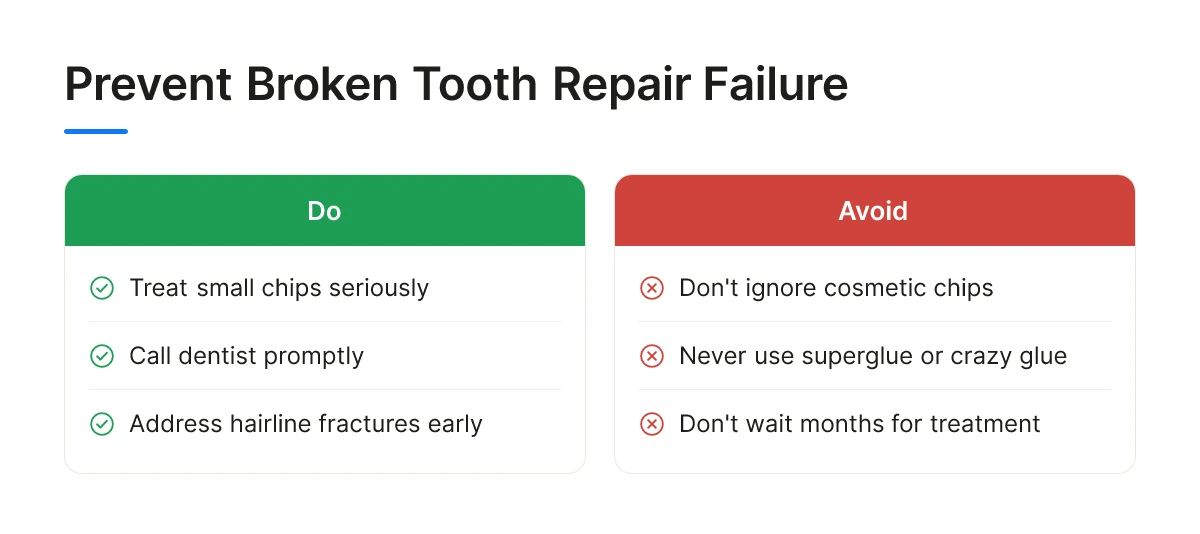
Most broken tooth repair problems get worse not from the initial injury but from three avoidable mistakes: ignoring the chip, gluing it, and waiting too long to call.
The first mistake is treating a small chip as cosmetic. A hairline fracture that doesn’t hurt today can spread under normal chewing pressure, eventually reaching the nerve or splitting the tooth below the gumline. What starts as a simple bonding fix can turn into a root canal or extraction if it sits untreated for months.
The second mistake is reaching for superglue, crazy glue, or denture adhesive to hold a fragment in place. These products aren’t rated for use inside the mouth, and swallowing or inhaling them can irritate soft tissue or cause a choking hazard. Dental wax, sold at most pharmacies, is the safe option for covering a sharp edge until your dentist can see you.
The third mistake is delaying the call. Once a fracture exposes dentin or the inner pulp, bacteria have a direct path into the tooth. Pain that fades after a day or two isn’t always good news, it can mean the nerve has died, which raises the risk of an abscess. Parents in Katy and Cinco Ranch sometimes assume a broken baby tooth doesn’t need urgent attention since it will fall out anyway, but an infected primary tooth can still affect the permanent tooth developing underneath.
What Habits and Protective Measures Reduce Your Risk of Breaking a Tooth Again
The habits that prevent a repeat trip to the dentist are straightforward and low-cost compared to another round of repair work.
- Wear a nightguard if you grind your teeth. Grinding wears down enamel gradually and puts uneven pressure on teeth that already have fillings or old cracks.
- Wear a mouthguard for sports. Contact sports and even non-contact activities like skateboarding account for a large share of the tooth injuries we see at Villagio Family & Cosmetic Dental, and a properly fitted guard is inexpensive insurance.
- Stop chewing ice, hard candy, and popcorn kernels. These are among the most common causes of chipped and cracked teeth in patients of all ages.
- Keep routine checkups on the calendar. A six-month exam lets your dentist spot a weakening filling or a fine crack before it turns into an emergency, which is the most reliable way to avoid needing broken tooth repair in the first place.
Frequently Asked Questions
Can a broken tooth heal on its own without treatment?
No, enamel and dentin can’t regenerate, so a broken tooth will never repair itself. Left alone, a chip can worsen with normal biting force, and any crack that reaches the inner nerve invites bacteria in, raising the risk of infection. Treatment is what stops the damage from spreading, not time.
Is it an emergency if my broken tooth isn’t causing pain?
Lack of pain doesn’t mean it’s safe to wait, since some fractures damage the nerve slowly and only start hurting once infection sets in. A sharp edge, visible crack, or exposed dentin still needs an exam within a day or two, even if the tooth feels fine right now.
Can I go to work or school after getting a broken tooth repaired?
Most patients return to work or school the same day, especially after bonding or a filling, which involve no downtime beyond mild numbness from local anesthetic. Crown or root canal appointments may leave you a bit sore, but rarely require missing more than that afternoon.
Does dental insurance typically help cover broken tooth repair?
Most dental plans cover a meaningful share of broken tooth repair, though the exact amount depends on the procedure and your specific policy. Bonding and fillings are usually classified as basic restorative care, while crowns and root canals often fall under major services with different coinsurance levels. Our Katy-area team verifies benefits before treatment starts, so you know what to expect before any work begins rather than after the bill arrives.
What happens if I don’t repair a broken tooth at all?
An unrepaired broken tooth typically gets worse, since chewing pressure can extend the crack deeper or shear off more of the structure. Bacteria entering exposed dentin can lead to infection, abscess, and eventually tooth loss, turning a simple filling into a root canal or extraction.

Conclusion
A broken tooth isn’t a one-size-fits-all problem: a small chip may need only bonding, while a crack near the nerve calls for a root canal and crown. What matters most in the first hours is protecting the tooth, rinse, save any fragment, cover sharp edges, and avoid chewing on that side. Waiting rarely helps, since untreated fractures tend to spread and get more expensive to fix. If you’re in Katy, Fulshear, Richmond, or Cinco Ranch and dealing with a broken tooth right now, call Villagio Family & Cosmetic Dental today for a same-week exam before the crack gets worse.
Sources & References
Recommended Articles
Explore more from our content library: