Proudly Serving Katy, Richmond & Fulshear Cinco Ranch
(281) 395-2100
|
(281) 394-4001

Understanding how to find good dentist is essential. A good dentist combines verified credentials, transparent communication, and a comfortable patient experience, not just clinical skill. Look for clear licensing and training, upfront pricing before any treatment begins, a staff that explains options without pressuring you into procedures, and consistent positive patterns across patient reviews. The best fit also depends on your family’s needs: office hours, whether they treat children and adults, and how they handle questions during your first visit all signal whether ongoing care will feel trustworthy rather than transactional.
1. Verified Credentials and Specialist Training
Checking a dentist’s degree and license status through your state dental board takes five minutes and rules out unqualified providers before you book a visit.
Anyone researching how to find good dentist options should start here, because credentials are the one factor you can verify objectively, before you ever judge bedside manner or office decor.
What’s the Difference Between a DDS, DMD, and Specialist Certifications?
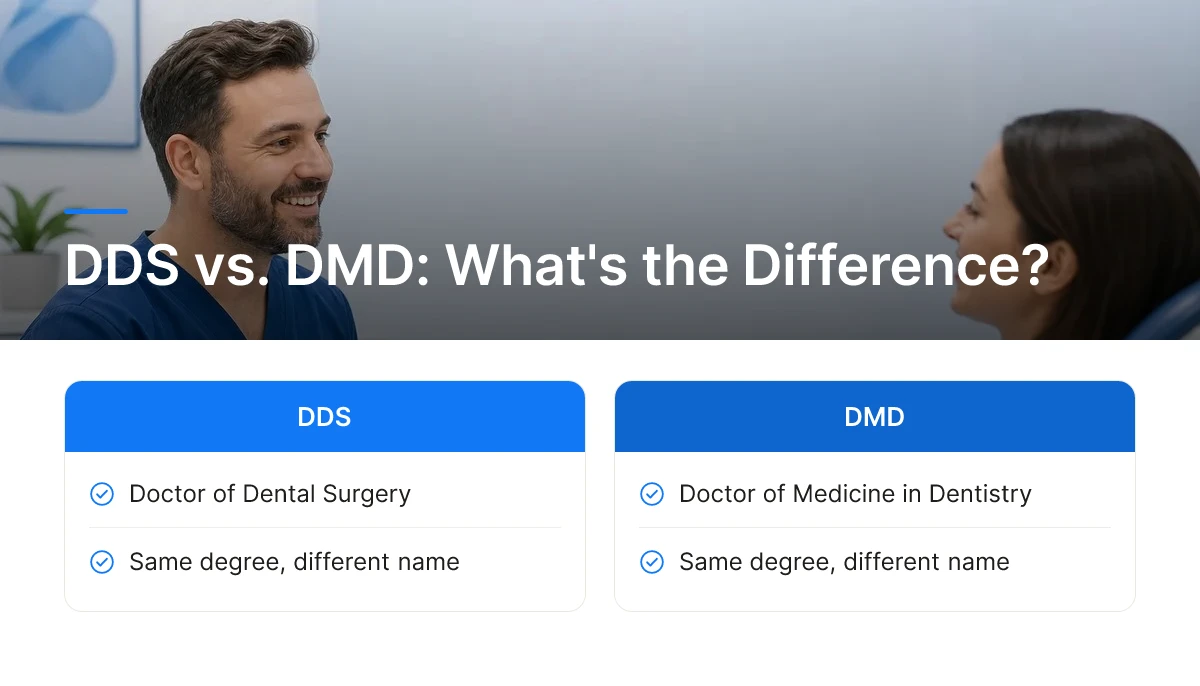
DDS (Doctor of Dental Surgery) and DMD (Doctor of Medicine in Dentistry) are the same degree under two names, the naming convention just depends on which accredited university awarded it. Neither credential is more advanced or rigorous than the other, so don’t let the letters alone sway a decision.
Specialist certification matters when your case calls for it: orthodontics for complex bite correction, periodontics for advanced gum disease, oral surgery for extractions or jaw issues. For routine cleanings, fillings, and general checkups, a well-trained general dentist’s education covers the need fully.
Verify standing directly through your state dental board’s license lookup tool rather than trusting a practice website’s claims. Board records show disciplinary history, license expiration dates, and whether a provider is authorized to practice in Texas at all.
Best for: readers who want a fast, objective first filter before evaluating softer factors like communication style or office atmosphere.
2. A Modern, Well-Maintained Facility
A clean, updated office with current technology signals that a practice invests in accurate diagnoses and consistent infection control, not just curb appeal.
How Do Modern Facilities and Welcoming Environments Affect Care Quality?
Digital X-rays and intraoral cameras let a dentist spot decay, cracks, and bone loss earlier and with more precision than older film-based methods, while also cutting the radiation dose per image. If a practice still relies on outdated film X-rays as standard, that’s worth asking about directly.
Visible sterilization routines matter too. Instruments sealed in sterile pouches, treatment rooms wiped down between patients, and staff following clear protocols are proxies for how seriously a practice treats safety, even if you can’t inspect the sterilization log yourself.
Environment also shapes whether families actually show up for follow-up care. A calm waiting area, staff who explain what’s happening before a procedure, and kid-friendly touches reduce the anxiety that causes patients to delay or skip appointments altogether.
Best for: anxious patients or families with young kids who are sensitive to clinical settings.
3. Genuine Patient Reviews and Reputation Patterns
Look for recurring themes across dozens of reviews rather than trusting any single glowing or scathing post, since patterns reveal more than outliers do.
What Do Patient Reviews and Testimonials Actually Tell You About a Dentist?
One five-star review could be a friend of the practice; one one-star review could be an isolated billing mixup. What matters is the pattern: do dozens of reviewers mention long wait times, surprise charges, or staff who rushed through explanations? Consistency across many voices is the signal worth trusting.
Scan specifically for how billing surprises were resolved, whether the dentist explained procedures before starting, and how the front desk handled scheduling or insurance questions. These details tell you more about daily experience than a generic “great dentist!” comment ever will.
Also read how the practice responds publicly to negative reviews. A thoughtful, non-defensive reply shows accountability; silence or a combative tone suggests the same pattern might show up in how they handle in-person complaints.
One thing most guides on how to find good dentist options skip: weigh recency. A practice with excellent reviews from three years ago may have since changed ownership, lost key staff, or shifted its patient volume, check for reviews from the last six to twelve months before assuming the reputation still holds.
4. Clear, Pressure-Free Communication
The strongest sign of a trustworthy dentist is explaining the reasoning behind a recommendation, not just announcing what treatment you need.
How Does a Pressure-Free Approach Affect Your Experience and Outcomes?
A dentist who says “you need a crown” and one who says “here’s what the X-ray shows, here’s why a filling won’t hold, and here’s what happens if we wait” are giving you the same conclusion through very different processes. The second approach lets you make an informed decision instead of a rushed one.
Pressure-free communication shows up in specific behaviors: the dentist pauses for questions, lays out multiple treatment options with honest trade-offs, and doesn’t push urgency tactics like same-day discounts on major procedures. A practice that welcomes a second opinion without getting defensive is telling you something important about its confidence in the diagnosis.
This isn’t just about comfort, patients who understand why a treatment is necessary are more likely to follow through on it and maintain the habits that prevent repeat problems. Clear communication is a treatment-outcome factor, not just a nice-to-have.
Best for: patients who’ve previously felt rushed, talked over, or unheard during a dental visit.
5. Transparent, Upfront Pricing
An ethical practice gives you a written, itemized treatment plan with costs before work begins, not a verbal estimate that changes once treatment is underway.
How Can You Compare Costs and Understand Pricing Without Insurance Coverage?
Upfront pricing means the office puts the plan in writing: procedure by procedure, cost by cost, before any drilling starts. If a quote only comes verbally, or shifts significantly once you’re in the chair, that’s a red flag worth pausing over.
Costs vary by region, provider experience, and case complexity, so instead of expecting one fixed number, compare practices using general tiers, budget-friendly, mid-range, or premium, based on what’s included in the estimate, such as materials used or follow-up visits covered. This is more useful than chasing an exact figure that won’t hold across different patients anyway.
For patients without insurance, a transparent practice offers a clear cost breakdown and payment options upfront, rather than vague reassurances that “we’ll figure it out later.” Ask how they handle dental payment plans and whether they help estimate out-of-pocket costs against any coverage you do have, this is part of financial planning as much as it is part of choosing a provider, and it belongs in any serious approach to how to find good dentist that fits your budget.

6. Warning Signs That Should Make You Walk Away
A dentist who pressures same-day treatment, hides costs, or rushes every visit is telling you something important about how they practice.
What Warning Signs Suggest a Dentist May Use High-Pressure Sales Tactics or Unnecessary Procedures?
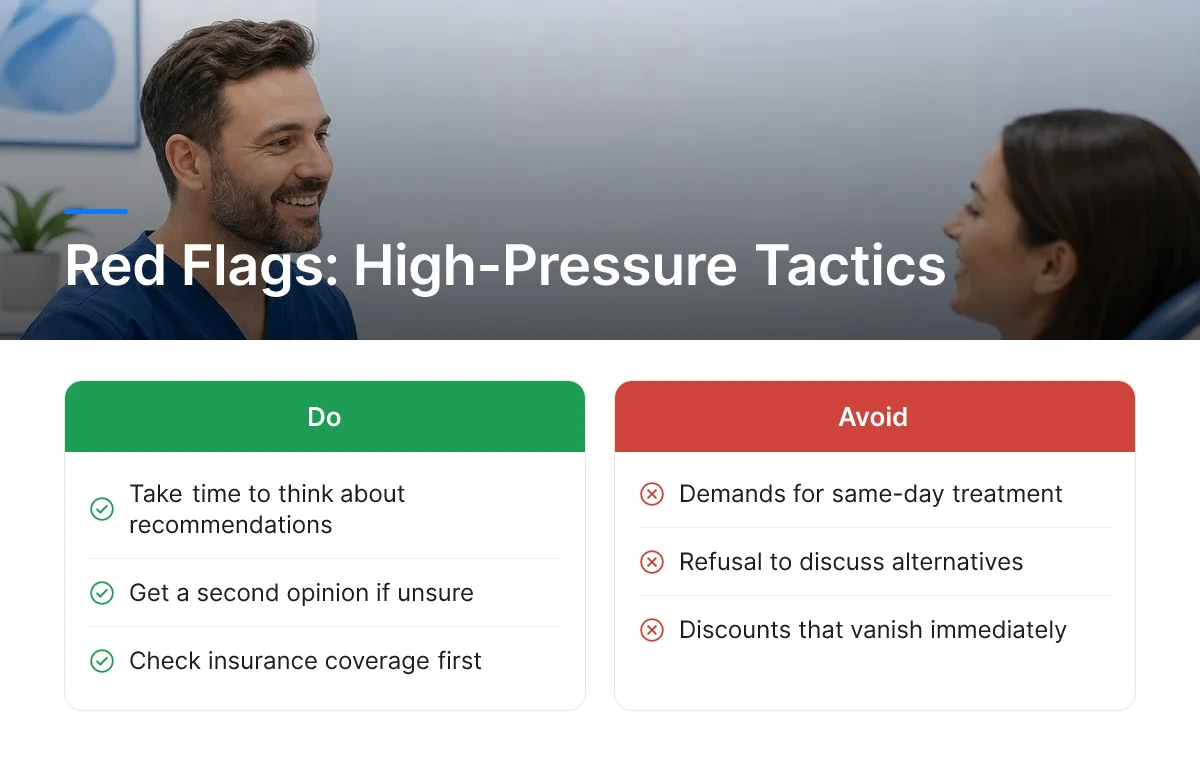
High-pressure sales tactics are the clearest red flag: demands for same-day treatment, refusal to walk through alternatives, or a discount that vanishes if you don’t decide on the spot. A dentist confident in a recommendation will let you take time to think, get a second opinion, or check insurance coverage first.
Unnecessary procedure recommendations often surface when a new diagnosis flatly contradicts a recent second opinion or existing X-rays without a clear clinical explanation for the difference. If a dentist wants to replace several fillings or start extensive work you’ve never had flagged before, ask what changed and request to see the imaging yourself.
Administrative red flags matter too: a practice that won’t put a treatment plan in writing, gives vague answers about billing, or cycles through staff so often that no one remembers your history. And a rushed appointment with no room for questions is a warning sign on its own, regardless of how technically skilled the dentist is, an office that doesn’t make time for you isn’t the right fit.
7. A True Family-Friendly Approach
A genuinely family-friendly dentist adjusts tone, pace, and explanations for each patient’s age rather than running one script for everyone.
What Should You Look for in a Dentist Who Treats Both Children and Adults?
Watch how the dentist and staff talk to a nervous 6-year-old versus how they discuss a root canal with a parent. A practice built for families slows down, uses simple language, and builds trust with children while still giving adults direct, detailed answers about their own care.
Consolidating care under one roof carries a practical payoff beyond convenience. Shared records mean the dentist treating your child’s cavity also sees your teenager’s orthodontic history and your own gum disease risk, which makes scheduling four family members around soccer practice and work meetings far simpler than juggling separate providers.
Ask specifically about staff experience with pediatric anxiety, techniques like tell-show-do, shorter first visits, or sedation options for kids who struggle in the chair. Also ask how much the practice emphasizes preventive care, like sealants and fluoride treatments, for younger patients rather than waiting to treat problems after they appear.
This approach works best for households trying to cut down the number of separate providers they manage. Villagio Family & Cosmetic Dental, for instance, structures care so a Katy-area family can bring a toddler and a grandparent to the same practice and get age-appropriate treatment for both without switching offices.
8. Convenient Hours and Accessible Scheduling
Families skip dental visits mainly because appointments collide with work and school schedules, not because they don’t value oral health.
Why Do Extended Hours and Weekend Availability Matter for Busy Families?
A parent working a 9-to-5 or a shift schedule often can’t take a weekday morning off for a cleaning, and neither can a teenager without missing class. Practices offering early mornings, evenings, or Saturday appointments remove that conflict, which is often the real reason preventive visits get postponed for months or skipped entirely.
Are Virtual Consultations or Telehealth Options Available to Help You Decide?
Some practices now offer virtual consultations for initial questions, insurance checks, or triaging a dental concern before committing to an in-person visit. This gives you a low-effort way to evaluate a dentist’s communication style, how clearly they explain things over a screen is a reasonable preview of how they’ll explain things chairside.
Easy online booking and automated appointment reminders are a small but telling signal of a modernized, patient-first operation. If scheduling still requires a phone call during business hours only, that friction adds up over a family’s worth of appointments, and it’s worth weighing alongside clinical quality when you’re working through how to find good dentist options near Katy, Fulshear, or Cinco Ranch.
How to Choose the Right Dentist for Your Family
Treat the first visit as a two-way evaluation and score the dentist against a short checklist covering credentials, costs, and communication.
How Can You Gauge Whether a Dentist Listens to Your Concerns and Explains Treatment Options Clearly?
Before you commit, ask three things on a first call or visit: what are the dentist’s credentials and continuing education, can they provide a written estimate before any procedure, and how do they handle it when a patient disagrees with a recommended treatment. The answers reveal more about day-to-day care than any website bio.
Pay attention to real-time behavior during the visit. Does the dentist pause for questions instead of talking straight through an exam? Do they explain trade-offs between treatment options, including cost and recovery time? Do they adjust their explanation when you look confused or ask a follow-up? These small patterns tell you more than credentials alone.
Weigh convenience against fit rather than defaulting to whichever office is closest. A practice ten minutes farther away that communicates clearly and respects your time usually beats a nearby office that rushes every appointment.
Working through how to find good dentist for your household comes down to this: use the first visit to test listening, transparency, and pacing, then trust the pattern that emerges over any single first impression.

Frequently Asked Questions
Are there specific certifications or memberships that indicate a trustworthy dentist?
Look for a state dental board license in good standing, membership in the American Dental Association or a state affiliate, and board certification in any specialty the dentist practices. These credentials confirm the dentist meets ongoing education requirements and follows accepted safety standards. You can verify licensing status directly through the Texas State Board of Dental Examiners website before booking a first appointment.
How often should I switch dentists if I’m not satisfied with my current one?
Switch as soon as a pattern of concern shows up, one bad visit isn’t a reason, but repeated rushed exams, unclear billing, or dismissed questions is. Waiting years out of loyalty or convenience often costs more in missed problems than the hassle of finding a new dental home.
Can I trust a dentist based on recommendations from friends and family alone?
Personal referrals are a solid starting point but shouldn’t be the only factor. A dentist who’s a great fit for a coworker’s routine cleanings may not match your family’s needs for pediatric care, sedation options, or evening appointments. Pair referrals with your own research into reviews, credentials, and a trial visit.
Should I be concerned if a dentist recommends treatment during my very first visit?
Not automatically, some conditions like a cracked tooth or active infection genuinely need same-visit treatment. The concern is when a dentist pushes costly, non-urgent work like multiple crowns or cosmetic procedures before completing a full exam and X-ray review. Ask for the clinical reasoning and get a second opinion if something feels rushed.
Conclusion
Finding a good dentist comes down to three checks: verify credentials and licensing, read reviews for patterns rather than isolated complaints, and pay attention to how the office treats you during that first visit. A dentist who explains findings clearly, shows X-rays before recommending treatment, and answers questions without rushing is worth keeping. If you’re weighing options in Katy, Fulshear, Richmond, or Cinco Ranch, book a consultation visit at Villagio Family & Cosmetic Dental and use it specifically to test how the team communicates before committing to ongoing care.
Recommended Articles
Explore more from our content library: