Proudly Serving Katy, Richmond & Fulshear Cinco Ranch
(281) 395-2100
|
(281) 394-4001

Understanding why do teeth hurt is essential. Teeth hurt for reasons that range from obvious dental problems to surprising outside causes. Cavities, cracked teeth, gum infections, and worn enamel are common culprits, but clenching your jaw, sinus pressure, recent whitening treatments, dehydration, and even heart trouble can also produce tooth pain. Because a toothache can signal something happening in your gums, nerves, sinuses, or elsewhere in your body, persistent or severe pain is worth having a dentist evaluate rather than guessing at home. If you’ve ever wondered why do teeth hurt so intensely one day and feel completely normal the next, the answer usually lies in one of the patterns covered below.
1. Why Do Teeth Hurt After Whitening or Other Cosmetic Treatments
Whitening gel temporarily dehydrates enamel and opens tiny channels called dentin tubules, letting heat, cold, and pressure reach the nerve inside the tooth, this is one of the most common reasons why do teeth hurt after a cosmetic visit.
Why Do Teeth Hurt After Whitening, and How Long Does the Sensitivity Last?
The bleaching agent, usually hydrogen or carbamide peroxide, pulls moisture out of enamel to lift stains. While the enamel is dehydrated, the tubules underneath are more exposed, so a sip of ice water can suddenly feel sharp. For most patients, this sensitivity fades within a few days as saliva rehydrates the enamel and the tubules reseal on their own. This is particularly relevant for why do teeth hurt.
This group is mostly people considering whitening for an upcoming event, or those a day or two out from a treatment and wondering if the ache is normal. It usually is. A detail most whitening guides skip: spacing out sessions and using a desensitizing toothpaste with potassium nitrate before treatment, not just after, blunts the nerve response before it starts. If sensitivity lingers well past a week, that’s no longer a whitening side effect, it points to a possible crack or decay that was already there and deserves a dental exam.
What Can You Do Between Whitening Sessions to Reduce Discomfort?
Spacing whitening sessions a few days apart gives enamel time to reabsorb minerals and moisture, which noticeably reduces the sting many people feel with back-to-back treatments. Chewing sugar-free gum can help stimulate saliva flow, and avoiding very hot or cold foods for 24 to 48 hours after a session gives the tubules time to reseal. Patients who plan whitening around a big event often forget this recovery window and end up surprised by lingering sensitivity right when they want their smile to feel its best.
2. Cavities, Cracks, and Gum Infections
Most toothaches trace back to one of three sources, decay, a crack, or a gum infection, and each produces a pain pattern specific enough to identify at home.
What Dental Problems Most Commonly Cause Tooth Pain?
Cavities top the list. Once decay eats through enamel and reaches the dentin or nerve, sugar and temperature changes trigger a sharp, localized jolt, that quick zing after a bite of cake or a cold drink is classic cavity behavior [1]. A cracked tooth behaves differently: pain shows up specifically when biting down or, notably, right when you release the bite, and it’s often intermittent enough that patients struggle to name which tooth hurts. Gum disease and dental abscesses feel different still, a dull, throbbing, or pulsing ache, frequently paired with swelling, tenderness, or a bad taste that won’t go away.
How Do Cavities, Infections, and Gum Disease Each Cause Different Types of Tooth Pain?
The distinction matters because it tells you how urgent the problem is. Before calling the dentist, note what triggers the pain: sweets point to a cavity, biting pressure points to a crack, and throbbing with swelling points to infection. That single self-check, sweet, temperature, or pressure, narrows the likely cause faster than guessing, and it’s a step most tooth-pain articles skip entirely in favor of just listing conditions.
3. Jaw Clenching and Teeth Grinding (Bruxism)
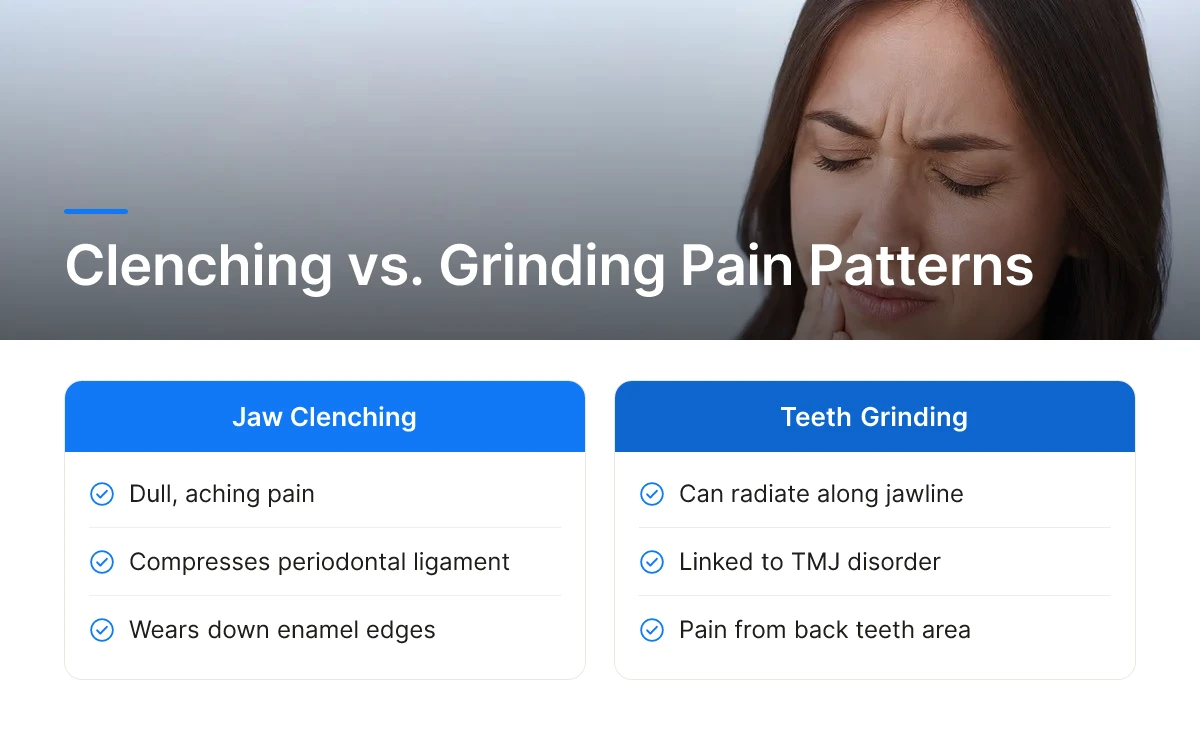
Chronic clenching and grinding put repeated micro-stress on teeth and the ligament around the root, producing a dull, aching pain rather than a sharp one.
What’s the Connection Between Stress, TMJ Disorder, and Tooth Pain?
Every clench compresses the periodontal ligament that cushions the tooth root, and over months that pressure inflames the ligament and wears down enamel edges. Grinding is also closely tied to temporomandibular joint (TMJ) disorder, when the jaw joint itself is strained or inflamed, that pain can radiate along the jawline and feel like it’s coming from the back teeth even when the teeth are structurally fine [1].
How Can I Stop Grinding My Teeth and Prevent the Pain It Causes?
This is the group waking up with a sore jaw, a dull headache, or noticing their front teeth look shorter and flatter than they used to. A nightguard protects enamel from further wear, but it doesn’t fix why the grinding started. Stress, sleep apnea, and misaligned bites are common triggers, and addressing one of those matters as much as wearing the appliance, a nightguard alone treats the symptom, not the cause.
4. Sinus Pressure and Referred Pain: Another Answer to Why Do Teeth Hurt
Sinus congestion can press directly on the roots of upper back teeth, producing an ache that feels exactly like a toothache but has nothing to do with the tooth itself. When considering why do teeth hurt, this point stands out.
What Does Referred Pain Mean, and How Can Pain from My Sinuses, Heart, or Jaw Feel Like a Toothache?
The roots of the upper molars and premolars sit just beneath the floor of the maxillary sinus [2]. When a cold, allergies, or a sinus infection inflames that lining, the swelling pushes on the same nerve pathways that serve those teeth, and the brain reads it as tooth pain. The giveaway: sinus-related pain usually spreads across several upper teeth at once rather than pinpointing one, and it gets noticeably worse when bending forward or lying down.
This is one specific example of a broader pattern called referred pain, where discomfort felt in the teeth actually starts somewhere else, the jaw joint, the ear, and in rare but serious cases, even the heart during a cardiac event. Readers whose tooth pain showed up alongside a cold, seasonal allergies, or facial pressure, rather than sensitivity to a specific bite or sweet, are the ones most likely dealing with a sinus issue, not a dental one.
How Can You Tell Sinus Pain Apart from a Real Dental Problem?
A simple test many people overlook: sinus-related tooth pain tends to ease once congestion clears, usually alongside other cold or allergy symptoms improving, while a dental problem stays put or worsens regardless of how your sinuses feel. If several upper teeth ache together and the discomfort tracks with your sinus symptoms rather than with eating or drinking, that pattern points away from the tooth itself and toward the sinuses as the true source.
5. Acidic Foods, Frequent Vomiting, and Dehydration
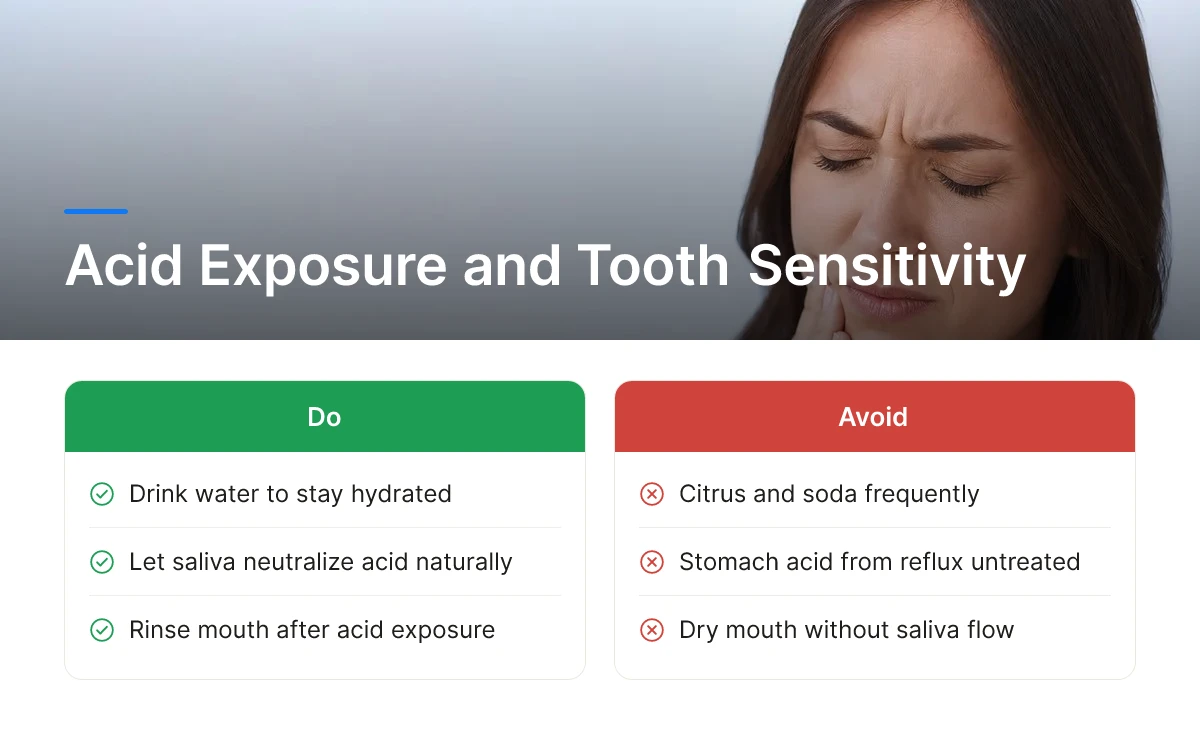
Frequent acid exposure from diet, reflux, or vomiting softens enamel over time, wearing it thin enough that ordinary temperature and pressure start to hurt.
How Do Acidic Foods, Frequent Vomiting, and Dehydration Damage Teeth and Cause Pain?
Citrus, soda, and stomach acid from reflux or recurrent vomiting all lower the pH in the mouth enough to soften enamel and expose the dentin underneath, which is far more sensitive to hot, cold, and touch. Dehydration compounds the problem: saliva is what neutralizes that acid and helps redeposit minerals back into enamel, so a dry mouth leaves teeth exposed to acid for longer stretches.
This pattern shows up most in people with frequent heartburn, a diet heavy in citrus or carbonated drinks, or conditions involving recurrent vomiting. One habit makes it worse without people realizing it: brushing immediately after an acidic meal or an episode of reflux. Enamel is softest in that window, and brushing scrubs it away faster. Rinsing with plain water first, then brushing thirty minutes later, protects enamel that’s already vulnerable.
6. Medication Side Effects
Certain prescriptions cause tooth pain indirectly by drying out the mouth or altering bone metabolism, not by damaging teeth themselves.
Which Common Medications Have Tooth Pain or Sensitivity as a Side Effect?
Antihistamines and some blood pressure medications reduce saliva production. Saliva neutralizes acid and washes away food particles, so less of it means faster enamel wear, more decay, and teeth that feel sensitive to sweets or temperature.
Bisphosphonates and related bone-density drugs work differently. They affect how jawbone tissue remodels itself, and in some patients this shows up as a dull, persistent ache rather than sharp pain tied to one tooth. For those exploring why do teeth hurt, this matters.
This cause fits readers on long-term prescriptions, for osteoporosis, hypertension, allergies, or depression, who notice new sensitivity with no cavity, crack, or obvious dental trigger. It’s one of the answers to why do teeth hurt that patients rarely connect to their pill bottle.
The differentiator here: tell your dentist about every medication you take, not just your physician. A doctor tracks systemic effects, but a dentist is the one who spots oral side effects like dry mouth or bone changes during a routine exam, often before you’d think to mention them.
What Can You Do If a Medication Is Making Your Teeth More Sensitive?
Sipping water throughout the day, chewing sugar-free gum to stimulate saliva, and using an alcohol-free mouth rinse formulated for dry mouth can all offset medication-related dryness. Never stop or change a prescribed medication without talking to your physician first, but do mention any new sensitivity to your dentist so it can be tracked and managed alongside your regular care, rather than mistaken for a new cavity.

7. Pregnancy and Hormonal Changes
Pregnancy hormones increase blood flow to gum tissue, causing swelling and sensitivity that can feel like generalized tooth pain.
improved estrogen and progesterone make gums more reactive to the plaque that’s normally present along the gumline. The tissue swells, bleeds more easily during brushing, and can become tender enough that nearby teeth feel achy even though the teeth themselves are healthy. Dentists call this pattern pregnancy gingivitis, and it’s one of the more common non-decay reasons expectant mothers ask why do teeth hurt during the second trimester in particular.
This applies to pregnant readers who notice new bleeding or soreness and aren’t sure whether it’s a normal hormonal shift or a sign something is wrong. In most cases, it’s the former, but it should still get checked.
The differentiator worth correcting: dental cleanings are safe throughout pregnancy and are actively recommended, not something to postpone until after delivery. Skipping cleanings lets plaque build up further, which tends to make pregnancy gingivitis worse, not better.
What Oral Care Habits Help Manage Pregnancy Gingivitis at Home?
Gentle, consistent brushing with a soft-bristled brush, daily flossing, and an alcohol-free antibacterial rinse can help keep plaque under control even when gums are more sensitive than usual. Some expectant mothers ease off brushing because their gums bleed, but backing off actually lets plaque build up further and worsens the swelling. Sticking with a soft, thorough routine and keeping regular dental visits on the calendar throughout pregnancy tends to keep symptoms mild rather than letting them escalate.
8. Intense Exercise and Clenching Under Physical Strain
Heavy lifting and intense cardio often trigger unconscious jaw clenching, straining teeth and jaw muscles the same way nighttime grinding does.
Many people brace their entire body during a heavy set or a hard sprint, and that bracing includes the jaw. The clenching force loads the same teeth and joints affected by bruxism, just in short, repeated bursts instead of overnight. Add in mouth breathing during cardio, which dries oral tissue and temporarily heightens sensitivity to air and cold drinks, and a hard workout can leave teeth aching well after the last rep.
This cause fits athletes and regular gym-goers who notice soreness in their teeth or jaw specifically tied to workout days, with no pain otherwise.
The fix most guides skip: consciously relax your jaw between sets instead of setting it, and consider a sports mouthguard during heavy lifting. It’s a low-cost habit change that addresses the mechanical cause directly, rather than just masking the soreness afterward. This directly impacts why do teeth hurt outcomes.
9. When Tooth Pain Signals a Serious Health Condition
Tooth pain paired with chest tightness, numbness, or symptoms unrelated to biting or temperature can point to a problem well beyond the mouth.
When Might Tooth Pain Indicate Heart Problems, Nerve Damage, or Other Systemic Conditions?
Jaw or tooth pain accompanied by chest tightness, shortness of breath, or pain radiating down the arm can be a sign of a cardiac event, and it needs emergency attention immediately, not a dental appointment. Separately, persistent nerve-type pain, facial numbness, or pain that seems out of proportion to any visible dental problem can indicate nerve damage or, in rare cases, oral cancer. Either pattern warrants prompt evaluation rather than a wait-and-see approach.
Why Is It Important to Rule Out Non-Dental Causes of Tooth Pain?
A filling or root canal won’t fix pain that’s actually coming from the heart or a nerve pathway elsewhere in the body. Treating the tooth when the tooth isn’t the real source delays the correct diagnosis and, in a cardiac case, can cost critical time.
This matters most for readers whose tooth pain doesn’t match any obvious trigger, no cavity, no cracked tooth, no recent dental work, and comes bundled with symptoms elsewhere in the body. When the picture doesn’t add up, that mismatch is itself the warning sign.
How to Decide What’s Actually Causing Your Tooth Pain
Narrow the cause by checking three things: where the pain is, what triggers it, and whether other symptoms come with it.
Start with location, one tooth points to decay, a cracked tooth, or an abscess, while all-over pain suggests grinding, sinus pressure, or hormonal gum inflammation. Then note the trigger: sweet foods, cold drinks, biting pressure, and lingering ache each point to a different mechanism, as covered in the causes above. Finally, check for accompanying symptoms like facial swelling, fever, or chest-related complaints, which change the urgency entirely.
What Home Remedies and Over-the-Counter Options Actually Work for Tooth Pain?
For short-term relief while you figure out next steps: rinse with warm salt water, take an OTC pain reliever as directed, apply a cold compress to the outside of the jaw, avoid the specific foods that trigger the pain, and switch to a desensitizing toothpaste if sensitivity is mild.
What Are the Signs That My Tooth Pain Is a Dental Emergency?
Some signs override home care entirely: facial swelling, fever, difficulty swallowing or breathing, a knocked-out or fractured tooth from trauma, or any tooth pain paired with chest symptoms. These need same-day or emergency care, not a wait-and-watch approach. This is particularly relevant for why do teeth hurt.
As a general timeline, pain lasting more than a day or two, or pain that’s getting worse instead of better, should prompt a dental exam rather than continued self-treatment. Sensitivity from an irritant usually settles within days; an infection needs professional treatment and follow-up; and anything structural, a crack, a loose filling, a fracture, needs a dentist’s diagnosis before you’ll know what it actually takes to fix it.
Frequently Asked Questions
Why do all my teeth hurt at once instead of just one?
Whole-mouth pain usually points to a cause that affects your bite, sinuses, or nerves rather than a single tooth. Sinus infections put pressure on the upper molars’ roots, jaw clenching strains every tooth at once, and sudden temperature changes can trigger widespread sensitivity. A single aching tooth is more often decay or a crack; an all-over ache suggests something systemic.
How long does tooth pain typically last before it should be treated as a problem?
Pain lasting more than 1-2 days, or that returns repeatedly, needs a dentist’s evaluation. Brief sensitivity after cold food or a stressful week of clenching often fades on its own. But pain that lingers, worsens at night, or comes with swelling signals decay, infection, or nerve damage that won’t resolve without treatment.
How quickly should I schedule a dentist appointment if my teeth suddenly start hurting?
Call within 24-48 hours for persistent or worsening pain, and same-day for swelling, fever, or pain that disrupts sleep. Mild, short-lived sensitivity can wait for a routine visit. Waiting too long on sharp or throbbing pain risks turning a simple filling into a root canal.
Can dehydration alone cause tooth sensitivity?
Yes, reduced saliva flow from dehydration lets acids and bacteria linger on enamel, which can trigger sensitivity. Saliva normally neutralizes acid and rinses away debris, so a dry mouth from low water intake, mouth breathing, or certain medications leaves teeth more exposed to irritation.
What questions should I ask myself to narrow down what’s causing my tooth pain?
Ask when it hurts (chewing, cold drinks, lying down), whether it’s one tooth or several, and whether you’ve had recent stress, a cold, or a hard-food bite. Note if there’s swelling, bad taste, or jaw soreness on waking. These details help your dentist diagnose faster instead of guessing at the exam.

Conclusion
Tooth pain almost always traces back to one of a few culprits: decay, a cracked tooth, gum infection, sinus pressure, or jaw clenching. The pattern matters more than the intensity, one tooth versus many, triggered by temperature versus constant, sudden versus gradual. Track those details before your appointment; they cut diagnosis time significantly.
If pain has lasted more than two days or comes with swelling, don’t wait for it to resolve on its own. Call Villagio Family & Cosmetic Dental this week to get an exam scheduled before a manageable problem turns into an emergency root canal.
Sources & References
- Why Do My Teeth Hurt?, 15 Possible Causes of Your Tooth Pain – University General Dentists
- 15 Conditions That Make Your Teeth Hurt
Recommended Articles
Explore more from our content library: