Proudly Serving Katy, Richmond & Fulshear Cinco Ranch
(281) 395-2100
|
(281) 394-4001

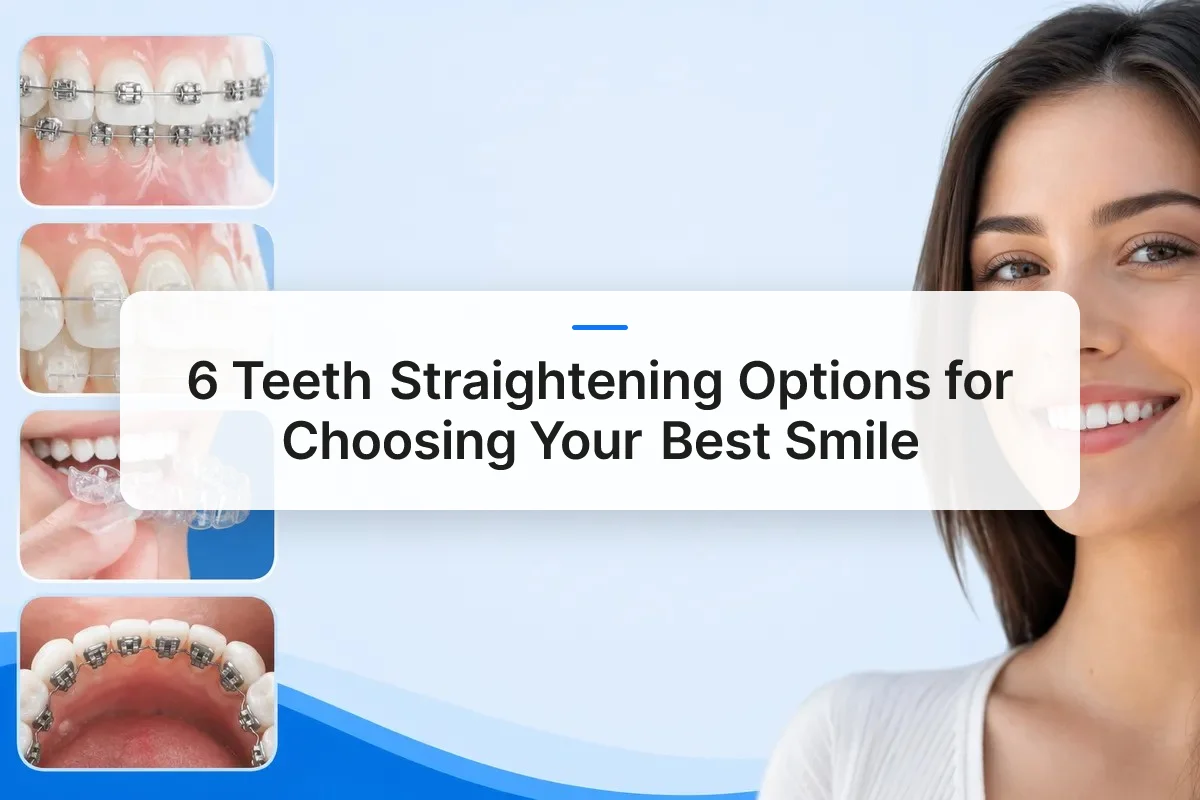
The main teeth straightening options are traditional metal braces, ceramic braces, clear aligners (like Invisalign), and lingual braces, each differing in visibility, comfort, treatment time, and cost. The right choice depends on how severe your misalignment is, your budget tier, and how much visibility you’re willing to accept during treatment. Mild-to-moderate crowding often responds well to clear aligners, while complex bite issues may need traditional braces. A consultation lets your dentist match the option to your specific bite, lifestyle, and financial situation.
1. Traditional Metal Braces
Metal braces use stainless steel brackets bonded to each tooth and connected by an archwire, which applies continuous, controlled pressure to guide teeth into position over time. Elastic or metal ties hold the wire in the bracket slot, and orthodontists adjust wire tension at follow-up visits to keep the movement progressing.
Among teeth straightening options, metal braces remain the standard for complex bite issues, severe crowding, and rotated teeth that clear aligners often can’t fully correct. Because brackets are bonded and fixed rather than removable, treatment doesn’t depend on the patient remembering to wear anything, the appliance works whether or not the patient thinks about it.
One detail that gets skipped in most comparisons: bracket placement lets an orthodontist control vertical tooth movement, extrusion and intrusion, not just side-to-side alignment. That vertical control matters for correcting uneven gum lines or teeth that have drifted up or down, something aligner trays are far more limited in addressing.
Cost-wise, metal braces are typically the most budget-friendly fixed appliance, making them a practical starting point for parents comparing options for a child or teen with significant misalignment.
2. Ceramic Braces
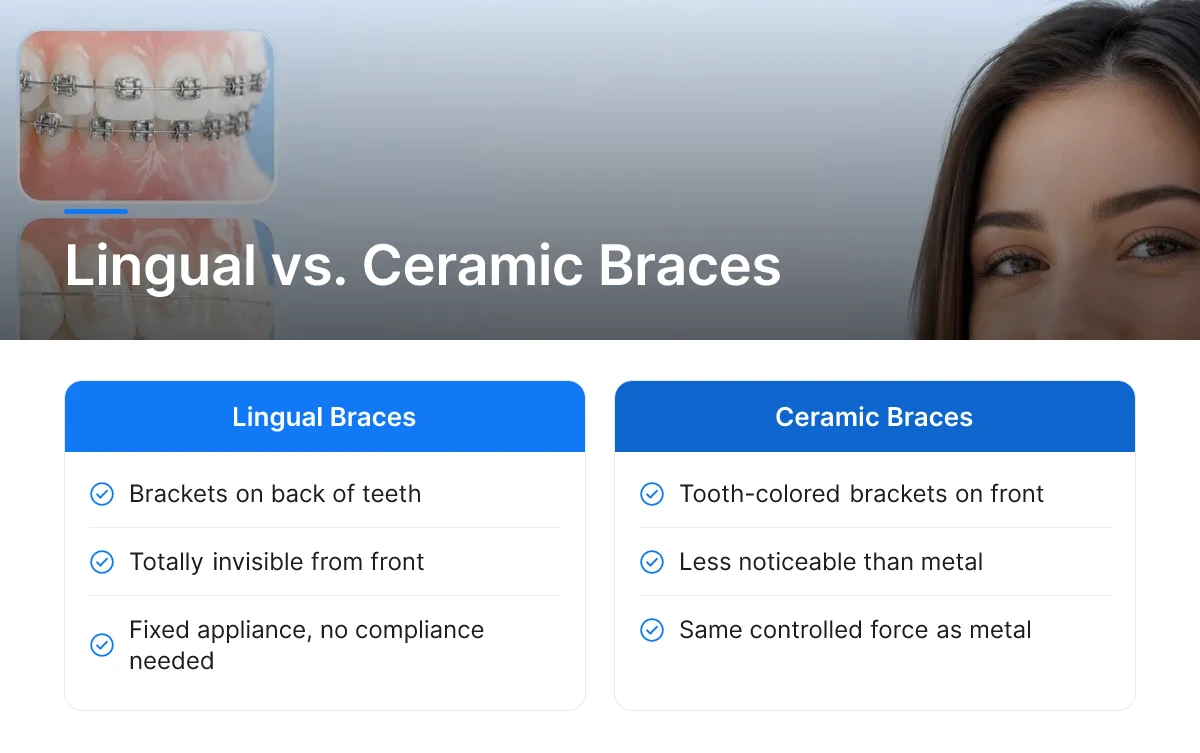
Ceramic braces work exactly like metal braces but use tooth-colored or clear brackets that blend into the enamel instead of standing out. The wire may still be metal, though some systems use a tinted version to reduce contrast further.
The main benefit is cosmetic discretion without giving up the predictability of a fixed appliance, the bracket-and-wire mechanism still delivers the same controlled, continuous force as metal braces. That makes ceramic a solid fit for teens self-conscious about a metal-mouth look and adults who need fixed-appliance strength but want something less noticeable in photos or meetings.
One trade-off competitors rarely flag: ceramic brackets are more porous than metal and more prone to staining from coffee, tea, red sauce, and other pigmented foods. Patients need to be more deliberate about oral hygiene and diet to keep the brackets looking clean throughout treatment.
On cost, ceramic braces generally sit in a mid-range tier, pricier than metal braces but usually less than clear aligners or lingual systems. For a broader comparison of visibility, cost tier, and comfort across appliances, this overview of discreet braces alternatives for adults is a useful reference point.
3. Clear Aligners (Invisalign and Similar Systems)
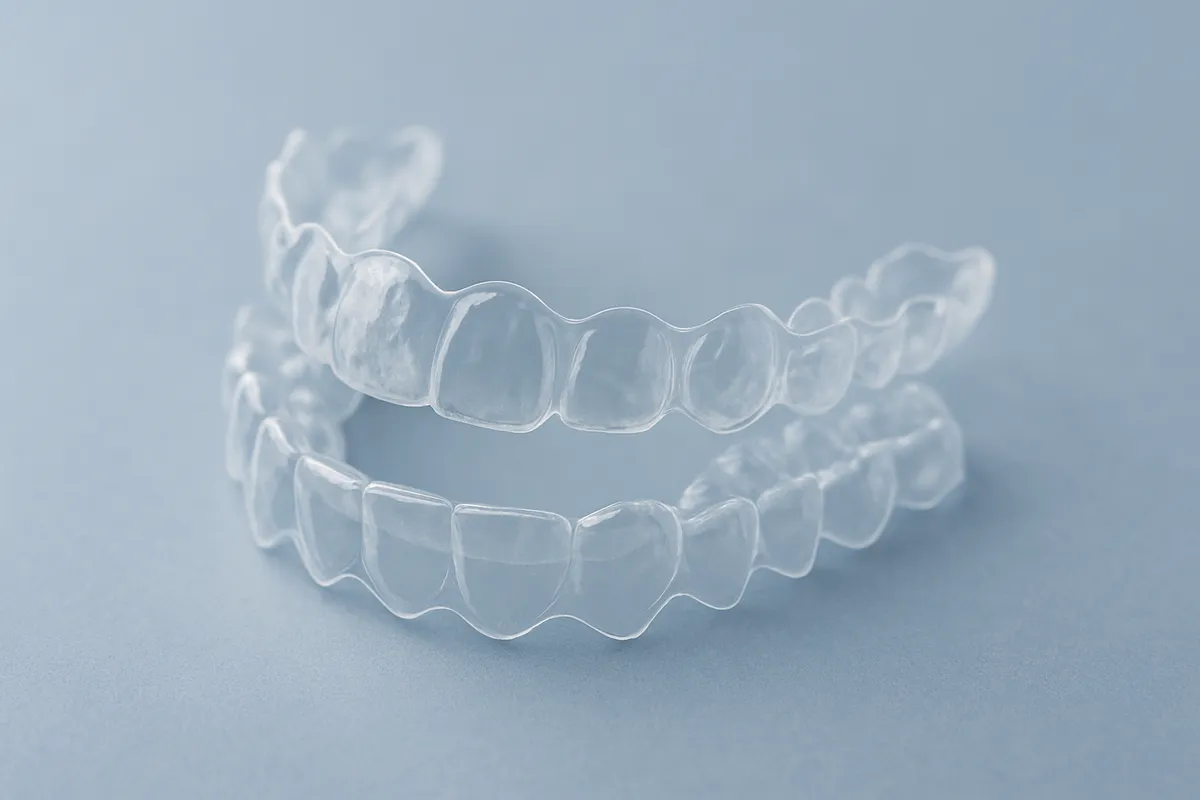
Clear aligners use a series of custom-fitted, removable plastic trays that each shift teeth slightly before being swapped for the next set in the sequence. Each tray is worn for about one to two weeks before advancing, gradually moving teeth toward the final planned position, a mechanism Invisalign describes as reshaping the smile through incremental, predictable steps [1].
The appeal is near-invisibility combined with removability: patients can take the trays out to eat, brush, floss, or attend a special event, which fixed braces don’t allow. Among teeth straightening options, aligners work best for mild-to-moderate crowding, spacing, or minor bite issues in patients who will reliably wear them as directed.
That reliability is the catch. Aligners require roughly 20 to 22 hours of daily wear to stay on schedule, and inconsistent wear directly extends treatment time, a variable that simply doesn’t exist with fixed braces, since brackets can’t be taken out. CareCredit notes that treatment timelines across straightening methods commonly run six to 24 months, with aligner cases depending heavily on how consistently trays are worn [2].
How do I know if I’m a candidate for clear aligners?
Good candidates have mild-to-moderate misalignment and the discipline to wear trays nearly all day. Aligners are not ideal for severe rotations, significant bite discrepancies, or cases requiring the vertical tooth movement that fixed brackets handle more reliably.
4. Lingual Braces
Lingual braces use the same bracket-and-wire mechanism as traditional braces, but the brackets are bonded to the back, tongue-facing side of the teeth instead of the front. That placement makes the entire appliance invisible when looking at the patient head-on.
The benefit over ceramic braces or even clear aligners is total concealment, there’s no bracket color to catch light and no tray edge visible near the gumline. This makes lingual braces a strong fit for adults in client-facing roles, on-camera professions, or anyone who wants a fixed appliance without any visible sign of orthodontic treatment.
What most comparisons leave out: because brackets sit against the tongue, patients typically go through a real adjustment period involving temporary speech changes (particularly with “s” and “th” sounds) and tongue irritation as the tissue adapts to the hardware. This settles down for most patients within a few weeks, but it’s a genuine trade-off worth planning for.
Because each bracket is custom-fabricated to fit the back surface of each tooth, lingual braces sit at a premium cost tier compared to metal, ceramic, or standard aligners.
5. Self-Ligating Braces
Self-ligating braces use a built-in clip or sliding door on each bracket to hold the archwire in place, replacing the elastic or wire ties used on traditional braces. The wire can move more freely within the bracket, which changes how force is applied as teeth shift.
The practical benefit is less friction between the wire and bracket, which can translate to fewer adjustment visits and a smoother feel day-to-day. This appeals to patients who want the reliability of fixed braces with a maintenance routine that’s a bit lighter than traditional ligature systems.
A nuance most competitor pages skip: because there’s less friction resisting tooth movement, some patients report less soreness after adjustments compared to traditional braces, where tightening ties can create sharper pressure spikes. That said, self-ligating brackets are a mechanism upgrade, not a shortcut, they don’t guarantee faster treatment, since total time still depends on the complexity of the case, not just the bracket type.
6. Retainers and Post-Treatment Maintenance
Retainers hold teeth in their new position after active treatment ends, and skipping this step lets teeth drift back toward where they started.
Every one of the five active treatment options above, braces, clear aligners, or any other approach, moves teeth by applying sustained pressure. But that new position isn’t permanent until the surrounding bone and ligament tissue rebuild around it, which is where retainers do their work.
How long do straightening results last?
The honest answer: as long as you wear your retainer. The periodontal ligament, the fibrous tissue connecting tooth root to bone, holds a kind of physical memory of the tooth’s original position. Right after treatment, that ligament is still reorganizing, and it will pull teeth back toward their pre-treatment alignment if nothing holds them in place. This is why relapse happens within months, not years, when retainer wear lapses.
Fixed retainers, a thin wire bonded behind the front teeth, work continuously without relying on patient compliance, which makes them useful for patients who forget removable devices. Removable retainers, typically worn nightly, give more flexibility but only work if actually worn. We walk every patient at Villagio Family & Cosmetic Dental through both options and set a wear schedule matched to their treatment type and relapse risk, because protecting months or years of treatment investment shouldn’t come down to guesswork.
How to Choose the Right Teeth Straightening Option for Your Smile
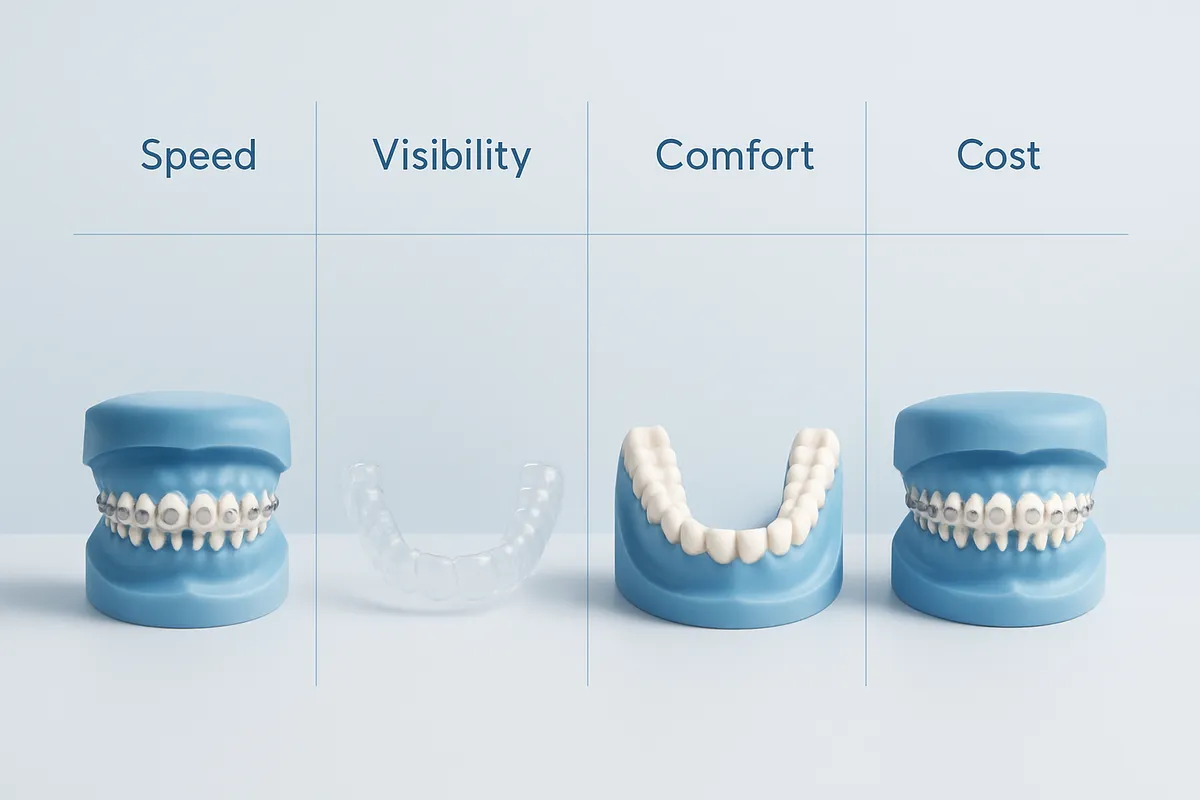
The right choice depends on four factors: how severe the misalignment is, how visible you’re willing to let treatment be, your daily compliance ability, and your budget tier.
- Severity of misalignment: Severe crowding, rotated teeth, or bite problems often need the continuous, fixed force of braces, while mild to moderate spacing usually responds well to clear aligners.
- Visibility tolerance: Ceramic and lingual braces or clear aligners suit patients who want a more discreet option, while metal braces are the most visible of the teeth straightening options.
- Daily compliance: Fixed appliances apply constant force regardless of what the patient does day to day, while removable aligners only work as fast as the patient wears them, typically 20 to 22 hours a day.
- Budget tier: Metal braces tend to be the most budget-friendly, ceramic sits mid-range, and lingual braces or premium aligner systems sit at the higher end.
That compliance difference is also why treatment timelines vary so much between options: fixed appliances do the work automatically, while removable aligners depend entirely on wear time. Miss days, and timelines stretch [2]. Comparing all the teeth straightening options side by side against these four factors is usually the fastest way to narrow down a shortlist before a consultation. If you’re weighing several teeth straightening options at once, resources like this patient Q&A on straightening options and this discussion of teeth straightening options can help frame questions to bring to your consultation.
What factors affect the final cost of my treatment?
Case complexity, treatment length, and the specific appliance chosen all move the price. A single arch or minor relapse case costs less than full-mouth correction of a complex bite. Many practices, including ours, offer payment plans that spread cost over the treatment period rather than requiring a lump sum upfront.
Does dental insurance cover teeth straightening?
Some dental insurance plans partially cover orthodontic treatment, particularly for adolescents, though coverage varies significantly by plan and carrier [1]. It’s worth checking your specific benefits before assuming either full coverage or none at all.
Newer accelerated-treatment technologies and digital scanning for treatment planning have shortened some timelines and improved fit accuracy industry-wide, though results still depend on the specific case. Because bite complexity isn’t something you can diagnose by looking in a mirror, a consultation remains the deciding step, it’s the only reliable way to match one of the available teeth straightening options to your actual mouth rather than a guess from a chart.
Frequently Asked Questions
Which teeth straightening option works fastest?
Short-term clear aligner systems and accelerated orthodontics typically move teeth fastest, sometimes in as little as three to six months for mild cases.
Traditional metal braces and full Invisalign treatment usually take longer, with most cases in the six to 24 month range [2]. The right timeline depends on how much correction your bite actually needs, which is why an in-person evaluation matters more than any general estimate.
What’s the difference between Invisalign, ceramic braces, and traditional metal braces?
Invisalign uses clear, removable aligner trays; ceramic braces use tooth-colored brackets; metal braces use traditional stainless steel brackets and wires.
Invisalign trays are removable for eating and brushing, which many teens and adults prefer [1]. Ceramic braces blend in visually but stay fixed like metal braces, which often makes them better suited to complex bite corrections that require more precise, continuous force.
Are there newer teeth straightening technologies I should know about?
Yes, advances include smoother aligner materials, more precise digital treatment mapping, and shorter-term appliance options for minor corrections.
Some aligner brands now use materials engineered to apply steadier pressure so teeth shift more predictably over the course of treatment [1]. These updates mainly improve comfort and predictability rather than replacing the basic mechanics of tooth movement.
What results can I expect from teeth straightening?
Expect straighter teeth, a more even bite, and easier cleaning between teeth, with most people noticing visible change within a few months.
Beyond appearance, proper alignment can reduce uneven wear and jaw strain over time [2]. Final results and timing vary based on starting alignment, treatment type, and how consistently any removable appliance is worn.
What payment plans help make straightening more affordable?
Most practices offer monthly payment plans, and many accept FSA/HSA funds or third-party financing to spread out the cost.
Dental insurance may also cover a portion of orthodontic treatment, sometimes up to a set annual maximum [1]. Ask our Katy office to review your specific insurance and financing options before committing to a plan.
Conclusion
Fast results, discreet appearance, and lasting bite correction rarely come from a single option, the right fit depends on how misaligned your teeth are and how you live day to day. Parents comparing options for a teenager in Cinco Ranch should weigh compliance and durability; adults in Katy or Fulshear chasing a discreet fix should compare Invisalign against ceramic braces before deciding. Cost shouldn’t be a guessing game either, since financing and insurance coverage vary by plan and treatment length.
Here’s a quick recap of the teeth straightening options covered above:
- Traditional metal braces — budget-friendly, effective for complex cases
- Ceramic braces — discreet, mid-range cost, requires more upkeep
- Clear aligners (Invisalign and similar) — removable, best for mild-to-moderate cases
- Lingual braces — fully hidden, premium cost tier
- Self-ligating braces — less friction, potentially fewer adjustment visits
- Retainers — essential maintenance after any active treatment
Schedule an orthodontic consultation with Villagio Family & Cosmetic Dental to get a bite assessment and a treatment timeline specific to your teeth, not a generic estimate.
Sources & References
- Invisalign® Clear Aligners & Teeth Straightening | Invisalign.com
- 7 Teeth Straightening Options to Improve Your Smile
Recommended Articles
Explore more from our content library: