Proudly Serving Katy, Richmond & Fulshear Cinco Ranch
(281) 395-2100
|
(281) 394-4001

Understanding teeth cleaning benefits is essential. Professional teeth cleanings protect your health by removing hardened plaque (tartar) that brushing and flossing can’t touch, catching problems like gum disease and decay before they cause pain or tooth loss, and reducing bacteria linked to inflammation elsewhere in the body. Most patients benefit from cleanings every six months, though some health conditions call for more frequent visits. The result is healthier gums, fresher breath, and early detection of issues while they’re still simple and affordable to treat. Below, we break down the specific teeth cleaning benefits you can expect and how to make the most of them.
1. Deeper Plaque and Tartar Removal, A Core Teeth Cleaning Benefit
Professional cleaning strips away hardened tartar below the gumline that a toothbrush and floss physically cannot reach, which is one of the most immediate teeth cleaning benefits patients notice. Plaque is soft and removable at home for only a short window, once it hardens into tartar, usually within days, it bonds directly to enamel and creeps under the gum tissue where bristles never touch. You can read more about what happens during a professional dental cleaning to understand exactly how this process works.
What Can Professional Cleaning Remove That At-Home Routines Cannot?
Dental hygienists use ultrasonic scalers and hand instruments to vibrate and break tartar loose from the tooth surface without scratching or thinning enamel. These tools reach the gumline and between-teeth contact points that daily brushing skips. This is particularly relevant for teeth cleaning benefits.
This service is best suited for patients with visible tartar buildup, regular coffee or tea drinkers whose enamel holds stain-bonded deposits, and anyone overdue for a cleaning by more than a year. Left alone, tartar creates a rough, porous surface that actively attracts more plaque, so buildup doesn’t just sit still, it compounds. That snowball effect is the differentiator most home-care routines can’t address: brushing harder doesn’t remove tartar, it just polishes around it.
2. Early Detection of Gum Disease
A cleaning appointment doubles as a diagnostic exam, catching gum disease at its earliest and most reversible stage before symptoms feel obvious. Hygienists measure the depth of the pocket between tooth and gum with a small probe and check for bleeding, both of which flag inflammation before it becomes visible to the patient.
How Does Professional Cleaning Improve Gum Health Specifically?
Gingivitis, the earliest stage, marked by redness and occasional bleeding, is fully reversible with a professional cleaning and better home care. Left untreated, it progresses to periodontitis, where the infection moves below the gumline and begins breaking down the bone that holds teeth in place. That bone loss cannot be undone, only managed.
This checkpoint matters most for patients with a family history of gum disease or anyone who notices bleeding when brushing or flossing. Catching the problem at the gingivitis stage means a straightforward cleaning solves it; catching it after bone loss begins means ongoing, more involved management for the rest of a patient’s life. That gap is where the real teeth cleaning benefits show up, not in the cleaning itself, but in the disease progression it prevents.
3. Fresher Breath That Lasts
Persistent bad breath usually comes from bacteria living in tartar and on the back of the tongue, and a professional cleaning removes their habitat rather than covering the smell. Mints, gum, and mouthwash mask odor for an hour or two; they don’t touch the bacterial colonies producing it.
A cleaning physically disrupts where these bacteria grow, which is why patients often notice breath improvement that outlasts anything from a drugstore shelf. This benefit is best for patients who’ve cycled through multiple breath products without lasting results, the kind of person who always has mints on hand but still worries about their breath by mid-afternoon. When considering teeth cleaning benefits, this point stands out.
The differentiator here is diagnostic: bad breath that persists despite consistent brushing, flossing, and mouthwash use is often a sign it’s time to see a dentist, not a signal to try a new product. That pattern points to something a cleaning can fix and a mint cannot.
4. Reduced Risk of Tooth Decay and Costly Repairs
Removing plaque before its acids demineralize enamel is one of the clearest teeth cleaning benefits for preventing cavities before they start. Plaque bacteria feed on sugar and produce acid that wears down enamel over time; professional cleaning removes the plaque itself, and the fluoride treatments often paired with a cleaning help re-harden enamel that’s already under stress.
What Is the Cost-Benefit of Regular Cleanings Compared to Treating Problems Later?
Small areas of early decay, caught during a routine cleaning and exam, can usually be managed with more conservative treatment than decay that’s had months or years to spread. Once decay reaches the inner tooth structure, treatment gets more invasive and more involved by necessity.
This benefit matters most for patients prone to cavities or with deep grooves in their molars where food and bacteria settle easily. Financially, the comparison is straightforward without needing specific numbers: routine preventive visits stay budget-friendly, while the treatment required once decay or infection advances is a bigger investment in time, discomfort, and cost. Prevention is simply the cheaper path, structurally.
5. Support for Whole-Body Health, Not Just Your Mouth
Chronic gum inflammation gives bacteria a path into the bloodstream, which is why dentists treat oral health as connected to the rest of the body, not separate from it. When gum tissue stays inflamed, it doesn’t just stay local, it becomes a gateway, and that’s the biological mechanism behind why routine cleanings carry weight beyond the mouth.
Are There Special Considerations for Pregnant Patients or Those With Diabetes?
The relationship runs both directions for certain patients. Diabetes can make gum disease harder to control, and unmanaged gum disease can make blood sugar harder to control in turn; pregnancy hormones can heighten gum sensitivity and inflammation, while gum health during pregnancy warrants closer attention as part of overall prenatal care. For those exploring teeth cleaning benefits, this matters.
This makes routine cleaning especially relevant for patients managing chronic conditions like diabetes or who are currently pregnant, not as an isolated checklist item, but as part of a two-way relationship between mouth and body that’s worth monitoring closely with a dentist who knows the patient’s full health picture. At Villagio Family & Cosmetic Dental, this connection is part of why our hygiene team asks about medical history at every visit, not just dental history, the two are rarely separate.
6. A Brighter, More Confident Smile
Polishing after scaling removes surface stains from coffee, tea, wine, and tobacco, leaving teeth visibly cleaner and noticeably smoother within one visit.
A cleaning restores your teeth to their natural color by clearing away buildup that dulls enamel, it doesn’t bleach teeth past their natural shade the way a whitening treatment does. Patients in Katy and Cinco Ranch who want a quick confidence boost before a family photo or event often notice this difference without ever touching a whitening tray. This is one of the more visible teeth cleaning benefits, even though it’s not a substitute for cosmetic whitening if your goal is a shade change rather than stain removal.
Will My Teeth Feel or Look Different After a Cleaning?
Yes, most patients notice their teeth feel smoother to the tongue immediately after a cleaning, which is a direct, tangible sign that plaque and tartar buildup have been removed. That texture change is one of the fastest ways to confirm the appointment worked, even before you look in a mirror.
7. A Comfortable, Low-Risk Preventive Visit
Most cleanings involve little to no discomfort, and any sensitivity usually traces back to inflammation or heavy tartar rather than the cleaning itself.
Mild sensitivity or gum tenderness can show up when there’s significant tartar buildup below the gumline or existing inflammation from gingivitis. In those cases, the hygienist is working through a problem that’s already there, not creating one. Our hygienists at Villagio Family & Cosmetic Dental adjust technique, pressure, and appointment timing for patients who mention sensitivity ahead of time, options like a slower pace, topical numbing gel, or splitting a deep cleaning into two shorter visits all help. This approach suits anxious patients or anyone who’s had an uncomfortable experience at a previous office and wants a different outcome this time. This directly impacts teeth cleaning benefits outcomes.
What Side Effects or Discomfort Might I Experience?
Some mild gum tenderness or bleeding for a day is normal, especially after a first cleaning in a while, but real discomfort during a healthy cleaning is uncommon. If it happens, treat it as diagnostic information, a signal that gum tissue is inflamed and needs attention, rather than an expected part of routine care.
8. The Right Cleaning Frequency for Your Risk Level
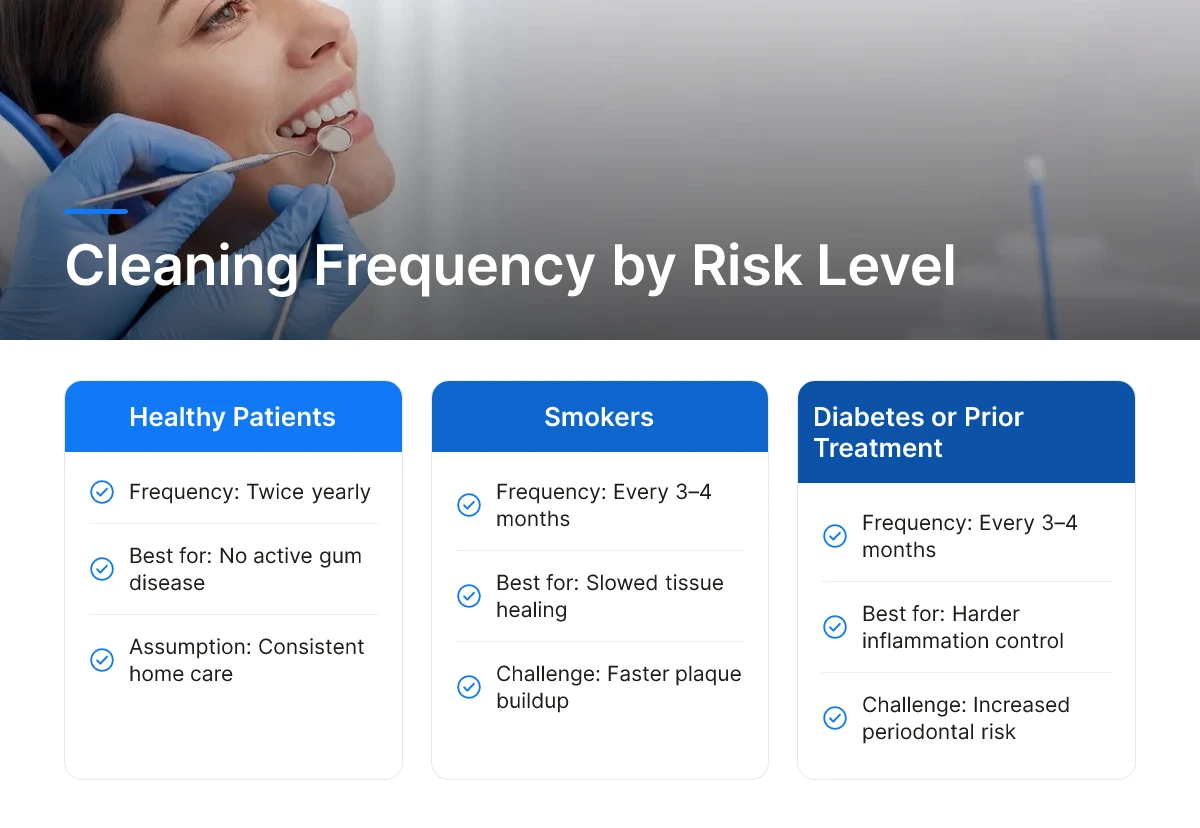
Twice a year works as a baseline for most healthy patients, but smoking, diabetes, and a history of gum treatment can justify visits every three to four months.
The standard six-month interval assumes average risk: no active gum disease, no chronic conditions affecting healing, and consistent home care. Consider how these common risk factors shift the picture:
- Smoking: Slows tissue healing and raises bacteria levels in the mouth, which speeds up plaque and tartar buildup between visits.
- Diabetes: Affects the body’s ability to control gum inflammation, making patients more prone to periodontal issues even with good brushing habits.
- History of periodontal treatment: Typically moves patients onto a maintenance schedule, often every three to four months, to keep bacteria levels from rebuilding.
- Pregnancy: Hormonal changes can heighten gum sensitivity, making closer monitoring worthwhile.
Do People With Risk Factors Like Smoking or Diabetes Need More Frequent Cleanings?
Often, yes, this is a decision made with your dentist based on your specific gum health and medical history, not a fixed rule that applies to everyone the same way.
What Happens If I Skip Regular Professional Cleanings?
Skipping cleanings doesn’t just delay the benefit, it lets tartar and inflammation build on each other, so the eventual visit takes longer and may require more extensive treatment than a routine cleaning would have. For a closer look at what’s at stake, this overview of the advantages of regular teeth cleaning outlines how consistent visits compare to reactive treatment. This is particularly relevant for teeth cleaning benefits.
How to Choose the Right Cleaning Schedule and Provider
Match your cleaning frequency to your risk factors, then choose a provider who measures gum health thoroughly and explains findings in plain language.
Start with a quick self-check to help you and your dentist land on the right interval instead of defaulting to a generic schedule:
- How long has it been since your last cleaning?
- Do your gums bleed when you brush or floss?
- Do you smoke, have diabetes, or have a family history of gum disease?
- Have you noticed persistent bad breath despite consistent home care?
Insurance plans typically cover preventive cleanings at little to no out-of-pocket cost, often up to two visits per year, though coverage details vary by plan and some plans allow additional visits for documented risk factors. Confirm your specific benefits with your insurance provider before scheduling, since terms differ across plans.
How Much Does Professional Teeth Cleaning Cost, and Does Insurance Cover It?
Cost depends on your plan and whether you need a routine cleaning or a deeper periodontal maintenance visit, check with your insurer for exact coverage details rather than assuming a flat rate applies.
Beyond cost, look for a provider who takes real gum measurements at each visit, walks you through what they find in terms you understand, and doesn’t rush the appointment. That combination, thorough exams, clear communication, and unhurried care, is what turns a routine visit into one you can trust for catching problems early. For families in Katy, Fulshear, and Richmond weighing their next steps, pairing a cleaning with a routine checkup and confirming your insurance coverage basics ahead of time rounds out a solid preventive care routine and helps you get the full range of teeth cleaning benefits your plan already pays for. For a broader look at what these visits typically include, this guide to the teeth cleaning process and its benefits is a helpful reference point.

Frequently Asked Questions
Is professional cleaning more effective than daily brushing and flossing alone?
Yes, professional cleaning removes hardened tartar and bacteria that a toothbrush and floss physically cannot reach [1]. Once plaque calcifies into tartar, it bonds to the tooth surface and below the gumline, and only a dental hygienist’s instruments can safely remove it. Brushing and flossing prevent new buildup; cleanings remove what’s already hardened. Both are necessary, but neither replaces the other. When considering teeth cleaning benefits, this point stands out.
How long do the benefits of a professional cleaning last?
Most patients keep the core benefits, fresher breath, brighter surfaces, and reduced gum inflammation, for the full three to six months until their next visit. How long they last depends on your home care routine, diet, and whether you have risk factors like smoking or a history of gum disease. Consistent brushing and flossing extend the results.
When should I schedule my next cleaning after completing one?
Schedule your next visit six months out for most patients, though patients with gum disease history may need visits every three to four months. Your dentist will confirm the right interval based on plaque buildup speed and gum health observed at your appointment. Katy-area families with kids in orthodontic treatment often benefit from the shorter interval.
Can regular cleanings help prevent serious health conditions beyond dental problems?
Yes, untreated gum disease has been linked to heart disease and other whole-body inflammation issues, so regular cleanings support more than just your smile [2]. Bacteria from inflamed gums can enter the bloodstream, and researchers have connected chronic oral infection to cardiovascular risk. Cleanings interrupt that cycle early. This doesn’t mean cleanings alone prevent these conditions, but they remove a documented risk factor as part of a broader health routine.
What are the downsides or risks of skipping professional cleanings?
Skipping cleanings lets plaque harden into tartar, raising your risk of cavities, gum disease, and eventually tooth loss [4]. What starts as a routine, low-cost visit can turn into root canals, deep cleanings, or extractions if tartar sits undisturbed for years. Bad breath and stained teeth are the early, visible signs before real damage sets in.

Conclusion
Professional cleanings do work that brushing and flossing cannot, removing hardened tartar, catching cavities early, and cutting inflammation linked to broader health risks [1][2]. The return on a routine visit is disproportionate to the time it takes: fresher breath, a brighter smile, and fewer expensive problems down the road. In short, the teeth cleaning benefits outlined above add up to a simple takeaway: consistent visits protect both your smile and your broader health. For Katy, Fulshear, Richmond, and Cinco Ranch families juggling school and work schedules, the practical move is booking the next cleaning before you leave your current appointment, so it’s on the calendar six months out instead of something you remember only after a toothache starts.
Sources & References
- What Happens During a Dental Cleaning?
- The Surprising Health Benefits of Regular Dental Cleanings
- What Are The Advantages of Regular Teeth Cleaning? – Fallin Family Dentistry
Recommended Articles
Explore more from our content library: