Proudly Serving Katy, Richmond & Fulshear Cinco Ranch
(281) 395-2100
|
(281) 394-4001

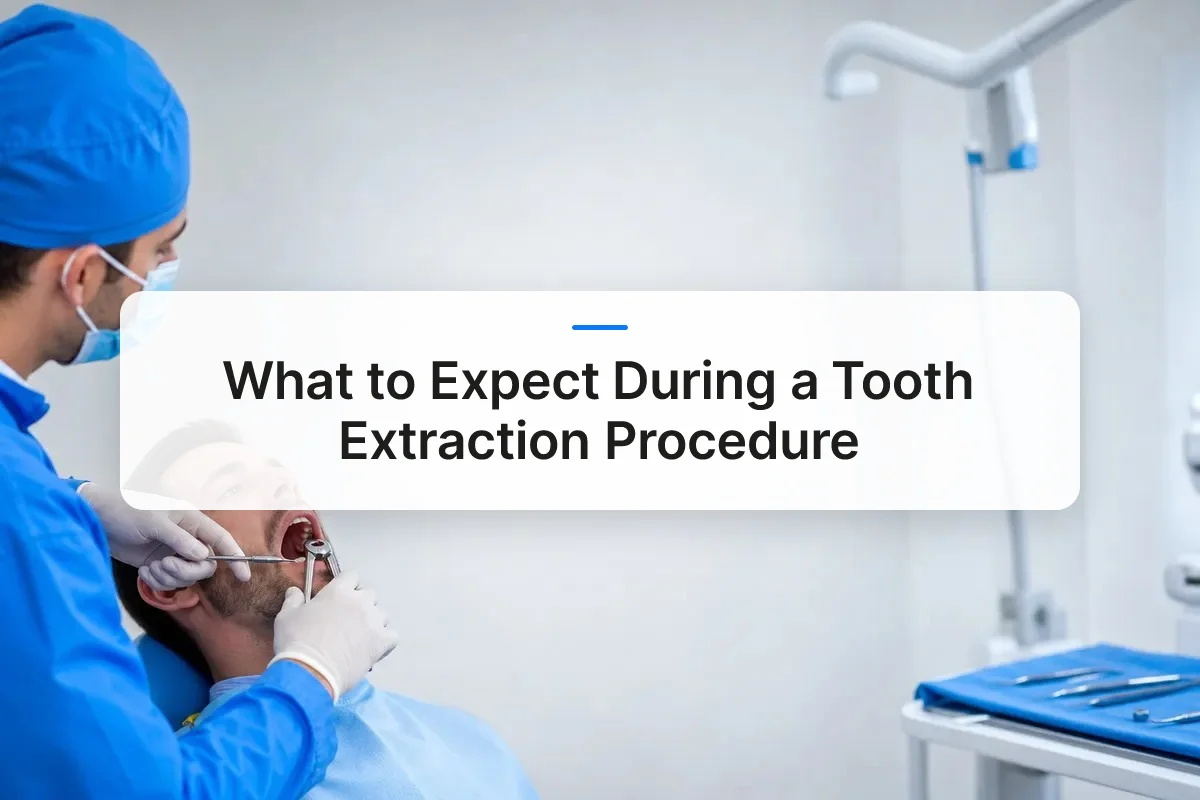
Understanding the tooth extraction procedure is essential. During a tooth extraction appointment, your dentist numbs the area with local anesthetic, loosens the tooth with specialized instruments, and removes it either whole or in sections if it’s impacted or broken below the gumline. The whole visit typically takes 20 to 60 minutes depending on the tooth’s position and root shape. Afterward, you’ll bite down on gauze to form a blood clot, receive aftercare instructions, and be advised to rest for a few days while the socket begins to heal.
What Happens During a Tooth Extraction Procedure?
A tooth extraction procedure moves through five predictable stages: exam, numbing, loosening, removal, and bleeding control, most patients are in and out within an hour.
- Exam: The dentist reviews your X-ray and health history to confirm extraction is necessary.
- Numbing: Local anesthetic is applied so you feel pressure but not sharp pain.
- Loosening: An elevator instrument widens the socket and separates the tooth from surrounding ligament.
- Removal: Forceps extract the tooth whole or in sections if needed.
- Bleeding control: Gauze is placed and pressure is applied to encourage clot formation.
Why Do Teeth Need to Be Extracted?
Dentists pull teeth when decay, damage, or crowding leave no realistic way to save the tooth. Common triggers include severe decay that has destroyed too much tooth structure for a filling or crown, gum disease advanced enough to break down the bone anchoring the tooth, and fractures below the gumline that can’t be restored [1]. Wisdom teeth are a frequent case too, when they’re impacted, meaning they’re stuck against another tooth or trapped in the jawbone, extraction is often the only option [4].
Orthodontic crowding is another reason parents in Katy and Fulshear see come up often. If a child or teen’s jaw doesn’t have room for all their teeth to align properly, an orthodontist may ask a dentist to remove one or two teeth first to create space for braces or Invisalign to work as planned.
What Happens Step-by-Step During the Extraction Process?
Before touching the tooth, your dentist takes an X-ray to confirm the diagnosis and map what’s happening below the gumline [2]. This image shows bone density around the roots, how curved or hooked the roots are, and how close the tooth sits to a nerve, all of which shape the approach the dentist takes and how much force or sectioning will be needed.
Once the plan is set, the dentist numbs the area with a local anesthetic so you feel pressure but not sharp pain [2]. Next comes an instrument called an elevator, which rocks the tooth back and forth to widen the socket and separate the ligament holding the tooth in place. After the tooth loosens, the dentist uses forceps to remove it, sometimes in one piece, sometimes in smaller sections if it’s fractured or impacted [3]. Gauze goes over the socket immediately afterward, and steady biting pressure helps a blood clot form, which is the first real step in healing [1].
Despite how intimidating it sounds, this is a routine outpatient procedure that dentists perform daily. Most simple extractions wrap up in well under an hour. Cases involving deeply impacted wisdom teeth, curved roots close to a nerve, or teeth broken far below the gumline are usually referred to an oral surgeon, since those situations call for more advanced surgical technique and sometimes sedation beyond what a general dental office offers. You can review more detail on what a tooth extraction procedure involves, including surgery and healing expectations, from Cleveland Clinic.
How Long Does a Tooth Extraction Take and What Are Your Anesthesia Options?
Most simple extractions are finished in under 20 minutes, while surgical extractions can take 20 to 60 minutes or more depending on the tooth’s position and root shape [3]. The exact tooth extraction procedure timeline depends on whether the tooth is visible above the gumline or needs to be accessed surgically, as with many impacted wisdom teeth.
How Painful Is Having a Tooth Extracted?
Local anesthetic numbs the nerves around the tooth, so you shouldn’t feel pain during the extraction itself, but pressure, tugging, and vibration are normal sensations and don’t mean the anesthetic has failed [2]. Dentists use forceps and, in surgical cases, a gentle rocking motion to loosen the tooth from the socket [1]. Patients often describe this as firm pressure rather than pain, since the nerve fibers that transmit sharp pain are blocked while touch and pressure receptors still register the movement.
Soreness typically shows up after the anesthetic wears off, usually within a few hours, and can be managed with over-the-counter pain relievers or a prescription if the extraction was more involved [1]. That delayed discomfort is a separate experience from the numbness-with-pressure sensation felt in the chair.
What Pain Management and Sedation Options Are Available for Anxious Patients?
Options generally range from local anesthesia alone to nitrous oxide, oral conscious sedation, and IV sedation, chosen based on procedure complexity and how anxious the patient feels [2]. A straightforward extraction for a patient with mild nerves might need nothing more than local numbing. Nitrous oxide, or laughing gas, adds a light relaxing effect that wears off quickly, which works well for kids and mildly anxious adults who still want to drive themselves home afterward.
Common sedation options for a tooth extraction procedure include:
- Local anesthesia only: Best for straightforward extractions and mildly anxious patients.
- Nitrous oxide: A light, quickly reversible relaxing effect suitable for kids and mild anxiety.
- Oral conscious sedation: A prescribed pill taken before the appointment for deeper calm.
- IV sedation: The deepest level of relaxation, typically used for longer surgical extractions.
Oral conscious sedation involves taking a prescribed pill before the appointment and produces a deeper, drowsy calm for patients with more significant dental anxiety. IV sedation offers the most control over depth of relaxation and suits longer surgical extractions, such as impacted wisdom teeth, or patients who need to be sedated more heavily [2]. Anyone considering sedation beyond nitrous oxide should arrange a ride home, since grogginess can last several hours.
Patients with weakened immune systems, heart conditions, or other medical complexities sometimes need extra precautions before extraction, including antibiotic premedication in specific cases their dentist or physician identifies [1]. If you fall into this category, mention your full medical history and current medications during the consultation so the team can plan accordingly rather than adjusting mid-appointment.

What’s the Difference Between a Simple and a Surgical Extraction?
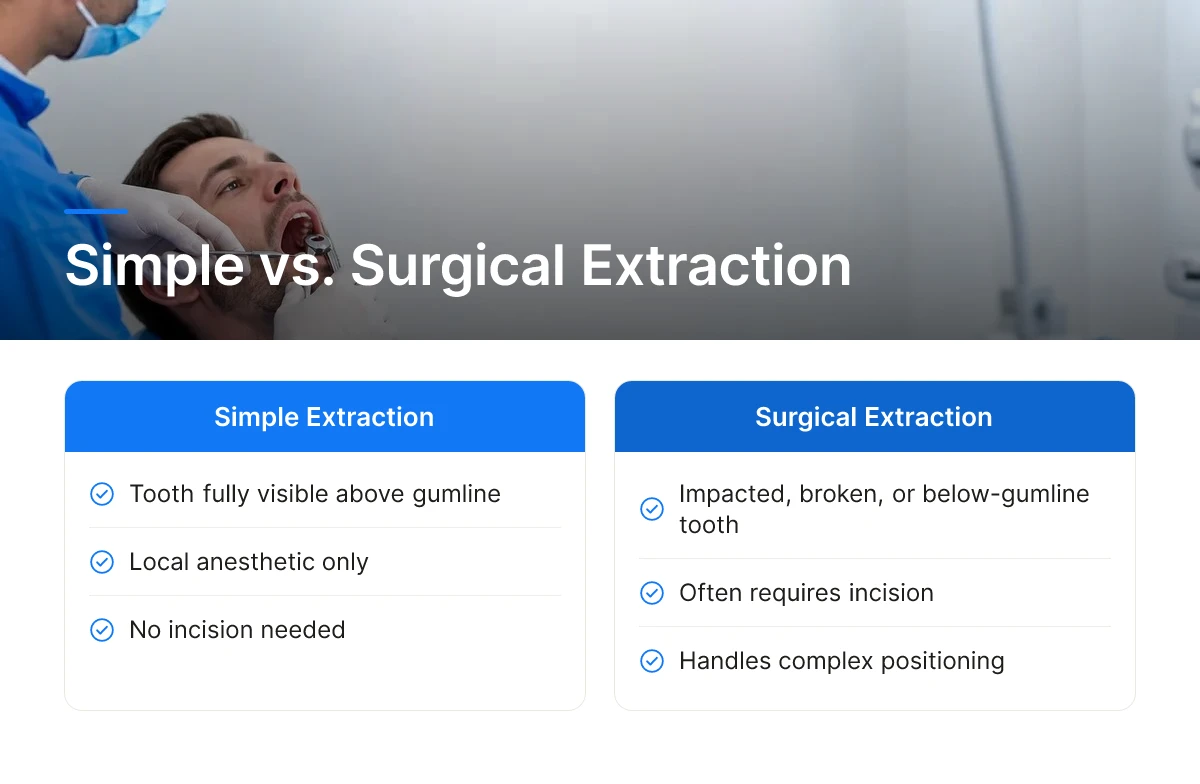
A simple extraction removes a visible tooth with local anesthetic alone, while a surgical extraction handles impacted, broken, or below-gumline teeth and often needs an incision.
Every tooth extraction procedure falls into one of these two categories, and the difference shapes what happens in the chair and how you feel afterward. Dentists usually decide which category applies during the exam and X-ray review, not on the day of the appointment, so most patients already know which path they’re on before they sit down.
Simple Extractions
A simple extraction is for a tooth your dentist can see fully above the gumline. The dentist loosens the tooth with an instrument called an elevator, then removes it with forceps [2]. Local anesthetic numbs the area, and the tooth typically comes out in one piece within a few minutes. This is the more common scenario for a tooth compromised by decay or a fracture that hasn’t broken below the gum.
Surgical Extractions
A surgical extraction is for teeth that are impacted, broken at the gumline, or curved in a way that prevents a straight pull. Oral surgeons or dentists trained in surgical techniques may need to cut the gum tissue and, in some cases, section the tooth into pieces before removing it [1][2]. This approach is standard for teeth that haven’t fully erupted or that fractured during a prior attempt at simple removal. Many general dentists refer surgical cases to an oral surgeon, particularly when a tooth sits close to a nerve or sinus.
How Do Simple and Surgical Extractions Differ in Cost, Recovery Time, and Complexity?
Surgical extractions generally involve more tissue disruption, so patients tend to see more swelling, longer soreness, and a longer follow-up window than with a simple extraction [1]. A simple extraction often settles down within a few days, while a surgical site needs closer monitoring and sometimes a suture removal visit. Cost follows a similar pattern: surgical cases generally sit at a higher tier because of the added technique, time, and, often, a specialist’s involvement, whereas simple extractions are typically priced at the lower end of the extraction range [5].
Wisdom teeth are the clearest everyday example of a surgical extraction. They frequently come in impacted or partially erupted, which is why third molar removal is the case most people associate with stitches, gauze, and a longer recovery [3][4].
What Should You Do to Prepare for Your Tooth Extraction?
Preparing for a tooth extraction procedure comes down to three things: full disclosure to your dentist, a plan for getting home, and food staged for a mouth that won’t cooperate for a day or two.
What Specific Steps Should You Take Before Your Appointment to Prepare?
Start by giving our team at Villagio Family & Cosmetic Dental a complete rundown of your medical history and every medication or supplement you take, prescription or otherwise. This isn’t a formality, certain drugs change how your dentist plans the extraction and manages bleeding risk.
Blood thinners like warfarin or aspirin, along with some herbal supplements, can interfere with normal clotting after a tooth is pulled [2]. Your dentist may need to coordinate with your physician about pausing or adjusting a medication before the appointment. Never stop a prescribed medication on your own, that decision belongs to the doctor who prescribed it, working alongside your dental team.
If your extraction involves IV sedation, plan to arrive with an empty stomach; most offices ask patients to avoid eating or drinking for a set number of hours beforehand [2]. You’ll also need someone to drive you home, since sedation affects coordination and judgment for hours afterward. For extractions done with local anesthetic only, the opposite applies, eat a normal meal beforehand, since your mouth will be numb for a few hours post-procedure and chewing won’t be an option right away.
Before the day arrives, stock your kitchen with soft foods: yogurt, applesauce, mashed potatoes, and broths make the first 24 to 48 hours far less stressful. Clear your schedule for the rest of the appointment day and, ideally, the day after, since rest supports clot formation and faster healing [1]. If you want a broader rundown of what to organize before any dental visit, paperwork, insurance questions, timing, check our general appointment prep guidance for a fuller checklist.
How Long Is Recovery After a Tooth Extraction and What Should You Watch For?
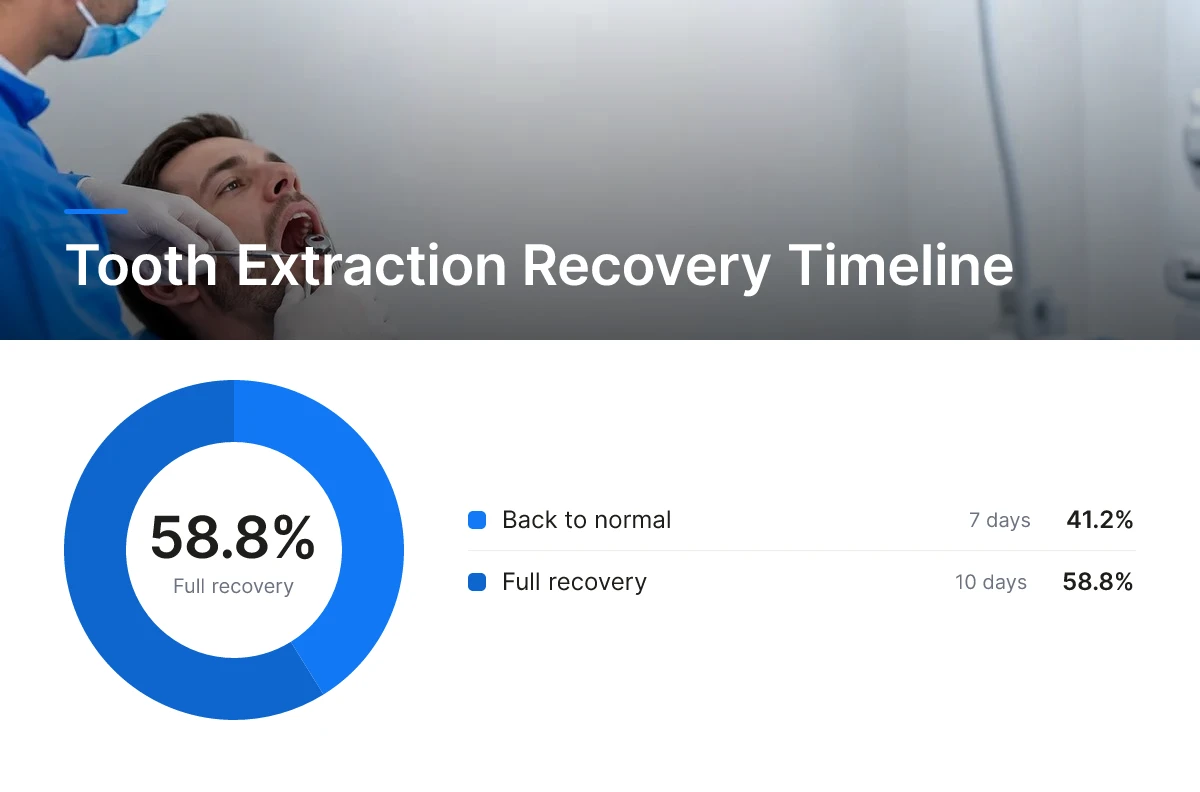
Most patients feel back to normal within 7 to 10 days, with a blood clot forming in the socket during the first 24 hours and gum tissue fully closing over several weeks [1].
The first day matters most. A dark red clot fills the socket and protects the bone and nerve underneath, this is why dentists give such specific instructions about the first 24 hours after any tooth extraction procedure. Swelling and soreness typically build over the next day or two before they start to ease [1].
Why Is Day 3 the Worst After Tooth Extraction and How Many Days of Rest Do You Need?
Day 3 often feels worse than day 1, and that’s the body’s inflammation response peaking before it turns the corner, not a sign of infection for most patients. Cleveland Clinic notes that swelling and discomfort tend to reach their high point around 48 to 72 hours after the procedure before gradually improving over the following week [1]. Parents managing a child’s recovery, or juggling their own appointment against school pickup and work, should plan for the bulk of downtime in that first three-day window rather than just the day of surgery.
A few habits protect the clot during this stretch:
- Skip straws and smoking, since suction can pull the clot loose and cause dry socket.
- Stick to soft foods like yogurt, mashed potatoes, and scrambled eggs.
- Wait a full 24 hours before rinsing, then rinse gently with warm salt water afterward [2].
Aspen Dental’s guidance echoes this, the healing timeline depends on the type of extraction and how closely aftercare instructions are followed [5].
What Complications Should You Watch For and When Should You Call Your Dentist?
Dry socket is the complication to watch most closely. It happens when the protective clot dislodges or dissolves too early, exposing bone and nerve endings, and it typically shows up as worsening pain after day 3, a visible empty-looking socket, and a bad taste or odor in the mouth [2].
Call the dentist promptly for fever, bleeding that won’t slow down after a day, pus or discharge, or pain that escalates instead of easing, these fall outside normal healing and Cleveland Clinic lists them as clear reasons to seek follow-up care [1].
Once the socket heals, most patients turn to replacement options, implants, bridges, or dentures, to restore chewing function and prevent shifting teeth. Villagio Family & Cosmetic Dental walks patients through those choices as part of planning the extraction itself, so the gap doesn’t sit unaddressed longer than necessary.
Frequently Asked Questions
Can I drive myself home after a tooth extraction?
It depends on the sedation you receive, if you get local anesthesia only, you can usually drive yourself.
But if your dentist uses IV sedation, oral sedation, or general anesthesia, plan for a family member or friend to drive you home and stay with you for a few hours afterward.
What foods can I eat the first few days after a tooth extraction?
Stick to soft, cool foods for the first 48 to 72 hours, think yogurt, applesauce, mashed potatoes, and smoothies without a straw.
Straws create suction that can dislodge the healing blood clot [1]. Avoid hot, spicy, or crunchy foods, and slowly reintroduce solid foods as the socket heals over the following week.
How soon can I return to work or school after having a tooth pulled?
Most patients return to work or school within one to two days for a simple extraction.
Surgical extractions, like impacted wisdom teeth, often call for two to three days of rest. Jobs involving heavy lifting or strenuous activity may need a longer break to avoid disrupting clot formation.
Do I need to replace an extracted tooth right away?
Not immediately, but waiting too long can let neighboring teeth shift and cause bite problems.
Dentists typically recommend discussing replacement options, a bridge, implant, or partial denture, during your extraction consultation [1]. At Villagio Family & Cosmetic Dental, we map out replacement timing as part of the same visit, so Katy-area families aren’t left guessing about next steps.
Will my dental insurance cover a tooth extraction?
Most dental insurance plans cover a portion of extraction costs, especially when the procedure is medically necessary.
Coverage percentages vary by plan and whether the extraction is simple or surgical. Financing options and payment plans can also help offset out-of-pocket costs [5], so ask your dental office to check your specific benefits before treatment.

Conclusion
A tooth extraction procedure follows a predictable path: numbing, removal, and a recovery window where clot protection matters more than anything else. The first 24 hours set the tone, avoid straws, skip strenuous activity, and stick to soft foods while the socket seals. Watch for warning signs like fever or worsening pain past day three, since those point to complications like dry socket or infection rather than normal healing.
Before your appointment, ask your dentist whether your case is simple or surgical, and discuss tooth replacement timing in that same conversation. Schedule your extraction consultation with Villagio Family & Cosmetic Dental to get a clear plan for both the procedure and what comes after.
Sources & References
- Tooth Extraction: Surgery & Healing
- What is a Tooth Extraction? | Delta Dental
- Tooth Extraction Lewiston | Oral & Facial Surgery
- Tooth Extraction Video | Medical Video Library
- Tooth Extraction: Procedure, Preparation, & Recovery | Aspen Dental
Recommended Articles
Explore more from our content library: