Proudly Serving Katy, Richmond & Fulshear Cinco Ranch
(281) 395-2100
|
(281) 394-4001

Understanding how to whiten teeth naturally is essential. Natural methods can safely whiten teeth by a shade or two over several weeks, mainly by removing surface stains rather than changing the tooth’s underlying color, which is what professional whitening targets. Consistent brushing, flossing, and stain-prevention habits work well for mild discoloration from coffee, tea, or wine, but they can’t match in-office or dentist-dispensed whitening for deeper or yellowed stains. Use natural methods as daily maintenance and a first step, then talk to a dentist if you want faster or more dramatic results.
Why Teeth Lose Their Natural Whiteness Over Time
Teeth darken through two separate processes, surface staining that sits on enamel, and structural changes inside the tooth that no amount of scrubbing can fix.
What Causes Tooth Stains and Discoloration?
Extrinsic stains form on the outer enamel layer from pigmented foods, drinks, and plaque buildup [1]. Intrinsic discoloration happens underneath, enamel wears thin with age and exposes the yellowish dentin layer beneath it [1]. This distinction matters before trying any method for how to whiten teeth naturally: one type responds to home care, the other does not.
How Do Diet and Smoking Affect Tooth Color?
Coffee, tea, red wine, and tobacco are the most common drivers of surface staining, along with acidic foods that soften enamel and make it more stain-prone [1]. Aging adds a second layer to the problem, enamel naturally thins over decades, and as it does, more of the dentin’s yellow tone shows through [1]. That shift is structural, not a surface residue, which is why no amount of brushing reverses it.
This is the gap natural methods can’t close. The sections below focus on what actually responds to home care, extrinsic, diet-driven staining, and where professional treatment becomes the only real option for intrinsic change.
1. How to Whiten Teeth Naturally With Daily Brushing and Flossing
Consistent brushing and flossing remove the thin bacterial film where stains attach, which is the single most reliable natural whitening method available [1].
What’s the Right Brushing Technique to Prevent Stains?
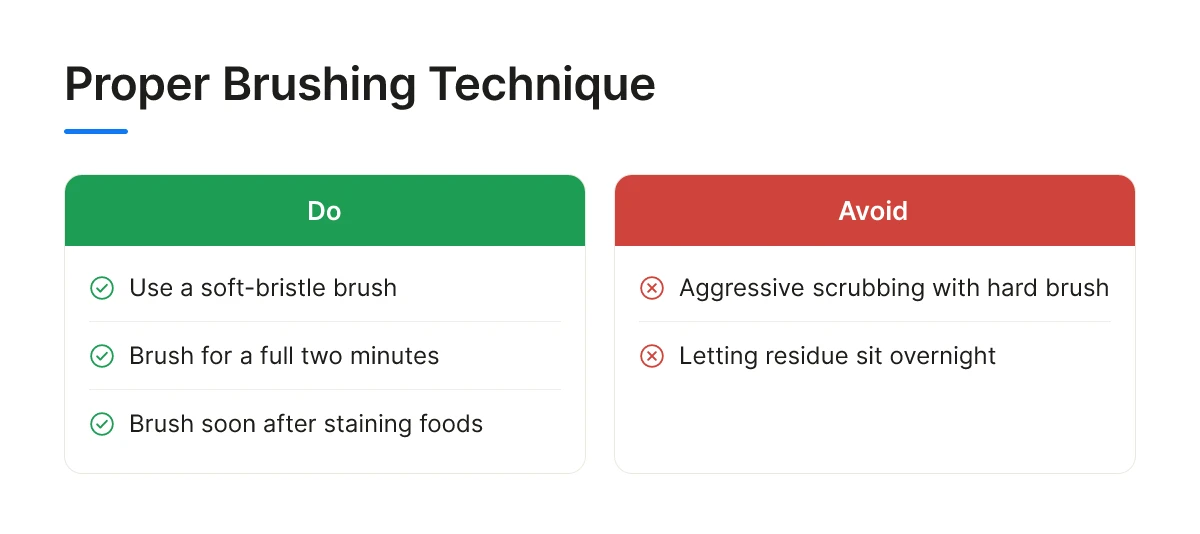
Brushing clears the pellicle, a sticky surface layer, before pigments from coffee, tea, or wine have a chance to bind to it [1]. Technique matters here: use a soft-bristle brush, brush for a full two minutes, and aim to brush within a reasonable window after consuming staining foods or drinks rather than letting residue sit overnight [1]. Soft bristles matter because aggressive scrubbing with a hard brush wears enamel rather than protecting it.
This approach works best for people with early-stage, light surface staining, not years of accumulated discoloration, which brushing alone won’t touch. Flossing plays a distinct role: it clears the particles wedged between teeth that a toothbrush physically cannot reach, preventing stains from setting into those gaps over time [1]. Treat this as maintenance rather than a whitening treatment on its own, it protects the baseline shade of your teeth and makes every other method on this list more effective.
2. Baking Soda for Mild Surface Stains
Baking soda lifts surface stain particles through gentle abrasion, making it one of the most studied options for how to whiten teeth naturally at home.
Is Baking Soda Safe for Whitening Teeth, and How Do You Use It?
A 2017 research review found baking soda to be a safe method for removing surface stains, and noted it may also help reduce bacteria linked to plaque buildup [5]. The mechanism is mechanical, not chemical, it polishes away particles sitting on enamel rather than bleaching the dentin underneath [1]. To use it, mix equal parts baking soda and water into a paste and apply it gently with a finger or soft-bristle brush [5].
This method suits light coffee or tea staining and works well as a low-cost supplement to a regular brushing routine, not a replacement for toothpaste. The real risk isn’t the ingredient itself, it’s overuse. Daily use can wear down enamel over months, so limit it to occasional applications a few times a week rather than a twice-daily habit [1].
3. Oil Pulling as a Gentle Supportive Habit
Oil pulling may reduce plaque and bacteria in the mouth, but it has no bleaching effect on dentin and should not be treated as a whitening treatment.
What Does the Research Say About Oil Pulling and Other Natural Whitening Claims?
The practice involves swishing coconut oil around the mouth for several minutes, with the claimed benefit centered on reducing bacteria that contribute to plaque and surface discoloration [1]. Evidence specifically supporting a whitening effect is limited, the realistic framing is plaque and bacteria reduction with an indirect, modest cosmetic benefit, not tooth bleaching [1].
Oil pulling fits best as an additive morning habit layered alongside brushing, not a standalone fix for anyone researching how to whiten teeth naturally. A practical time commitment runs 10 to 15 minutes, and it should never substitute for brushing and flossing, it supports the mouth’s bacterial balance, but it doesn’t clean teeth the way a toothbrush does [1].

4. Eating Crunchy Fruits and Vegetables That Support Saliva Flow
Crunchy produce like apples and celery increases saliva flow, which helps buffer acid and clear loose surface debris before it can stain enamel.
Chewing fibrous foods stimulates saliva production, and saliva’s natural function is to neutralize acids from food and rinse away particles that would otherwise sit on tooth surfaces [1]. The chewing motion itself also creates a mild mechanical scrubbing effect against enamel, similar in spirit to brushing but far gentler. Apples, celery, and carrots are the most commonly cited examples because their fibrous texture requires sustained chewing, which extends the saliva-boosting effect.
This approach suits people trying to prevent new stains through diet, rather than treat discoloration that’s already set in. It’s also a useful habit after any whitening treatment, professional or natural, since staining is an ongoing process, not a one-time event, and diet is one of the few variables patients control daily.
5. Rinsing With Water After Staining Foods and Drinks
Swishing water in your mouth right after coffee, tea, or wine dilutes pigmented compounds before they have time to settle into enamel.
Tannins and chromogens, the staining molecules in dark beverages, bind more easily to enamel the longer they sit on the tooth surface. A quick rinse with plain water clears much of that residue before it can take hold, buying time until you can brush properly. This habit suits parents in Katy or Cinco Ranch juggling school drop-offs and errands who sip coffee or iced tea throughout the day and can’t step away to brush after every cup.
The real differentiator here is prevention rather than correction. Instead of relying on abrasive methods like baking soda to scrub away stains after they’ve formed, rinsing stops pigment from binding to enamel in the first place, which means less wear on the tooth surface over time. Pair it with drinking staining beverages through a straw, which limits direct contact between liquid and the front teeth. Both habits are free, take seconds, and fit easily into a packed family schedule.
6. Avoiding Charcoal, Lemon Juice, and Vinegar
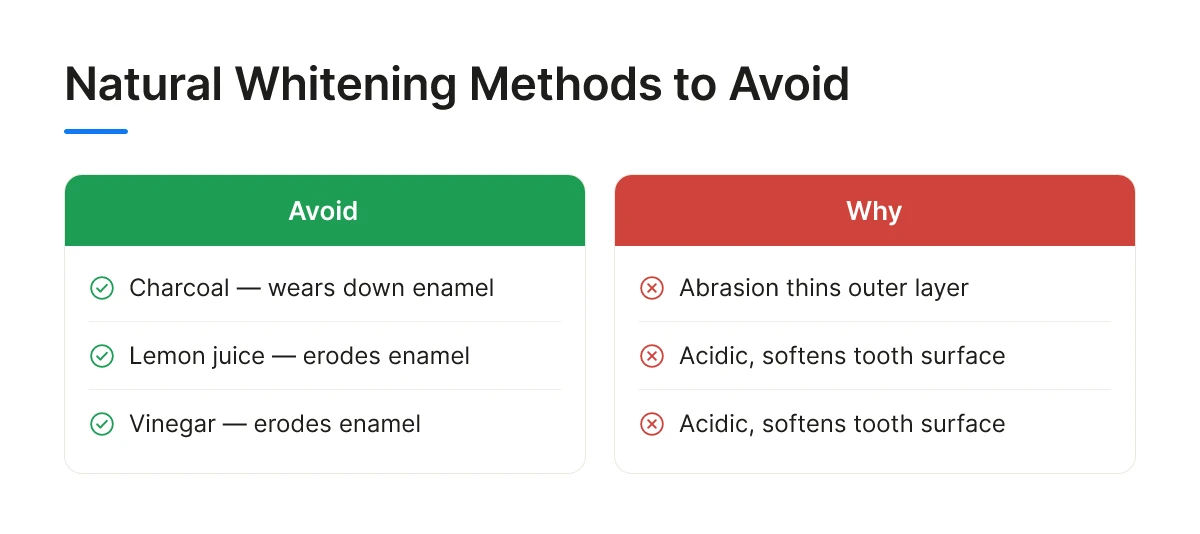
Charcoal, lemon juice, and vinegar are popular DIY whitening remedies, but dentists consider them risks to avoid rather than methods worth trying [1].
Why Are Charcoal, Lemon Juice, and Vinegar Harmful to Tooth Enamel?
Lemon juice and vinegar are acidic enough to erode enamel with repeated use, softening the outer layer of the tooth over time [1]. Activated charcoal works through abrasion, and brushing with it regularly can wear down that same enamel layer rather than simply lifting surface stains [1]. Once enamel thins, the yellow dentin layer underneath becomes more visible, producing teeth that look more discolored than before, the opposite of what these remedies promise.
What Side Effects or Risks Come With Certain Natural Whitening Methods?
The risks go beyond color. Eroded enamel often brings increased tooth sensitivity to hot and cold, and because enamel doesn’t regenerate, the damage is permanent [1]. Repeated abrasion from charcoal can also leave teeth with an uneven, rough texture that attracts new stains more easily. For families searching for how to whiten teeth naturally, the better path is sticking with the gentler, evidence-based habits already covered, consistent brushing and flossing, rinsing after staining foods, and occasional baking soda use, rather than reaching for acidic or abrasive shortcuts [1].
How to Choose the Right Natural Whitening Approach for Your Teeth
Match the method to the stain: surface discoloration from diet responds to prevention habits, while years of buildup usually needs a longer timeline or professional care.
Stains fall into two broad categories. Surface stains from coffee, tea, or berries typically respond to daily brushing, rinsing after meals, and occasional baking soda use [1][5]. Deeper discoloration built up over years, or stains tied to enamel thinning with age, won’t fully resolve with home habits alone because the color sits below the surface [4].
When Should You Move From Natural Methods to Professional Whitening?
Natural methods work gradually, expect subtle change over several weeks of consistent use, not overnight results, since they don’t contain the bleaching agents used in professional treatments [4]. If weeks of consistent effort show no visible improvement, if teeth become more sensitive, or if stains look gray or brown rather than yellow, that’s a signal to stop the DIY approach and see a dentist. Those patterns often point to issues natural methods can’t touch, such as internal staining or enamel damage.
Can Natural Methods Work on All Types of Tooth Discoloration?
No. Natural methods only address surface-level change, so severely yellowed or heavily stained teeth typically need a professional evaluation first [4]. Weigh the trade-off honestly: natural approaches are budget-friendly and low-risk but limited in what they can fix, while professional whitening costs more but changes the tooth’s intrinsic color and works faster. At Villagio Family & Cosmetic Dental, we help Katy-area families figure out which category their smile falls into before recommending next steps, so time isn’t spent on home remedies that were never going to reach the stain underneath.

Frequently Asked Questions
Why might professional whitening be more effective than natural methods?
Professional whitening uses peroxide concentrations strong enough to change the tooth’s actual color, not just lift surface stains. Natural methods like baking soda or oil pulling can remove plaque and mild discoloration, but they can’t penetrate enamel to bleach the dentin underneath [1]. For deeper, long-term discoloration, a dentist-supervised treatment delivers results natural methods aren’t formulated to reach.
What should you expect from professional whitening at a dental office?
Expect a controlled, dentist-supervised process that protects your gums while applying a stronger whitening agent than anything sold over the counter. Your dentist examines your teeth first to rule out cavities or enamel issues, then applies a protective barrier before treatment. Many patients see noticeable brightening in a single visit, with results that last longer than at-home remedies.
How can you prevent new stains from forming after whitening?
Limit staining foods and drinks like coffee, tea, and red wine, and rinse with water after consuming them. Keep up daily brushing and flossing, since plaque buildup makes new stains stick faster [1]. Routine cleanings also help catch surface staining before it sets in.
What whitening options exist for deep or stubborn tooth stains?
Deep or stubborn stains usually need professional treatment, since natural remedies only address surface-level discoloration. Options include in-office bleaching, custom take-home trays with dentist-grade gel, or veneers for stains caused by old dental work or medication. A dentist can evaluate whether the staining is extrinsic or intrinsic before recommending the right approach.
Why do natural methods take longer than professional treatments to show results?
Natural methods work gradually because they rely on mild abrasion or enzymes rather than bleaching agents. Baking soda, for example, polishes away surface stains over repeated uses instead of altering tooth color chemically [1]. That slower mechanism makes natural methods a maintenance habit, not a fast fix.

Conclusion
Natural methods, consistent brushing, occasional baking soda, oil pulling, and cutting back on staining foods, genuinely help maintain a brighter smile between professional visits [1][5]. They won’t reverse deep or intrinsic staining, and reaching for charcoal, lemon juice, or vinegar can wear down enamel instead of protecting it [1]. Use natural habits for upkeep, and let a dentist evaluate anything that doesn’t respond after a few weeks. If your teeth haven’t brightened despite consistent at-home care, schedule an exam at Villagio Family & Cosmetic Dental to find out whether professional whitening or a deeper evaluation makes sense for your smile.
Sources & References
- Safe Natural Teeth Whitening: 6 Methods That Work
- How to Whiten Your Teeth at Home | Rejuvenation Health
- How to whiten teeth naturally: 5 home remedies
Recommended Articles
Explore more from our content library: