Proudly Serving Katy, Cinco Ranch, Richmond & Fulshear
Cinco Ranch (281) 395-2100
|
Fulshear (281) 394-4001

Understanding why are my gums bleeding is essential. Bleeding gums are most often caused by gingivitis, gum inflammation from plaque buildup along the gumline, but they can also result from brushing too hard, vitamin deficiencies, certain medications, hormonal changes, or less commonly a systemic health condition. Gentle but consistent brushing and flossing, a soft-bristled toothbrush, and a professional cleaning usually stop mild bleeding within one to two weeks. If bleeding persists, worsens, or comes with swelling, loose teeth, or bleeding elsewhere, see a dentist to rule out gum disease or an underlying medical cause.
1. Gingivitis: The Most Common Reason Why Your Gums Are Bleeding
Plaque buildup along the gumline is the single biggest answer to why are my gums bleeding, and it starts with gingivitis, the earliest stage of gum disease [1][2].
When plaque sits on your teeth too long, bacteria in it trigger an inflammatory response in the surrounding gum tissue. Blood vessels near the surface dilate and become fragile, so even light brushing or flossing is enough to make them bleed [2]. Left in place, that plaque hardens into tartar, which only irritates the gums further [2].
Gingivitis has a recognizable look: gums turn red instead of a healthy pink, swell slightly, feel tender to the touch, and bleed during normal brushing or flossing [1][3].
How can I tell if my bleeding gums are from gingivitis or something else?
Gingivitis bleeding tends to stay isolated to brushing and flossing, without other symptoms. If you notice gum recession, pockets forming between teeth and gums, persistent bad breath, or teeth that feel loose, that points toward periodontitis, a more advanced and destructive form of gum disease [1].
Gingivitis is the best news on this list: it’s reversible. Improved brushing, daily flossing, and a professional cleaning typically resolve it within one to two weeks, while periodontitis requires deeper treatment to manage [2].

2. Brushing Too Hard or Using the Wrong Technique
Aggressive brushing or flossing can cause gums to bleed by physically abrading the tissue, even when no plaque disease is present at all [2][3].
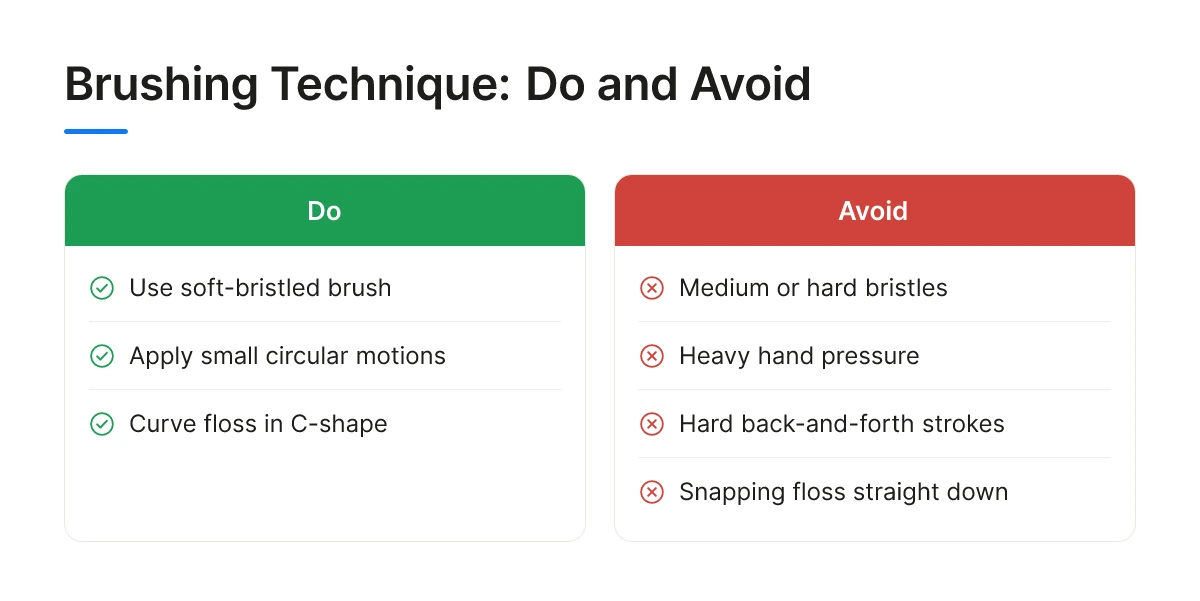
Medium or hard bristles, combined with heavy hand pressure, scrape away at the thin gum tissue the same way a rough scrub irritates skin. This is purely mechanical damage, not bacterial inflammation, which is why it can show up suddenly after a routine change [3][4].
The pattern gives it away: bleeding concentrates in the exact spot where pressure is heaviest, usually along one side of the mouth or wherever a new flossing habit started. Over time, this repeated trauma can also wear the gumline back, leaving visible recession [3].
This cause fits people who recently switched toothbrushes, restarted flossing after a long break, or run an electric brush on a high-intensity setting without realizing how much pressure they’re applying.
The fix competing advice often skips: check your angle and pressure, not just your bristle type. Hold the brush at a 45-degree angle to the gumline and use short, gentle strokes rather than scrubbing back and forth. A soft-bristled brush paired with light pressure protects enamel and gum tissue at the same time.
3. Vitamin Deficiencies (B12, C, and K)
Low levels of vitamin C, K, or B12 can leave gums fragile or slow to clot, so bleeding persists even with solid brushing habits. This is one of the less obvious answers to why are my gums bleeding, since it has nothing to do with brushing technique at all.
Vitamin C builds and repairs collagen, the structural protein that holds gum tissue together. When intake is too low, gum structure weakens and bleeds easily, scurvy, a severe and now-rare vitamin C deficiency, is the extreme end of this pattern [1][2].
Vitamin K plays a different role: it’s required for blood clotting. A deficiency doesn’t cause gum irritation on its own, but it means any minor irritation that does occur bleeds longer and more heavily than it should [2].
Vitamin B12 deficiency is linked to gum inflammation and a reduced ability to fight off the bacteria that drive gum infections, which indirectly raises bleeding risk [1].
This cause fits people who maintain good oral hygiene yet still see blood regularly, especially alongside other deficiency signs such as:
- Persistent fatigue or low energy
- Pale skin
- Cuts or wounds that take longer than usual to heal
- Frequent bruising
- Soreness or swelling of the tongue
Diet changes and supplements can help, but talk to a physician before self-treating. A vitamin deficiency can overlap with other medical conditions, and the right dose depends on bloodwork, not guesswork.
4. Hormonal Changes (Pregnancy, Puberty, Menstrual Cycle)
Hormonal shifts increase blood flow to the gums, making them more sensitive and more likely to bleed in response to ordinary plaque [2].
Rising progesterone and estrogen widen blood vessels in gum tissue and heighten its sensitivity, so the same amount of plaque that caused no reaction before can now trigger swelling and bleeding. This is why teens going through puberty and anyone tracking a cyclical pattern tied to their menstrual cycle often notice gum changes they didn’t have before [2].
Pregnancy brings its own named version of this: pregnancy gingivitis, a pattern dentists commonly see emerge in the second trimester as hormone levels climb [2].
This fits pregnant patients, teenagers, and anyone noticing bleeding that rises and falls with their cycle rather than staying constant.
The detail worth remembering: hormonal bleeding isn’t something to just wait out. It still responds to stricter plaque control, more consistent brushing, daily flossing, and a professional cleaning, because the hormones amplify the gums’ reaction to plaque rather than causing bleeding independent of it.
5. Stress and Lifestyle Factors
Chronic stress and related habits can keep gums bleeding by weakening the body’s ability to control inflammation and heal tissue.
Ongoing stress raises cortisol levels, which can suppress immune response and slow gum tissue repair. Inflammation that would normally resolve in days lingers instead, so minor irritation keeps reopening and bleeding [2].
Stress rarely works alone. It tends to show up alongside teeth grinding and neglected brushing or flossing routines during busy, high-pressure stretches, which compounds the problem indirectly rather than causing bleeding by itself.
Smoking adds a confusing twist: nicotine restricts blood flow to the gums, which can mask bleeding and gum disease symptoms while someone still smokes [1]. Bleeding often becomes noticeably worse once a person cuts back or quits, which can feel like things are getting worse when gum health is actually starting to recover.
What other lifestyle factors besides stress can cause gums to bleed?
- Dehydration, which reduces saliva that normally helps wash away bacteria
- High-sugar diets that feed the same bacteria responsible for plaque buildup
- Inconsistent brushing routines during travel, illness, or busy weeks with kids’ schedules [4]
- Poor sleep, which can weaken the immune system’s ability to control inflammation
This cause fits people under heavy stress who have ruled out other explanations and still wonder why are my gums bleeding without an obvious trigger. If bleeding continues past a week or two despite addressing these factors, that’s the point to bring it to a dentist rather than keep guessing at home [5].
6. Medications and Blood Thinners
Some prescriptions make gums bleed more easily by thinning the blood, slowing clotting, or changing gum tissue itself. If you’re asking why are my gums bleeding and the timing lines up with a new prescription, the drug, not your brushing habits, may be the trigger.
Which blood thinners and anticoagulants are known to cause bleeding gums?
Anticoagulants and antiplatelet drugs such as warfarin, aspirin, and clopidogrel reduce the blood’s ability to clot [2]. That means minor gum irritation from brushing or flossing bleeds more heavily and takes longer to stop than it would otherwise.
Calcium channel blockers, prescribed for high blood pressure, and certain anti-seizure medications can cause gum tissue to overgrow. That extra tissue is more vascular and prone to bleeding with even light contact. Chemotherapy drugs and immunosuppressants work differently, they thin gum tissue and reduce the body’s healing capacity, leaving gums fragile and slower to recover from everyday wear [2].
Never stop a prescribed medication on your own to address bleeding gums. Talk to the prescribing physician first, and tell your dentist about every medication you take before any cleaning or procedure so they can plan around it.
Best for: people whose bleeding started shortly after beginning a new medication.
7. Underlying Health Conditions Like Diabetes or Blood Disorders
Bleeding gums sometimes signal a body-wide condition rather than a local hygiene problem, especially when bleeding happens without brushing or won’t stop.
What’s the difference between bleeding gums caused by gingivitis versus other serious conditions like diabetes or leukemia?
Uncontrolled diabetes damages small blood vessels and weakens immune response, which makes gum tissue more vulnerable to infection and bleeding [1]. In these cases, the gums are acting as a messenger about what’s happening elsewhere in the body, not the source of the problem.
Gingivitis-driven bleeding is usually localized to the areas you brush or floss, and it responds within days to better technique and a cleaning. Bleeding tied to a systemic condition behaves differently: it’s often persistent, shows up spontaneously even without brushing, and travels with other signs like fatigue, unexplained bruising, or infections that keep coming back [1].
Blood clotting disorders and platelet conditions are a less common but important cause of spontaneous gum bleeding, and leukemia is sometimes flagged in medical references as a rarer source of this pattern [1][2]. These are not the most likely explanation for most people, but they’re worth ruling out when bleeding doesn’t match a hygiene cause. For a closer look at these less common causes, the MedlinePlus Medical Encyclopedia entry on bleeding gums outlines how systemic conditions can present alongside oral symptoms.
Best for: anyone whose gums bleed without brushing, or bleed heavily and unpredictably.
8. Professional Treatments That Stop Gum Bleeding Fast
A professional cleaning removes the hardened plaque below the gumline that’s actually causing the bleeding, and most mild cases improve within one to two weeks.
How long does it take for bleeding gums to heal after treatment?
A standard cleaning, called scaling, clears tartar that has built up at and below the gumline, the exact buildup that a toothbrush at home cannot reach [2]. Removing it lets inflamed tissue calm down and start healing on its own.
For more advanced cases with gum pockets or tissue that’s pulled away from the tooth, a dentist may recommend scaling and root planing, a deeper cleaning that smooths the tooth root so gum tissue can reattach. This is a more involved procedure than a routine cleaning and typically requires more than one visit.
Timelines vary by severity. Mild gingivitis-related bleeding often improves within one to two weeks when a cleaning is paired with consistent home care. Deeper treatment like root planing takes longer, several weeks for tissue to fully reattach and for bleeding to stop completely. A dentist may also prescribe an antimicrobial rinse or a localized antibacterial treatment alongside cleaning to speed healing.
Best for: anyone whose bleeding hasn’t improved after two weeks of better brushing and flossing at home.
9. At-Home Care Steps to Stop Bleeding Gums Quickly
Switching to gentler tools and a more consistent routine stops most mild gum bleeding within one to two weeks, often before you need a dental visit.
Are there specific home remedies that actually work for bleeding gums?
Start with a soft-bristled brush and small circular motions instead of hard back-and-forth strokes, which irritate gum tissue rather than clean it [3]. A warm saltwater rinse is a simple step with a real mechanism behind it, the salt reduces bacteria in the mouth and soothes inflamed tissue [5].
Flossing technique matters as much as frequency. Curve the floss around each tooth in a C-shape instead of snapping it straight down into the gum, which can re-injure tissue that’s already inflamed [2][4].
A quick checklist for anyone still asking why are my gums bleeding despite a reasonable routine:
- Switch to a soft-bristled toothbrush if you haven’t already
- Brush with short, gentle strokes at a 45-degree angle to the gumline
- Floss once daily using a C-shape curve around each tooth
- Rinse with warm saltwater to calm inflamed tissue
- Stay consistent for one to two weeks before expecting full improvement
Consistency beats intensity: brushing twice daily and flossing once daily resolves most mild bleeding faster than one aggressive cleaning session followed by weeks of neglect. Saltwater rinses and steady hygiene have a clear basis in how plaque and bacteria cause inflammation, other remedies circulating online don’t have the same backing, so it’s worth sticking to the basics rather than experimenting.
Best for: anyone who wants to start addressing the problem today, before or alongside a dental visit.
How to Choose the Right Response to Bleeding Gums
Match the pattern of your bleeding to the right next step: home care for mild cases, a cleaning for persistent bleeding, and prompt evaluation for anything spontaneous or severe.
If bleeding only happens during brushing or flossing and nothing else feels off, give improved home care one to two weeks before doing anything else. If bleeding continues or gets worse despite consistent gentle brushing and proper flossing, schedule a routine cleaning, that’s usually a sign of plaque buildup below the gumline that needs professional removal [3][4].
Spontaneous bleeding, heavy bleeding that doesn’t slow down, swelling, loose teeth, or bleeding anywhere else on the body are different, those call for prompt evaluation rather than a wait-and-see approach [1][2].
What’s the difference between a routine dental visit and emergency care for bleeding gums?
A routine visit handles plaque-driven bleeding through cleaning and hygiene coaching. Urgent care is for bleeding that won’t stop, trauma to the mouth, or signs of infection like fever or facial swelling, these need same-day attention, not a scheduled cleaning weeks out.
When is bleeding gums a sign of a serious health problem?
If bleeding comes with fatigue, unexplained bruising, or infections elsewhere in the body, loop in your physician alongside your dentist, the gums may be reflecting a condition that starts outside the mouth. According to the Cleveland Clinic’s overview of bleeding gum causes and treatment, this kind of symptom pattern is exactly what gets flagged during an exam so it isn’t treated as a brushing problem when it’s something more.

Frequently Asked Questions
Should I be worried if my gums bleed every time I brush?
Yes, bleeding every time you brush is a sign of gingivitis, not normal brushing wear and tear. Healthy gums don’t bleed from a soft-bristled toothbrush and proper technique [1]. Daily bleeding usually means plaque has built up along the gumline and needs a professional cleaning, not just gentler brushing.
What does gingivitis look like compared to healthy gums?
Healthy gums are firm and pale pink; gums with gingivitis look red, swollen, and bleed when touched or brushed [1]. Gingivitis is the earliest stage of gum disease, caused by plaque buildup at the gumline [2]. Catching it at this stage matters, because it’s reversible with cleaning and better home care before it progresses to periodontitis.
Can stress alone cause my gums to bleed?
Stress alone rarely causes bleeding gums directly, but it can weaken your immune response and worsen existing gum inflammation. Stress also tends to disrupt habits like consistent brushing and flossing, which lets plaque build up [2]. If bleeding persists, plaque or another underlying cause is more likely at play than stress by itself.
When should I see a dentist about bleeding gums instead of waiting it out?
See a dentist if bleeding lasts more than a week, happens with every brushing, or comes with swelling, loose teeth, or bad breath [5]. Heavier or ongoing bleeding often signals gum disease that needs professional treatment rather than home remedies [5]. Sudden, unexplained bleeding gums can also point to a medical condition like a vitamin deficiency or blood disorder [1][2], so don’t wait months to get it checked.
How can I prevent my gums from bleeding in the future?
Prevent bleeding gums with gentle brushing twice daily, daily flossing, and a dental cleaning every six months [2]. Use a soft-bristled toothbrush, replace it every three months, and avoid pressing too hard, brushing too hard is a leading cause of irritated gums [3]. Address contributing factors like hormonal changes, medications, or vitamin deficiencies with your dentist’s guidance [2][4].

Conclusion
Bleeding gums almost always trace back to one of two things: plaque buildup along the gumline or a habit, brushing too hard, flossing incorrectly, or skipping cleanings, that’s irritating healthy tissue [2][3]. The fix for most parents in Katy, Fulshear, Richmond, and Cinco Ranch starts at home: a soft-bristled brush, gentler technique, and consistent flossing for one to two weeks. If bleeding doesn’t improve in that window, or shows up with swelling or loose teeth, that’s your signal to get a professional cleaning and exam rather than wait it out [5]. Schedule a cleaning at Villagio Family & Cosmetic Dental this month if you haven’t had one in the last six months, it’s the single most effective step for catching gum disease before it progresses.
Sources & References
- Bleeding Gums: Causes & Treatment
- Bleeding gums: MedlinePlus Medical Encyclopedia
- Why Gums Bleed & How to Stop It | Dental Nation Las Vegas
- 10 Causes of Bleeding Gums | Delta Dental Of Washington
- 7 Ways to Stop Gums from Bleeding | Blog
Recommended Articles
Explore more from our content library: