Proudly Serving Katy, Richmond & Fulshear Cinco Ranch
(281) 395-2100
|
(281) 394-4001

Child dental anxiety affects an estimated 9–15% of children and is one of the leading reasons kids avoid dental care altogether. It stems from fear of pain, loss of control, unfamiliar sounds, and past negative experiences. The good news: structured techniques like tell-show-do, gradual desensitization, and pediatric-specific appointment setups reduce anxiety measurably, often within two to three visits when applied consistently.
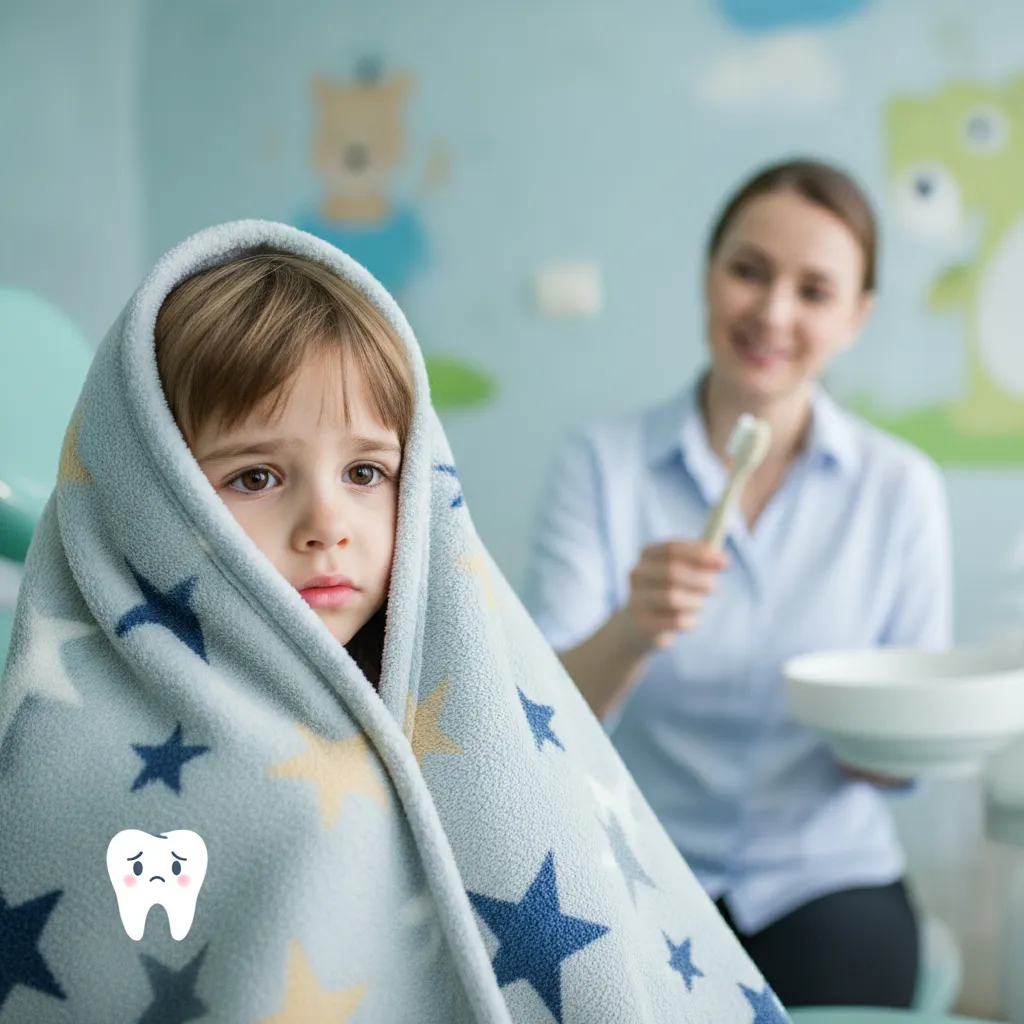
Understand What Drives Child Dental Anxiety
Child dental anxiety traces to four core triggers: fear of pain, loss of control, unfamiliar clinical smells and sounds, and negative learning from anxious family members.
Fear of pain is the most frequently cited cause across age groups. Unfamiliar sensory inputs, the high-pitched drill, antiseptic odors, bright overhead lights, activate a threat response in children who have no prior reference point for what those stimuli mean. Loss of control compounds the reaction: a child lying flat in a chair, unable to see what is happening, has no way to predict or stop the experience.
Parental anxiety is a documented transmission vector. According to research published in PMC on child dental anxiety, children of dentally anxious parents are 2–3x more likely to develop the same fear [3], a finding that matters practically, because a parent’s visible tension in the waiting room can undo careful preparation before the appointment even starts.
“Parental dental anxiety is one of the strongest predictors of child dental fear. When parents model calm, matter-of-fact behavior around dental visits, children are significantly more likely to approach the appointment without distress.” — Dr. Bhanu Bhanu, Pediatric Dentist, Penn Dental Medicine
How Dental Anxiety Differs Across Age Groups
Anxiety presentation shifts with developmental stage, and the intervention must match the child’s age to work.
- Toddlers (ages 2–4) react primarily to separation and strangers. The dentist is an unfamiliar adult in a mask, that alone triggers distress, independent of any procedure.
- School-age children (ages 5–11) fear pain and embarrassment. They understand enough to anticipate discomfort but lack the coping vocabulary to manage it.
- Adolescents are most sensitive to loss of control and social judgment, being seen as frightened or unable to handle a routine appointment.
Distinguishing situational anxiety from clinical dental phobia also shapes the response. Situational anxiety is normal and manageable with consistent technique. Dental phobia, defined as avoidance behavior that persists six or more months and actively disrupts care [3], requires a more structured clinical approach, and parents should flag that pattern to their dentist rather than waiting it out. At Villagio Family & Cosmetic Dental, the care team screens for this distinction at the first visit so the right support level is in place from the start.
Apply Evidence-Based Techniques to Ease Child Dental Anxiety
Tell-show-do, gradual desensitization, CBT, and nitrous oxide are the four most evidence-backed options for reducing child dental anxiety.
Tell-Show-Do vs. Desensitization vs. CBT: How They Compare
Tell-show-do is the most widely used first-line technique. The dentist explains each step verbally, demonstrates it on a model or the child’s finger, then performs the procedure. Multiple randomized controlled trials show this method reduces anxiety scores by 30–40% in school-age children, making it the default starting point at most pediatric dental visits.
Gradual desensitization works across 2–4 structured visits, beginning with non-invasive steps like a mirror check or counting teeth before any treatment begins. This approach suits children with moderate anxiety who need time to build trust with the dental team rather than a single-session fix.
Cognitive behavioral therapy (CBT) carries the strongest long-term evidence for children 8 and older with persistent dental phobia. A typical course runs 4–6 sessions with a psychologist and produces durable results that technique-only approaches cannot match, the child learns to reframe fear rather than simply tolerate the appointment.
Distraction tools run alongside all three methods. Child-directed music, video glasses, and a pre-agreed hand signal for “stop” give children perceived control over the visit. Pediatric studies consistently show these tools measurably reduce self-reported fear scores, and they cost nothing to implement. As noted by Penn Dental Medicine’s guidance on managing dental anxiety in young patients, combining distraction with tell-show-do produces better outcomes than either approach used alone.
“The tell-show-do method remains one of the most effective behavioral tools we have. When children understand what to expect before it happens, their sense of control increases and their fear response decreases measurably.” — Dr. Anna Fuks, Professor of Pediatric Dentistry, Hebrew University–Hadassah School of Dental Medicine
When Nitrous Oxide and Sedation Are the Right Call
Nitrous oxide, commonly called laughing gas, is the first-line pharmacological option for moderate-to-severe anxiety. It is safe for children as young as 3, wears off within minutes of the mask being removed, and requires no IV access. At Villagio Family & Cosmetic Dental, the care team assesses each child’s anxiety level before recommending nitrous oxide, reserving oral sedation or general anesthesia for cases where behavioral and inhalation techniques have not provided adequate relief.
- Confirm the child has no contraindications (e.g., nasal congestion, certain respiratory conditions) before scheduling nitrous oxide.
- Follow the American Academy of Pediatric Dentistry titration protocol: start at 30% concentration and adjust based on the child’s response.
- Keep a parent or caregiver in the room during the first nitrous oxide experience to reinforce calm and provide reassurance.
- Document the child’s response so subsequent visits can build on what worked rather than starting the assessment from scratch.
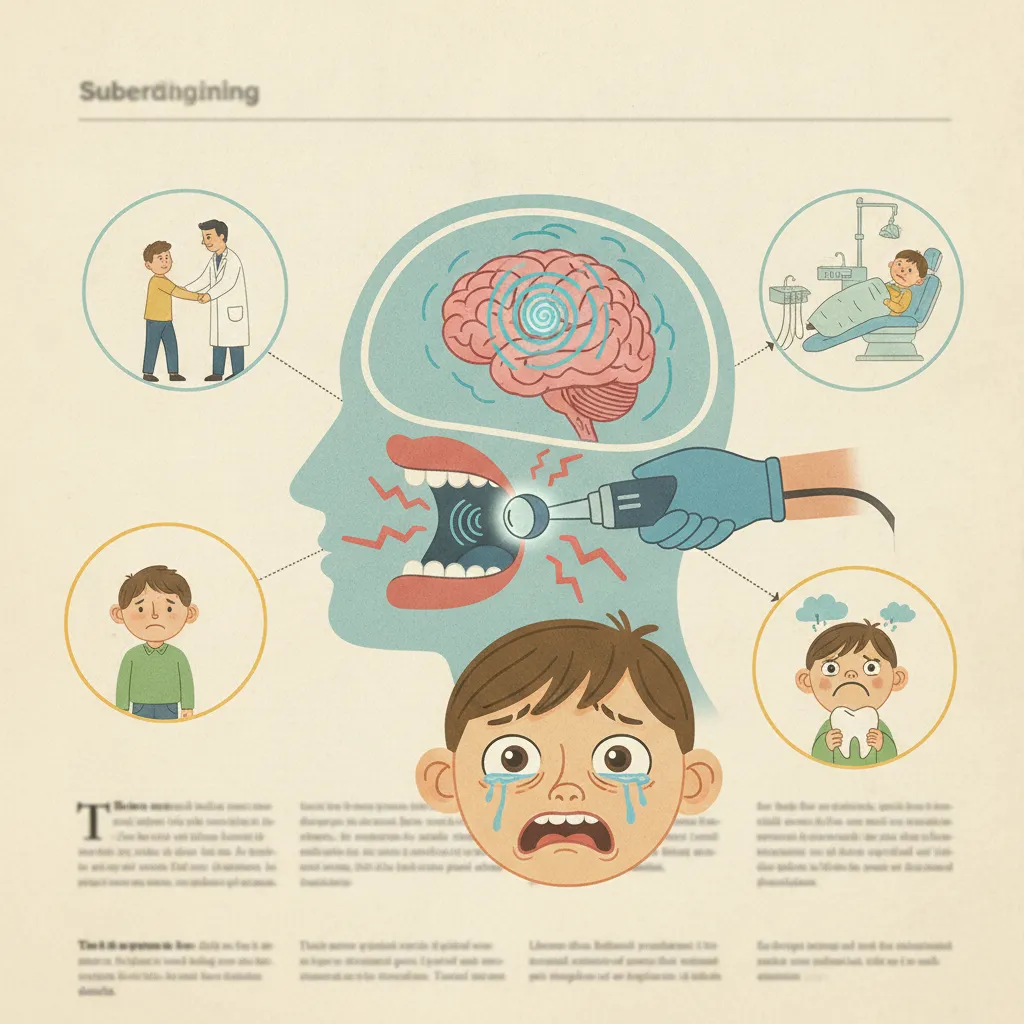
Choose the Right Dentist and Appointment Setup
Selecting a pediatric specialist and scheduling appointments strategically are the two fastest ways to reduce child dental anxiety before treatment begins.
What Makes a Pediatric Dentist Different from a General Dentist
Pediatric dentists complete 2–3 years of post-doctoral specialty training beyond dental school, focused specifically on child behavior management, child psychology, and age-appropriate treatment techniques. That credential gap is meaningful when your child is already anxious, a general dentist may be skilled, but their training in managing a fearful six-year-old is limited by comparison. For more information, see Hybridps.
When evaluating a practice, ask these questions directly:
- Is the dentist board-certified by the American Board of Pediatric Dentistry (ABPD)?
- Does the office use child-sized instruments and equipment?
- Are staff trained in formal behavior guidance protocols, such as tell-show-do or voice control?
- Does the practice offer a “happy visit”, a no-treatment appointment just for familiarization?
- Is there a virtual or in-person office tour available before the first appointment?
Pre-visit tours and happy visits directly reduce novelty fear, which is one of the primary drivers of pre-appointment distress in children [3]. For additional practical strategies, Growing Grins Pediatric Dentistry outlines six ways to support a child scared of the dentist, including familiarization visits and role-playing at home before the appointment.
Book morning slots when possible. Children’s fatigue and hunger levels rise through the afternoon, and both amplify anxiety responses, a well-rested child after breakfast handles new experiences far better than one who has been in school all day.
Waiting room design also plays a measurable role. Practices with child-specific décor, noise-dampening materials, and separate pediatric waiting areas show lower pre-appointment anxiety scores in observational studies [3]. At Villagio Family & Cosmetic Dental, the office environment and staff protocols are structured with these factors in mind, parents in Katy and Cinco Ranch can ask about the practice’s approach to first-visit familiarization when scheduling.
Recognize Common Mistakes That Make Child Dental Anxiety Worse
Five specific parent and provider behaviors reliably intensify child dental anxiety, and each one has a direct corrective action you can apply immediately.
Using dental visits as a threat. Phrases like “if you don’t behave, the dentist will pull your teeth” are linked to improved fear scores in children as young as 4. The dentist’s office becomes a punishment destination before your child ever sits in the chair. Replace threats with neutral, factual previews of what the visit involves.
Over-reassuring with “it won’t hurt at all.” When a procedure causes even mild discomfort, that promise breaks trust, and anxiety spikes sharply after the first broken reassurance. Instead, validate your child’s feelings and describe honest sensations: “You might feel a little pressure, like someone pressing on your arm.”
Skipping appointments to avoid a meltdown. Avoidance reinforces the fear loop and delays care until problems are more invasive, and genuinely more painful. One skipped visit rarely solves anything; it typically means the next appointment involves more treatment, not less.
Projecting parental anxiety. Children read adult body language before they process words. A parent who visibly tenses, over-explains, or apologizes to the dentist on the child’s behalf signals danger. Stay calm and matter-of-fact, even if you personally dislike dental visits.
Choosing a dentist on proximity or insurance alone. A provider whose behavior management approach conflicts with your child’s temperament can set back progress by months. At Villagio Family & Cosmetic Dental, the team uses age-appropriate communication techniques and a tell-show-do method specifically because a technique mismatch, not the procedure itself, is often what triggers lasting fear. Ask any prospective dentist directly: “How do you handle a child who becomes distressed mid-appointment?”
Know When to Refer Child Dental Anxiety to a Mental Health Professional
Refer a child to a mental health professional when dental anxiety causes complete care refusal lasting 6+ months, triggers panic attacks, or spreads to other medical settings.
These thresholds mark a shift from situational nervousness to clinical-level fear. At that point, standard in-office comfort techniques are unlikely to be sufficient on their own.
Most pediatric dentists screen for this using the Children’s Fear Survey Schedule, Dental Subscale (CFSS-DS), a validated 15-item tool scored out of 75. A score above 38 indicates clinical-level child dental anxiety that warrants a formal referral rather than continued in-office management alone.
Pediatric psychologists trained in health anxiety use Cognitive Behavioral Therapy (CBT) protocols specifically adapted for dental phobia, typically delivered across 4–8 sessions. These protocols work in direct collaboration with the treating dentist, using graduated exposure: the child progresses from sitting in the dental chair to tolerating a mirror exam to accepting a cleaning, one controlled step at a time.
The outcomes justify the referral. Combined CBT and gradual in-office desensitization programs show 70–80% of children completing routine dental care without sedation after just 3 months of structured intervention [3].
“Children who receive combined CBT and graduated dental exposure show dramatically better long-term outcomes than those managed with sedation alone. The goal is to build genuine coping skills, not just get through the appointment.” — Dr. Tim Newton, Professor of Psychology as Applied to Dentistry, King’s College London
What Case Studies Show About Parent Strategies and Outcomes
Parent coaching is a core component of any referral package, not an optional add-on. Psychologists teach parents how to respond to pre-appointment distress in ways that reduce fear rather than reinforce avoidance.
A common error is excessive reassurance: repeatedly telling a child “it won’t hurt” or allowing them to skip appointments when they protest. Both responses signal to the child that the dentist is genuinely dangerous, which deepens the avoidance cycle over time.
Instead, coached parents use neutral, matter-of-fact language, maintain scheduled appointments, and apply brief distraction techniques at home before visits. Research consistently shows that parent behavior during the pre-appointment period is as predictive of outcomes as the child’s own therapy sessions [3].
At Villagio Family & Cosmetic Dental, our team coordinates directly with referring psychologists when a child’s anxiety crosses clinical thresholds, sharing appointment notes and structuring in-office graduated exposure steps to align with the child’s CBT progress outside the office.
Frequently Asked Questions
How common is dental anxiety in children, and at what age does it typically peak?
Roughly 9% of children and adolescents experience dental anxiety severe enough to interfere with their care [3]. Anxiety tends to peak between ages 5 and 8, when unfamiliar sensory experiences, sounds, smells, and the feeling of instruments in the mouth, are most overwhelming. Children who have had a painful or abrupt first dental visit are significantly more likely to carry that fear into adolescence, which is why a calm, predictable first appointment matters so much.
What is the 3-3-3 rule for anxiety in kids, and does it apply to dental visits?
The 3-3-3 rule is a grounding technique: name 3 things you see, 3 things you hear, and 3 things you can move or feel, redirecting attention away from anxious thoughts. It works well in a dental chair because it gives a child a concrete mental task during a procedure. Asking your child to notice the ceiling tiles, the hum of the equipment, and the feeling of their feet flat on the footrest can interrupt the anxiety response before it escalates.
Can a child outgrow dental anxiety without treatment?
Some children do reduce anxiety naturally as they accumulate positive dental experiences, but untreated fear rarely disappears on its own. Studies show that children who avoid the dentist due to anxiety are more likely to present with advanced decay, which then requires more invasive treatment, reinforcing the fear cycle rather than breaking it. Structured support, such as tell-show-do techniques and consistent gentle appointments, speeds resolution far more reliably than simply waiting.
Is nitrous oxide safe for young children with severe dental anxiety?
Nitrous oxide, commonly called laughing gas, is considered safe and well-tolerated for children when administered by a trained dental professional. The American Academy of Pediatric Dentistry endorses it as a first-line option for managing moderate to severe child dental anxiety. It takes effect within minutes, wears off quickly after the mask is removed, and does not require an IV or sedation recovery period. At Villagio Family & Cosmetic Dental, the care team evaluates each child individually before recommending any sedation approach.
How can parents prepare a child for a dental visit at home before the appointment?
Parents can significantly reduce child dental anxiety before the appointment even begins by role-playing the visit at home, reading age-appropriate books about going to the dentist, and using calm, factual language when describing what will happen. Avoid over-explaining or repeatedly asking if the child is nervous, as this signals that worry is warranted. Practicing simple coping tools like deep breathing or the 3-3-3 grounding technique in a low-stakes setting at home gives children a ready strategy they can use in the dental chair.
Conclusion
Child dental anxiety is manageable, but it responds to deliberate action, not avoidance. Three steps make the biggest difference: choose a dental home that uses tell-show-do from the very first visit, model calm behavior yourself before and after appointments, and schedule visits in the morning when children are rested and less likely to be overwhelmed. Catching anxiety early prevents the avoidance cycle that turns a nervous 6-year-old into a fearful adult. If your child in Katy, Fulshear, or Cinco Ranch is overdue for a visit, call Villagio Family & Cosmetic Dental to book a low-pressure introductory appointment, and ask specifically about their approach to first-time anxious patients.
Sources & References
- Child Dental Anxiety Research — PMC, National Library of Medicine
- Kids’ Dental Phobia: 6 Ways to Support a Child Scared of the Dentist | Growing Grins Pediatric Dentistry
- Helping Young Patients’ Dental Anxiety | Penn Dental Medicine
Recommended Articles
Explore more from our content library:
- <a href="https://villagiofamilydental.com/blog/2026/08/02/how-to-prepare-your-dental-appointment-for-a-first-visit/" title="How to Prepare Your Dental Appointment for a First Visit“>How to Prepare Your Dental Appointment for a First Visit
- <a href="https://villagiofamilydental.com/blog/2026/07/30/how-to-build-a-daily-oral-hygiene-routine-that-works/" title="How to Build a Daily Oral Hygiene Routine That Works“>How to Build a Daily Oral Hygiene Routine That Works
- <a href="https://villagiofamilydental.com/blog/2026/07/29/why-do-teeth-become-sensitive-and-how-to-find-relief/" title="Why Do Teeth Become Sensitive and How to Find Relief“>Why Do Teeth Become Sensitive and How to Find Relief
- <a href="https://villagiofamilydental.com/blog/2026/07/28/how-dental-implants-work-a-complete-guide-to-modern-tooth-re/" title="Dental Implants Explained: Modern Tooth Replacement Guide“>Dental Implants Explained: Modern Tooth Replacement Guide
- <a href="https://villagiofamilydental.com/blog/2026/07/27/what-is-professional-teeth-cleaning-and-why-you-need-it-twic/" title="Professional Teeth Cleaning: Why You Need It Twice a Year“>Professional Teeth Cleaning: Why You Need It Twice a Year