Proudly Serving Katy, Richmond & Fulshear Cinco Ranch
(281) 395-2100
|
(281) 394-4001

Proper flossing technique means curving the floss into a C-shape around each tooth, sliding it gently beneath the gumline, and moving it up and down against the tooth surface, not snapping it side to side. Use roughly 18 inches of floss, work a clean section between each tooth, and floss at least once daily. Done correctly, flossing removes plaque and food debris that brushing misses, reducing your risk of gum disease and cavities between teeth.
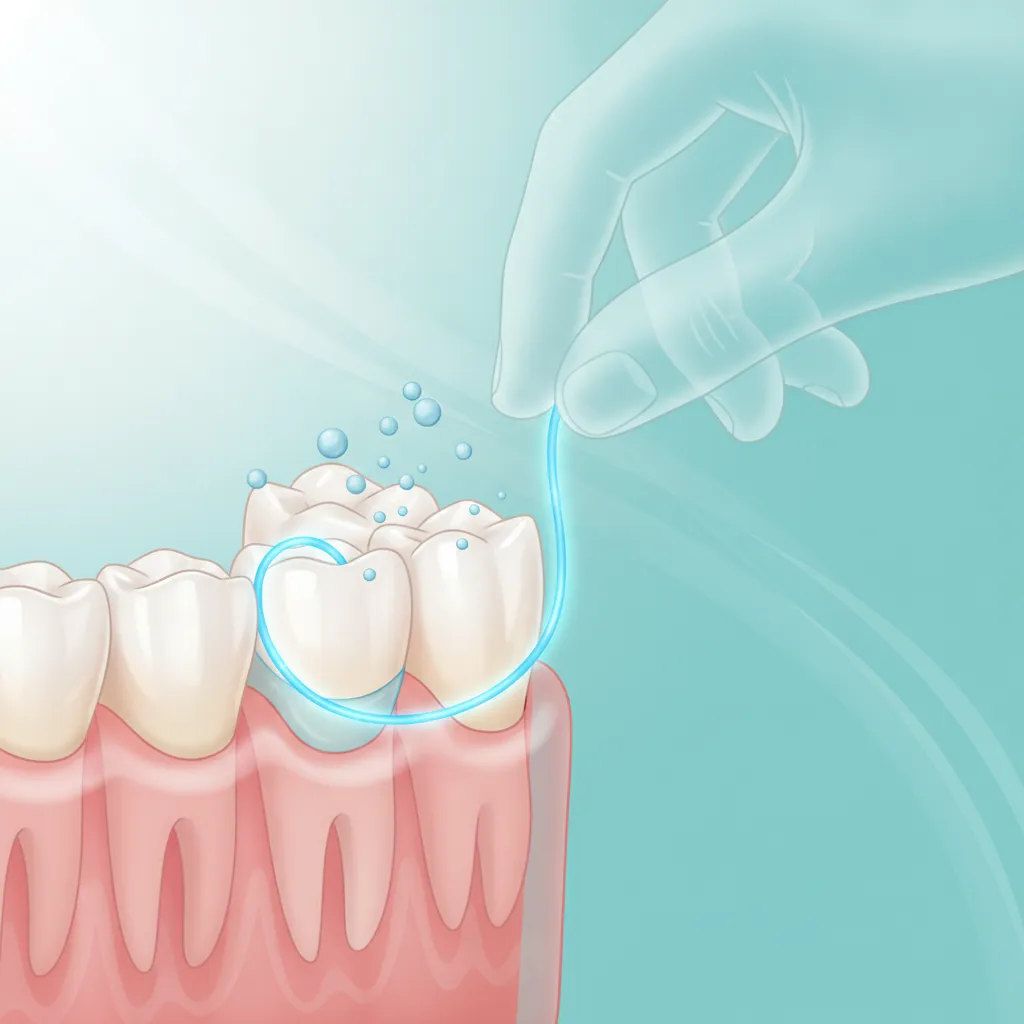
Use Proper Flossing Technique: A Step-by-Step Guide
Cut 18 inches of floss, curve it into a C-shape around each tooth, and move it up and down, covering all 28 contact points once daily.
Start by winding most of the floss around the middle finger of each hand, leaving 1–2 inches of clean floss to work with. Pinch that working section between your thumbs and index fingers to keep it taut and controlled.
- Slide the floss gently between two teeth using a zigzag motion, never snap it straight down, which can bruise the gum tissue.
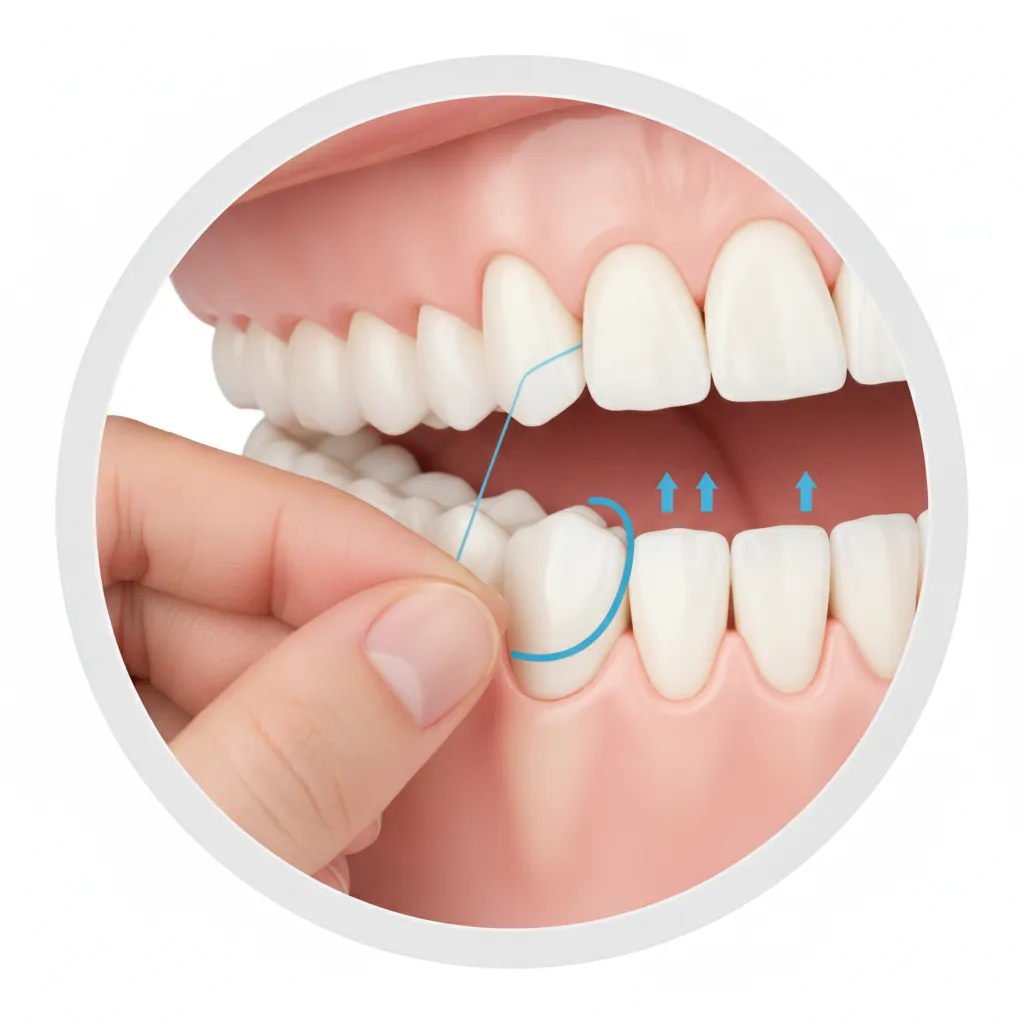
- Curve the floss into a C-shape around one tooth and ease it beneath the gumline.
- Move the floss up and down against the tooth surface, 4–5 strokes per side, before repositioning the C-shape around the adjacent tooth and repeating.
- Advance to a clean section of floss before moving to the next contact point, reusing the same section transfers bacteria from one gap to another.
- Work through all 28 contact points, finishing with the back surface of the last molar on each side, the area most people skip entirely.
“Flossing is an essential part of taking care of your teeth and gums. Floss at least once a day to help remove plaque from the areas between your teeth where your toothbrush can’t reach.” — American Dental Association, MouthHealthy.org
For a visual walkthrough of these steps, watch this instructional flossing video on YouTube to see the C-shape motion and gumline technique demonstrated in real time.
Is It Better to Floss Up and Down or Back and Forth?
Up and down is correct, a back-and-forth sawing motion cuts into gum tissue and causes recession over time. According to the American Dental Association’s MouthHealthy resource on flossing, the up-and-down stroke is specifically recommended because it scrapes plaque off the tooth surface without traumatizing the surrounding gum [2]. Four to five vertical strokes per tooth side are enough to dislodge the plaque film before it hardens into tartar.
How Deep Should Floss Go Under the Gumline?
Slide the floss 1–2mm below the gumline, that shallow pocket is where plaque accumulates and where most people stop short when applying proper flossing technique. Going deeper than 2–3mm risks irritating the attachment between the gum and the tooth root. The goal is to disrupt the plaque that a toothbrush bristle physically cannot reach [2], not to probe the full depth of the sulcus. If your gums bleed consistently after two weeks of daily flossing, schedule an exam at Villagio Family & Cosmetic Dental, persistent bleeding is a sign of gum inflammation that warrants a professional evaluation.
Choose the Right Flossing Tools for Your Teeth
The best flossing tool is the one you’ll use consistently, but each option has real clinical trade-offs worth knowing before you pick one.
String Floss vs. Water Flosser vs. Picks: Which Wins?
Traditional string floss, waxed or unwaxed, remains the clinical gold standard for plaque removal at the gumline. The American Dental Association [2] recommends it as the baseline because it physically disrupts the sticky plaque film that brushing misses. Waxed string slides more easily between tight contacts; unwaxed gives slightly more surface friction against the tooth.
Water flossers like the Waterpik remove roughly 29% more plaque than string floss alone in some clinical studies, making them a strong complement rather than a direct replacement. They’re especially effective for flushing debris from hard-to-reach areas. That said, a water flosser alone won’t replicate the mechanical scraping action that proper flossing technique requires at the gumline.
Floss picks are convenient, one-handed, portable, and easy to use at a desk or in the car. The trade-off is that they limit the C-shape wrapping motion around each tooth, which reduces gumline contact. They’re acceptable for daily maintenance but less effective than string for thorough cleaning.
“Interdental cleaners such as floss are an essential part of taking care of your teeth and gums. Cleaning between teeth removes plaque that can lead to cavities or gum disease from the areas where a toothbrush can’t reach.” — American Dental Association, Oral Health Topics
Best Flossing Tools for Braces, Implants, and Gum Disease
Patients with braces, implants, or bridges often struggle to thread string floss, water flossers are the top recommendation for these cases because they reach around hardware without requiring threading. Interdental brushes outperform floss when gaps between teeth exceed 0.4mm; periodontists frequently recommend them for patients managing gum disease.
Children under 10 typically need a parent to floss for them [2]. Floss picks with handles or child-sized water flossers make the process easier and help build the habit earlier. At Villagio Family & Cosmetic Dental, our team can recommend the right tool for your child’s age and tooth spacing at their next cleaning visit.
Decide When to Floss: Timing and Frequency That Actually Matter
Floss once daily, before brushing, to maximize fluoride retention and remove plaque before your toothbrush distributes it across clean surfaces. For more information, see Collage Du Vin En M%C3%A9doc Techniques Et Secrets.
Should You Floss Before or After Brushing?
The before-brushing sequence has the stronger evidence behind it. A 2018 study published in the Journal of Periodontology found that participants who flossed first, then brushed, retained significantly more fluoride on tooth surfaces after rinsing compared to those who brushed first. Flossing loosens debris and plaque between teeth, and the subsequent brushing step sweeps that material away while coating the now-open interproximal spaces with fluoride toothpaste.
The American Dental Association sets once daily as the clinical minimum [2]. Most periodontists agree that twice-daily flossing adds marginal benefit for patients with healthy gums, but if you have active gum disease, twice daily is warranted to control bacterial load between professional cleanings. Despite this clear guidance, the Centers for Disease Control and Prevention reports that only about 30% of Americans floss daily, leaving the majority at elevated risk for interproximal cavities and gum disease.
One note for parents in Katy and Cinco Ranch: the pediatric 3-3-3 mnemonic, brush 3 times, for 3 minutes, 3 times a day, is a brushing aid only. It does not address flossing frequency and should not be read as a substitute for the once-daily standard.
How Often Should You Floss If You Have Braces or Gum Disease?
Patients with braces need to floss after every meal. Food trapped around brackets accelerates decay faster than in unbraced teeth, and a floss threader or water flosser makes it practical to reach under the archwire. Standard floss alone is difficult to thread correctly after each meal, a water flosser handles the job in under 60 seconds.
Implant patients face a different concern: standard floss can fray on abutment edges and leave fiber debris around the implant post. Use implant-specific floss or a water flosser set to low pressure. Villagio Family & Cosmetic Dental can recommend the right tool based on your implant type, proper flossing technique for implants differs enough from natural teeth that a brief chair-side demonstration is worth requesting at your next visit.
Avoid These Common Flossing Mistakes
Most flossing routines fail because of four repeatable errors, snapping, skipping the C-shape, reusing sections, and quitting when gums bleed.
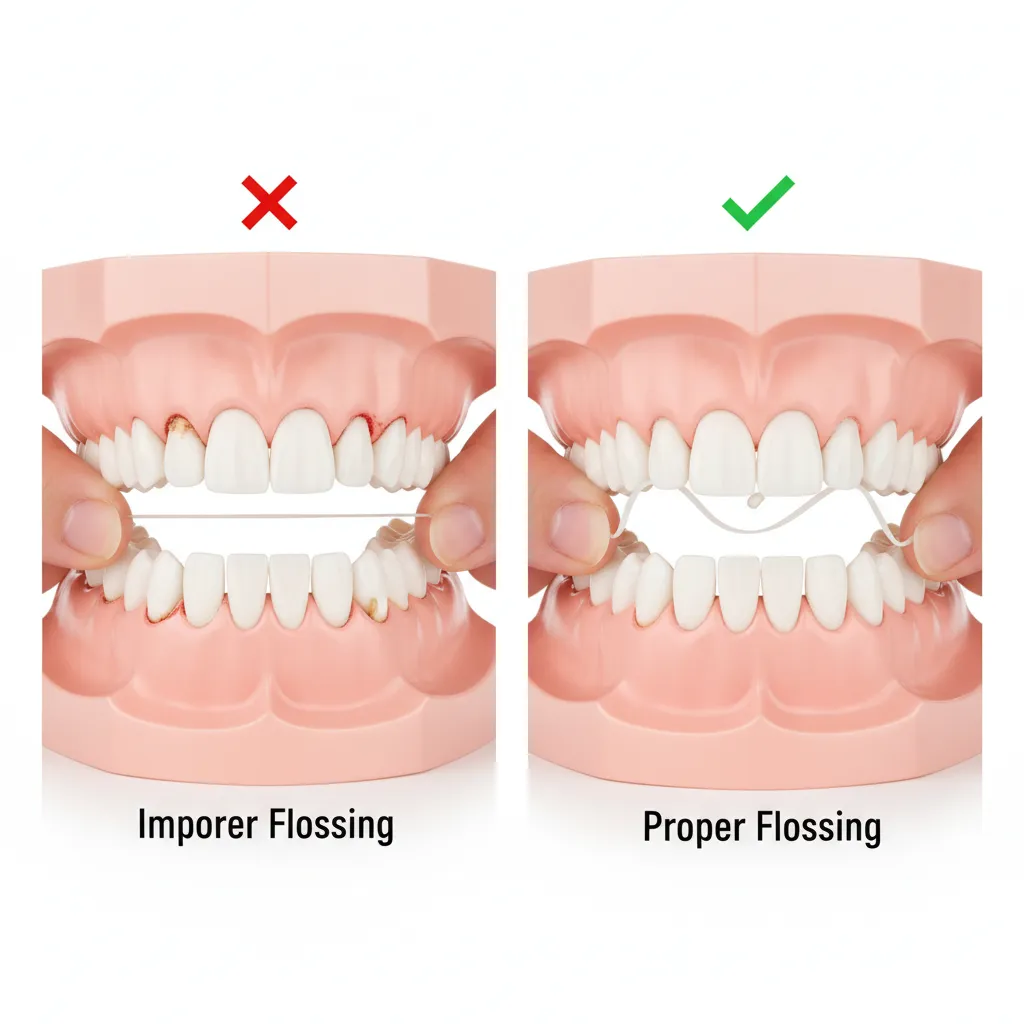
Snapping floss between teeth is the single most common mistake. Forcing the floss down with a quick jerk cuts gum tissue, causes bleeding, and gives people a reason to stop flossing entirely. Ease the floss through the contact point with gentle back-and-forth pressure instead.
Skipping the C-shape and pulling floss straight down is equally damaging to your results. That motion clears food from between teeth but misses the gumline pocket, the exact area where periodontal disease begins. The floss must curve around each tooth and slide just below the gumline to do its job.
Reusing the same section of floss across multiple teeth transfers bacteria from one contact point to the next. Advance to a clean section every time you move to a new tooth, that’s why proper flossing technique calls for 18 inches of floss at the start [2]. Research published in the Journal of Clinical Periodontology found that patients who received hands-on flossing instruction reduced their gingival bleeding scores by up to 38% over a 12-week period compared to those who received written instructions alone — underscoring how much technique matters.
“The most important thing about flossing is that you do it. Whether you use a traditional string or a water flosser, the key is consistency and making sure you’re reaching below the gumline every single day.” — Dr. Sally Cram, Periodontist and Consumer Advisor, American Dental Association
Why Do My Gums Bleed When I Floss?
Bleeding during the first one to two weeks of consistent flossing is a normal inflammation response, not a sign that flossing is harming your gums. Gum tissue that hasn’t been cleaned regularly becomes inflamed, and it bleeds when disturbed. At Villagio Family & Cosmetic Dental, our hygienists see this pattern constantly, patients mistake normal adaptation for injury and stop flossing at exactly the wrong moment.
How Long Until Bleeding Stops with Consistent Flossing?
Gums typically stop bleeding within 7 to 14 days of daily flossing with correct technique. If bleeding persists beyond two weeks, it signals existing gum disease, gingivitis or early periodontitis, that requires a dental evaluation, not less flossing. Stopping because of sensitivity is the worst response; consistent technique is what resolves it.
Know What to Expect: Results Timeline from Consistent Flossing
Most people notice measurable improvements within 1–2 weeks of daily flossing, with gum health milestones continuing to build over the following months.
The first change you’ll likely notice is reduced bleeding. Gums that bleed during flossing are inflamed, and that inflammation resolves quickly once you remove the bacterial plaque causing it. For most patients, bleeding stops within 7–14 days of consistent daily flossing. If bleeding continues past two weeks, schedule a visit with your dentist, it may signal a deeper issue that a proper flossing technique alone cannot resolve.
Gum appearance follows shortly after. Tissue that looks red and puffy typically firms up and returns to a healthy pink color within 3–4 weeks in patients with mild gingivitis. Bad breath also improves in this window, flossing removes sulfur-producing bacteria lodged between teeth that a toothbrush cannot reach, and most patients notice a difference within 1–2 weeks.
Longer-term outcomes take more patience. Cavity prevention between teeth is a 6–12 month result, your next dental checkup is the first objective measure of whether your daily habit is working. For patients with moderate gum disease, consistent flossing can reduce periodontal pocket depth by 0.5–1mm over 3–6 months, a clinically meaningful change that can eliminate the need for scaling and root planing.
At Villagio Family & Cosmetic Dental, we measure these pocket depths at every cleaning appointment, so you can see the numbers move in the right direction.
Frequently Asked Questions
Should you floss 1 or 2 times a day?
Floss once a day, the American Dental Association recommends daily flossing to remove plaque and food particles that brushing misses [2]. Flossing more than once daily is generally unnecessary for most people and offers no proven additional benefit. What matters more than frequency is technique: a thorough, correctly executed session once a day clears the plaque that, if left 24 hours, begins hardening into tartar that only a dental professional can remove [2].
Do kids need to floss and at what age should they start?
Yes, children should begin flossing as soon as two teeth touch side by side [2]. At that point, a toothbrush can no longer reach the contact area between those teeth. Parents should floss for young children until they develop the hand coordination to do it themselves, typically around age 6 to 8. Floss picks or child-sized flossers can make the process easier for small hands and less resistant kids.
What is the 3-3-3 rule for teeth and does it include flossing?
The 3-3-3 rule is a general oral health guideline: brush 3 times a day, for 3 minutes each session, and visit your dentist 3 times a year. It does not specifically include flossing as one of its numbered steps. Still, flossing once daily remains a separate, non-negotiable recommendation from the ADA [2], the 3-3-3 rule is a memory aid, not a complete oral hygiene protocol.
Can you floss too much and damage your gums?
Flossing too aggressively, not too often, is what damages gums. Snapping floss hard against the gum line or sawing back and forth can cut gum tissue, cause bleeding, and over time contribute to gum recession. Proper technique means sliding the floss gently into the contact point and curving it around each tooth in a C-shape rather than forcing it down. If your gums bleed regularly despite gentle flossing, schedule a check with your dentist.
Is waxed or unwaxed floss better for proper flossing technique?
Both waxed and unwaxed floss are effective when used with correct technique. Waxed floss slides more easily through tight contact points between teeth, making it a better choice for people with closely spaced teeth or those new to flossing. Unwaxed floss provides slightly more friction against the tooth surface, which some dental professionals prefer for plaque removal. The ADA’s MouthHealthy flossing guide notes that any type of floss used consistently and correctly will deliver meaningful oral health benefits.
Conclusion
Proper flossing technique comes down to three things: use 18 inches of floss so you work with a clean segment for each tooth, curve the floss into a C-shape against each tooth surface rather than snapping it straight down, and floss once every day, not occasionally [2]. Skipping any one of these habits leaves plaque in the spaces a toothbrush simply cannot reach.
If you live in or around Katy, Fulshear, Richmond, or Cinco Ranch, TX, and you’re not sure whether your current routine is protecting your gums, book a cleaning at Villagio Family & Cosmetic Dental. Ask your hygienist to walk you through your technique at your next appointment, a 60-second hands-on demonstration does more than any written guide.
Sources & References
Recommended Articles
Explore more from our content library:
- A Complete Guide to Home Teeth Whitening Safely
- How to Manage Tooth Pain Until You Can See a Dentist
- Understanding and Managing Child Dental Anxiety
- How to Prepare Your Dental Appointment for a First Visit
- <a href="https://villagiofamilydental.com/blog/2026/07/30/how-to-build-a-daily-oral-hygiene-routine-that-works/" title="How to Build a Daily Oral Hygiene Routine That Works”>How to Build a Daily Oral Hygiene Routine That Works