Proudly Serving Katy, Richmond & Fulshear Cinco Ranch
(281) 395-2100
|
(281) 394-4001

The most effective home teeth whitening methods use hydrogen peroxide or carbamide peroxide, found in whitening strips, custom trays, and LED kits, to bleach intrinsic stains inside the enamel. Over-the-counter strips with 10–14% carbamide peroxide or 3–6% hydrogen peroxide deliver the most consistent results for most people. Results typically last 3–6 months depending on diet and maintenance habits.
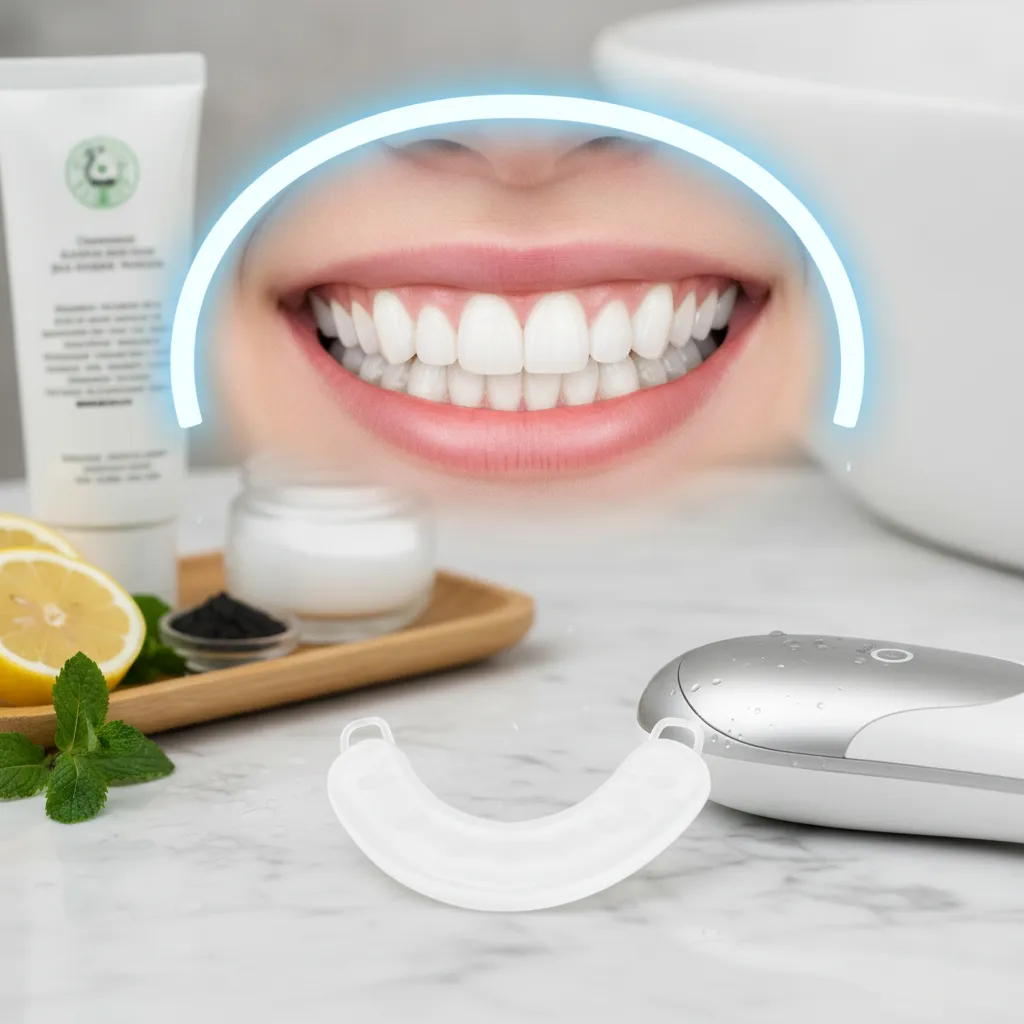
What You’ll Need for Home Teeth Whitening
Four product formats cover most home teeth whitening needs: whitening strips, LED kits, whitening pens, and custom trays, each with different price points and active ingredient concentrations.
- Whitening strips ($15–$40): Thin, flexible strips coated with 6–14% hydrogen peroxide gel. Applied directly to teeth for 30–60 minutes per session.
- LED kits ($30–$100): A mouthpiece paired with a light-activated gel. The LED accelerates the peroxide reaction, though clinical evidence on whether the light adds meaningful whitening beyond the gel alone remains mixed.
- Whitening pens ($15–$30): A brush-tip applicator with a lower-concentration gel (typically 3–6% hydrogen peroxide). Best for spot touch-ups, not full-arch whitening.
- Custom trays ($100–$150 at-home versions; higher through a dentist): Fitted trays filled with carbamide peroxide gel worn overnight or in short daily sessions. This format delivers the most even contact between gel and enamel.
When choosing any product, look for the ADA Seal of Acceptance, it indicates the formula has passed independent safety and efficacy testing, a concrete filter that cuts through marketing claims. According to the American Dental Association’s guidance on tooth whitening, products bearing this seal have been evaluated for both safety and effectiveness under controlled conditions.
Baking soda can supplement a whitening routine by removing surface stains through mild abrasion, but it does not bleach intrinsic discoloration inside the enamel and should not replace a peroxide-based product as your primary method.
“Whitening toothpastes and over-the-counter strips can be effective for mild surface staining, but patients should always look for the ADA Seal of Acceptance to ensure the product has met rigorous safety standards.” — Dr. Ada Cooper, Consumer Advisor, American Dental Association
Hydrogen Peroxide vs. Carbamide Peroxide: What the Labels Actually Mean
Carbamide peroxide breaks down into roughly one-third hydrogen peroxide once it contacts saliva, so a 10% carbamide peroxide product delivers approximately 3.3% active hydrogen peroxide. That conversion matters when comparing label claims across brands: a strip listing 6% hydrogen peroxide is chemically stronger than a tray gel listing 10% carbamide peroxide, even though the carbamide number looks higher. Hydrogen peroxide acts faster but dissipates quickly; carbamide peroxide releases more slowly, making it better suited to longer wear times like overnight trays.
Understanding these chemical differences helps you make a more informed purchase. For a deeper look at how these compounds interact with tooth enamel, the National Institutes of Health research on tooth bleaching agents provides a thorough scientific overview of peroxide-based whitening chemistry and its effects on enamel structure.
Which Whitening Method Is Best for Sensitive Teeth
People with crowns, veneers, active cavities, gum disease, or severe enamel erosion should consult a dentist at Villagio Family & Cosmetic Dental before starting any whitening routine. Peroxide agents won’t lift stain from ceramic or composite restorations, meaning crowns and veneers will stay their original shade while natural teeth whiten around them, and they can worsen sensitivity on enamel that’s already compromised. For mild sensitivity, strips with 6% hydrogen peroxide or lower-concentration carbamide gels used every other day are a reasonable starting point, but a professional evaluation first removes the guesswork.
Choose the Right Home Teeth Whitening Kit for Your Goals
The best home teeth whitening kit depends on how deeply stained your teeth are, how fast you need results, and how much you want to spend. According to Forbes Vetted’s roundup of the best teeth whitening kits, the top-performing products consistently use peroxide concentrations at or near the maximum allowed for over-the-counter sale, and those products also tend to carry the most clinical backing.
How Whitening Strips, LED Kits, Whitening Pens, and Custom Trays Compare
Whitening strips, such as Crest 3D Whitestrips Professional Effects, are the strongest all-around pick for most people. They typically contain 10–14% carbamide peroxide [1], cost $45–$55, and produce visible results in 3–5 days [1]. They also carry the most clinical evidence of any over-the-counter whitening format.
LED kits (GLO Science and AuraGlow are two common examples) pair a peroxide gel with a blue-light device. The light accelerates gel activation, it does not whiten teeth on its own. Expect to spend $50–$100 and allow 7–10 days for noticeable results.
Whitening pens contain only 3–6% hydrogen peroxide and cost $10–$30. They work well for touch-ups between full treatment cycles but cannot replace a complete whitening regimen on their own.
Custom take-home trays from a dentist use 10–22% carbamide peroxide, the highest concentration legally dispensed for home use. They cost $200–$400 and are the most effective option for deep or stubborn staining. Results also tend to last longer than any over-the-counter alternative. For more information, see Home.
“For patients who want professional-level results without repeated in-office visits, custom take-home trays with carbamide peroxide gel remain the gold standard. The fit ensures even gel distribution, which is something no generic strip can fully replicate.” — Dr. Michael Apa, Cosmetic Dentist and Clinical Instructor, NYU College of Dentistry
At-Home Kits vs. Professional Dental Whitening: Cost-Benefit Analysis
Professional in-office whitening runs $300–$1,000 per session. Custom take-home trays from a dentist like Villagio Family & Cosmetic Dental deliver near-comparable results at roughly 30–40% of that cost, making them the strongest value play for anyone with serious whitening goals.
- Calculate your staining level first: surface stains respond well to strips; intrinsic or deep staining needs higher-concentration trays.
- Factor in treatment frequency: pens and strips require repeat purchases, while custom trays are reusable with refill gel.
- Ask your dentist whether your enamel thickness and any existing sensitivity rule out higher-peroxide options before purchasing.
For most patients in the Katy, TX area, custom trays represent the clearest path to lasting results without the full cost of repeated in-office sessions.
Apply Your Whitening Treatment Correctly
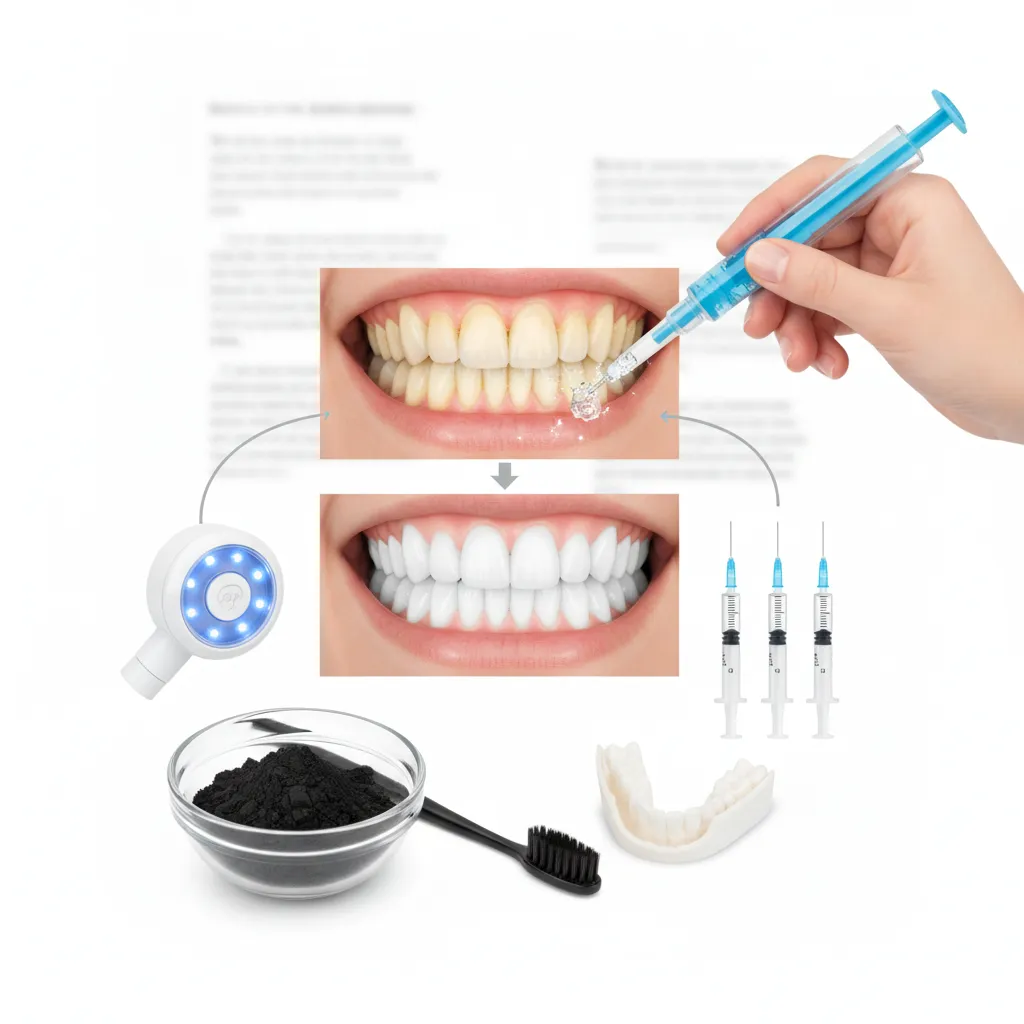
Correct application, not the product itself, determines whether your home teeth whitening routine delivers results or causes unnecessary sensitivity.
Follow these steps in order, regardless of which product format you use:
- Brush your teeth first, then wait 30 minutes before applying any product. Brushing temporarily softens enamel, and applying a whitening agent directly to that softened surface increases the risk of sensitivity. Brush, set a timer, then begin your treatment.
- For strips: press each strip firmly against your teeth and fold the excess over the backs. Leave the strips on for the time printed on the packaging, typically 30–60 minutes [1]. Wearing them longer does not improve whitening and measurably increases sensitivity without added benefit.
- For trays: place a pea-sized amount of gel into each tooth compartment, seat the tray, then immediately wipe away any gel that contacts your gums with a cotton swab. Gel contact with gum tissue is the primary cause of irritation, this is the step most people skip.
- For LED kits: run the light-activation cycle for exactly the manufacturer’s specified time, typically 10–16 minutes. Extending the session does not speed up results and may trigger sensitivity.
- After treatment, avoid food, colored drinks, and smoking for at least 30–60 minutes. Whitening temporarily opens microscopic channels in enamel, and anything pigmented that enters during this window restains teeth faster than it would otherwise. Water is fine; coffee, tea, and red wine are not.
If you experience persistent sensitivity, the team at Villagio Family & Cosmetic Dental can assess whether a lower-concentration formula or a desensitizing gel used before treatment is the right adjustment for your enamel.
Avoid These Common Home Teeth Whitening Mistakes
The most damaging home teeth whitening mistakes, overuse, wrong stain expectations, and DIY acids, reduce results and erode enamel before you see any benefit.
Applying strips or trays more often than the label directs is one of the most common errors. Excess applications don’t accelerate whitening, they deplete the peroxide before it can penetrate the enamel and trigger unnecessary sensitivity. Most whitening strips are formulated for one full cycle every 3–6 months. Repeating them sooner doesn’t compound results; it compounds irritation.
Peroxide bleaches intrinsic stains from coffee, wine, and tobacco by breaking apart pigment molecules inside the tooth. It cannot change the shade of crowns, veneers, or dental bonding, those materials don’t respond to peroxide chemistry. It also won’t correct tetracycline-related gray discoloration, which is a structural stain that sits too deep for over-the-counter concentrations to reach. If you have restorations or antibiotic-related staining, ask Villagio Family & Cosmetic Dental about professional options before investing in a home kit.
DIY mixtures are a separate risk category. Lemon juice is acidic enough to erode enamel with repeated use, and activated charcoal has no clinical evidence supporting whitening, it may also be abrasive enough to scratch enamel over time. Neither is endorsed by the American Dental Association [2]. For a broader look at which natural approaches have any scientific merit, Healthline’s review of natural teeth whitening methods provides a well-sourced breakdown of what works and what to avoid.
“Patients often come in after trying activated charcoal or oil pulling expecting dramatic results. The evidence simply isn’t there for those methods, and some can cause real harm to enamel over time. Stick to products with proven peroxide chemistry.” — Dr. Edita Outericka, General and Cosmetic Dentist, American Academy of Cosmetic Dentistry Member
What Are the Side Effects and Risks of At-Home Whitening
Tooth sensitivity is the most reported side effect. If it occurs, switch to every-other-day application rather than stopping entirely. Use a potassium nitrate toothpaste such as Sensodyne 30 minutes before each treatment session, and shorten your wear time by 5–10 minutes. These three adjustments resolve sensitivity in most cases without abandoning the treatment cycle.
Gum irritation is the second most common complaint and is almost always caused by gel overflow onto soft tissue rather than the peroxide concentration itself. Wiping excess gel from the gumline immediately after seating a tray, and choosing strips that are sized appropriately for your arch, eliminates most gum-related discomfort before it starts. According to the National Institute of Dental and Craniofacial Research, maintaining good baseline oral hygiene before beginning any whitening treatment also reduces the likelihood of irritation and improves overall outcomes.
How Often Do You Need to Repeat Treatments to Maintain Results
Whitening results typically last 3–6 months before re-staining becomes visible. Coffee, red wine, and tobacco are the fastest re-staining agents, they bind to enamel within hours of whitening when the pores are still open. Monthly touch-up pen use combined with a daily whitening toothpaste can extend visible results to 9–12 months, cutting the number of full treatment cycles you need each year.
Patients who maintain regular professional cleanings every six months also tend to hold their whitening results longer. Professional scaling removes calculus and surface deposits that at-home brushing cannot fully address, giving whitening agents cleaner enamel to work with during each subsequent treatment cycle.
Frequently Asked Questions
Can yellow teeth actually be whitened at home, or do you need a dentist?
Yes, yellow teeth can be whitened at home, but results depend on the cause of the discoloration. Surface stains from coffee, tea, and wine respond well to over-the-counter strips and gels containing hydrogen peroxide or carbamide peroxide. Deeper, intrinsic stains caused by aging, medication, or trauma are harder to shift with at-home products and typically require professional treatment. If your teeth have yellowed significantly over many years, a consultation at Villagio Family & Cosmetic Dental will help you identify which approach is realistic before you invest in a kit.
What real results can you expect from popular whitening kits, and how fast?
Most dentist-approved at-home kits produce noticeable whitening within 1–2 weeks of consistent use [1]. Products like Crest 3D Whitestrips deliver visible results in as few as 3 days when using the “fast results” formulas [1], while gel tray systems such as Opalescence Go work over 5–10 days depending on the concentration selected [1]. Shade improvements of 2–5 levels are typical for surface stains. Results vary based on your starting shade, how consistently you apply the product, and whether you avoid staining foods and drinks during treatment.
Does baking soda actually whiten teeth, or does it just remove surface stains?
Baking soda primarily removes surface stains rather than chemically bleaching the underlying tooth structure [2]. Its mild abrasiveness scrubs away plaque and stain deposits, and its alkaline properties help inhibit bacterial growth in the mouth [2]. Brushing with a baking soda and water paste a few times a week can make teeth appear brighter, but it will not change the natural color of your enamel the way peroxide-based products do. Think of it as maintenance, not a whitening treatment.
How do you prevent tooth stains from coming back after whitening?
Avoid the main staining culprits, coffee, red wine, tea, and tobacco, for at least 48 hours after each whitening session, when enamel pores are most open [2]. Rinsing with water immediately after consuming staining foods or drinks slows re-staining between sessions. Brushing twice daily and scheduling regular professional cleanings at Villagio Family & Cosmetic Dental removes fresh deposits before they bond to enamel. Touch-up whitening strips once a month can also extend your results.
Is home teeth whitening safe to use during pregnancy or while breastfeeding?
Most dental professionals recommend avoiding elective whitening treatments during pregnancy and breastfeeding as a precautionary measure. While no large-scale studies have confirmed harm from peroxide-based whitening products in these groups, the lack of conclusive safety data means the conservative approach is to wait. If you are pregnant or breastfeeding and concerned about tooth discoloration, speak with your dentist and obstetrician before beginning any whitening regimen to weigh the options appropriate for your situation.
Conclusion
Home teeth whitening works best when you match the right product to the right stain type, peroxide-based strips and trays for surface discoloration, and professional guidance for anything deeper. Protecting your results is just as important as achieving them: avoid staining foods for 48 hours post-treatment and build consistent brushing habits to slow re-staining. If you’re in the Katy, TX area and unsure where your teeth fall on the spectrum, schedule a whitening consultation at Villagio Family & Cosmetic Dental. Ask specifically about take-home tray options, they offer a stronger peroxide concentration than most retail kits and are custom-fitted to your teeth.
Sources & References
- Best Teeth Whitening Kits 2026 – Forbes Vetted
- How to Whiten Your Teeth Naturally at Home
- American Dental Association: Tooth Whitening
- National Institutes of Health: Research on Tooth Bleaching Agents
- National Institute of Dental and Craniofacial Research: Oral Hygiene
Recommended Articles
Explore more from our content library: